AVALIAÇÃO DA IMDb
7,3/10
19 mil
SUA AVALIAÇÃO


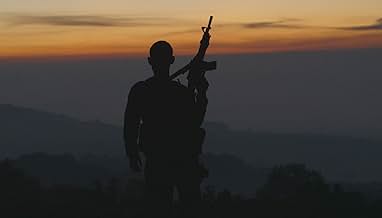
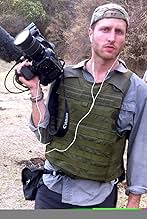
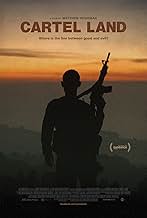
O cineasta Matthew Heineman examina o estado do atual problema das drogas ao longo da fronteira entre os EUA e o México.O cineasta Matthew Heineman examina o estado do atual problema das drogas ao longo da fronteira entre os EUA e o México.O cineasta Matthew Heineman examina o estado do atual problema das drogas ao longo da fronteira entre os EUA e o México.
- Indicado a 1 Oscar
- 19 vitórias e 38 indicações no total


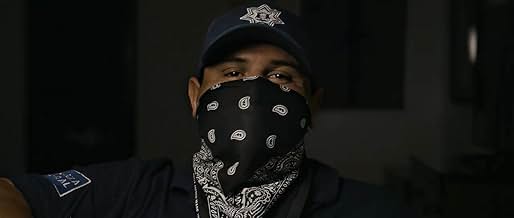


Nicolás Sierra
- Self
- (as as Nicolás Sierra 'El Gordo')

Alfredo Castillo Cervantes
- Self - Mexican political
- (as Alfredo Castillo)
María Imilse Arrué
- Self
- (as María Imilse)
7,319K
1
2
3
4
5
6
7
8
9
10
Avaliações em destaque
Vigilantism
This documentary is about Mexico and cartels, but it is also about vigilantism in general. Is it OK to take the law into your own hands? Does this freedom corrupt? The documentary explores two (related) instances of vigilantism, and it does so in a critical, but nuanced way. It reflects upon the motives of the people involved, and their situation. This exploration is what really makes this documentary great. It throws some light on the situation in Mexico in a way that is both thrilling and heartbreaking - but by focusing on the acts of the vigilantes, the documentary becomes timeless.
The people behind this went to great lengths to get some really(!) impressive footage. How they convinced people involved to let them film all of this is beyond me.
A warning though: There were some scenes here where I had to look away because of the images shown.
The people behind this went to great lengths to get some really(!) impressive footage. How they convinced people involved to let them film all of this is beyond me.
A warning though: There were some scenes here where I had to look away because of the images shown.
powerful doc
Greetings again from the darkness - from the Dallas International Film Festival. Even in this digital age where information exists from all sides of a conflict
often with corresponding video, the general public somehow remains complacent to issues that don't directly and obviously affect their lifestyle. Skilled documentarian Matthew Heineman ignores the rhetoric of political speeches and plops the war against drug cartels right into our lap.
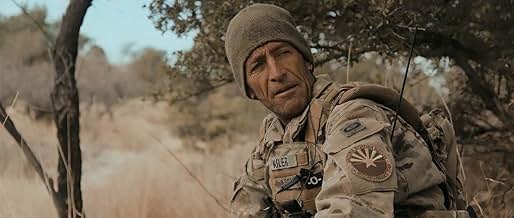
This is a different approach to a topic with which we are all at least somewhat familiar. The involved parties include the affected communities (in Mexico and Arizona), the governments and affiliated agencies (DEA, Border Patrol), the ever-expanding vigilante groups of citizens (Arizona Border Recon, AutoDefensas), and of course the cartels (focus on Knights Templar).
Intimacy is the key here, as Mr. Heineman takes us inside these groups with an up-close look at leaders. Especially fascinating is Dr. Mireles who is the face of the AutoDefensas – a group he pledges will protect communities from the cartels, who clearly have no regard for human life. The film doesn't shy away from the expected issues: citizen pushback, greed, abuse of power, and corruption. As AutoDefensas teams with the Mexican government to create the Rural Defense Force, we can't help but wonder if the rumors of differing goals are at play in the drug battles. Citizens want safety, but what is it that the government wants? Is the goal drug-free streets or is it a cut of the action.
Learning how desperate the vigilantes are to protect their homes, turf and way of life, we are left with little doubt of their mission. It's everyone else that we must keep questioning and holding accountable. This is not an easy documentary to watch, but it's necessary if you have previously lost interest as the next politician proclaims he will continue "the war on drugs".
This is a different approach to a topic with which we are all at least somewhat familiar. The involved parties include the affected communities (in Mexico and Arizona), the governments and affiliated agencies (DEA, Border Patrol), the ever-expanding vigilante groups of citizens (Arizona Border Recon, AutoDefensas), and of course the cartels (focus on Knights Templar).
Intimacy is the key here, as Mr. Heineman takes us inside these groups with an up-close look at leaders. Especially fascinating is Dr. Mireles who is the face of the AutoDefensas – a group he pledges will protect communities from the cartels, who clearly have no regard for human life. The film doesn't shy away from the expected issues: citizen pushback, greed, abuse of power, and corruption. As AutoDefensas teams with the Mexican government to create the Rural Defense Force, we can't help but wonder if the rumors of differing goals are at play in the drug battles. Citizens want safety, but what is it that the government wants? Is the goal drug-free streets or is it a cut of the action.
Learning how desperate the vigilantes are to protect their homes, turf and way of life, we are left with little doubt of their mission. It's everyone else that we must keep questioning and holding accountable. This is not an easy documentary to watch, but it's necessary if you have previously lost interest as the next politician proclaims he will continue "the war on drugs".
Questionable Point of View
This moving and compelling documentary paints a vivid picture of the tragic situation involving the cartels, police, military, government, and citizens of Mexico. This story is too little known north of the border, and that's why this documentary is important and should be seen. The director's bravery in obtaining some amazing footage is to be commended.
However, in my opinion the filmmaker has made a serious and even offensive misstep in trying to create a parallel between the vigilantes of the Autodefensas and the vigilantes of the Arizona Border Recon. Quoting from the doc's website, the premise is that these groups "vie to bring their own brand of justice to a society where institutions have failed."
It's abundantly clear that in Mexico, to put it as neutrally as possible, institutions (government, police, military) have failed to protect citizens from cartel- sponsored violence. The tragic consequences of this failure are made disturbingly real in the film.
However, the idea that U.S. government, police, and military have failed to protect the citizens of Arizona from cartel-sponsored violence is just absurd. Worse, by comparing a flawed Mexican leader who is apparently sincerely trying to address a horrific situation to a flawed American "leader" who is off on some crackpot right-wing conspiracy theory where the danger is mostly in his head, the film ends up insulting the actual pain and suffering experienced by the people of Mexico. However much the Arizona guy wants to say he's really focusing on the cartel's activity in the Arizona desert (how does that work, again?), his true motive is to stop people from crossing the border because he has an anti-immigration ax to grind. However you feel about immigration, U.S.-based anti- immigrant vigilantism is not analogous to the motives or efforts of the Autodefensas. Comparing the two insults the Mexican people's suffering and the Autodefensas courage, however flawed their leaders and unsuccessful their efforts may be.
If the filmmaker wanted to bring in important information from the U.S. side of the border, he might have tried providing some information about how our government's "War on Drugs" has paralleled the cartel's rise (coincidence?), or the blood that's on our hands because we're the ones buying the drugs.
Instead, he makes a false parallel with a group of anti-immigrant wingnuts. If you want to make a documentary to show that anti- immigrant wingnuts are people too, go ahead, but don't try to compare the Arizona Border Recon to the Autodefensas. That's not an intellectually fascinating parallel, as the filmmaker apparently believes. It's just pretentious and, really, disgusting.
However, in my opinion the filmmaker has made a serious and even offensive misstep in trying to create a parallel between the vigilantes of the Autodefensas and the vigilantes of the Arizona Border Recon. Quoting from the doc's website, the premise is that these groups "vie to bring their own brand of justice to a society where institutions have failed."
It's abundantly clear that in Mexico, to put it as neutrally as possible, institutions (government, police, military) have failed to protect citizens from cartel- sponsored violence. The tragic consequences of this failure are made disturbingly real in the film.
However, the idea that U.S. government, police, and military have failed to protect the citizens of Arizona from cartel-sponsored violence is just absurd. Worse, by comparing a flawed Mexican leader who is apparently sincerely trying to address a horrific situation to a flawed American "leader" who is off on some crackpot right-wing conspiracy theory where the danger is mostly in his head, the film ends up insulting the actual pain and suffering experienced by the people of Mexico. However much the Arizona guy wants to say he's really focusing on the cartel's activity in the Arizona desert (how does that work, again?), his true motive is to stop people from crossing the border because he has an anti-immigration ax to grind. However you feel about immigration, U.S.-based anti- immigrant vigilantism is not analogous to the motives or efforts of the Autodefensas. Comparing the two insults the Mexican people's suffering and the Autodefensas courage, however flawed their leaders and unsuccessful their efforts may be.
If the filmmaker wanted to bring in important information from the U.S. side of the border, he might have tried providing some information about how our government's "War on Drugs" has paralleled the cartel's rise (coincidence?), or the blood that's on our hands because we're the ones buying the drugs.
Instead, he makes a false parallel with a group of anti-immigrant wingnuts. If you want to make a documentary to show that anti- immigrant wingnuts are people too, go ahead, but don't try to compare the Arizona Border Recon to the Autodefensas. That's not an intellectually fascinating parallel, as the filmmaker apparently believes. It's just pretentious and, really, disgusting.
When the state fails
Are vigilantes reluctant heroes taking up arms to defend their communities? Or men of violence looking for a cause in which to fight? Can a band of local activists protect the people against a corrupt government? Or is an self-appointed institution always doomed, by its very nature, to be guilty of the same crimes it is founded to eliminate? Where does the greatest threat to a popular movement come from - the personal failings of a charismatic leader who can satisfy, but only for a moment, the people's desire for a saviour, or in the slime-ball sellouts who would replace him? These questions are deftly posed by 'Cartel Land', a documentary about the drug trade that focuses on the odd right-wing Minutemen of southern Arizona, who seem to feel it necessary to patrol the Mexican border for reasons unapparent, and the Atodefensas of central Mexico, a self-defence force fighting the drug cartels out of a self-evident desire for mere survival but which might possibly be just a new cartel in the making. The only certain conclusion from Matthew Heiman's bleak, compelling film is that the war on drugs is a war that can only be lost.
Intriguing on one hand, but on the other hand ...
The Mexican side of this documentary is more than intriguing. What people go through is incredible. The patrol they created to fight against crime is something that most people probably stand behind and support too. The Arizona patrol on the other hand? A whole different beast (quite literally, especially considering the views they express and because it's not the same situation as across the border).
Having said that, and if you are able to judge on your own and not take some things that are being said as more than they are: there is a real tension that builds up and even concerns families, bullying and trying to bring order where order is not wanted by the government (at least the current government in Mexico that is). And that's the thing: While the documentary takes a stance against drug and criminality, it almost embraces racism on the other hand ... either stay neutral or really make a good point
Having said that, and if you are able to judge on your own and not take some things that are being said as more than they are: there is a real tension that builds up and even concerns families, bullying and trying to bring order where order is not wanted by the government (at least the current government in Mexico that is). And that's the thing: While the documentary takes a stance against drug and criminality, it almost embraces racism on the other hand ... either stay neutral or really make a good point


Você sabia?
- CuriosidadesThe Autodefensas group shown in the film was created by civilians to stand up against the cartels because the government is overrun with corruption. Individuals speak about how little the Mexican president (Enrique Peña Nieto) is doing. In the film, the Autodefensas is shown celebrating its one year anniversary on February 24, 2014. On that exact same day, TIME Magazine ran an issue with the Mexican President Enrique Peña Nieto with the headline "Saving Mexico." Nieto reportedly paid TIME $44,000 for this cover article coincidentally released on the same day as the Autodefensas anniversary.
- Citações
José Manuel 'El Doctor' Mireles: Get everything you can out of him, and then put him in the ground.
- Trilhas sonorasEn Las Calles
Written by H. Scott Salinas and Jose Cancela
Principais escolhas
Faça login para avaliar e ver a lista de recomendações personalizadas
- How long is Cartel Land?Fornecido pela Alexa
Detalhes
- Data de lançamento
- País de origem
- Central de atendimento oficial
- Idiomas
- Também conhecido como
- Земля картелів
- Locações de filme
- Empresas de produção
- Consulte mais créditos da empresa na IMDbPro
Bilheteria
- Faturamento bruto nos EUA e Canadá
- US$ 704.352
- Fim de semana de estreia nos EUA e Canadá
- US$ 15.581
- 5 de jul. de 2015
- Faturamento bruto mundial
- US$ 1.145.923
- Tempo de duração
- 1 h 40 min(100 min)
- Cor
- Proporção
- 2.35 : 1
Contribua para esta página
Sugerir uma alteração ou adicionar conteúdo ausente