AVALIAÇÃO DA IMDb
7,9/10
43 mil
SUA AVALIAÇÃO


A vida desesperada de um alcoólatra crônico é seguida por uma bebedeira de quatro dias.A vida desesperada de um alcoólatra crônico é seguida por uma bebedeira de quatro dias.A vida desesperada de um alcoólatra crônico é seguida por uma bebedeira de quatro dias.
- Direção
- Roteiristas
- Estrelas
- Ganhou 4 Oscars
- 18 vitórias e 3 indicações no total


Anita Sharp-Bolster
- Mrs. Foley
- (as Anita Bolster)

Andy Andrews
- Alcoholic
- (não creditado)
Gene Ashley
- Male Nurse
- (não creditado)

Walter Baldwin
- Man from Albany
- (não creditado)

Harry Barris
- Pianist at Harry & Joe's
- (não creditado)
Ian Begg
- Undetermined Secondary Role
- (não creditado)

Eddie Borden
- Drunk in Alcoholic Ward
- (não creditado)
Jess Lee Brooks
- Hospital Patient
- (não creditado)
- Direção
- Roteiristas
- Elenco e equipe completos
- Produção, bilheteria e muito mais no IMDbPro
7,942.6K
1
2
3
4
5
6
7
8
9
10
Resumo
Reviewers say 'The Lost Weekend' is a groundbreaking film with a realistic portrayal of alcoholism. Ray Milland's performance as Don Birnam is praised for its depth. Billy Wilder's direction and the film's visual style, including deep focus and Miklós Rózsa's haunting score, effectively convey addiction's despair. However, some find it melodramatic and repetitive, with an unrealistic ending. Despite criticisms, it is regarded as powerful and influential in cinema.
Avaliações em destaque
For some reason I can watch this film over and over...
... and not get tired of it. Ray Milland's performance is riveting and, if you are watching for the first time, the first scene will do nothing but raise questions, getting you involved. How did Don (Ray Milland) get to be such an alcoholic? Why does his brother have a right to say how he lives? What does he do for a living? Why does such a seemingly together woman like Helen (Jane Wyman) stay with this guy for three years? All of these questions get answered slowly as the movie unravels over one long weekend that Don was supposed to spend in the country with his brother, but instead spends alone, but thanks to ten dollars that Don's brother left behind, he does not spend it completely alone - he's got money to buy booze.
And yet Don doesn't plan ahead. He thinks enough to cover up the two bottles he buys at the liquor store with some apples that he buys to put up on top of the bag as he walks home so neighbors cannot see the booze, but the urgency doesn't come until he is completely out of liquor and out of the ten bucks to get more. And he is willing to do ANYTHING to get that liquor - he'll pretend to be interested in a girl in a local bar who is obviously crazy about him in order to get a few bucks, he tries to trade his typewriter (he's a failed writer) to a local bar owner for a drink, he steals money from a woman's purse in a nightclub to get booze, he even stages a faux hold-up (he has no gun) to get a bottle from a liquor store.
And that's it for the entire movie - Don Birnham and his quest for the next bottle eats all of his time and energy. Other characters are just instruments in that quest or are in the form of flashbacks to tell you how Don got to where he was in the first scene. And then there's that haunting score that runs the length of the film. Everything is brutal realism UNTIL the last scene. Maybe it was the censors, but today it could have cost the film some Oscars.
A couple of questions never raised. How did Don's brother Wick manage to support himself AND Don all of these years IN New York City? Didn't Wick ever long for a life and family of his own? There's got to be a limit to anybody's patience and charity, even if they are kin. Another question from an old film buff like me - Isn't it odd how the Great Depression and World War II magically disappear from sight in the past that Don is recollecting. 15 years of American history that effected everybody seems to have no place in Don's story. To look at this film, this shiny bustling post-war world has always been there. This is the turn of film from Depression and world war - collective struggles - back to the struggle of the individual with himself, the beginning of noir.
And yet Don doesn't plan ahead. He thinks enough to cover up the two bottles he buys at the liquor store with some apples that he buys to put up on top of the bag as he walks home so neighbors cannot see the booze, but the urgency doesn't come until he is completely out of liquor and out of the ten bucks to get more. And he is willing to do ANYTHING to get that liquor - he'll pretend to be interested in a girl in a local bar who is obviously crazy about him in order to get a few bucks, he tries to trade his typewriter (he's a failed writer) to a local bar owner for a drink, he steals money from a woman's purse in a nightclub to get booze, he even stages a faux hold-up (he has no gun) to get a bottle from a liquor store.
And that's it for the entire movie - Don Birnham and his quest for the next bottle eats all of his time and energy. Other characters are just instruments in that quest or are in the form of flashbacks to tell you how Don got to where he was in the first scene. And then there's that haunting score that runs the length of the film. Everything is brutal realism UNTIL the last scene. Maybe it was the censors, but today it could have cost the film some Oscars.
A couple of questions never raised. How did Don's brother Wick manage to support himself AND Don all of these years IN New York City? Didn't Wick ever long for a life and family of his own? There's got to be a limit to anybody's patience and charity, even if they are kin. Another question from an old film buff like me - Isn't it odd how the Great Depression and World War II magically disappear from sight in the past that Don is recollecting. 15 years of American history that effected everybody seems to have no place in Don's story. To look at this film, this shiny bustling post-war world has always been there. This is the turn of film from Depression and world war - collective struggles - back to the struggle of the individual with himself, the beginning of noir.
10Don-102
Textbook drama about addiction powerfully told...
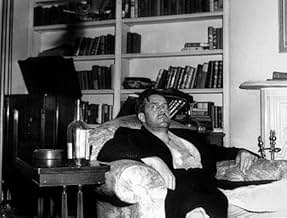
From the first shot of a bottle hanging from a drunk's apartment, we realize we are about to see a clever addict and a weekend of his demented exploits. Ray Milland has an honest face, not unlike Jimmy Stewart's, however, with this character it is only skin-deep. The great thing about his performance and the film as a whole, is that his face will gradually change, becoming dark and chilly, just like Stewart's in IT'S A WONDERFUL LIFE. Stewart had lost his life momentarily. Milland has lost his soul to the bottle and he will stop at nothing to quench his thirst.
This really is a textbook example of the alcoholic's lies and schemes, a precursor to LEAVING LAS VEGAS, although there are people in this film who care about the drinker from the beginning. He just can't stop and we start to lose whatever sympathy we had for him because of how he treats other people. This is a drunk with a sober man wanting to come out, but Wilder's script dives deeply into the unpredictable outcomes of most alcoholics.
LOST WEEKEND was innovative and was almost never released because test audiences could not take the film's realism. The hospital sequence retains its horror, and Milland's withdrawal-induced hallucination of a rat in the wall was like him looking in the mirror. See this movie and you will come away with a completely informed and scary anthology of the antics of a hopeless alcoholic. This is amazing considering it came out of the old Hollywood system.
This really is a textbook example of the alcoholic's lies and schemes, a precursor to LEAVING LAS VEGAS, although there are people in this film who care about the drinker from the beginning. He just can't stop and we start to lose whatever sympathy we had for him because of how he treats other people. This is a drunk with a sober man wanting to come out, but Wilder's script dives deeply into the unpredictable outcomes of most alcoholics.
LOST WEEKEND was innovative and was almost never released because test audiences could not take the film's realism. The hospital sequence retains its horror, and Milland's withdrawal-induced hallucination of a rat in the wall was like him looking in the mirror. See this movie and you will come away with a completely informed and scary anthology of the antics of a hopeless alcoholic. This is amazing considering it came out of the old Hollywood system.
Risk-Taking Film-Making at Its Finest.
Uncompromising, dark and definitely disturbing Best Picture Oscar winner from 1945 that deals with a writer's (Ray Milland in one of the very best performances ever shown on the silver which deservedly landed him his only Oscar) alcoholism and the effects that his problem has on himself, his work and those closest to him. The love of his life (Jane Wyman) and his very supportive brother (Phillip Terry) try to save Milland from a habit that has gotten terribly out-of-hand. Heart-wrenching flashbacks into Milland's demise are sometimes difficult sequences to get through. In the end it is not a sure thing if Milland can distance himself from his disease and return to a normal life. Billy Wilder's uncompromising direction and screenplay yielded him Oscars in this film that scared many studios away in the early-1940s due to its intense subject matter and the question of whether the film could create interest. Made during a time when patriotic movies and romantic comedic farces dominated the cinema, "The Lost Weekend" was truly unlike anything ever experienced before. A very well-made production that is first class all the way. A real classic in every sense of the term. 5 stars out of 5.
Sad end to the life of author Charles Jackson (The Lost Weekend)
In 1968, I was just 22 years old and driving a taxi part-time in Ft. Lee, New Jersey. One day, I drove Charles Jackson (author of "The Lost Weekend") from Englewood Cliffs, NJ to a run-down hotel in Times Square, New York City. I had seen and really liked the movie of the same name, starring Ray Milland, who did a wonderful job portraying an alcoholic on a weekend binge. The film was so realistic, I had a strong feeling that Charles Jackson had written the book based on his own life. I got up the nerve to ask him, and he told me that....yes, he indeed was the alcoholic portrayed in his book. We talked quite a bit about his life on the way into Times Square. He seemed like a very nice person, although he seemed quite depressed. However, it still came as quite a shock when, shortly after having him in my cab, I read in the papers that he had hung himself in his hotel room in NYC. That's an experience I will never forget!
Feeling thirsty? Then have a cup of tea.
Seedy bars, pawnshops, and an array of elaborate hiding places are the overriding images from this film. The Lost Weekend is a grimly realistic account of four days in the life of a chronic alcoholic, played by Ray Milland. In films of this quality one always takes away unforgettable images. The most striking is Milland's drunken efforts to remember where in his apartment the last hiding place he used is. Degraded and thoroughly beaten by his addiction, his last refuge is to try and keep it a secret from those who still love him. Billy Wilder's direction and script is brilliant - sympathetic, but unpatronising in his handling of a delicate and rarely dealt with affliction. Not until Nicolas Cage's portrayal of a man determined to drink himself to death in Leaving Las Vegas, has alcoholism been dealt with so well. Milland's performance is first rate - no hammy shlurring of words - and the atmosphere is dark and seedy like the bars he frequents. The scene where he spends several hours trying to find an open pawnshop on a public holiday is both harrowing and dazzling - it is remeniscent of the filmic image of a parched man trying to cross the desert.
Oscars Best Picture Winners, Ranked
Oscars Best Picture Winners, Ranked
See the complete list of Oscars Best Picture winners, ranked by IMDb ratings.


Você sabia?
- CuriosidadesBilly Wilder claimed the liquor industry offered Paramount Pictures $5 million not to release the film; he also suggested that he would have accepted had they offered it to him personally.
- Erros de gravaçãoWhen the waiter gives Don the check at Harry & Joe's and he reaches for it, the glass, ashtray, napkin, and cigarette all change position between camera shots.
- Citações
[Nat moves to wipe away the circle of whisky from Don Birnam's glass]
Don Birnam: Don't wipe it away, Nat. Let me have my little vicious circle. You know, the circle is the perfect geometric figure. No end, no beginning.
- ConexõesEdited into Cliente Morto Não Paga (1982)
- Trilhas sonorasLa Traviata
(1853) (uncredited)
Music by Giuseppe Verdi
Libretto by Francesco Maria Piave
Libiamo ne' lieti calici (Drinking Song) Performed by John Garris and Theodora Lynch with The San Francisco Opera Company
Principais escolhas
Faça login para avaliar e ver a lista de recomendações personalizadas
Detalhes
- Data de lançamento
- País de origem
- Idioma
- Também conhecido como
- Días sin huella
- Locações de filme
- Empresa de produção
- Consulte mais créditos da empresa na IMDbPro
Bilheteria
- Orçamento
- US$ 1.250.000 (estimativa)
- Faturamento bruto mundial
- US$ 813
- Tempo de duração
- 1 h 41 min(101 min)
- Cor
- Proporção
- 1.37 : 1
Contribua para esta página
Sugerir uma alteração ou adicionar conteúdo ausente