AVALIAÇÃO DA IMDb
6,5/10
7,2 mil
SUA AVALIAÇÃO


Adicionar um enredo no seu idiomaFifteen years after his death, a carousel barker is granted permission to return to Earth for one day to make amends to his widow and their daughter.Fifteen years after his death, a carousel barker is granted permission to return to Earth for one day to make amends to his widow and their daughter.Fifteen years after his death, a carousel barker is granted permission to return to Earth for one day to make amends to his widow and their daughter.
- Direção
- Roteiristas
- Estrelas
- Prêmios
- 1 vitória e 3 indicações no total




William LeMassena
- Heavenly Friend
- (as William Le Massena)


Jacques d'Amboise
- Louise's 'Starlight Carnival' Dancing Partner
- (as Jacques D'Amboise)
Virginia Aldridge
- Woman
- (não creditado)
Walter Bacon
- Graduation Spectator
- (não creditado)

Robert Banas
- Ruffian in Louise's Ballet
- (não creditado)
Tex Brodus
- Townsman
- (não creditado)

Buddy Bryan
- Dancer
- (não creditado)
Bob Calder
- Dancer
- (não creditado)
6,57.1K
1
2
3
4
5
6
7
8
9
10
Avaliações em destaque
"He's Your Fellow And You Love Him, That's All There Is To Say"
I saw Carousel for the very first time in its first release when it played a double bill with Oklahoma. You can't do much better than that for an introduction to the American Musical Theater.
It would get a perfect 10 had it been done with the original two leads that were set for the show, Frank Sinatra and Judy Garland. Judy backed out before production started and Sinatra shortly after that, so Gordon MacRae and Shirley Jones got to do a second Rodgers&Hammerstein classic.
Carousel is based on the Ferenc Molnar play Liliom and the original setting is in Molnar's native Hungary. On Broadway it was done by Eva Le Gallienne and Joseph Schildkraut and later in revival by Ingrid Bergman and Burgess Meredith. One man who did it in summer stock was Tyrone Power who if a straight dramatic version of Liliom had ever been done, would have been perfect.
Whether he's Liliom in Hungary or Billy Bigelow in 19th century New England, the part is one for a hero/heel that Tyrone Power patented on the screen. Probably Gordon MacRae benefited in no small way in having Power's favorite director Henry King in charge of Carousel.
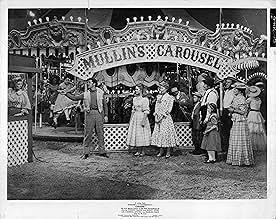
Richard Rodgers was also used to writing for a hero/heel having done Pal Joey with his former partner Lorenz Hart. Billy is that kind of guy, a carousel barker and boy toy to owner Audrey Christie when he spots Julie Jordan and her friend Carrie Pipperidge, a couple of mill workers. It's love at first sight and marriage shortly after, but Billy's not a guy to change his layabout ways and it ends in tragedy.
One reason that Sinatra was also so right for the part was that he had made a successful hit record of Billy's Soliliquy back in 1945 when Carousel debuted on Broadway. It was a groundbreaking piece of musical theater that Dick Rodgers and Oscar Hammerstein were responsible for in the Soliliquy. Billy's just been told by Julie he's about to become a father. In an almost 10 minute number he bares his soul to the audience and sings/thinks aloud the moves he's going to make. The song is almost operatic in quality, it takes a real singing actor to put it over like Sinatra, like MacRae is here, like John Raitt in the original cast on stage.
Though it's not Julie's song, Judy Garland had a successful record with You'll Never Walk Alone. I'm sure she would have sung it in the film had she seen it through. It's probably the big hit song from the score, still an inspiring number today.
Rounding out the cast is Cameron Mitchell as Billy's no good pal Jigger, Robert Rounseville and Barbara Ruick as Mr. Snow and Carrie, the second leads and from the Metropolitan Opera Claramae Turner as Julie's cousin Nettie who does sing You'll Never Walk Alone.
Two more who are perfectly cast are John Dehner as the officious mill owner that employs the girls and the heavenly star-keeper, Gene Lockhart in one of his last roles.
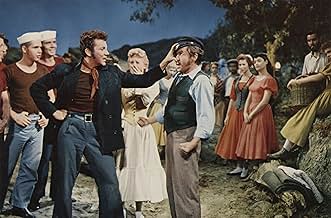
Even more than in Oklahoma, Agnes DeMille's ballet numbers are used to advance the plot. From the exuberant June Is Busting Out All Over to the dance that Billy and Julie's daughter does, all are done with taste and style.
Carousel is both tragic and yet uplifting and inspiring. It's a musical for all the ages to come.
It would get a perfect 10 had it been done with the original two leads that were set for the show, Frank Sinatra and Judy Garland. Judy backed out before production started and Sinatra shortly after that, so Gordon MacRae and Shirley Jones got to do a second Rodgers&Hammerstein classic.
Carousel is based on the Ferenc Molnar play Liliom and the original setting is in Molnar's native Hungary. On Broadway it was done by Eva Le Gallienne and Joseph Schildkraut and later in revival by Ingrid Bergman and Burgess Meredith. One man who did it in summer stock was Tyrone Power who if a straight dramatic version of Liliom had ever been done, would have been perfect.
Whether he's Liliom in Hungary or Billy Bigelow in 19th century New England, the part is one for a hero/heel that Tyrone Power patented on the screen. Probably Gordon MacRae benefited in no small way in having Power's favorite director Henry King in charge of Carousel.
Richard Rodgers was also used to writing for a hero/heel having done Pal Joey with his former partner Lorenz Hart. Billy is that kind of guy, a carousel barker and boy toy to owner Audrey Christie when he spots Julie Jordan and her friend Carrie Pipperidge, a couple of mill workers. It's love at first sight and marriage shortly after, but Billy's not a guy to change his layabout ways and it ends in tragedy.
One reason that Sinatra was also so right for the part was that he had made a successful hit record of Billy's Soliliquy back in 1945 when Carousel debuted on Broadway. It was a groundbreaking piece of musical theater that Dick Rodgers and Oscar Hammerstein were responsible for in the Soliliquy. Billy's just been told by Julie he's about to become a father. In an almost 10 minute number he bares his soul to the audience and sings/thinks aloud the moves he's going to make. The song is almost operatic in quality, it takes a real singing actor to put it over like Sinatra, like MacRae is here, like John Raitt in the original cast on stage.
Though it's not Julie's song, Judy Garland had a successful record with You'll Never Walk Alone. I'm sure she would have sung it in the film had she seen it through. It's probably the big hit song from the score, still an inspiring number today.
Rounding out the cast is Cameron Mitchell as Billy's no good pal Jigger, Robert Rounseville and Barbara Ruick as Mr. Snow and Carrie, the second leads and from the Metropolitan Opera Claramae Turner as Julie's cousin Nettie who does sing You'll Never Walk Alone.
Two more who are perfectly cast are John Dehner as the officious mill owner that employs the girls and the heavenly star-keeper, Gene Lockhart in one of his last roles.
Even more than in Oklahoma, Agnes DeMille's ballet numbers are used to advance the plot. From the exuberant June Is Busting Out All Over to the dance that Billy and Julie's daughter does, all are done with taste and style.
Carousel is both tragic and yet uplifting and inspiring. It's a musical for all the ages to come.
best musical
I can't remember how old I was when I first saw this on TV, but it was a long time ago (we had a B&W TV!)...but even though I saw it in B&W, it had an impact that has lasted. This musical has the most gorgeous score by the great Richard Rodgers. Also believe this music got me hooked onto opera later in my youth and that opened an entirely other world of music to me.
But back to Carousel, the story is beautiful and moving, sad and romantic. The stuff of great musicals. And the music is wonderfully scored by the Fox maestro of the time, Alfred Newman and the superb Fox orchestra!! I think that if Fox had made this film earlier (like in the 40's, the orchestrations might have been sparser. In 1956, with bigger production spending (to get audiences away from their TVs and back into theatres), the musicals are also beefed up orchestrally (with improved stereo recording techniques) to make the most of the score. (The soundtrack is also an enjoyable one to experience on its own.)
I loved the scenery of the Maine coast...I have even travelled to Maine and made a special stop in Boothbay Harbor--much changed since 1956 I am sure, but it felt wonderful to visit there. I only wish that the town would make more of an effort to promote the fact that Carousel's location filmwork was done there.
The cinematography is splendid and lush. I love the way the camera is used in the Carousel Waltz sequence, with the music dominating any dialogue. Modern directors wouldn't dare try that today!
I can live with the juxtapositional mixes of location photography vs. the in-studio filming. Not all the dancing could be done on a real beach. And I was very pleased that the entire Soliloquy scene was shot outdoors, very beautiful camera-work following Mr. MacRae's movements. And he sings that song like it was written for him. I agree with most other reviewers here, that Mr. Sinatra was not right for this part.
Shirley Jones is just gorgeous to look at and so believable in this role. Too bad, she only really has two songs, one being the duet with MacRae. Claramae Turner's rendition of the classic You'll Never Walk Alone always brings tears to me, even now after all these years.
Even at the end, I am teary-eyed. That tells me this movie is timeless.
I hope anyone who has never seen it, and reads the reviews here, that you will be able to find as much joy and love from this great music and story that we all have.
But back to Carousel, the story is beautiful and moving, sad and romantic. The stuff of great musicals. And the music is wonderfully scored by the Fox maestro of the time, Alfred Newman and the superb Fox orchestra!! I think that if Fox had made this film earlier (like in the 40's, the orchestrations might have been sparser. In 1956, with bigger production spending (to get audiences away from their TVs and back into theatres), the musicals are also beefed up orchestrally (with improved stereo recording techniques) to make the most of the score. (The soundtrack is also an enjoyable one to experience on its own.)
I loved the scenery of the Maine coast...I have even travelled to Maine and made a special stop in Boothbay Harbor--much changed since 1956 I am sure, but it felt wonderful to visit there. I only wish that the town would make more of an effort to promote the fact that Carousel's location filmwork was done there.
The cinematography is splendid and lush. I love the way the camera is used in the Carousel Waltz sequence, with the music dominating any dialogue. Modern directors wouldn't dare try that today!
I can live with the juxtapositional mixes of location photography vs. the in-studio filming. Not all the dancing could be done on a real beach. And I was very pleased that the entire Soliloquy scene was shot outdoors, very beautiful camera-work following Mr. MacRae's movements. And he sings that song like it was written for him. I agree with most other reviewers here, that Mr. Sinatra was not right for this part.
Shirley Jones is just gorgeous to look at and so believable in this role. Too bad, she only really has two songs, one being the duet with MacRae. Claramae Turner's rendition of the classic You'll Never Walk Alone always brings tears to me, even now after all these years.
Even at the end, I am teary-eyed. That tells me this movie is timeless.
I hope anyone who has never seen it, and reads the reviews here, that you will be able to find as much joy and love from this great music and story that we all have.
It's a Wonderful Death
In recent years it has become commonplace to site Frank Kapra's `It's a Wonderful Life' as one of the greatest films ever. It has become a Christmas tradition. I feel that film is overrated. The problem I have with it is that it stacks the deck in trying to convince us of the value of human life. George Bailey is a successful banker- not exactly rich but successful enough that he contributed a lot of material things to people's lives, including a housing development named after him. He also saved his brother's life so his brother could save the men on that ship, etc. etc. The message is that you are of value if you have done the sort of things they build statues of people to honor. On top of that, without George, everybody in this town is nothing. They are all drunks or crooks or prostitutes. They have no capabilities of their own. They are all dependent on George Bailey.
I much prefer Carousel, whose hero is a bum. If you were to ask nearly everybody in town- a town that has done just fine without him, as a matter of fact, what Billy Bigelow contributed to their lives, they would say nothing- if they remembered him at all. The only people who would have anything good to say about him are those that he loved and who loved him. And that is the bottom line. If a person can be redeemed by his ability to love and to inspire love in others, we all have a chance. If you have to have a bank and town named after you, the bar is too high for most of us.
As a musical, this is as good as it gets. `If I loved you' is rivaled only by `Some Enchanted Evening' as a love song and it means more as it's revealing of the character of this crude man who can't express what's in his soul and this shy girl who wants only to love and be loved. `Soliloquy' is the dramatic highlight in the history of the musical as Billy works out all his hopes and dreams in his mind and vows to do anything he can to make his daughter's life special. By over reaching his bounds, he does the opposite. `What's the Use of Wondering' expresses the doubts anyone entering a relationship has and is doubly moving as it's sung by Julie, for whom we know the song will have special relevance. `When You Walk Through a Storm' offers hope to us all. Those old guys at graduations are really worth listening to.
I much prefer Carousel, whose hero is a bum. If you were to ask nearly everybody in town- a town that has done just fine without him, as a matter of fact, what Billy Bigelow contributed to their lives, they would say nothing- if they remembered him at all. The only people who would have anything good to say about him are those that he loved and who loved him. And that is the bottom line. If a person can be redeemed by his ability to love and to inspire love in others, we all have a chance. If you have to have a bank and town named after you, the bar is too high for most of us.
As a musical, this is as good as it gets. `If I loved you' is rivaled only by `Some Enchanted Evening' as a love song and it means more as it's revealing of the character of this crude man who can't express what's in his soul and this shy girl who wants only to love and be loved. `Soliloquy' is the dramatic highlight in the history of the musical as Billy works out all his hopes and dreams in his mind and vows to do anything he can to make his daughter's life special. By over reaching his bounds, he does the opposite. `What's the Use of Wondering' expresses the doubts anyone entering a relationship has and is doubly moving as it's sung by Julie, for whom we know the song will have special relevance. `When You Walk Through a Storm' offers hope to us all. Those old guys at graduations are really worth listening to.
This version does not do justice to a great musical
I have had the relatively rare privilege of performing "Carousel" on stage, uncut, and with a full orchestra. The original "Carousel" that Rodgers and Hammerstein wrote for the stage is practically an opera, employing extended musical scenes that cover great stretches of plot and character by alternating music and dialogue. When one sees the "Carousel" on stage (with good voices and the original orchestrations), one begins to understand why this is considered one of the greatest musicals ever written.
"Carousel" on film is not nearly as overwhelming. The story is still there, as are the songs, for the most part. But they are just songs in the movie, scenes distilled to the bare bones of the melody on which the original sequence was based. You don't get the feeling, after hearing them sung, that you have learned anything new about the characters (excepting, of course, Billy Bigelow's "Soliloquy" which is left entirely intact).
For example, the "If I Loved You" bench scene between Julie Jordan (Shirley Jones) and Billy Bigelow (Gordon MacRae) lasts almost fifteen minutes once the music starts. What the characters don't tell us about themselves, the music does, throwing melodies left and right until it finally culminates in the release of the famous love song. The scene has built up to this moment until it becomes the only way that Julie can tell Billy that she loves him. In the movie, however, it is all talk until Julie starts singing "If I Loved You". The song seems to come much more out of left field and does not seem nearly as satisfying. Billy repeats the song and the scene ends. As a result, their falling in love with each other doesn't make much sense because the scene really hasn't built up to it.
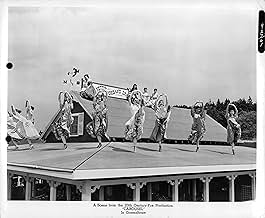
Several songs which delineate the supporting characters are either severely truncated (such as the musical/character sequence between Carrie Pipperidge (Barbara Ruick) and Enoch Snow (Robert Rounseville)) or cut entirely (such as "Blow High, Blow Low" which could have been a choreographer's dream). As for the choreography itself, surely "June is Bustin' Out All Over" could have been staged with a little more imagination instead of confining itself to the roof and deck of Nettie Fowler's spa. And it does feel confined. This is a song about abandoning the human spirit to the glories of the summer season, a feeling that covers much more territory than just a dining patio.
I do like the casting in the film, although I believe that they were badly underdirected. Gordon MacRae and Shirley Jones seem a little lost here. Their talent is not in question as evidenced by their stellar performances in the movie version of "Oklahoma!". Clearly this movie, which had the potential to be a cinema classic, was helmed by someone who didn't understand the genius of Rodgers and Hammerstein. In other words, don't try to fix what ain't broke.
"Carousel" on film is not nearly as overwhelming. The story is still there, as are the songs, for the most part. But they are just songs in the movie, scenes distilled to the bare bones of the melody on which the original sequence was based. You don't get the feeling, after hearing them sung, that you have learned anything new about the characters (excepting, of course, Billy Bigelow's "Soliloquy" which is left entirely intact).
For example, the "If I Loved You" bench scene between Julie Jordan (Shirley Jones) and Billy Bigelow (Gordon MacRae) lasts almost fifteen minutes once the music starts. What the characters don't tell us about themselves, the music does, throwing melodies left and right until it finally culminates in the release of the famous love song. The scene has built up to this moment until it becomes the only way that Julie can tell Billy that she loves him. In the movie, however, it is all talk until Julie starts singing "If I Loved You". The song seems to come much more out of left field and does not seem nearly as satisfying. Billy repeats the song and the scene ends. As a result, their falling in love with each other doesn't make much sense because the scene really hasn't built up to it.
Several songs which delineate the supporting characters are either severely truncated (such as the musical/character sequence between Carrie Pipperidge (Barbara Ruick) and Enoch Snow (Robert Rounseville)) or cut entirely (such as "Blow High, Blow Low" which could have been a choreographer's dream). As for the choreography itself, surely "June is Bustin' Out All Over" could have been staged with a little more imagination instead of confining itself to the roof and deck of Nettie Fowler's spa. And it does feel confined. This is a song about abandoning the human spirit to the glories of the summer season, a feeling that covers much more territory than just a dining patio.
I do like the casting in the film, although I believe that they were badly underdirected. Gordon MacRae and Shirley Jones seem a little lost here. Their talent is not in question as evidenced by their stellar performances in the movie version of "Oklahoma!". Clearly this movie, which had the potential to be a cinema classic, was helmed by someone who didn't understand the genius of Rodgers and Hammerstein. In other words, don't try to fix what ain't broke.
Classic R&H Musical With Superb MacRae and Jones...
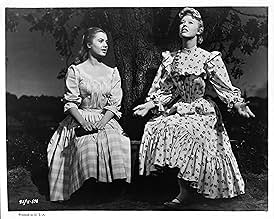
Rodgers & Hammerstein's brilliant stage musical comes to the screen with most of the music intact--and what songs they are. Each one is a gem and fully integrated into the tragic storyline. Gordon MacRae stars as Billy Bigelow, the amusement park barker who tries to change his life when he marries Julie Jordan (Shirley Jones)-- with tragic results. MacRae's robust baritone is showcased in his big number, 'Soliloquy', performed at seaside with the ocean backdrop. Only occasionally is the use of stagebound sets a jarring note--but overall, the look and feel of the movie is one of genuinely moving musical drama.
Delightful performances from Barbara Ruick and Robert Rounseville as Mr. and Mrs. Snow. Their 'When The Children Are Asleep' is a charming highlight. Claramae Turner does an outstanding job on 'You'll Never Walk Alone'. Cameron Mitchell is a slyly villainous Jigger. Filming of the 'June Is Bustin' Out All Over' number in Boothsbay Harbor, Maine is a production highlight and choreographer's dream.
Gordon MacRae and Shirley Jones are in excellent voice for 'If I Loved You'. What more could you want? An exceptional movie musical that ranks with the best of Rodgers & Hammerstein's works.
Delightful performances from Barbara Ruick and Robert Rounseville as Mr. and Mrs. Snow. Their 'When The Children Are Asleep' is a charming highlight. Claramae Turner does an outstanding job on 'You'll Never Walk Alone'. Cameron Mitchell is a slyly villainous Jigger. Filming of the 'June Is Bustin' Out All Over' number in Boothsbay Harbor, Maine is a production highlight and choreographer's dream.
Gordon MacRae and Shirley Jones are in excellent voice for 'If I Loved You'. What more could you want? An exceptional movie musical that ranks with the best of Rodgers & Hammerstein's works.


Você sabia?
- CuriosidadesThe film was not successful at the box office despite the positive reviews, but the soundtrack album became a national best seller.
- Erros de gravação(at around 59 mins) Billy Bigelow (Gordon MacRae) sings the "My Boy Bill" soliloquy on the beach. One minute and 17 seconds into the song, four jets fly over in formation in the upper left of the frame. This scene was filmed on the beach near Paradise Cove, Malibu, California, in 1955, when there were several operating Navy and Marine military bases in southern California.
- Cenas durante ou pós-créditosA star hurtles downward and explodes in mid-air; out of this appears the credit "Twentieth Century-Fox presents Rodgers and Hammerstein's Carousel". The other credits all appear in a straightforward fashion.
- Versões alternativasIn the film's first two telecasts on ABC-TV in 1966, Mrs. Mullin's line "I don't run my business for a lot of sluts." followed by Carrie's retort "Who you calling a slut? Slut yourself!" and Julie says "Yeah, slut yourself!" was edited out. The line was kept on all local station telecasts of the film, and on all video releases.
- ConexõesFeatured in King of the Movies (1978)
- Trilhas sonorasThe Carousel Waltz
(1945) (uncredited)
Music by Richard Rodgers
Performed by the 20th Century-Fox Studio Orchestra Conducted by Alfred Newman
Principais escolhas
Faça login para avaliar e ver a lista de recomendações personalizadas
Detalhes
- Data de lançamento
- País de origem
- Idioma
- Também conhecido como
- Carousel
- Locações de filme
- Boothbay Harbor, Maine, EUA(scenes outside Nettie's Spa and in marina, including musical numbers "June Is Bustin' Out All Over" and "When The Children Are Asleep")
- Empresa de produção
- Consulte mais créditos da empresa na IMDbPro
Bilheteria
- Faturamento bruto mundial
- US$ 1.104
- Tempo de duração
- 2 h 8 min(128 min)
- Cor
- Proporção
- 2.55 : 1
Contribua para esta página
Sugerir uma alteração ou adicionar conteúdo ausente