

Um médico de uma pequena cidade descobre que a população de sua comunidade está sendo substituída por alienígenas sem emoções.Um médico de uma pequena cidade descobre que a população de sua comunidade está sendo substituída por alienígenas sem emoções.Um médico de uma pequena cidade descobre que a população de sua comunidade está sendo substituída por alienígenas sem emoções.
- Direção
- Roteiristas
- Estrelas
- Prêmios
- 3 vitórias no total



- Direção
- Roteiristas
- Elenco e equipe completos
- Produção, bilheteria e muito mais no IMDbPro
7,758.7K
1
2
3
4
5
6
7
8
9
10
Avaliações em destaque
Excellent genre film with intellectual subtexts
Dr. Miles J. Bennell (Kevin McCarthy) is called back to his small California home early from a conference because a number of his patients have been frantically asking to see him. But oddly, when he returns home, most forget about their unspecified needs. At the same time, it seems that a mass hysteria is building where residents believe that friends and loved ones are "not themselves", literally. Just what is going on? As of this writing, it has been more than twenty years since I have seen the 1978 remake of this film, so I can't compare the two at the moment. However, it would have to be flawless to top this, the original Invasion of the Body Snatchers.
The sole factor that caused me to give the film less than a ten was the pacing during portions of the first half hour or so. While it's not bad, exactly, director Don Siegel does not build atmosphere and tension as effectively as he might have while the viewer is being filled in on the necessary exposition. Admittedly, this section is directed in a standard way for its era, but "standard" here is enough to subtract a point.
However, once we reach Miles' friend Jack Belicec (King Donovan) discovering a body on his billiard table, the suspense and tension gradually increase, and the remainder of the film is a very solid ten.
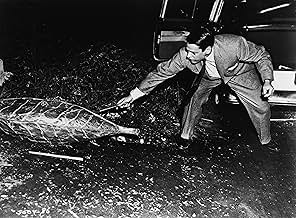
The literal "weapon" of the film's horror could have easily come across as cheesy, but it doesn't. Don Post and Milt Rice's special make-up effects and props are threateningly eerie. The transformation sequences involving the props are beautifully shot and edited--showing just enough to make them effective, but not so much that the mystery is gone.
It was ingenious to create a story where a whole town gradually turns into a villain, and even natural, unavoidable biological functions threaten our heroes' destruction. In conjunction, it all creates an intense sense of claustrophobia and paranoia for the audience.
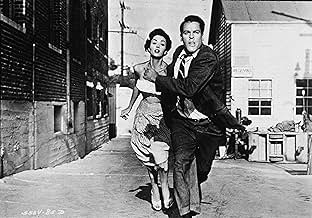
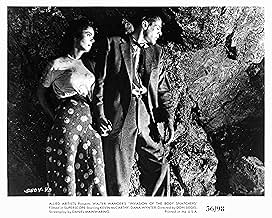
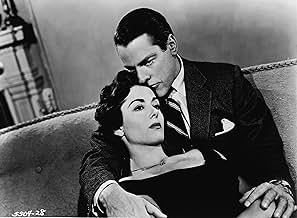
McCarthy and Dana Wynter, as Miles' girlfriend Becky Driscoll, expertly convey a gradual transformation from common citizens to panic-stricken, desperate victims on the run. The film is also notable for slightly ahead-of-its time portrayals of relationships and divorce.
Much has been said about the parallels between Invasion of the Body Snatchers and the "communist paranoia" in the United States in the late 1940s and early 1950s, especially as it was directed against Hollywood by the House of Un-American Activities Committee. (And how ironic that the star of Invasion of the Body Snatchers is named McCarthy?) However, there is another very interesting subtext present that isn't so often mentioned. The film can also be looked at as a philosophical exploration of personal identity. Just what does it take for people to be themselves? Is it how they look, act, the things they say? Is it not the case that people are constantly transformed into something they weren't just hours ago, or even moments ago? Among the many ways that these kinds of ideas are worked into the script is that sleep is a metaphor for unconscious physical change over time. It would be easy to analyze each scene in the film in this manner, going into detail about the various implications each plot development has on the matter of personal identity.
Despite the slight pacing/atmosphere flaw in the beginning, this is a gem of a film, not just for sci-fi and horror fans, and not just for its era. It's worth seeing by anyone with a serious interest in film, and can be enjoyed either on its suspenseful surface level, or more in-depth by those who want to look at the film as more metaphorical material for societal and philosophical concerns.
The sole factor that caused me to give the film less than a ten was the pacing during portions of the first half hour or so. While it's not bad, exactly, director Don Siegel does not build atmosphere and tension as effectively as he might have while the viewer is being filled in on the necessary exposition. Admittedly, this section is directed in a standard way for its era, but "standard" here is enough to subtract a point.
However, once we reach Miles' friend Jack Belicec (King Donovan) discovering a body on his billiard table, the suspense and tension gradually increase, and the remainder of the film is a very solid ten.
The literal "weapon" of the film's horror could have easily come across as cheesy, but it doesn't. Don Post and Milt Rice's special make-up effects and props are threateningly eerie. The transformation sequences involving the props are beautifully shot and edited--showing just enough to make them effective, but not so much that the mystery is gone.
It was ingenious to create a story where a whole town gradually turns into a villain, and even natural, unavoidable biological functions threaten our heroes' destruction. In conjunction, it all creates an intense sense of claustrophobia and paranoia for the audience.
McCarthy and Dana Wynter, as Miles' girlfriend Becky Driscoll, expertly convey a gradual transformation from common citizens to panic-stricken, desperate victims on the run. The film is also notable for slightly ahead-of-its time portrayals of relationships and divorce.
Much has been said about the parallels between Invasion of the Body Snatchers and the "communist paranoia" in the United States in the late 1940s and early 1950s, especially as it was directed against Hollywood by the House of Un-American Activities Committee. (And how ironic that the star of Invasion of the Body Snatchers is named McCarthy?) However, there is another very interesting subtext present that isn't so often mentioned. The film can also be looked at as a philosophical exploration of personal identity. Just what does it take for people to be themselves? Is it how they look, act, the things they say? Is it not the case that people are constantly transformed into something they weren't just hours ago, or even moments ago? Among the many ways that these kinds of ideas are worked into the script is that sleep is a metaphor for unconscious physical change over time. It would be easy to analyze each scene in the film in this manner, going into detail about the various implications each plot development has on the matter of personal identity.
Despite the slight pacing/atmosphere flaw in the beginning, this is a gem of a film, not just for sci-fi and horror fans, and not just for its era. It's worth seeing by anyone with a serious interest in film, and can be enjoyed either on its suspenseful surface level, or more in-depth by those who want to look at the film as more metaphorical material for societal and philosophical concerns.
One of the best sci-fi horrors ever
I feel like I've seen so many movies with this kind of concept. People aren't themselves, something fishy is going on. Eventually, the evidence is too much to ignore but our main characters are already outnumbered by tens or hundreds. It's similar to the zombie genre except that here the "possessed" or "infected" ones act normal which is far more unnerving. This has to be one of the earliest and most effective versions of this kind of story.
It is legitimately creepy and has many memorable moments. Blank, "dead" bodies turning up out of nowhere. Alien pods giving birth to proto-humans. A convergence of strangers in the middle of town as if they all have telepathic powers. You begin to suspect people constantly, are they really on our side? Are our heroes being lured into a trap? Are they safe here? The build-up is excellent as well. People urgently seeking a doctor and then abruptly canceling and feeling much better. A boy terrified of his mother because she is not really his mother and then suddenly he is okay again. A woman swears that her uncle is no longer himself but can't quite prove it. Your imagination starts to fill in the gaps.
It's effective to show the main character flustered and babbling at the start. It contrasts greatly with how calm and reasonable he was only a few days ago as he recounts what happened. We figure that it must have taken something very disturbing to drive him to that level of mania. This builds our anticipation for finding out what he went through.
It's funny that the main actor's name is (Kevin) McCarthy. There are certainly parallels that could be drawn with the communism scare of the 1950s. Are we too suspicious about our neighbours? Are we becoming paranoid and seeing everyone as being against us? Or perhaps our freedom is being taken away and we are being forced to robotically follow traditional American values.
Invasion of the Body Snatchers wastes no time at 80min. It builds the way a good suspense/horror film should and the turn of events are satisfying. It isn't too predictable and it really had me on the edge of my seat, apprehensive about where the story was going and how it could possibly be resolved. Less is more and this movie only shows what it really needs to. It plants the seeds of fear in your mind and you do the rest.
It is legitimately creepy and has many memorable moments. Blank, "dead" bodies turning up out of nowhere. Alien pods giving birth to proto-humans. A convergence of strangers in the middle of town as if they all have telepathic powers. You begin to suspect people constantly, are they really on our side? Are our heroes being lured into a trap? Are they safe here? The build-up is excellent as well. People urgently seeking a doctor and then abruptly canceling and feeling much better. A boy terrified of his mother because she is not really his mother and then suddenly he is okay again. A woman swears that her uncle is no longer himself but can't quite prove it. Your imagination starts to fill in the gaps.
It's effective to show the main character flustered and babbling at the start. It contrasts greatly with how calm and reasonable he was only a few days ago as he recounts what happened. We figure that it must have taken something very disturbing to drive him to that level of mania. This builds our anticipation for finding out what he went through.
It's funny that the main actor's name is (Kevin) McCarthy. There are certainly parallels that could be drawn with the communism scare of the 1950s. Are we too suspicious about our neighbours? Are we becoming paranoid and seeing everyone as being against us? Or perhaps our freedom is being taken away and we are being forced to robotically follow traditional American values.
Invasion of the Body Snatchers wastes no time at 80min. It builds the way a good suspense/horror film should and the turn of events are satisfying. It isn't too predictable and it really had me on the edge of my seat, apprehensive about where the story was going and how it could possibly be resolved. Less is more and this movie only shows what it really needs to. It plants the seeds of fear in your mind and you do the rest.
Classic chiller
A doctor comes to a hospital on a late night call to hear a man whom everybody else deems insane. The doctor persuades the man to be patient and tell his story. The man then tells the doctor about how a small California town has been invaded by some sort of alien seeds that grow into human clones...
Coming straight from the McCarthy era and general Cold War paranoia this is one scary movie. There is not a gun fired, not a drop of gore shed but the final effect of the film will stay with you for a good while. More contemporary film viewers might recognize the concept from John Carpenter's "The Thing" which itself was an update of the 1951 film. However, the themes of paranoia and tension are just as nail-biting and intense here.
There is a lack of visual punch that so many people are used to today, but just think of the historical context and the implications, basically use your mind! Then you'll see why the film scared studio executives so much that they forced Don Siegel to add an intro and outro to help soften the overall effect. It wasn't the best play in the book, but the film remains a great classic chiller. --- 9/10
Not Rated. It would most likely receive a PG from the MPAA, there are several tense moments, though no violence.
Coming straight from the McCarthy era and general Cold War paranoia this is one scary movie. There is not a gun fired, not a drop of gore shed but the final effect of the film will stay with you for a good while. More contemporary film viewers might recognize the concept from John Carpenter's "The Thing" which itself was an update of the 1951 film. However, the themes of paranoia and tension are just as nail-biting and intense here.
There is a lack of visual punch that so many people are used to today, but just think of the historical context and the implications, basically use your mind! Then you'll see why the film scared studio executives so much that they forced Don Siegel to add an intro and outro to help soften the overall effect. It wasn't the best play in the book, but the film remains a great classic chiller. --- 9/10
Not Rated. It would most likely receive a PG from the MPAA, there are several tense moments, though no violence.
A Very Exciting and Often Involving Noir Fantasy Thriller; Recommended
The decision to make this fascinating novel into a noir thriller worked very well on its own merits as an "adventure" with mostly-implicit ideas as motivations; however, I believe the film could have been made into a dramatic work of unusual power, It is B/W, swift-paced, intelligently acted and unusually- well-directed by Don Siegel, with a literate script by Daniel Mainwaring. The project is also interesting and disturbing for a number of reasons. Jack Finney wrote a novel in the 1950s which some read as a loss of American individualism, and others as an attack on Cold-War mentality realpolitik. Whatever the wellsprings of this fine idea, Finney's story treated of "seeds from space"; the idea is that these came to Earth and have the power to reproduce themselves into any living thing's form, right down to its thought patterns, memories, etc. But of course they have no emotions--they are merely replicas, not the originals. A mass hysteria grips the town of Santa Mira, California, shortly after their secret arrival on our planet; and Dr. Miles Bennell is called home from a conference because a dozen people claim some relative or beloved friend is not who they were before. When this seems to die down, Miles has time to pursue old flame and lovely Becky Driscoll, now that both their divorces are final. But the problem does not disappear and cannot be explained away by a psychologist friend of Bennelle's, thoughtfully played by Larry Gates. Bennell and his friend Jack Belicec and his wife Teddie find a body on Jack's pool table; his wife think's it's an alien thing--to replace Jack. They three flee to Miles's house, and Bennell goes to get Becky--carrying her off into the night. The next day looks sunny and normal, except that they find huge seed pods in Bennell's greenhouse, turning into--something else. Or someone? The remainder of the film consists of Bennell trying to call for help, observing the distribution of seeds in trucks in the small town's center, being trapped in his office, overcoming two guards, fleeing, and losing Becky to the monsters, before he finally convinces authorities that he is not insane; this requires an accident--to a truck carrying giant seed pods, from Santa Mira. As Bennell, Kevin McCarthy is quite good if not ideal. Dana Wynter is classically good as Becky; King Donovan and Carolyn Jones are the Belicecs, she doing a great deal with little to work from. Ralph Dumke as the Police Chief and Virginia Christine as Becky's Aunt Wilma are also standouts. Others in the cast include Kenneth Patterson, Tom Fadden, Guy Rennie and Jean Willes as Bennell's nurse. The production values are all good, by my standards, but only the direction is outstanding, except for the special effects. Carmen Dragon supplied eerie music suitable to the action. The loss to the film occasioned by its being made as a frightening adventure can be gauged best perhaps by comparing the qualities of Raymond Chandler's The Little Sister with the enjoyable adventure-level film "Marlowe" made in the 1970s. What we have here is a taut and often moving entertainment; what we might have had could have contained every element here, but could also perhaps have been even more intriguing. The theme of the film is "what makes a person human"; and no stronger idea for an idea-level fantasy can perhaps be imagined. But what we have here is a famous and interesting thriller in its own right; I like the envelope involving Richard Deacon, Whitner Bissell and others as the doctors at a mental hospital to which a raving Bennell is taken when he escape Santa Mira's nightmare. The original "They're here!" ending to me would have been unacceptably alarmist.
One of the scariest sci-fi films of the 1950s.
A chilling motion picture, well directed by Don Sigel, with a script co-written by Daniel Mainwaring and (uncredited) Sam Peckinpah, based on the novel "The Body Snatchers" (aka "Sleep No More") by Jack Finney.
The excellent musical score is by Carmen Dragon. Kevin McCarthy and Dana Wynter head the cast of this four-star classic in which the inhabitants of a small California town are being replaced by alien look-alikes. The aliens come to Earth in the form of "seed pods" that burst open and spew out a foam which grows into human duplicates, complete with all the memories of the original. The best scene in the film takes place in a greenhouse where several alien pods burst open and disgorge the half-formed copies of the horrified humans.
A prologue, a new ending, and a voice over-narration were added after the film's initial release, to help the audience follow the strange plot. In the added scenes, the story opens with Kevin McCarthy being brought into a hospital, raving about alien invaders. Two doctors (Whit Bissell and Richard Deacon) listen to McCarthy's strange story, which the audience sees as a flashback. At the end of he movie the doctors are understandably skeptical about McCarthy's weird yarn, but an unexpected event lends credence to his story.
Many film reviewers criticize these added scenes as unnecessary, an unwise attempt to conclude the story with a happier ending. But these scenes serve a valuable purpose, increasing the viewers sympathy for McCarthy and his efforts to convince someone that mankind is in danger. The alleged "happier ending" does not establish that mankind will win the battle against the aliens. It simply implies a Chapter Two in this epic struggle. Mankind will have a fighting chance in the war, but the outcome is definitely open to debate.
The excellent musical score is by Carmen Dragon. Kevin McCarthy and Dana Wynter head the cast of this four-star classic in which the inhabitants of a small California town are being replaced by alien look-alikes. The aliens come to Earth in the form of "seed pods" that burst open and spew out a foam which grows into human duplicates, complete with all the memories of the original. The best scene in the film takes place in a greenhouse where several alien pods burst open and disgorge the half-formed copies of the horrified humans.
A prologue, a new ending, and a voice over-narration were added after the film's initial release, to help the audience follow the strange plot. In the added scenes, the story opens with Kevin McCarthy being brought into a hospital, raving about alien invaders. Two doctors (Whit Bissell and Richard Deacon) listen to McCarthy's strange story, which the audience sees as a flashback. At the end of he movie the doctors are understandably skeptical about McCarthy's weird yarn, but an unexpected event lends credence to his story.
Many film reviewers criticize these added scenes as unnecessary, an unwise attempt to conclude the story with a happier ending. But these scenes serve a valuable purpose, increasing the viewers sympathy for McCarthy and his efforts to convince someone that mankind is in danger. The alleged "happier ending" does not establish that mankind will win the battle against the aliens. It simply implies a Chapter Two in this epic struggle. Mankind will have a fighting chance in the war, but the outcome is definitely open to debate.


Você sabia?
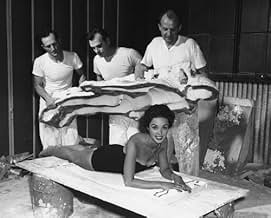
- CuriosidadesProduction designer Ted Haworth came up with a fairly simple and inexpensive (about $30,000 total) idea for creating the pods. The most difficult part was when the pods burst open, revealing the likenesses of the actors. The actors had to have naked impressions of themselves made out of thin, skin-tight latex. Making the casts, which involved being submerged in the very hot casting material with only a straw in their mouths to breathe through, was grueling for the actors, especially Carolyn Jones, who was claustrophobic. Dana Wynter recalled, "I was in this thing while it hardened, and of course it got rather warm! I was breathing through straws or something quite bizarre, and the rest of me was encased, it was like a sarcophagus. The guys who were making it tapped on the back of the thing and said, 'Dana, listen, we won't be long, we're just off for lunch [laughs]!' In the end, we had to be covered except for just the nostrils and I think a little aperture for the mouth."
- Erros de gravação(at around 20 mins) When Dr. Bennell is shown the body on the pool table he never bothers to ask where it came from or why it is there. One would think that would be the first question.
- Citações
Dr. Miles J. Bennell: They're here already! You're next! You're next, You're next...!
- Cenas durante ou pós-créditosTHE END comes up on the final shot of the film of Miles looking relieved that Dr Hill has believed his story, and is calling the FBI about the alien invasion of Santa Mira.
- Versões alternativasOriginally released at 80 minutes; reissued in 1979 at 76 minutes, deleting the studio-imposed prologue and epilogue starring Whit Bissel and Richard Deacon.
- ConexõesEdited into O Ataque Vem do Polo (1957)
Principais escolhas
Faça login para avaliar e ver a lista de recomendações personalizadas
Detalhes
- Data de lançamento
- País de origem
- Idioma
- Também conhecido como
- Muertos vivientes
- Locações de filme
- Empresas de produção
- Consulte mais créditos da empresa na IMDbPro
Bilheteria
- Orçamento
- US$ 417.000 (estimativa)
- Faturamento bruto mundial
- US$ 4.047
- Tempo de duração
- 1 h 20 min(80 min)
- Cor
Contribua para esta página
Sugerir uma alteração ou adicionar conteúdo ausente