AVALIAÇÃO DA IMDb
7,4/10
16 mil
SUA AVALIAÇÃO


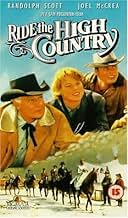
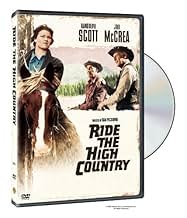
Um ex-soldado da União é contratado para transportar ouro de uma comunidade mineira através de um território perigoso. Mas o que ele não percebe é que seu parceiro e velho amigo está conspir... Ler tudoUm ex-soldado da União é contratado para transportar ouro de uma comunidade mineira através de um território perigoso. Mas o que ele não percebe é que seu parceiro e velho amigo está conspirando para traí-lo.Um ex-soldado da União é contratado para transportar ouro de uma comunidade mineira através de um território perigoso. Mas o que ele não percebe é que seu parceiro e velho amigo está conspirando para traí-lo.
- Direção
- Roteiristas
- Estrelas
- Indicado para 1 prêmio BAFTA
- 2 vitórias e 2 indicações no total


Alice Allyn
- Candy
- (não creditado)

George Bell
- Townsman
- (não creditado)
Oscar Blank
- Miner
- (não creditado)

Chet Brandenburg
- Miner
- (não creditado)

Don Brodie
- Spieler
- (não creditado)
Chris Carter
- Rose
- (não creditado)
- Direção
- Roteiristas
- Elenco e equipe completos
- Produção, bilheteria e muito mais no IMDbPro
7,415.8K
1
2
3
4
5
6
7
8
9
10
Avaliações em destaque
"All I want is to enter my house justified."
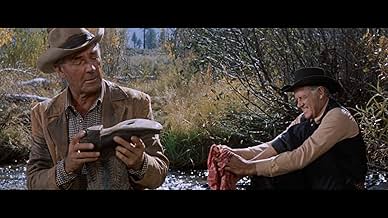
Aging ex-lawman Joel McCrea is hired to protect gold shipment and asks old friend Randolph Scott to join him. Scott brings a young sidekick (Ron Starr) with him and has intentions of robbing the gold shipment, with or without McCrea's help. Last hurrah for western stars Randolph Scott and Joel McCrea. Scott's last film completely and McCrea's last worth mentioning. It's funny but I never really think of Joel McCrea as a western star. I know he did a lot of them, particularly in the later half of his career, but I always preferred his comedy and drama roles from earlier on. The westerns he did were not that impressive to me. Scott, on the other hand, was a bona fide western legend on the basis of his Boetticher films alone. Mariette Hartley is good in her film debut. Ron Starr is the film's weak link. It's not surprising he would have a limited acting career. It's been said by many to be Sam Peckinpah's best film. Is it? I'm not quite there but I do believe it's one of his least self-indulgent films. He's not one of my favorite directors but he did do some good work. This is right up there. It's not a perfect film. The first half is kind of pedestrian for a film with such a high reputation. But the second half delivers and you can see why many call this a classic.
An "A" Farewell for Two "B" Western Stars
Randolph Scott and Joel McCrea will probably be remembered as the top "B" western stars in movies. But their last film "Ride the High Country" stands as an "A" western and a very good one too.
Perhaps they owe this final chance to director Sam Peckinpah who turns the story into a splendid film in its genre shot in beautiful outdoor sceneries, with very well managed action scenes, a credible script, great settings and a fine musical score too.
Two moments are particularly outstanding in my opinion: the sort of "Fellinesc" sequence at the wedding with all those bizarre characters and the final showdown where Scott and McCrea face the mean Hammond brothers (John Anderson, James Drury and Warren Oates) in the "old fashioned way".
A well deserved "A" product for both actors -that amused and thrilled us western fans- through their long careers in the genre.
Perhaps they owe this final chance to director Sam Peckinpah who turns the story into a splendid film in its genre shot in beautiful outdoor sceneries, with very well managed action scenes, a credible script, great settings and a fine musical score too.
Two moments are particularly outstanding in my opinion: the sort of "Fellinesc" sequence at the wedding with all those bizarre characters and the final showdown where Scott and McCrea face the mean Hammond brothers (John Anderson, James Drury and Warren Oates) in the "old fashioned way".
A well deserved "A" product for both actors -that amused and thrilled us western fans- through their long careers in the genre.
Dignity and strength of character
"In simple terms, Ride the High Country was about salvation and loneliness" - Sam Peckinpah
Both in their 60s at the time, Joel McCrea and Randolph Scott summed up their careers in Sam Peckinpah's second film, Ride the High Country. After two hundred films between them, this was Scott's final film and McCrea's second to last. The film was shot in only twenty-six days and played mostly as bottom filler for double bills. It was only after winning first prize at the Cannes Film Festival that it began to be appreciated for the true classic it is. Set in the early days of the century, the days of the cowpoke are giving way to the modern modes of transportation and communication. People like lawman Steve Judd (Joel McCrea), with a reputation for fierce integrity may be obsolete in the New West but his dignity and strength of character make him a hero worthy of admiration.
The film is both a lament for the passing of the Old West and a gentle celebration of humanity's search for friendship, honor, and trust. Both men feel they have somehow failed to live up to their standards and want one more chance to redeem their honor. Judd wants to recapture some measure of self-respect while Westrum looks for the material wealth that has always eluded him. As the film opens, Judd hires his ex-deputy Gil Westrum (Randolph Scott) to help him transport a shipment of gold bullion down from the high Sierras, a job in which six prior attempts ended in failure. Against Judd's advice, they bring along a third man - a wild, womanizing youth named Heck Longtree (Ron Starr), who proves to them that he can handle himself in a fistfight.
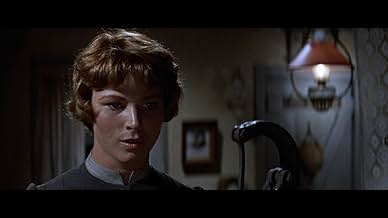
Things get complicated when they spend the night at a farm run by puritanical Joshua Knudson (R.G. Armstrong) and Heck is taken with his beautiful daughter Elsa (Mariette Hartley). Feeling thwarted by her possessive and moralizing father, Elsa runs away with the trio hoping to find a miner, Billy Hammond (James Drury) who has promised to marry her. As they ride up into the hills, the cinematography by Lucien Ballard reflects the beauty of the West as it has rarely been seen. When they arrive, things go from bad to worse for Elsa. Preceded by a marvelously comic horseback parade in which the boys sing When the Roll is Called Up Yonder, she is married to Billy in a saloon presided over by an inebriated judge.
Unfortunately, she has to be rescued by Judd after Billy Boy plans to share his bride with his four redneck brothers on their wedding night. The wedding scene is shown from Elsa's point of view and it is sympathetic and touching. On the way back with the gold, however, Gil turns on his old friend, plotting with Heck to steal the gold. In a famous exchange, Gil asks Judd, `Pardner, you know what's on the back of a poor man when he dies? The clothes of pride. Is that all you want?' To this Judd replies `All I want is to enter my house justified.' When the travelers encounter the Hammond boys waiting to ambush them at the farm, both men must confront their deepest fears and their noblest truths.
Both in their 60s at the time, Joel McCrea and Randolph Scott summed up their careers in Sam Peckinpah's second film, Ride the High Country. After two hundred films between them, this was Scott's final film and McCrea's second to last. The film was shot in only twenty-six days and played mostly as bottom filler for double bills. It was only after winning first prize at the Cannes Film Festival that it began to be appreciated for the true classic it is. Set in the early days of the century, the days of the cowpoke are giving way to the modern modes of transportation and communication. People like lawman Steve Judd (Joel McCrea), with a reputation for fierce integrity may be obsolete in the New West but his dignity and strength of character make him a hero worthy of admiration.
The film is both a lament for the passing of the Old West and a gentle celebration of humanity's search for friendship, honor, and trust. Both men feel they have somehow failed to live up to their standards and want one more chance to redeem their honor. Judd wants to recapture some measure of self-respect while Westrum looks for the material wealth that has always eluded him. As the film opens, Judd hires his ex-deputy Gil Westrum (Randolph Scott) to help him transport a shipment of gold bullion down from the high Sierras, a job in which six prior attempts ended in failure. Against Judd's advice, they bring along a third man - a wild, womanizing youth named Heck Longtree (Ron Starr), who proves to them that he can handle himself in a fistfight.
Things get complicated when they spend the night at a farm run by puritanical Joshua Knudson (R.G. Armstrong) and Heck is taken with his beautiful daughter Elsa (Mariette Hartley). Feeling thwarted by her possessive and moralizing father, Elsa runs away with the trio hoping to find a miner, Billy Hammond (James Drury) who has promised to marry her. As they ride up into the hills, the cinematography by Lucien Ballard reflects the beauty of the West as it has rarely been seen. When they arrive, things go from bad to worse for Elsa. Preceded by a marvelously comic horseback parade in which the boys sing When the Roll is Called Up Yonder, she is married to Billy in a saloon presided over by an inebriated judge.
Unfortunately, she has to be rescued by Judd after Billy Boy plans to share his bride with his four redneck brothers on their wedding night. The wedding scene is shown from Elsa's point of view and it is sympathetic and touching. On the way back with the gold, however, Gil turns on his old friend, plotting with Heck to steal the gold. In a famous exchange, Gil asks Judd, `Pardner, you know what's on the back of a poor man when he dies? The clothes of pride. Is that all you want?' To this Judd replies `All I want is to enter my house justified.' When the travelers encounter the Hammond boys waiting to ambush them at the farm, both men must confront their deepest fears and their noblest truths.
Morality, honor, and duty.
This is an important western because the subplot of a young woman's life in the remote west is addressed. At this time many women were looked upon as chattel. Here a young woman escapes farm life with an overbearing religious father who beats her, to flee into marriage with a redneck miner who beats her and plans to share her with his brothers and father. The lead character played by veteran Joel McCrea is trying to earn an honorable living because there is no pension or social security benefits for him to rely on. Randolph Scott is trying to score some easy dough to last during his retirement. A fine movie about morality, honor, and duty.
Revisonist splendour as Peckinpah starts his thematic obsession.
"All I want is to Enter My House Justified"
Sam Peckinpah's second feature film is today standing up as a must see and must own for those interested in the Western genre.
The film sees ageing lawman Steve Judd land a job of escorting a gold shipment safely to a bank in Hornitos. After running into old friend, and fellow aged lawman Gil Westrun, he hires both he and his young sparky sidekick Heck Longtree to hopefully see the job through to a successful conclusion. Yet Gil has other ideas, for where Steve is upstanding and adhering to the values he has lived his life by, Gil sees this as one last chance to actually get a big payday. The journey takes a further twist as the three men meet and then save Elsa Knudsen from a brutal marriage, it's an incident that puts them all on a collision course with the Hammond brothers.
What we have here is Sam Peckinpah's first film dealing with men who have outlived their time. We witness some emotionally poignant stuff as the two main protagonists know that they have aged beyond their world, yet as alike as they are, they have different ideals in how to deal with the advent of time. The masterstroke here is the casting of genre legends Joel McRea & Randolph Scott as Steve & Gil respectively. It's evident from the off that both men are identifying with their characters, with both men hitting top emotional form to fully realise the thematic heart of the story. Mariette Hartley makes her film debut as Elsa, and she fits in nicely with the quality on show behind and in front of the camera. Lucien Ballard's cinematography is gorgeous as the various California locations envelope the protagonists in a sort of elegiac way, and Peckinpah directs with his heart as well as his head.
Bookended by two heart-achingly super sequences, of which the finale has rightly passed into Western genre legend, this really is a strong and beautiful film, one that simultaneously shows a truly great director was at work. For here he was left alone, and the final result is a quality Western beating far more than just a cowboy heart. The supporting cast is strong, notably Edgar Buchanan, L.Q. Jones & John Anderson, while the undervalued George Bassman provides a narratively fitting tonal music score. If there is a criticism? it's that Peckinpah doesn't let the younger characters breath, but given the film's core focus on aged men in an aged passing era, well it's easily forgiven. A precursor to The Wild Bunch for sure, but while the theme is the same for both films, this one impacts in a very different way. Highly recommended, not just for the Oater crowd, but for fans of classic cinema too. 9/10
Sam Peckinpah's second feature film is today standing up as a must see and must own for those interested in the Western genre.
The film sees ageing lawman Steve Judd land a job of escorting a gold shipment safely to a bank in Hornitos. After running into old friend, and fellow aged lawman Gil Westrun, he hires both he and his young sparky sidekick Heck Longtree to hopefully see the job through to a successful conclusion. Yet Gil has other ideas, for where Steve is upstanding and adhering to the values he has lived his life by, Gil sees this as one last chance to actually get a big payday. The journey takes a further twist as the three men meet and then save Elsa Knudsen from a brutal marriage, it's an incident that puts them all on a collision course with the Hammond brothers.
What we have here is Sam Peckinpah's first film dealing with men who have outlived their time. We witness some emotionally poignant stuff as the two main protagonists know that they have aged beyond their world, yet as alike as they are, they have different ideals in how to deal with the advent of time. The masterstroke here is the casting of genre legends Joel McRea & Randolph Scott as Steve & Gil respectively. It's evident from the off that both men are identifying with their characters, with both men hitting top emotional form to fully realise the thematic heart of the story. Mariette Hartley makes her film debut as Elsa, and she fits in nicely with the quality on show behind and in front of the camera. Lucien Ballard's cinematography is gorgeous as the various California locations envelope the protagonists in a sort of elegiac way, and Peckinpah directs with his heart as well as his head.
Bookended by two heart-achingly super sequences, of which the finale has rightly passed into Western genre legend, this really is a strong and beautiful film, one that simultaneously shows a truly great director was at work. For here he was left alone, and the final result is a quality Western beating far more than just a cowboy heart. The supporting cast is strong, notably Edgar Buchanan, L.Q. Jones & John Anderson, while the undervalued George Bassman provides a narratively fitting tonal music score. If there is a criticism? it's that Peckinpah doesn't let the younger characters breath, but given the film's core focus on aged men in an aged passing era, well it's easily forgiven. A precursor to The Wild Bunch for sure, but while the theme is the same for both films, this one impacts in a very different way. Highly recommended, not just for the Oater crowd, but for fans of classic cinema too. 9/10


Você sabia?
- CuriosidadesFinal film of Randolph Scott. He retired from acting once he saw the finished film, saying he wanted to quit while he was ahead and that he would never be able to better his work here.
- Erros de gravaçãoThe many 34-star flags, all on flagpoles, at the opening of the movie do not match the Bobby helmets, open automobiles and electric wiring over the streets. The 34-star U.S. flag was in use only from 1861-1863. There is, however, also an inconsistent 45-star flag strung across the street. That design, in use from 1896-1908, does match the movie's time setting.
- Citações
Steve Judd: All I want is to enter my house justified.
- Cenas durante ou pós-créditosIntroducing Mariette Hartley
- ConexõesFeatured in America at the Movies (1976)
Principais escolhas
Faça login para avaliar e ver a lista de recomendações personalizadas
Detalhes
- Data de lançamento
- País de origem
- Idiomas
- Também conhecido como
- Pistoleiros do Entardecer
- Locações de filme
- Mammoth Lakes, Califórnia, EUA(Twin Lake, Horseshoe Lake)
- Empresa de produção
- Consulte mais créditos da empresa na IMDbPro
Bilheteria
- Orçamento
- US$ 813.000 (estimativa)
- Tempo de duração
- 1 h 34 min(94 min)
- Cor
- Proporção
- 2.35 : 1
Contribua para esta página
Sugerir uma alteração ou adicionar conteúdo ausente