AVALIAÇÃO DA IMDb
6,7/10
2,9 mil
SUA AVALIAÇÃO


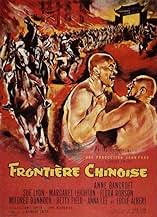
Adicionar um enredo no seu idiomaIn 1935 China, seven dedicated missionary women try to protect themselves from the advances of a barbaric Mongolian warlord and his cut-throat gang of warriors.In 1935 China, seven dedicated missionary women try to protect themselves from the advances of a barbaric Mongolian warlord and his cut-throat gang of warriors.In 1935 China, seven dedicated missionary women try to protect themselves from the advances of a barbaric Mongolian warlord and his cut-throat gang of warriors.
- Direção
- Roteiristas
- Artistas
- Prêmios
- 1 indicação no total



Lee Kolima
- Warrior
- (não creditado)
- Direção
- Roteiristas
- Elenco e equipe completos
- Produção, bilheteria e muito mais no IMDbPro
Avaliações em destaque
"Seven Women" is the last feature film of John Ford, arguably the greatest director the United States has yet produced. After a half century of film making, Ford ended his fabled career with a wide screen feature about women in peril at a Chinese mission. Infirm and alcoholic, he filmed it on an MGM sound stage; MGM then cut it and tossed it away on the bottom half of a double bill.
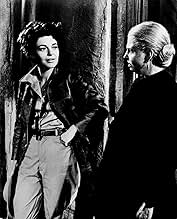
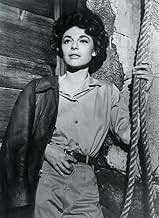
Today, the film is little known and seldom seen. It is far from Ford's best work, yet there is power and believability in many of the lead performances, and power in the arc of the story. Anne Bancroft shines as a feisty New York doctor who ultimately sacrifices herself to save the other missionaries -- many whom she doesn't agree with -- from brutal deaths at the hands of Chinese bandits. Her work here is more forceful and better realized than her role of Mrs. Robinson, done two years later.
The best gift MGM/Sony could give lovers of serious cinema is a clean print of this forgotten film. Its sets are often glaringly artificial, and some of the secondary players are over the top (an old weakness of Ford's) as well as miscast, but "7W" is a far better film than Hollywood legend has told us.
Today, the film is little known and seldom seen. It is far from Ford's best work, yet there is power and believability in many of the lead performances, and power in the arc of the story. Anne Bancroft shines as a feisty New York doctor who ultimately sacrifices herself to save the other missionaries -- many whom she doesn't agree with -- from brutal deaths at the hands of Chinese bandits. Her work here is more forceful and better realized than her role of Mrs. Robinson, done two years later.
The best gift MGM/Sony could give lovers of serious cinema is a clean print of this forgotten film. Its sets are often glaringly artificial, and some of the secondary players are over the top (an old weakness of Ford's) as well as miscast, but "7W" is a far better film than Hollywood legend has told us.
I wonder what feminists feel about this film. I found this work to be a fascinating look at women by a male director that can compare with two other cinematic works: Paul Mazursky's "The Unmarried Woman" and Muzaffar Ali's "Umrao Jaan". Strong women, weak women, lesbians, and immature girls, are contrasted with cardboard male characters that are never fully developed and are obviously no match to the array of women portrayed in the film. The men are painted so negatively that one begins to wonder if Ford thought Asian men had more brawn than brain--a strange view that has gained currency in Hollywood cinema.
I applaud Ford's decision to cast Anne Bancroft in this role. This is one of her strong performances. She makes even the most vapid films look elegant with her roles ("Lipstick", "Little Nikita", to name just two). Ford develops her role "7 women" on the lines of a Western gunslinger--only there are no gunfights. The woman has a weapon: sex. That weapon can down all the bad guys faster than it takes to down Mexicans, Red Indians, rustlers, bank-robbers. In this film these bad men are Chinese/Mongolian thugs. Established thespians Dame Flora Robson and Margaret Leighton are totally eclipsed by Bancroft's riveting performance.
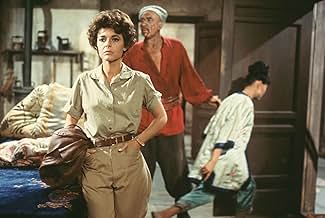
What Ford wanted I guess was to stun the viewer with the ending--the twist preceded by the gradual softening of the Bancroft in men's clothes to the Bancroft in women's clothes and the acceptance of male superiority. Most critics have found the end facile but I found the end was powerful as it makes you review and reconsider the strength of the lead character.
The film questions established views on religion; evidently Ford was old enough to have seen enough to choose to make this film in the evening of his life. In his films, Ford's women are as interesting as any other aspect of his cinema and this film provides ample fodder for those interested in studying this element of Ford's work.
However, for a 1966 film, the studio sets for the film look too artificial for the serious cinema the film offers. If anything, the film makes the viewer think!
I applaud Ford's decision to cast Anne Bancroft in this role. This is one of her strong performances. She makes even the most vapid films look elegant with her roles ("Lipstick", "Little Nikita", to name just two). Ford develops her role "7 women" on the lines of a Western gunslinger--only there are no gunfights. The woman has a weapon: sex. That weapon can down all the bad guys faster than it takes to down Mexicans, Red Indians, rustlers, bank-robbers. In this film these bad men are Chinese/Mongolian thugs. Established thespians Dame Flora Robson and Margaret Leighton are totally eclipsed by Bancroft's riveting performance.
What Ford wanted I guess was to stun the viewer with the ending--the twist preceded by the gradual softening of the Bancroft in men's clothes to the Bancroft in women's clothes and the acceptance of male superiority. Most critics have found the end facile but I found the end was powerful as it makes you review and reconsider the strength of the lead character.
The film questions established views on religion; evidently Ford was old enough to have seen enough to choose to make this film in the evening of his life. In his films, Ford's women are as interesting as any other aspect of his cinema and this film provides ample fodder for those interested in studying this element of Ford's work.
However, for a 1966 film, the studio sets for the film look too artificial for the serious cinema the film offers. If anything, the film makes the viewer think!
...what a moving last picture for Ford's swansong.Too often underrated ,"Seven woman" in spite of a sometimes weak script-too many things happen in too little time- is perhaps the most modern film in Ford 's canon.
We find one of Ford's permanent features:a group of human beings in jeopardy who's got to struggle against an enemy:"Stagecoach" is the best example .Dudley Nichols's screenplay was inspired by Guy de Maupasssant's "Boule de Suif".
Women always played a prominent part in Ford's canon.Ford's world is deceptive :it seems to be a male world but actually women are the strongest and the wisest (Jane Darwell's character in "Wagon Master" ,the soldiers' wives in "Fort Appache" ).It was only natural that Ford's last movie was an all-women film (all men,including Albert's character are caricatures.) And these women are very endearing.Anne Bancroft,one of the greatest actresses America ever had, shines all along the movie ,and even when the script verges on grotesque ,she's still beaming, fascinating ,never losing her sense of humor.Even when she "becomes Chinese" ,nobody would think of laughing at her.She's so strong an actress that we seem to know her heroine intimately,her life in NYC people dispensaries,her sad love stories.With her masculine swagger,her boots ,her cigarettes and her whiskey we see a broken woman who has lost all her illusions.She's an atheist,which is very rare in Ford's canon.
Religion is in the center of many a Ford movie ."Seven Women" takes place in a mission .All these women put their faith in God and ...in America (We're American citizens!).One of them (Margaret Leighton) is particularly interesting : a tight-lipped puritan at the beginning of the movie,she becomes,slowly but inexorably ,a mystic lunatic,mentioning Babylon and sinners.Like "Stagecoach" ,"seven femmes " borrows from Maupassant.Like his heroine,"Boule De suif" Cartwright gives her life in sacrifice so the others can survive.
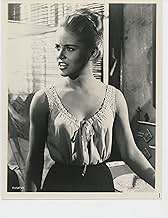
Six Woman are leaving Sodom under an ominous sky :one of them is screaming about lust while the blonde schoolteacher (Sue Lyon,whose role is an equivalent of Caroll Baker's in "Cheyenne Autumn ,though it's an underwritten part ),along with the newborn child, represents hope for the future:all that she went through ,her late heroine (she was the only one to be nice with Cartwright when she arrived)might help her to carry on.But Ford's last opus,like Huston's "the dead" is a very pessimistic opus.
We find one of Ford's permanent features:a group of human beings in jeopardy who's got to struggle against an enemy:"Stagecoach" is the best example .Dudley Nichols's screenplay was inspired by Guy de Maupasssant's "Boule de Suif".
Women always played a prominent part in Ford's canon.Ford's world is deceptive :it seems to be a male world but actually women are the strongest and the wisest (Jane Darwell's character in "Wagon Master" ,the soldiers' wives in "Fort Appache" ).It was only natural that Ford's last movie was an all-women film (all men,including Albert's character are caricatures.) And these women are very endearing.Anne Bancroft,one of the greatest actresses America ever had, shines all along the movie ,and even when the script verges on grotesque ,she's still beaming, fascinating ,never losing her sense of humor.Even when she "becomes Chinese" ,nobody would think of laughing at her.She's so strong an actress that we seem to know her heroine intimately,her life in NYC people dispensaries,her sad love stories.With her masculine swagger,her boots ,her cigarettes and her whiskey we see a broken woman who has lost all her illusions.She's an atheist,which is very rare in Ford's canon.
Religion is in the center of many a Ford movie ."Seven Women" takes place in a mission .All these women put their faith in God and ...in America (We're American citizens!).One of them (Margaret Leighton) is particularly interesting : a tight-lipped puritan at the beginning of the movie,she becomes,slowly but inexorably ,a mystic lunatic,mentioning Babylon and sinners.Like "Stagecoach" ,"seven femmes " borrows from Maupassant.Like his heroine,"Boule De suif" Cartwright gives her life in sacrifice so the others can survive.
Six Woman are leaving Sodom under an ominous sky :one of them is screaming about lust while the blonde schoolteacher (Sue Lyon,whose role is an equivalent of Caroll Baker's in "Cheyenne Autumn ,though it's an underwritten part ),along with the newborn child, represents hope for the future:all that she went through ,her late heroine (she was the only one to be nice with Cartwright when she arrived)might help her to carry on.But Ford's last opus,like Huston's "the dead" is a very pessimistic opus.
7 Women (1966)
*** (out of 4)
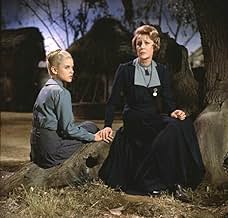
John Ford's final film is one you really wouldn't expect to see from him but I guess it goes to show what a great director he was as he could end his nearly fifty-year career with something fresh and original. The film takes place in 1935 China as a free-wheeling and free-spirited doctor (Anne Bancroft) comes to work at a missionary where she immediately clashes with the head of the mission (Margaret Leighton). The head doesn't agree with the doctor's way of life, which includes smoking, drinking, profane language and of course not believing in God. Soon the doctor is battling this but then a plague breaks out in the mission and then they come under attack from some rebels. I'm not sure if stunned is too strong of a word but that's what my feelings were going through this film. I've seen at least fifty John Ford movies and I never thought I'd see something like this one. The attitude of the Bancroft character just seems like something the director would stay away from and the anti-religion stance was so strong that again I couldn't believe this was something from Ford. I think if you showed this movie to the biggest of film buffs and didn't tell them who the director was I doubt they'd ever guess it was someone like Ford. I really appreciated the 60s fling thrown into the picture because you can obviously tell that they were taking a 60s woman and putting her into this situation. There's a bit about the doctor leaving America because a woman couldn't get a fair shake at a good career and again I wonder if they were standing up for women's rights. The film also has bits of lesbianism, the religious hypocrites and a strong sense of sexuality. The movie certainly isn't ahead of its time considering this was 1966 but it's still impressive stuff. Bancroft is downright marvelous here and turns in a very memorable performance. I must admit that I fell in love with her character as you have to respect the toughness that the actress brings to the role. I believed every second of it and there's just a certain fire to Bancroft that clearly shows up on the screen. Leighton is one of those love-to-hate performances and makes for a great villain. Sue Lyon, best known from Kubrick's LOLITA, turns in a fine performance. We even get Woody Strode in a small role as one of the warriors. The film's pacing is a very slow one and it feels like the movie is a lot longer than its 86-minute running time but this isn't a negative thing as I never got bored. I was certainly surprised to see how much Ford managed to cram into the short running time. His direction here contains some of his softest touches but they all work. It's a shame this movie isn't mentioned more when people discuss his career but it's certainly a good and original way for him to go out.
*** (out of 4)
John Ford's final film is one you really wouldn't expect to see from him but I guess it goes to show what a great director he was as he could end his nearly fifty-year career with something fresh and original. The film takes place in 1935 China as a free-wheeling and free-spirited doctor (Anne Bancroft) comes to work at a missionary where she immediately clashes with the head of the mission (Margaret Leighton). The head doesn't agree with the doctor's way of life, which includes smoking, drinking, profane language and of course not believing in God. Soon the doctor is battling this but then a plague breaks out in the mission and then they come under attack from some rebels. I'm not sure if stunned is too strong of a word but that's what my feelings were going through this film. I've seen at least fifty John Ford movies and I never thought I'd see something like this one. The attitude of the Bancroft character just seems like something the director would stay away from and the anti-religion stance was so strong that again I couldn't believe this was something from Ford. I think if you showed this movie to the biggest of film buffs and didn't tell them who the director was I doubt they'd ever guess it was someone like Ford. I really appreciated the 60s fling thrown into the picture because you can obviously tell that they were taking a 60s woman and putting her into this situation. There's a bit about the doctor leaving America because a woman couldn't get a fair shake at a good career and again I wonder if they were standing up for women's rights. The film also has bits of lesbianism, the religious hypocrites and a strong sense of sexuality. The movie certainly isn't ahead of its time considering this was 1966 but it's still impressive stuff. Bancroft is downright marvelous here and turns in a very memorable performance. I must admit that I fell in love with her character as you have to respect the toughness that the actress brings to the role. I believed every second of it and there's just a certain fire to Bancroft that clearly shows up on the screen. Leighton is one of those love-to-hate performances and makes for a great villain. Sue Lyon, best known from Kubrick's LOLITA, turns in a fine performance. We even get Woody Strode in a small role as one of the warriors. The film's pacing is a very slow one and it feels like the movie is a lot longer than its 86-minute running time but this isn't a negative thing as I never got bored. I was certainly surprised to see how much Ford managed to cram into the short running time. His direction here contains some of his softest touches but they all work. It's a shame this movie isn't mentioned more when people discuss his career but it's certainly a good and original way for him to go out.
For a film nut like me. 7 Women offers a plethora of pleasures. Patricia Neal was suppose to star but ill health made her unavailable. Anne Bancroft took over as the drinking, smoking, swearing saint. and all the aspects of this complex character are totally real in Anne Bancroft's face. She arrives to the Mission in China like a benevolent tornado. The spectacular Margaret Leighton is the head of the Mission and she plays it like a raw nerve, Among the other women, Flora Robson, Queen Elizabeth to Laurence Olivier's Michael Ingolby in Fire Over England, brings a voice of reason that reassure us, Betty Field , Kim Novak's mother in Picnic, among a gallery of memorable characters, plays the pregnant middle age woman who offends the Christian mission for having had sex with her husband under their roof. Mildred Dunnock, Anna Lee and even Stanley Kubrick's Lolita, Sue Lyon is part of the Mission. On the other side, the villains, that offended so many people, John Ford casts his longtime companion Woody Strode. I understand and even accept all the criticisms listed in the reviews of this pages but, somehow, I can put all that aside and enjoy the plethora of pleasures that it offers.


Você sabia?
- CuriosidadesAnne Bancroft recalled producer and director John Ford's tearing pages out of the script and described him as "Marvelous but loony."
- Erros de gravaçãoDr. Cartwright's hairstyle is not out of place for 1935. Dr. Cartwright is a strong, independent woman and it is not unusual for her to have this type of hairstyle - see Amelia Earhart. Besides, short hair worn off the shoulder was a very popular style in the 1930s.
- Citações
Dr. D.R. Cartwright: [to Tunga Khan, Bandit Leader] So long, ya bastard!
- Cenas durante ou pós-créditosPROLOGUE: "1935: North China near the border of Mongolia...A land of feudal war lords and marauding bandit armies...A time of lawlessness and violence."
- ConexõesReferenced in MGM 40th Anniversary (1964)
- Trilhas sonorasJesus Loves Me
(uncredited)
Words by Anna B. Warner and David Rutherford McGuire
Music by William B. Bradbury
Sung by Sue Lyon and the children
Principais escolhas
Faça login para avaliar e ver a lista de recomendações personalizadas
- How long is 7 Women?Fornecido pela Alexa
Detalhes
- Data de lançamento
- País de origem
- Idiomas
- Também conhecido como
- Sete Mulheres
- Locações de filme
- Empresas de produção
- Consulte mais créditos da empresa na IMDbPro
Bilheteria
- Orçamento
- US$ 2.300.000 (estimativa)
- Faturamento bruto mundial
- US$ 228
- Tempo de duração
- 1 h 27 min(87 min)
- Cor
- Proporção
- 2.35 : 1
Contribua para esta página
Sugerir uma alteração ou adicionar conteúdo ausente