AVALIAÇÃO DA IMDb
7,9/10
27 mil
SUA AVALIAÇÃO


Adicionar um enredo no seu idiomaA film that successfully argued that a man was wrongly convicted for murder by a corrupt justice system in Dallas County, Texas.A film that successfully argued that a man was wrongly convicted for murder by a corrupt justice system in Dallas County, Texas.A film that successfully argued that a man was wrongly convicted for murder by a corrupt justice system in Dallas County, Texas.
- Direção
- Roteirista
- Estrelas
- Prêmios
- 12 vitórias e 5 indicações no total



7,927.3K
1
2
3
4
5
6
7
8
9
10
Avaliações em destaque
10faraaj-1
If there was ever a hell on earth...
I grew up in a society that strongly believes in the death penalty - a religion injunction based on the Islamic code of justice. I remember being told a story (don't know if its true) of how the US President visited Saudi Arabia and on the last day of his visit he was treated to some public be-headings. When he questioned the morality of it, his host informed him that the handful of criminals punished represented the entirety of the criminal population for the past one year. The moral being that harsh punishments prevent crimes and caring too much about the aggressor leads to high crime rates. I personally lost faith in the prison system many years ago after reading about the Milgram and Stanford Prison Experiment findings. A harrowing Australian movie, Ghosts of the Civil Dead made me detest the prison system even more. In recent years Abu Ghraib and Guantanamo have left a bad taste in the mouth. So, is the answer really the death penalty and other physical measures that can't be reversed? After seeing The Thin Blue Line I just don't know. This film has really affected me.
An innocent hitch-hiker, and from what I saw in the documentary a decent man, is caught at the wrong time in the wrong place - a former sundown town called Vidor, Dallas County. He is implicated in the murder of a cop and is obviously innocent of the crime. The entire legal system of Vidor is bent to prosecute him. The reason: the real killer is a 16-year old and there's no benefit in finding him guilty because he can't be given the death penalty. Randall Adams, in his 20's, can and must be punished because he's a stranger to these small-minded bigots and someone must pay! Shocking that people can think that way. It makes The Ox-Bow Incident and issues it raised 70 years ago valid even today. This was no more than a judicial lynching.
Fortunately, in this case Randall Adams' case was reopened and he was acquitted and released, in large measure due to this documentary and the scandal it caused. The story is exceedingly well told and the end with the tape recorded last interview with David Harris is chilling. I can't say that after watching this I still have a clear opinion of what punishment should fit a crime, but it has certainly made me question the validity of the mentality present in so many Muslim countries. Who is to say there can be no similar travesty of justice there?
An innocent hitch-hiker, and from what I saw in the documentary a decent man, is caught at the wrong time in the wrong place - a former sundown town called Vidor, Dallas County. He is implicated in the murder of a cop and is obviously innocent of the crime. The entire legal system of Vidor is bent to prosecute him. The reason: the real killer is a 16-year old and there's no benefit in finding him guilty because he can't be given the death penalty. Randall Adams, in his 20's, can and must be punished because he's a stranger to these small-minded bigots and someone must pay! Shocking that people can think that way. It makes The Ox-Bow Incident and issues it raised 70 years ago valid even today. This was no more than a judicial lynching.
Fortunately, in this case Randall Adams' case was reopened and he was acquitted and released, in large measure due to this documentary and the scandal it caused. The story is exceedingly well told and the end with the tape recorded last interview with David Harris is chilling. I can't say that after watching this I still have a clear opinion of what punishment should fit a crime, but it has certainly made me question the validity of the mentality present in so many Muslim countries. Who is to say there can be no similar travesty of justice there?
10mprins
An astonishing look at the criminal justice system.
Along with 1996's Paradise Lost, The Thin Blue Line should be mandatory viewing for those who believe that the criminal justice system eventually convicts only the guilty. It is a stark and shocking look at one man behind bars and the truckloads of evidence that point toward his innocence. Documentarian Errol Morris indirectly argues that, at the very least, this evidence should have presented a "reasonable doubt" to the jury, and near the end of the movie, the audience has little choice but to accept his unbelievable findings. And the film ends with a single scene of just a tape recorder and voices that should be recognized as one of the most powerful endings to a movie, ever. A documentary masterpiece.
Rough justice
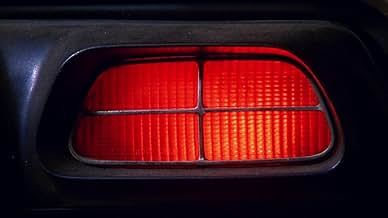
I first saw this film not long after its initial release some 20 years ago and images and scenes from it have stayed with me ever since, so that it was with considerable anticipation that I re-watched it again recently. Down the years I can still recall Randall Adams drawling in his unforgettable voice "The kid scares me", the ever-revolving red light on the cop-car and most of all Philip Glass' wonderful, hypnotic music. The depiction of the fateful night of the cold-blooded murder of the policeman is shown from, almost literally, every possible angle, conveyed in a highly stylised way with almost every speculated remembrance of the doubtful list of every dubious (and are they ever dubious!) witness played out on the screen, the effect, in so doing, to completely explode their fantasist recollections, as was no doubt the director's aim. The reconstructions are set alongside filmed interviews of most of the main protagonists (with the main exception of the second cop in the car who witnessed the killing). As you watch these, the centrepiece clearly becomes the contrasting testimony of the almost-certain murderer David Harris with the wronged Randall Adams, the first coming across from the start as duplicitous and uncaring, the latter as bemused but reasoning. I was particularly taken with the erudition of Adams, who suppresses his inner rage with admirable restraint as he points the viewer time and again back to the evidence. As an indictment of the American criminal justice system, it hits home hard; it appears that investigation standards head for the hills especially when the law has a cop-killer to nail. Thankfully the miscarriage of justice was eventually resolved although it makes you grateful for the coincidence which led director Morris to change the subject course of his original project to instead highlight Adams' case culminating in his release soon after the film was first shown. The film however is more than a crusading documentary and there is much for students and admirers of the film-makers art to enjoy. Unforgettable, really, almost haunting, and proof if needed that truth really is stranger than fiction.
Subject matter vs. presentation
Having seen two other Errol Morris documentaries, I expected that there would be a Philip Glass soundtrack, some flashy camera work, and perhaps some reenactments during 'The Thin Blue Line'. I have long struggled with my opinions on Morris' work, mainly because I am more of a purist when it comes to documentaries. I want to see footage, photographs, interviews, etc. that are going to back up a strong story, not a lot of camera angles, stark white backgrounds, and a post-modernist score.
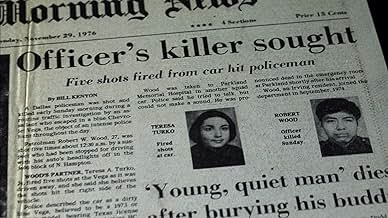
'The Thin Blue Line' had the latter presentation, so I immediately was slightly turned off until the subject of the film was presented. The location is Dallas, and it is the 1970's. Late one night, a squad car pulls over a car that does not have its lights on, but as soon as the policeman reaches the driver's side door, he is shot several times and murdered. The car pulls away before the policeman's partner is able to ascertain the license plate number or even the exact make and model of the vehicle. What follows is a veritable witch hunt for the killer (or killers) that ends with one man in jail who is professing his innocence, and another man, a career criminal who gets away veritably scot-free. Through various interviews with the players involved; detectives, alleged eye-witnesses, the accused themselves, Morris seeks to find out the truth in a case that comes down to a 'he-said/he-said' situation.
'The Thin Blue Line' is expert film-making in the investigative sense. Morris does his job in presenting as many facts as possible. The case finally came to a head a couple of years after the film was finished, but it is documented as being instrumental in the reexamination of the facts. I still don't necessarily care for Morris' style, but it cannot be argued that 'The Thin Blue Line' is an excellent documentary, and that he definitely has an eye for picking very compelling subjects.
--Shelly
'The Thin Blue Line' had the latter presentation, so I immediately was slightly turned off until the subject of the film was presented. The location is Dallas, and it is the 1970's. Late one night, a squad car pulls over a car that does not have its lights on, but as soon as the policeman reaches the driver's side door, he is shot several times and murdered. The car pulls away before the policeman's partner is able to ascertain the license plate number or even the exact make and model of the vehicle. What follows is a veritable witch hunt for the killer (or killers) that ends with one man in jail who is professing his innocence, and another man, a career criminal who gets away veritably scot-free. Through various interviews with the players involved; detectives, alleged eye-witnesses, the accused themselves, Morris seeks to find out the truth in a case that comes down to a 'he-said/he-said' situation.
'The Thin Blue Line' is expert film-making in the investigative sense. Morris does his job in presenting as many facts as possible. The case finally came to a head a couple of years after the film was finished, but it is documented as being instrumental in the reexamination of the facts. I still don't necessarily care for Morris' style, but it cannot be argued that 'The Thin Blue Line' is an excellent documentary, and that he definitely has an eye for picking very compelling subjects.
--Shelly
A simple and matter-of-fact condemnation of a miscarriage of justice
Randall Adams was a drifter who was picked up by runaway teenager David Harris when he ran out of petrol. The two men hang out for a while, drank some beer, went to the movies, smoked some weed. At this point Adams says he went his own way to his motel with his brother, watched TV and went to sleep. Alternatively, Harris says the two men stayed together were stopped by the police when Adams took out a gun and opened fire on a police officer before driving off. This film follows the court case which charged Adams for the murder of a police officer, with the underage Harris (who was ineligible for the death penalty) as one of the main witnesses against him.
I do enjoy a Perry Mason film because, after a solid hour of red herrings and question-marks, it always come down to the big reveal with Mason demanding "isn't it true? ISN'T IT?" as everyone gasps, the guilty confesses on the stand and justice is done. Sadly this is not a documentary but a basic TVM series and what the Thin Blue Line does so effectively is to get passed all our ideas of how justice works from films and presents a near-unquestionable miscarriage of justice. At no point does the "guilty" person get totally exposed (although the suggestion is very clearly there as to who it was) but instead Morris goes after the idea of reasonable doubt (which, if there is any, then the charged should not have been convicted). Starting at the very start of the fateful evening, Morris uses interviews and some reconstructions to tell the story of what happened from various points of view initially with a focus very much on the events as the courts saw it.
From here he then uses these same contributions to inject a huge amount of doubt into the vast majority of the case for the prosecution. If you want to find it, there are things in here that could be taken as anti-death penalty but for me the film is pro-justice as opposed to anti-anything as it is essentially reinforcing the importance of reasonable doubt. By virtue of doing this, everyone involved looks bad and Morris wisely doesn't need to pick on anybody in particular directly. It is fascinating as a film but I can understand the occasional claim of it being "dull" I cannot agree with it but I can understand because, in a world where excess is the norm (style, action, violence, opinion) anything that is actually restrained and even handed could be taken as "dull".
This modern moaning aside though, The Thin Blue Line is a well made film that simply and matter-of-factly condemns the justice system as it applied to Randall Adams. One of Morris' best films and worth seeking out.
I do enjoy a Perry Mason film because, after a solid hour of red herrings and question-marks, it always come down to the big reveal with Mason demanding "isn't it true? ISN'T IT?" as everyone gasps, the guilty confesses on the stand and justice is done. Sadly this is not a documentary but a basic TVM series and what the Thin Blue Line does so effectively is to get passed all our ideas of how justice works from films and presents a near-unquestionable miscarriage of justice. At no point does the "guilty" person get totally exposed (although the suggestion is very clearly there as to who it was) but instead Morris goes after the idea of reasonable doubt (which, if there is any, then the charged should not have been convicted). Starting at the very start of the fateful evening, Morris uses interviews and some reconstructions to tell the story of what happened from various points of view initially with a focus very much on the events as the courts saw it.
From here he then uses these same contributions to inject a huge amount of doubt into the vast majority of the case for the prosecution. If you want to find it, there are things in here that could be taken as anti-death penalty but for me the film is pro-justice as opposed to anti-anything as it is essentially reinforcing the importance of reasonable doubt. By virtue of doing this, everyone involved looks bad and Morris wisely doesn't need to pick on anybody in particular directly. It is fascinating as a film but I can understand the occasional claim of it being "dull" I cannot agree with it but I can understand because, in a world where excess is the norm (style, action, violence, opinion) anything that is actually restrained and even handed could be taken as "dull".
This modern moaning aside though, The Thin Blue Line is a well made film that simply and matter-of-factly condemns the justice system as it applied to Randall Adams. One of Morris' best films and worth seeking out.


Você sabia?
- CuriosidadesErrol Morris spent 2-1/2 years tracking down the various players in the Randall Adams case and convincing them to appear in the film.
- Erros de gravaçãoDavid Harris talks about his older brother drowning at the age of four in 1963. He says it occurred "right after President Kennedy was assassinated I believe. Sometime right after that. During the summer". However Kennedy was killed in the third week of November, well after summer.
- Citações
Melvyn Carson Bruder: Prosecutors in Dallas have said for years - any prosecutor can convict a guilty man. It takes a great prosecutor to convict an innocent man.
- Cenas durante ou pós-créditosDrawings from the Bender Visual Motor Gestalt Test © 1946, American Orthopsychiatric Association Inc. and Lauretta Bender, M.D.
Principais escolhas
Faça login para avaliar e ver a lista de recomendações personalizadas
- How long is The Thin Blue Line?Fornecido pela Alexa
Detalhes
- Data de lançamento
- País de origem
- Central de atendimento oficial
- Idioma
- Também conhecido como
- The Thin Blue Line
- Locações de filme
- Empresas de produção
- Consulte mais créditos da empresa na IMDbPro
Bilheteria
- Faturamento bruto nos EUA e Canadá
- US$ 1.209.846
- Fim de semana de estreia nos EUA e Canadá
- US$ 17.814
- 28 de ago. de 1988
- Faturamento bruto mundial
- US$ 1.209.846
- Tempo de duração
- 1 h 41 min(101 min)
- Cor
- Mixagem de som
- Proporção
- 1.85 : 1
Contribua para esta página
Sugerir uma alteração ou adicionar conteúdo ausente