AVALIAÇÃO DA IMDb
6,7/10
15 mil
SUA AVALIAÇÃO


Adicionar um enredo no seu idiomaA Japanese-American fisherman is accused of killing his neighbor at sea. In the 1950s, race figures into the trial. So does reporter Ishmael.A Japanese-American fisherman is accused of killing his neighbor at sea. In the 1950s, race figures into the trial. So does reporter Ishmael.A Japanese-American fisherman is accused of killing his neighbor at sea. In the 1950s, race figures into the trial. So does reporter Ishmael.
- Direção
- Roteiristas
- Estrelas
- Indicado a 1 Oscar
- 5 vitórias e 11 indicações no total
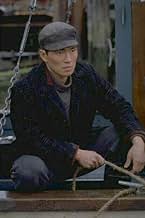
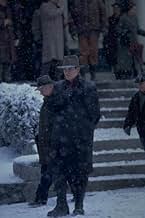
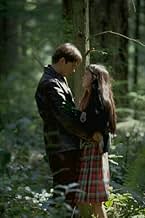
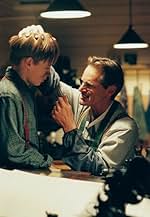
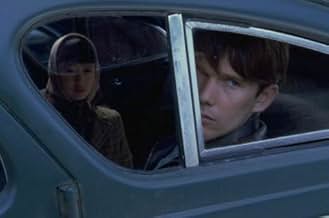


Max von Sydow
- Nels Gudmundsson
- (as Max Von Sydow)

Yûki Kudô
- Hatsue Miyamoto
- (as Youki Kudoh)


Daniel von Bargen
- Carl Heine Sr.
- (as Daniel Von Bargen)


- Direção
- Roteiristas
- Elenco e equipe completos
- Produção, bilheteria e muito mais no IMDbPro
6,714.9K
1
2
3
4
5
6
7
8
9
10
Avaliações em destaque
Magnificent - the best of the year.
This film stands apart from the standard, sometimes clever, seldom memorable work that passes too often for Oscar fare nowadays. It is a film about life and death, love and betrayal, passion and pain, forgiveness and redemption. It is about the power of emotion to influence perception and memory. It is about justice and truth.
But that is not why you should see it; You should see it for the story. For this film is so finely crafted, and the story unfolds so naturally, that it is easy to appreciate for the simple compelling drama of the narrative. You care about the characters, you care about how the trial turns out, and you ache to know the truth.
The plot centers around a murder trial of a Japanese man charged in the death of a local fisherman, and on a white reporter covering the trial. It turns out the reporter had once been in love with a Japanese woman, now the accused man's wife. This romance was shattered as World War II broke out, and the young woman and her family were rounded up with other Japanese Americans, and interred in camps.
The story that unfolds is part "Casablanca", part "Amistad", part "To Kill a Mockingbird", yet wholly original and true to itself. It is at once a tender love story, a lesson in history, a murder mystery, and more.
The story of each of the main characters is told through flashbacks that reveal how each of them has suffered because of the war and how each has to overcome this suffering. Many of the most compelling images of the film occur in these flashbacks. Like real lasting memories, they are moments of deep emotional significance, and include many images which you will carry in your own mind long after you have left the theater.
If you look for them you may also find some symbolic or allegorical images in the film (the boat's mast resembles a cross; the fish could also be seen as a Christian symbol of sacrifice), but these elements are not heavy handed or forced, they occur naturally as important elements of the story which is set in a small fishing village on the Northwestern coast of the US in the years surrounding World War II.
While I have seen many reviewers comment on how beautifully filmed and well acted this film is, I have seen a few who have somehow failed to appreciate the significance of the story. My only caution on this account is, take care that you are not so blinded by beauty, that you fail to notice love.
In short, I found this to be a brilliant, deep, uplifting engrossing, and highly satisfying film experience.
But that is not why you should see it; You should see it for the story. For this film is so finely crafted, and the story unfolds so naturally, that it is easy to appreciate for the simple compelling drama of the narrative. You care about the characters, you care about how the trial turns out, and you ache to know the truth.
The plot centers around a murder trial of a Japanese man charged in the death of a local fisherman, and on a white reporter covering the trial. It turns out the reporter had once been in love with a Japanese woman, now the accused man's wife. This romance was shattered as World War II broke out, and the young woman and her family were rounded up with other Japanese Americans, and interred in camps.
The story that unfolds is part "Casablanca", part "Amistad", part "To Kill a Mockingbird", yet wholly original and true to itself. It is at once a tender love story, a lesson in history, a murder mystery, and more.
The story of each of the main characters is told through flashbacks that reveal how each of them has suffered because of the war and how each has to overcome this suffering. Many of the most compelling images of the film occur in these flashbacks. Like real lasting memories, they are moments of deep emotional significance, and include many images which you will carry in your own mind long after you have left the theater.
If you look for them you may also find some symbolic or allegorical images in the film (the boat's mast resembles a cross; the fish could also be seen as a Christian symbol of sacrifice), but these elements are not heavy handed or forced, they occur naturally as important elements of the story which is set in a small fishing village on the Northwestern coast of the US in the years surrounding World War II.
While I have seen many reviewers comment on how beautifully filmed and well acted this film is, I have seen a few who have somehow failed to appreciate the significance of the story. My only caution on this account is, take care that you are not so blinded by beauty, that you fail to notice love.
In short, I found this to be a brilliant, deep, uplifting engrossing, and highly satisfying film experience.
If you loved the book then see this movie
I loved the book, but I am not sure that any director could make the translation to film that captures both the lyrical and compelling nature of the book.
Scott Hicks goes for lyrical and he certainly delivers. The cinematography is beautiful, the pace reverberates in space and time. The characters are painted with pointillist precision.
The difficulty is that pointillism is pretty but lacks resolution. There is insufficient time to develop the characters. The urgent and desperate nature of the defendant's plight is lost amongst the beautiful cedars.
Still, if you enjoyed the book then I would recommend seeing this movie.
Scott Hicks goes for lyrical and he certainly delivers. The cinematography is beautiful, the pace reverberates in space and time. The characters are painted with pointillist precision.
The difficulty is that pointillism is pretty but lacks resolution. There is insufficient time to develop the characters. The urgent and desperate nature of the defendant's plight is lost amongst the beautiful cedars.
Still, if you enjoyed the book then I would recommend seeing this movie.
Graceful
This is one of those films that needs to be seen a second time to pick up on the subtleties of the plot. It is a feast for the eyes and features outstanding acting. It also has a sense of balance. It doesn't manipulate its viewer. The murder mystery isn't one that brings in forces that threaten the main character. The forces are prejudice and fear. The adversaries are not people carrying guns but rather the legal system that often overlooked the rights of people of another race or ethnic background. The internment camps are part of the backdrop. I know that people say this is slow, but so is the process these people faced.
I loved the intellectual character of the young man who has to look past his own feeling and try to bring closure to someone he will never be able to have. The transitions are so breathtaking. The winter scenes are a portrait of softness and violence. My wife had read the book upon which this is based and said that the movie might be interesting. Apparently, the producers were unwilling to go the extra mile to get this noticed. It's a gem and deserves to be on a list of very fine movies.
I loved the intellectual character of the young man who has to look past his own feeling and try to bring closure to someone he will never be able to have. The transitions are so breathtaking. The winter scenes are a portrait of softness and violence. My wife had read the book upon which this is based and said that the movie might be interesting. Apparently, the producers were unwilling to go the extra mile to get this noticed. It's a gem and deserves to be on a list of very fine movies.
Beautifully crafted and compelling story
This is a magnificent adaptation of David Guterson's acclaimed book. Scott Hicks took on a gargantuan task in attempting to make the book into a film, not only because it was so powerful and well received, but because it was so lengthy and daedal. The result, however, was one of the best films I have seen in quite some time.
There were really three stories intricately interwoven into one. The main story was the trial of a Japanese American for the murder of a fisherman who owned the land wrongfully taken from the accused's father. The other two stories provide insight into critical events affecting the trial. The first involves the childhood love affair of local newspaperman Ishmael (Ethan Hawke) and Hatsue (Youki Kudoh), who is now the wife of the accused. He has uncovered information that can aid the defense, but his resentment for having been jilted by Hatsue stands in the way of his bringing it forth.
The second ancillary story is the persecution of Japanese Americans and Japanese immigrants during World War II. We see depictions of hatred and bigotry, as law abiding Japanese citizens are shamelessly herded into internment camps. This seething animus serves as the psychological backdrop for the trial, which occurs in the early 1950's when the memories of the war and lost loved ones is still fresh.
From a directorial and cinematography perspective, this film was nothing short of a masterpiece. It is a cinematic work of art. Between Hicks' brilliant camera perspectives and Robert Richardson's beautiful lighting and earth tone coloring, the film was resplendent in powerful and stirring images. Many were so artistically done that if made into snapshots they could easily hang in any art gallery. Each shot was meticulously thought out. Many involved complex shots through windows, silhouette backlighting, elaborate blocking, and scenes where actors, props and camera were all moving in different directions to create fabulously fluid perspective shots that slowly unfolded to revealed the scene's full content.
The editing was also fantastic. I have seen comparison's between this editing and The Limey'. While there is some similarity in technique, this was far more elegant and flowing, whereas `The Limey' was jumpy and disconnected. This style of editing was absolutely necessary to adhere to the book's non linear format. Hicks needed to insert scenes that explained the feelings and motivations of the characters, and the only way to do this was with flashbacks and jump cuts. Despite the fact that such editing is disconcerting to a large majority of viewers, it was an artistic decision that was exactly right for the story, and seamlessly done. The same is true of the audio overlays with monologues of characters superimposed on one another, giving great power and emphasis to certain of the characters' lines.
The story itself, with all of its components, was engaging and well crafted. Unfortunately, there was not enough time to develop more of the characters. The scenes depicting the herding of the Japanese out of their homes for relocation were chilling. The courtroom scenes were realistic, not forsaking court procedure for dramatic effect, as is so common nowadays. The love scenes were sensitive, romantic and passionate without the need for sexual explicitness.
From an acting perspective, this was more of an ensemble production. All the actors gave wonderful performances, especially Youki Kudoh, who was torn between her love for Ishmael and her loyalty to her family and traditions. Kudoh was so emotionally involved with the part that she actually began crying during the featurette when recalling one of the scenes. Screen legend Max von Sydow was also fantastic as the aging defense attorney fighting and pleading for justice amidst the racial hatred.
This is a beautifully crafted film with a compelling story. It is a filmmaking 10/10. It has unfortunately not found a wide audience since its strongest elements are not areas of mass appeal. For the refined viewer who can appreciate filmmaking as an art, and enjoy an intriguing but deliberate story with exquisitely woven subtleties, this film is a delight. For those who prefer Hollywood's movie success formula of fast paced linear stories with lots of violence, profanity, clever one liners and raunchy sex, this film will bore them to death.
There were really three stories intricately interwoven into one. The main story was the trial of a Japanese American for the murder of a fisherman who owned the land wrongfully taken from the accused's father. The other two stories provide insight into critical events affecting the trial. The first involves the childhood love affair of local newspaperman Ishmael (Ethan Hawke) and Hatsue (Youki Kudoh), who is now the wife of the accused. He has uncovered information that can aid the defense, but his resentment for having been jilted by Hatsue stands in the way of his bringing it forth.
The second ancillary story is the persecution of Japanese Americans and Japanese immigrants during World War II. We see depictions of hatred and bigotry, as law abiding Japanese citizens are shamelessly herded into internment camps. This seething animus serves as the psychological backdrop for the trial, which occurs in the early 1950's when the memories of the war and lost loved ones is still fresh.
From a directorial and cinematography perspective, this film was nothing short of a masterpiece. It is a cinematic work of art. Between Hicks' brilliant camera perspectives and Robert Richardson's beautiful lighting and earth tone coloring, the film was resplendent in powerful and stirring images. Many were so artistically done that if made into snapshots they could easily hang in any art gallery. Each shot was meticulously thought out. Many involved complex shots through windows, silhouette backlighting, elaborate blocking, and scenes where actors, props and camera were all moving in different directions to create fabulously fluid perspective shots that slowly unfolded to revealed the scene's full content.
The editing was also fantastic. I have seen comparison's between this editing and The Limey'. While there is some similarity in technique, this was far more elegant and flowing, whereas `The Limey' was jumpy and disconnected. This style of editing was absolutely necessary to adhere to the book's non linear format. Hicks needed to insert scenes that explained the feelings and motivations of the characters, and the only way to do this was with flashbacks and jump cuts. Despite the fact that such editing is disconcerting to a large majority of viewers, it was an artistic decision that was exactly right for the story, and seamlessly done. The same is true of the audio overlays with monologues of characters superimposed on one another, giving great power and emphasis to certain of the characters' lines.
The story itself, with all of its components, was engaging and well crafted. Unfortunately, there was not enough time to develop more of the characters. The scenes depicting the herding of the Japanese out of their homes for relocation were chilling. The courtroom scenes were realistic, not forsaking court procedure for dramatic effect, as is so common nowadays. The love scenes were sensitive, romantic and passionate without the need for sexual explicitness.
From an acting perspective, this was more of an ensemble production. All the actors gave wonderful performances, especially Youki Kudoh, who was torn between her love for Ishmael and her loyalty to her family and traditions. Kudoh was so emotionally involved with the part that she actually began crying during the featurette when recalling one of the scenes. Screen legend Max von Sydow was also fantastic as the aging defense attorney fighting and pleading for justice amidst the racial hatred.
This is a beautifully crafted film with a compelling story. It is a filmmaking 10/10. It has unfortunately not found a wide audience since its strongest elements are not areas of mass appeal. For the refined viewer who can appreciate filmmaking as an art, and enjoy an intriguing but deliberate story with exquisitely woven subtleties, this film is a delight. For those who prefer Hollywood's movie success formula of fast paced linear stories with lots of violence, profanity, clever one liners and raunchy sex, this film will bore them to death.
Love in the Cold
Snow Falling on Cedars
Nominated for best cinematography, this film deserved to give American Beauty a better run for its money. Sadly savaged by many critics, who seemed to fail to grasp the depth of the story and the beauty with which it was told because they were too busy analyzing the parts. Snow Falling on Cedars follows a mixed race love that is complicated by the onset of war. The reactions of the two principle characters betrays not only how human love can transcend itself into something greater but how those involved can find fulfillment in themselves through its sacrifice. The exquisite symbolism (you could write a book on the different things snow could symbolize after watching this) is never overplayed - in other words, the viewer can enjoy the film as entertainment without having "deeper meanings" rammed down their throat - but they are there in abundance, from the way the scenery is developed to small details such as the main character's name ("Ishmael" - meaning "He whom God hears").
Nominated for best cinematography, this film deserved to give American Beauty a better run for its money. Sadly savaged by many critics, who seemed to fail to grasp the depth of the story and the beauty with which it was told because they were too busy analyzing the parts. Snow Falling on Cedars follows a mixed race love that is complicated by the onset of war. The reactions of the two principle characters betrays not only how human love can transcend itself into something greater but how those involved can find fulfillment in themselves through its sacrifice. The exquisite symbolism (you could write a book on the different things snow could symbolize after watching this) is never overplayed - in other words, the viewer can enjoy the film as entertainment without having "deeper meanings" rammed down their throat - but they are there in abundance, from the way the scenery is developed to small details such as the main character's name ("Ishmael" - meaning "He whom God hears").


Você sabia?
- CuriosidadesWhen the Japanese-Americans are sent to internment camps, many of the extras were Japanese-Americans who had actually been sent to the camps in the 1940s.
- Erros de gravaçãoJapanese guests wear black ties at the wedding. They should be wearing white ties. In Japan, black ties are for funerals.
- Citações
Nels Gudmundsson: It takes a rare thing, a turning point, to free oneself from any obsession. Be it prejudice or hate, or, even love.
- Cenas durante ou pós-créditosJan Rubes and Sheila Moore are on the credits despite their scenes being deleted.
- ConexõesFeatured in Siskel & Ebert & the Movies: Double Jeopardy/Jakob the Liar/Mumford (1999)
- Trilhas sonorasMoon over Burma
Written by Friedrich Hollaender (as Frederick Hollander), Frank Loesser
Performed by Dorothy Lamour
Courtesy of the RCA Records Label of BMG Entertainment
Principais escolhas
Faça login para avaliar e ver a lista de recomendações personalizadas
- How long is Snow Falling on Cedars?Fornecido pela Alexa
Detalhes
Bilheteria
- Orçamento
- US$ 35.000.000 (estimativa)
- Faturamento bruto nos EUA e Canadá
- US$ 14.417.593
- Fim de semana de estreia nos EUA e Canadá
- US$ 32.135
- 26 de dez. de 1999
- Faturamento bruto mundial
- US$ 23.049.593
- Tempo de duração
- 2 h 7 min(127 min)
- Cor
- Mixagem de som
- Proporção
- 2.39 : 1
Contribua para esta página
Sugerir uma alteração ou adicionar conteúdo ausente