AVALIAÇÃO DA IMDb
6,2/10
7 mil
SUA AVALIAÇÃO
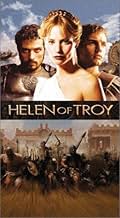
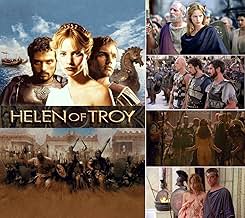
Apesar de casada com Menelau, rei de Esparta, Helena apaixona-se perdidamente por Páris, um dos príncipes de Tróia, e foge com ele. A fuga despoleta uma guerra de mais de dez anos entre os t... Ler tudoApesar de casada com Menelau, rei de Esparta, Helena apaixona-se perdidamente por Páris, um dos príncipes de Tróia, e foge com ele. A fuga despoleta uma guerra de mais de dez anos entre os troianos e uma coligação de cidades gregas.Apesar de casada com Menelau, rei de Esparta, Helena apaixona-se perdidamente por Páris, um dos príncipes de Tróia, e foge com ele. A fuga despoleta uma guerra de mais de dez anos entre os troianos e uma coligação de cidades gregas.
- Indicado para 1 Primetime Emmy
- 1 vitória e 7 indicações no total
Explorar episódios
6,26.9K
1
2
3
4
5
6
7
8
9
10
Avaliações em destaque
There's a difference between myth and literature
As a big fan of mythology and the Iliad, I'm pretty surprised by how nitpicky people are being on the details. Having taken a "Mythology in Film" course, I can safely state the following:
1) It's not supposed to be "The Iliad," it's "Helen of Troy." 2) It's a film. Made 3,000 years later. Targeted at an entirely different audience. 3) Greek mythology tends to be greatly inconsistent anyway, depending on your source. 4) Patroklus is never mentioned to justify Achilles's rage against Hector. So what? If Achilles hadn't withdrawn from war, he would've killed Hector anyways. And having him withdrawing and re-entering into the war would only have distracted from the main story (Helen) without really adding anything.
There's a difference between myths and literature. One can stray from the literature of a story while staying true to the mythology of it. The Iliad itself was constantly being reinvented by generations of oral poets who changed the story every time they performed it. Back in ancient times, a person who merely recited the story verbatim would be considered an inferior, because he'd merely be a copycat rather than a storyteller.
When it comes to the spirit and tradition, "Helen" shines. For instance, in the Iliad, Achilles compares Agamemnon taking Brisius to Paris taking Helen. In the film, the comparison is made literal. Brilliant. Then you have themes and scenes taken from the Orestia. Three or four different ideas are brought together in the span of one.
"Helen" may be a bit loose with the details, but it shows a good understanding why those details took place, and stays true to capturing their motivations. Just because they don't follow the material exactly doesn't mean they don't know it really, really well. The same is true for a lot of other film productions, from "Desire Under the Elms" to "O Brother Where Art Thou" to "Medea" and even "Clash of the Titans."
All and all, a good flick, I was pleasantly surprised. My only real complaints was the casting of Achilles (I assume they were combining his character with Ajax/Diomedes) and the fact that Hector never gets to actually beat anyone in combat (That was disappointing, to say the least).
1) It's not supposed to be "The Iliad," it's "Helen of Troy." 2) It's a film. Made 3,000 years later. Targeted at an entirely different audience. 3) Greek mythology tends to be greatly inconsistent anyway, depending on your source. 4) Patroklus is never mentioned to justify Achilles's rage against Hector. So what? If Achilles hadn't withdrawn from war, he would've killed Hector anyways. And having him withdrawing and re-entering into the war would only have distracted from the main story (Helen) without really adding anything.
There's a difference between myths and literature. One can stray from the literature of a story while staying true to the mythology of it. The Iliad itself was constantly being reinvented by generations of oral poets who changed the story every time they performed it. Back in ancient times, a person who merely recited the story verbatim would be considered an inferior, because he'd merely be a copycat rather than a storyteller.
When it comes to the spirit and tradition, "Helen" shines. For instance, in the Iliad, Achilles compares Agamemnon taking Brisius to Paris taking Helen. In the film, the comparison is made literal. Brilliant. Then you have themes and scenes taken from the Orestia. Three or four different ideas are brought together in the span of one.
"Helen" may be a bit loose with the details, but it shows a good understanding why those details took place, and stays true to capturing their motivations. Just because they don't follow the material exactly doesn't mean they don't know it really, really well. The same is true for a lot of other film productions, from "Desire Under the Elms" to "O Brother Where Art Thou" to "Medea" and even "Clash of the Titans."
All and all, a good flick, I was pleasantly surprised. My only real complaints was the casting of Achilles (I assume they were combining his character with Ajax/Diomedes) and the fact that Hector never gets to actually beat anyone in combat (That was disappointing, to say the least).
The Illiad was not a love story
The Helen of Troy miniseries on USA today failed apparently because the writer lacked the nerve to tell the classic story, and instead made up his own. Instead of using Homer's Illiad as a starting point, the TVsters seemed to turn to the 1956 film as the primary source--turning the seduction/kidnap of Helen into a big ol' love story.
So many key elements were missing: the interventions of the gods, the quarrel between Achilles and Agamemnon, the killing of Patroclus in Achilles armor, Achilles subsequent killing of Hector, etc. This was the storyline of what we know of the myth of the Trojan War.
And major characters are triviliazed or disappeared: Hector's glory on TV is as a second banana to Paris; mighty Ajax gets a mention, little more; Diomedes, Nestor, Idonmoneus are absent. On the Trojan side, Aeneas, Sarpedon, Glaucus, Deiphobus and others are equally invisible.
Agamemnon is seen, not as a hero with the fatal flaw of hubris but a Hitlerian monster. Menaleas, a strong warrior in the Illiad, seems like he attended all the sensitivity training classes avaiable to the Achians, (the Greeks were referred to as "the Ageans" in the series), but wasn't much of a fighter.
But my biggest beef is with the character of Paris (Helen seemed commonplace, but acceptable). Paris was not much of a hero in the Illiad; actually, he was a bit of a feckless bounder. Helen's feelings toward him were decidedly mixed, with lust, pity, and contempt thrown together. Hector upbraided Paris on several occasions for his cowardice and sloth, but then, Paris occasionally entered the fray as an experienced soldier as well.
I sense the writers chickened out of grappling with a different kind of plot, and thereby missed an opportunity. The difficult interplay among the Greek heroes, the complicated moral choices on both sides, the tragic savagery of war, while existing to small degrees in the series, took back seat to a more or less conventional love story.
Too bad. Production values were fair, and some of the elements were there to make something better.
So many key elements were missing: the interventions of the gods, the quarrel between Achilles and Agamemnon, the killing of Patroclus in Achilles armor, Achilles subsequent killing of Hector, etc. This was the storyline of what we know of the myth of the Trojan War.
And major characters are triviliazed or disappeared: Hector's glory on TV is as a second banana to Paris; mighty Ajax gets a mention, little more; Diomedes, Nestor, Idonmoneus are absent. On the Trojan side, Aeneas, Sarpedon, Glaucus, Deiphobus and others are equally invisible.
Agamemnon is seen, not as a hero with the fatal flaw of hubris but a Hitlerian monster. Menaleas, a strong warrior in the Illiad, seems like he attended all the sensitivity training classes avaiable to the Achians, (the Greeks were referred to as "the Ageans" in the series), but wasn't much of a fighter.
But my biggest beef is with the character of Paris (Helen seemed commonplace, but acceptable). Paris was not much of a hero in the Illiad; actually, he was a bit of a feckless bounder. Helen's feelings toward him were decidedly mixed, with lust, pity, and contempt thrown together. Hector upbraided Paris on several occasions for his cowardice and sloth, but then, Paris occasionally entered the fray as an experienced soldier as well.
I sense the writers chickened out of grappling with a different kind of plot, and thereby missed an opportunity. The difficult interplay among the Greek heroes, the complicated moral choices on both sides, the tragic savagery of war, while existing to small degrees in the series, took back seat to a more or less conventional love story.
Too bad. Production values were fair, and some of the elements were there to make something better.
Much more of a human drama than TROY
Unlike the epic TROY, which spent much time and money recreating the spectacle of the Trojan War with CGI, the emphasis here is on the political ambitions and prophecies leading up to the start of the siege of Troy. Rufus Sewell as Agamemnon gives a performance (as the man who would conquer Troy) which eerily evokes Oliver Reed at his sinister best, as he makes it clear that the romance of Helen and Paris was merely a convenient excuse for the events that followed, and that the war came out of his own thirst for conquest. Sienna Guillory is attractive as Helen, but her role is rapidly reduced to that of a bystander in the great events that swirled around her. And the film makes clear its logic about this: how could a woman be responsible for a war in a time when even princesses were chattels of the royal houses to be auctioned off in marriage for political gain? As it deals more intimately with its characters and looks more closely at social power structures and gender roles of the period, this film is much more interesting as a human drama than the rather empty spectacle TROY.
Long, at almost 3 hours, but does an admirable job of telling the legend of Helen of Troy.
DVD borrowed from my local public library, DTS sound, widescreen, each half on each of two disks, I watched it on consecutive nights. I was most drawn to it for Sienna Guillory, young British actress and daughter of a famous musician from Cuba, whom I had seen in the modern remake of 'The Time Machine.' She plays Helen of Sparta, who becomes Helen of Troy, and is the default object of passion which sparks the war and eventual fall of Troy, via the Trojan Horse. Agamemnon and Achilles are depicted as heartless killers with no redeeming qualities. I don't know what Homer had in mind, but this seems to be decidedly different from most earlier treatments of these mythical characters. The video transfer to DVD is very high quality, but the sharpness and realistic colors are not as effective as some period pieces (e.g. Gladiator) which use a mildly tinted image and selective focus to better depict the olden times. Still, for the type of movie it is, a worthwhile depiction of some important Greek mythology.
Not a bad job
I disagree with the reviewer who thinks Paris is prettier than Helen. Sienna Guillory is gorgeous! As in the Iliad Paris & Helen are a matched pair. I also disagree with the reviewer who panned the movie because it was not faithful to the Iliad. No movie, not even a TV miniseries, can be expected to be totally faithful to any book. A movie is always a selection. The question should not be what was omitted, or whether it compressed or altered the text for cinematic purposes. Of course it did! The question is whether or not it captured the spirit of the original, or whether it did violence to that spirit, as too many movies do. In my view this movie captured the spirit of the Iliad surprisingly well. Perhaps the Greek heroes, especially Agamemnon, do not come off as heroically as the modern viewer has come to expect. But then our idea of heroism, (confused as it too often is with idealism), is not Homer's; and, then again, this movies portrayal of the Greeks as devious aggressors plotting the conquest of Troy is both historically accurate and does nothing to distort Homer's portrait of them. He certainly would have agreed. I did feel that the movie became somewhat rushed at the end. Unfortunately, this seems to be a common problem with many movies based on classic works of literature. The director seems to lavish most of his energy and resources on the beginning and middle of the story. Then, as time and money begin to run out, the ending becomes hurried, episodes are combined, the story becomes perilously compressed. But even here, the movie does not really leave the viewer disappointed. The scene in which the Trojan Horse suddenly appears without explanation outside the walls of Troy is particularly effective, because it appears to the viewer just as it must have appeared to the Trojans. Even though one may wish for more, nothing in the movie's ending distorts Homer's tale of the fall of Ilium.
Você sabia?
- CuriosidadesThis adaptation changes several aspects of the original legend of Helen. The gods play almost no role in the characters' lives, Helen is not shown to have any children and it's not explained how Cassandra supposedly got her powers. Instead, the series plays the story like a brutal historical event with little supernatural elements.
- Erros de gravaçãoIt is mentioned three times that Troy is the gateway to the riches of Byzantium. The city of Byzantium was founded in 667BC five centuries after the Trojan War.
- ConexõesReferenced in In Praise of Action (2018)
Principais escolhas
Faça login para avaliar e ver a lista de recomendações personalizadas
- How many seasons does Helen of Troy have?Fornecido pela Alexa
Detalhes
- Data de lançamento
- País de origem
- Central de atendimento oficial
- Idioma
- Também conhecido como
- Helen of Troy
- Locações de filme
- Empresas de produção
- Consulte mais créditos da empresa na IMDbPro
- Tempo de duração
- 1 h 28 min(88 min)
- Cor
- Mixagem de som
- Proporção
- 1.78 : 1
Contribua para esta página
Sugerir uma alteração ou adicionar conteúdo ausente