AVALIAÇÃO DA IMDb
6,8/10
3,3 mil
SUA AVALIAÇÃO

Adicionar um enredo no seu idiomaAn indictment of modern times divided into three "kingdoms": "Enfer" ("Hell"), "Purgatoire" ("Purgatory") and "Paradis" ("Paradise").An indictment of modern times divided into three "kingdoms": "Enfer" ("Hell"), "Purgatoire" ("Purgatory") and "Paradis" ("Paradise").An indictment of modern times divided into three "kingdoms": "Enfer" ("Hell"), "Purgatoire" ("Purgatory") and "Paradis" ("Paradise").
- Prêmios
- 1 vitória e 6 indicações no total



6,83.2K
1
2
3
4
5
6
7
8
9
10
Avaliações em destaque
Notre Musique
Leave it up to Monsieur Godard to shoot his first film to directly address the Palastineans since Ici et ailleurs in '76 in Sarajevo with a cast that includes US Marines, Native Americans in full traditional regalia, and Godard himself in counter-sermonizing flesh. At least, and this is much more than trivial record keeping, the maestro has found a way to render his digital photography as gorgeous as the celluloid variety for which he is well known. The quality of the video images takes Notre Musique miles beyond the wan DV sections in Éloge de l'amour. This is all the more interesting considering his response, during the film's central writer's conference, to a question concerning whether or not digital cameras can save cinema. Godard stares into his DV lense and says nothing; the question cannot have an answer other than the one to be provided, immanently, vis-a-vis the unwinding of our collective species activity. Godard, as always, is best when he resists the unavailing temptation to answer the questions which constitute him as one of the most compelling artists of the 20th Century. Though his autodidactic flights of fancy may fail to soar as solidly as before, his discourses remain ultimately profound, his metaphors as unstintingly powerful as ever, his plagiarism as unflappable. He has begun to rely again on Borges, which is always good, and there is much less Merleau-Ponty. The only major flaw of the film is the opening section "Hell" (yes, Dante is backstage here folks), in which the montage is more of a groantage, in the manner of a Baraka (God no!) more than anything Eisenstein might recognize as dialectical. "Heaven", however, is wonderful. All Godard does is take the US Marine anthem at its word.
The Emporer makes an appearance in some rather seedy clothes
Some film critics, like Stuart Klawans of "The Nation" magazine, Desson Thomson of "The Washington Post," and Manohla Dargis of "The New York Times," have hailed this latest effort from Godard, the undisputed giant of the French New Wave, in glowing terms. I think it's a sloppy little film that wouldn't have seen the light of the big screen thousands of miles from home were it not for the fact that it was made by a legendary director.
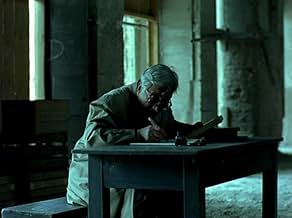
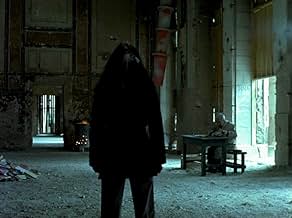
"Notre Musique" is divided into three sections: the first (12 minutes) is subtitled "Kingdom 1 Hell" and the last (6 minutes) is called "Kingdom 3 Heaven." The long middle section (62 minutes) is "Kingdom 2 Purgatory." "Hell" is a montage depicting scenes of war battles and the carnage that is created by war - made of clips from documentary archival footage and fictional feature films. "Heaven" is a contemporary shoot in a lush park-like setting next to a lake, where it's peaceable and sunny, a lovely stream meanders through, and a few people frolic about. Both of these brief sequences could easily have been made by film school students.
It's difficult to describe the main middle section. It takes place at an international conference in Sarajevo of intellectuals, literati, journalists, diplomats and arts people. Was it an actual conference or something staged for the film? You can't tell just from watching. Several well known people play themselves, including Godard. But mixed in among them are actors playing roles of people given other names.
There's lots of talk. A number of big ideas are casually put on the table, some intriguing but entirely unexplored (example: "killing a man to defend an idea isn't defending an idea, it's killing a man"), some certainly questionable or debatable (examples: "humane people don't start revolutions, they start libraries or cemeteries," or "if the house is already on fire, it's foolish to try to save the furniture"), others simply false on the face of it (example: "The only serious philosophical problem is suicide").
There are allusions to the Nazis; to the destruction - during the Bosnian war - and recent reconstruction of the nearby ancient Mostar Bridge, first built in 1566; to the perennial middle east problem of Palestine and Israel; to the seeming universality of man's inhumanity to man (example: Native Americans in full tribal regalia standing solemnly alongside the Mostar Bridge).
There is footage wasted on various moving forms of transportation planes, buses, cars, trains, streetcars and on people getting into and out of cars, like typical filler footage in a third rate TV drama from Burbank, CA. And there are little meaningless toss off scenes, like an impassive waiter serving flutes of wine carefully to six people seated around a table, a scene that segues into another, in which a fat male guest intrusively wraps a hammy arm around a shapely impassive waitress and pushes her through a little faux dance. So what's that all about the well off even intellectuals exploiting working people? Who knows.
The best bits occur in a seminar conducted by Godard himself, about the way in which cinema can portray opposite tendencies in human nature and society, what he refers to as "shot" and "reverse shot." He mentions several such polarities, e.g., certainty vs. ambiguity, victim vs. criminal. Another example: Godard asserts that the story of Jews in Israel is fiction, while the story of the Palestinians is documentary. What does that mean? One wonders.
Well, it's true that a larger-than-life romantic aura has developed around the Israelis and their struggle to secure a homeland over the past 60 years, while we think of Palestinians instead in undramatic, concrete terms of poverty, joblessness, lack of infrastructure, ineffective leadership, and so on.
Regarding cinema, Godard's comments made me think of scenes from the recent propagandistic documentary about Hugo Chavez and Venezuela, "The Revolution Will Not be Televised." In that film there is a sequence in which shots are fired from a bridge into a crowd below. Viewed from one angle, the scene invites the interpretation that opposition snipers are firing on a pro-Chavez crowd, but, viewed from another angle, the opposite conclusion is possible: that Chavez's people are shooting at opposition protesters. What is the truth? Both versions? Neither?
Animating this theme further are two young women who seem also to represent opposites. There is Judith Lerner (played by actress Sarah Adler), an Israeli journalist who chooses to live in Palestine. She has come to Sarajevo because "I wanted to see a place where reconciliation seems possible." Judith is an optimist. On the other hand we have Olga (Nade Dieu) who is depressed and suicidal, despite her comfortable life. She holds herself back from suicide only because she fears pain and the next world. In the end she is shot by marksmen, we are told, and we rejoin her in the final Heaven sequence.
I do agree with Godard that Purgatory could easily be imagined as a place where endless pseudo-intellectual blather keeps confusing and mesmerizing people, to their detriment. It's the sort of place that people who conduct themselves in this manner during life deserve to be stuck in for the hereafter. Talk is cheap and yet sometimes it has the power to move whole nations toward war or self destruction. Is this what he's driving at? Who can tell?
The only basis for recommending this film is that it is the creation of one of the great filmmakers of the last 50 years, and we owe Godard this respect, to observe any new work of his, approaching it soberly and with openness. But we are not required to genuflect to the master, casting a blind eye toward mediocrity. (In French, Arabic, English, Hebrew, Serbo-Croatian & Spanish) My rating: 6/10 (B-). (Film seen on 02/07/05). If you'd like to read more of my reviews, send me a message for directions to my websites.
"Notre Musique" is divided into three sections: the first (12 minutes) is subtitled "Kingdom 1 Hell" and the last (6 minutes) is called "Kingdom 3 Heaven." The long middle section (62 minutes) is "Kingdom 2 Purgatory." "Hell" is a montage depicting scenes of war battles and the carnage that is created by war - made of clips from documentary archival footage and fictional feature films. "Heaven" is a contemporary shoot in a lush park-like setting next to a lake, where it's peaceable and sunny, a lovely stream meanders through, and a few people frolic about. Both of these brief sequences could easily have been made by film school students.
It's difficult to describe the main middle section. It takes place at an international conference in Sarajevo of intellectuals, literati, journalists, diplomats and arts people. Was it an actual conference or something staged for the film? You can't tell just from watching. Several well known people play themselves, including Godard. But mixed in among them are actors playing roles of people given other names.
There's lots of talk. A number of big ideas are casually put on the table, some intriguing but entirely unexplored (example: "killing a man to defend an idea isn't defending an idea, it's killing a man"), some certainly questionable or debatable (examples: "humane people don't start revolutions, they start libraries or cemeteries," or "if the house is already on fire, it's foolish to try to save the furniture"), others simply false on the face of it (example: "The only serious philosophical problem is suicide").
There are allusions to the Nazis; to the destruction - during the Bosnian war - and recent reconstruction of the nearby ancient Mostar Bridge, first built in 1566; to the perennial middle east problem of Palestine and Israel; to the seeming universality of man's inhumanity to man (example: Native Americans in full tribal regalia standing solemnly alongside the Mostar Bridge).
There is footage wasted on various moving forms of transportation planes, buses, cars, trains, streetcars and on people getting into and out of cars, like typical filler footage in a third rate TV drama from Burbank, CA. And there are little meaningless toss off scenes, like an impassive waiter serving flutes of wine carefully to six people seated around a table, a scene that segues into another, in which a fat male guest intrusively wraps a hammy arm around a shapely impassive waitress and pushes her through a little faux dance. So what's that all about the well off even intellectuals exploiting working people? Who knows.
The best bits occur in a seminar conducted by Godard himself, about the way in which cinema can portray opposite tendencies in human nature and society, what he refers to as "shot" and "reverse shot." He mentions several such polarities, e.g., certainty vs. ambiguity, victim vs. criminal. Another example: Godard asserts that the story of Jews in Israel is fiction, while the story of the Palestinians is documentary. What does that mean? One wonders.
Well, it's true that a larger-than-life romantic aura has developed around the Israelis and their struggle to secure a homeland over the past 60 years, while we think of Palestinians instead in undramatic, concrete terms of poverty, joblessness, lack of infrastructure, ineffective leadership, and so on.
Regarding cinema, Godard's comments made me think of scenes from the recent propagandistic documentary about Hugo Chavez and Venezuela, "The Revolution Will Not be Televised." In that film there is a sequence in which shots are fired from a bridge into a crowd below. Viewed from one angle, the scene invites the interpretation that opposition snipers are firing on a pro-Chavez crowd, but, viewed from another angle, the opposite conclusion is possible: that Chavez's people are shooting at opposition protesters. What is the truth? Both versions? Neither?
Animating this theme further are two young women who seem also to represent opposites. There is Judith Lerner (played by actress Sarah Adler), an Israeli journalist who chooses to live in Palestine. She has come to Sarajevo because "I wanted to see a place where reconciliation seems possible." Judith is an optimist. On the other hand we have Olga (Nade Dieu) who is depressed and suicidal, despite her comfortable life. She holds herself back from suicide only because she fears pain and the next world. In the end she is shot by marksmen, we are told, and we rejoin her in the final Heaven sequence.
I do agree with Godard that Purgatory could easily be imagined as a place where endless pseudo-intellectual blather keeps confusing and mesmerizing people, to their detriment. It's the sort of place that people who conduct themselves in this manner during life deserve to be stuck in for the hereafter. Talk is cheap and yet sometimes it has the power to move whole nations toward war or self destruction. Is this what he's driving at? Who can tell?
The only basis for recommending this film is that it is the creation of one of the great filmmakers of the last 50 years, and we owe Godard this respect, to observe any new work of his, approaching it soberly and with openness. But we are not required to genuflect to the master, casting a blind eye toward mediocrity. (In French, Arabic, English, Hebrew, Serbo-Croatian & Spanish) My rating: 6/10 (B-). (Film seen on 02/07/05). If you'd like to read more of my reviews, send me a message for directions to my websites.
Godard's first really good film in a while
I first saw Notre Musique at the NY film festival, and responded to it strongly because it was, after going through a slew of his more recent work of the 80s and 90s (often hit or miss, more miss), a very well structured, interesting picture with a very distinct look and feel that balanced the elegiac and darkness with some light. Watching it again, I'm still fascinated most by the first segment 'Hell'. If this was just a stand-alone short film, I would rank it among some of Godard's best work from the 60s. It's brash, it's seemingly unending, the narration actually does fit the images on screen (which, from my perspective, is what ends up usually irking me with some of Godard's later work when he does this), and all of these images of civilization decaying through war and other disasters, and the machinery and technology used for all of this death and horror, really works to a great effect.
Purgatory, the second segment, is often quite good, as it's a really well-balanced mix of fiction and documentary as real life writers and professors and journalists go through issues like Sarajevo, troubles in the middle east, and cinema itself as Godard humorously and sometimes somberly goes through a lecture to some students as he's part of the setting. There's even a perfectly understated, interested performance by the lead Sarah Adler. When the film then transforms into the last act, Paradise, it kind of starts to break some of the power and interest in the previous sections of the film (I didn't really connect with much of the symbolism, as beautifully photographed as it all was). But what ends up really impressing me most about Notre Musique is that I really could understand most, if not all, of what many of these long stretches of dialog were about- unlike in some past, notoriously messy films by the director- and it worked without Godard's way of filming subjects and locations. Julien Hirsch's cinematography, going through the director's vision, is often so striking I'd say it's some of the best that was done in 2004 anywhere.
There's still some kind of documentarian's spirit at heart, and it really does work best in the conversations that go on in the film, as lots of subject matter gets covered. This mixed with a partially fictionalized story helps to make something pretty special, if not really sensational, and in its 80 minute running time nothing overstays its welcome. If anything, the film is almost too short by a few minutes. It's a mix of history, politics, poetry, cinema, and the meanings of life and death, and not often does it come off pretentious.
Purgatory, the second segment, is often quite good, as it's a really well-balanced mix of fiction and documentary as real life writers and professors and journalists go through issues like Sarajevo, troubles in the middle east, and cinema itself as Godard humorously and sometimes somberly goes through a lecture to some students as he's part of the setting. There's even a perfectly understated, interested performance by the lead Sarah Adler. When the film then transforms into the last act, Paradise, it kind of starts to break some of the power and interest in the previous sections of the film (I didn't really connect with much of the symbolism, as beautifully photographed as it all was). But what ends up really impressing me most about Notre Musique is that I really could understand most, if not all, of what many of these long stretches of dialog were about- unlike in some past, notoriously messy films by the director- and it worked without Godard's way of filming subjects and locations. Julien Hirsch's cinematography, going through the director's vision, is often so striking I'd say it's some of the best that was done in 2004 anywhere.
There's still some kind of documentarian's spirit at heart, and it really does work best in the conversations that go on in the film, as lots of subject matter gets covered. This mixed with a partially fictionalized story helps to make something pretty special, if not really sensational, and in its 80 minute running time nothing overstays its welcome. If anything, the film is almost too short by a few minutes. It's a mix of history, politics, poetry, cinema, and the meanings of life and death, and not often does it come off pretentious.
This one has to be seen
I've just come back from the cinema and it's raining very hard. But there's the sun, too, which is going down behind the mountains. It's very poetic. But not nearly as poetic as Jean Luc Godard's last film, "Notre Musique".
The movie is divided into three kingdoms: 1 - Enfer, 2 - Purgatoire and 3 - Paradis. The first part of the movie consists in a collage of various war images and situations accompanied by a wonderful music. Some very clever sentences are said off screen, too. "Death can be seen in two different ways: as the possible of the impossible or as the impossible of the possible". The second part shows us the crossed stories of some peoples meeting in Sarajevo for the Book Weeks: J. L. Godard himself, a young Israeli Journalist, a Palestinian and a Spanish poets, A young Hebrew girl with Russian origins, a Hebrew translator with Egyptian origins, some American natives, some natives of Sarajevo and other people speak about their experiences, they wishes, war, peace, poetry, history, life, death, cinema, reconciliation. J.L. Godard gives a lecture to some cinema students and shows them photographs. The third part takes place in paradise and shows us a girl who has been killed in a cinema by Israeli snipers who suspected her of being a terrorist ready to kill herself. She had a red bag with her and people thought it contained a bomb. In fact there were just books in it. The girl wanders near a river and encounters an American marine. Some boys are playing and reading books. Paradise is fenced and guarded by U.S. military forces.
This movie is truly amazing. In fact it is not just a film, it is poetry. In moments like these when cinema industry is dominated by fast, brainless, action-packed movies, it is a real pleasure and mind-freeing experience to see something that beautiful and poetic. This was presented this year in Cannes and didn't get much attention if I remember right. A journalist of "Le Nouvel Observateur" who usually gives very good advices, this time got it wrong saying that "Notre Musique" is a senile work. Not at all. It's the work of a director who has only improved with years and who has reached total serenity and great wisdom. This film does not give you ready-made, simple answers to common questions, it gives you some points which are incredibly interesting to develop and think about. Sarajevo is the ideal place where peoples, histories and cultures mix and sometimes sadly clash. When the young girl is asked "Why Sarajevo?" the touching answer she gives is "Because Palestine. I come from Tel Aviv and wanted to see a place where people can get along in harmony". There's so much to think about this movie. And everything is filmed so well, so limpidly, with such a mastery, you can't stop staring at the screen. "Godard is the only film director in the world" (Freddy Buache)
The movie is divided into three kingdoms: 1 - Enfer, 2 - Purgatoire and 3 - Paradis. The first part of the movie consists in a collage of various war images and situations accompanied by a wonderful music. Some very clever sentences are said off screen, too. "Death can be seen in two different ways: as the possible of the impossible or as the impossible of the possible". The second part shows us the crossed stories of some peoples meeting in Sarajevo for the Book Weeks: J. L. Godard himself, a young Israeli Journalist, a Palestinian and a Spanish poets, A young Hebrew girl with Russian origins, a Hebrew translator with Egyptian origins, some American natives, some natives of Sarajevo and other people speak about their experiences, they wishes, war, peace, poetry, history, life, death, cinema, reconciliation. J.L. Godard gives a lecture to some cinema students and shows them photographs. The third part takes place in paradise and shows us a girl who has been killed in a cinema by Israeli snipers who suspected her of being a terrorist ready to kill herself. She had a red bag with her and people thought it contained a bomb. In fact there were just books in it. The girl wanders near a river and encounters an American marine. Some boys are playing and reading books. Paradise is fenced and guarded by U.S. military forces.
This movie is truly amazing. In fact it is not just a film, it is poetry. In moments like these when cinema industry is dominated by fast, brainless, action-packed movies, it is a real pleasure and mind-freeing experience to see something that beautiful and poetic. This was presented this year in Cannes and didn't get much attention if I remember right. A journalist of "Le Nouvel Observateur" who usually gives very good advices, this time got it wrong saying that "Notre Musique" is a senile work. Not at all. It's the work of a director who has only improved with years and who has reached total serenity and great wisdom. This film does not give you ready-made, simple answers to common questions, it gives you some points which are incredibly interesting to develop and think about. Sarajevo is the ideal place where peoples, histories and cultures mix and sometimes sadly clash. When the young girl is asked "Why Sarajevo?" the touching answer she gives is "Because Palestine. I come from Tel Aviv and wanted to see a place where people can get along in harmony". There's so much to think about this movie. And everything is filmed so well, so limpidly, with such a mastery, you can't stop staring at the screen. "Godard is the only film director in the world" (Freddy Buache)
well intentioned but lacks depth (even though it seems the opposite)
It is sometimes hard for creative and well meaning filmmakers to accept the fact that their political and philosophical understanding of the world might not be as rounded as their movie making skills. Godard shows in this excruciating film that he clearly falls into this category of filmmakers. 'Notre Musique' is well intentioned, for sure. Godard seeks to obfuscate the lines between reality and drama, the sensible and the absurd (heaven guarded by US marines). In doing so, however, the film becomes Godard's 'international politics explained' more than an engaging piece of cinema. Being a visual medium as it is, cinema needs to add layers of subtlety to what's seen (so that we look beyond that which is seen), in order to be not only an effective messenger but also an exercise in self-exploration. 'Notre Musique' is a blaring loudspeaker with Godard in control of the microphone.


Você sabia?
- Citações
Olga Brodsky: If anyone understands me, then I wasn't clear.
- ConexõesEdited from Anjos das Ruas (1943)
- Trilhas sonorasDas Buch der Klänge
Composed by Hans Otte
Principais escolhas
Faça login para avaliar e ver a lista de recomendações personalizadas
- How long is Our Music?Fornecido pela Alexa
Detalhes
- Data de lançamento
- Países de origem
- Centrais de atendimento oficiais
- Idiomas
- Também conhecido como
- Our Music
- Locações de filme
- Empresas de produção
- Consulte mais créditos da empresa na IMDbPro
Bilheteria
- Faturamento bruto nos EUA e Canadá
- US$ 139.922
- Fim de semana de estreia nos EUA e Canadá
- US$ 8.210
- 28 de nov. de 2004
- Faturamento bruto mundial
- US$ 293.681
Contribua para esta página
Sugerir uma alteração ou adicionar conteúdo ausente