AVALIAÇÃO DA IMDb
6,6/10
2,8 mil
SUA AVALIAÇÃO

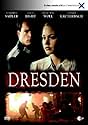
Adicionar um enredo no seu idiomaA romance between a British pilot hiding in Germany and a German nurse is shown on the background of massive allied bombing of Dresden towards the end of World War 2.A romance between a British pilot hiding in Germany and a German nurse is shown on the background of massive allied bombing of Dresden towards the end of World War 2.A romance between a British pilot hiding in Germany and a German nurse is shown on the background of massive allied bombing of Dresden towards the end of World War 2.
- Direção
- Roteiristas
- Estrelas
- Prêmios
- 4 vitórias e 5 indicações no total


Andreas Guenther
- 1. Feldgendarm
- (as Andreas Günther)
- Direção
- Roteiristas
- Elenco e equipe completos
- Produção, bilheteria e muito mais no IMDbPro
6,62.7K
1
2
3
4
5
6
7
8
9
10
Avaliações em destaque
Insulting
James Cameron is to blame. In his 1997 hit "Titanic" he used, in a rather tasteless way, a real-life tragedy as backdrop for a larger-than-life love story. Now some stupid German TV producers wanted to do just the same and came up with something even more tasteless.
The first thing I noticed while watching this much anticipated "TV event" was, that all the British spoke German. I wondered why that British pilot in Dresden tried to avoid talking to Germans, because when he spoke, it was always in perfect German without any accent (I might add, that in the "Making-of" features which promoted the film beforehand, it was pointed out that only British actors were cast for the British parts, for greater authenticity). Have you people never heard of the concept of "subtitling"?
The story of this film comes straight out of our favorite handbook "How to write a screenplay for beginners", so everything is trite, obvious and corny, from the way our heroine meets her hero just as she is about to get engaged, to the point where she is miraculously re-united with her dying father so he can whisper "I'm sorry" before drawing his last breath... And as you might expect, the directing is as trite and unimaginative as is the story.
When it comes to the bombing, there is a lot of explosions and fire, which is not the least impressive, as we have seen better explosions and bigger fires in hundreds of Hollywood films. Of course they throw in some gore (but not too much, as this is supposed to be prime time material), so no one can blame them of not having shown the "real" horror of war.
Some thing I liked was the cast and the acting, especially that of some of the supporting actors, for example Wolfgang Stumph as a priest and Katharina Meinecke as Annas mother. I really liked Susanne Bormann as the heroine's sister. I'd rather have followed her through the film instead of Felicitas Woll's Anna, that annoying prig who never hesitates to dump her fiancé (without telling him, of course) in favour of a handsome Englishman she barely knows. Oh, how I hate this kind of women.
The first thing I noticed while watching this much anticipated "TV event" was, that all the British spoke German. I wondered why that British pilot in Dresden tried to avoid talking to Germans, because when he spoke, it was always in perfect German without any accent (I might add, that in the "Making-of" features which promoted the film beforehand, it was pointed out that only British actors were cast for the British parts, for greater authenticity). Have you people never heard of the concept of "subtitling"?
The story of this film comes straight out of our favorite handbook "How to write a screenplay for beginners", so everything is trite, obvious and corny, from the way our heroine meets her hero just as she is about to get engaged, to the point where she is miraculously re-united with her dying father so he can whisper "I'm sorry" before drawing his last breath... And as you might expect, the directing is as trite and unimaginative as is the story.
When it comes to the bombing, there is a lot of explosions and fire, which is not the least impressive, as we have seen better explosions and bigger fires in hundreds of Hollywood films. Of course they throw in some gore (but not too much, as this is supposed to be prime time material), so no one can blame them of not having shown the "real" horror of war.
Some thing I liked was the cast and the acting, especially that of some of the supporting actors, for example Wolfgang Stumph as a priest and Katharina Meinecke as Annas mother. I really liked Susanne Bormann as the heroine's sister. I'd rather have followed her through the film instead of Felicitas Woll's Anna, that annoying prig who never hesitates to dump her fiancé (without telling him, of course) in favour of a handsome Englishman she barely knows. Oh, how I hate this kind of women.
Dresden - fire from the skies and love in the earth
This film, as you can guess from the title, is about the destruction of Dresden by the RAF (Royal Aircraft), but in reality this is only the background for the love story lived by a British pilot fighter whose plane was shot down and a German nurse in Dresden. Well, a dramatic story all down the line! When I went to the video store I found on the shelf a DVD called "Dresden - O Inferno" (the title in Portuguese) and my curiosity was raised when I discovered that it was a German film. I had no information at all about the director, actors etc, but I took my chances and rented the film. When I arrived home I discovered through IMDb that this was a television film. After this bit of information I was not expecting much of the film in spite of some good reviews. Well, I think that for those that don't care too much about logic, it's worth a watch.
What makes this film interesting is that you'll see the bombing of Dresden from the German point of view. As it is a television film "Dresden" was made for the big audience and not for intellectuals. How would the Germans describe the bombing of Dresden? How would they portray the allies? The film tries to be objective - it shows the gruesome details of the destruction of Dresden and shows as well the nazi terror dominant in Hitler's last days. It has a cast of British and German actors and doesn't try to demonize either side. It's much more concerned with the love story lived by the British pilot with the German nurse than with historical details and it's an appeal for peace and understanding. The plot is as full of holes as a swiss cheese, sometimes bordering on the incredible. But if you employ some suspension of disbelief "Dresden" will move you. There's good acting, good cinematography and the sweet Felicitas Woll.
What makes this film interesting is that you'll see the bombing of Dresden from the German point of view. As it is a television film "Dresden" was made for the big audience and not for intellectuals. How would the Germans describe the bombing of Dresden? How would they portray the allies? The film tries to be objective - it shows the gruesome details of the destruction of Dresden and shows as well the nazi terror dominant in Hitler's last days. It has a cast of British and German actors and doesn't try to demonize either side. It's much more concerned with the love story lived by the British pilot with the German nurse than with historical details and it's an appeal for peace and understanding. The plot is as full of holes as a swiss cheese, sometimes bordering on the incredible. But if you employ some suspension of disbelief "Dresden" will move you. There's good acting, good cinematography and the sweet Felicitas Woll.
6lual
Though being called "Dresden", the city only makes a guest appearance
Just like Kleiner_Fuchs after watching this movie and other recent Teamworxx productions like "Sturmflut" I thought that, had Cameron not made "Titanic", these people would probably not rely so heavily on the ever repeated formula of a fictional doomed love with a hazardous historical background (though this is by no means a new concept). Contrary to my predecessor I think that in "Titanic" this worked out fine. But this may be mainly because a ship is a so much smaller microcosm than a city and the actual historical figures,though playing minor parts in the story pop up every few minutes.
It might have worked in "Dresden" as well, had not been the focus so strictly on the English pilot and the Mauth family (plus a few scenes with Annas co-worker and her Jewish partner). From what I have read and seen on TV and listened to I have learned that there are so many interesting and heartbreaking actual stories. I think the makers of the movie should have worked more of them in for it was obvious in the movie that the parts that were the most shocking were the ones that were based on real events - just sad, that they were so few of them.
Also, since the movie was so very focused on a love story that obviously not many people cared about, the structure of this mini-series was somehow awkward. Why make a two-parter about the bombing of Dresden if the bombers don't actually leave the ground until the last scene of part one and only reach the city halfway into part two? Had this been cut down by an hour and shown as one 2-hour TV-movie I believe it might have had a greater impact.
Still I give this movie 6 stars, because the final 45 minutes actually do work. Of course, the focus is mainly an Anna and the two men running around in the city with her but there are many touching and horrifying scenes in which we as viewers get a little insight into how terrible and traumatizing it must have been to be at this place in this night. Sure, the actual events were still much worse and to tell survivors after viewing this one understands what it was like in Dresden is insulting, but it is mostly in small scenes like the one where a group of people asks a young soldier to shoot them because nobody will survive this anyhow, that I felt a big lump in my throat and got a better understanding of the horror than in the (arguably well done for a TV production) scenes of the inferno.
Tha final scene in which the rebuilt Frauenkirche is re-inaugurated worked for me. I think I understood a lot better now, after watching this movie, how important the building was for the people of Dresden, and why for many of the survivors it was a symbol of their wounds slowly healing and coming to terms with these traumatizing events.
But as a whole, this movie is not about "Dresden", thus it should not have this title. It is just about a bunch of uninteresting poorly written, cliché-based cardboard characters that are, though being mostly played by very competent actors, so completely unappealing, that they ruin the movie.
It might have worked in "Dresden" as well, had not been the focus so strictly on the English pilot and the Mauth family (plus a few scenes with Annas co-worker and her Jewish partner). From what I have read and seen on TV and listened to I have learned that there are so many interesting and heartbreaking actual stories. I think the makers of the movie should have worked more of them in for it was obvious in the movie that the parts that were the most shocking were the ones that were based on real events - just sad, that they were so few of them.
Also, since the movie was so very focused on a love story that obviously not many people cared about, the structure of this mini-series was somehow awkward. Why make a two-parter about the bombing of Dresden if the bombers don't actually leave the ground until the last scene of part one and only reach the city halfway into part two? Had this been cut down by an hour and shown as one 2-hour TV-movie I believe it might have had a greater impact.
Still I give this movie 6 stars, because the final 45 minutes actually do work. Of course, the focus is mainly an Anna and the two men running around in the city with her but there are many touching and horrifying scenes in which we as viewers get a little insight into how terrible and traumatizing it must have been to be at this place in this night. Sure, the actual events were still much worse and to tell survivors after viewing this one understands what it was like in Dresden is insulting, but it is mostly in small scenes like the one where a group of people asks a young soldier to shoot them because nobody will survive this anyhow, that I felt a big lump in my throat and got a better understanding of the horror than in the (arguably well done for a TV production) scenes of the inferno.
Tha final scene in which the rebuilt Frauenkirche is re-inaugurated worked for me. I think I understood a lot better now, after watching this movie, how important the building was for the people of Dresden, and why for many of the survivors it was a symbol of their wounds slowly healing and coming to terms with these traumatizing events.
But as a whole, this movie is not about "Dresden", thus it should not have this title. It is just about a bunch of uninteresting poorly written, cliché-based cardboard characters that are, though being mostly played by very competent actors, so completely unappealing, that they ruin the movie.
Too much romance, too less bombs
When you are going to watch a movie called "Dresden", it's logical to think that historical bombing of Dresden must be the main argument in it. Unfortunately in this movie the bombing is almost residual in its plot.
We can see a beautiful (but unbelievable) love story between a British officer of the RAF and a pretty German nurse (all in a few days). No real problem about this, but for my was a disappoint because I waited for something different, for more history and less story.
Finally, bombing of the city happens, of course, but it results no impressive. It was one of the most terrible bombings made in history, but in my opinion this is not reflected in the movie, and this is the main cause of its fail.
Briefing, not a bad movie, but if you want to see a war movie or a disaster movie, try another.
We can see a beautiful (but unbelievable) love story between a British officer of the RAF and a pretty German nurse (all in a few days). No real problem about this, but for my was a disappoint because I waited for something different, for more history and less story.
Finally, bombing of the city happens, of course, but it results no impressive. It was one of the most terrible bombings made in history, but in my opinion this is not reflected in the movie, and this is the main cause of its fail.
Briefing, not a bad movie, but if you want to see a war movie or a disaster movie, try another.
A welcoming change...
Following a friend's advice, I just finished watching "Dresden".
"Dresden" deals with two major themes: one dealing with the war itself, showing the German civilians living day to day in fear of severe retaliation on behalf of the British RAF. It also shows how the British pilots, who risk their lives to bomb the enemy, and how ruthless the Nazi's were.
The other theme is a fragment of the previous theme, showing a love-story between a stranded British pilot and a German civilian nurse working in a local hospital during the war.
Hence of course why this film is called "Dresden"; not because of the city but because of anyone and anything taking place in the city of Dresden.
Also worth to mention is that "Dresden" is unlike other Hollywood movies dealing World War 2. It's not meant to only entertain the viewer but to educate as well. This is partially done by some intense dramatic moments and painful, shocking detailed images.
About the rest of the movie; I was surprised by the good acting performances done by a relative unknown cast. At least I don't know any of them. It also was quite obvious that a large budget was available, looking at the good quality of production when keeping in mind that "Dresden" is 'only' a TV-movie.
Conclusion: if you want to learn something more about World War 2 while 'witnessing' it from another point of view and at the same time enjoying an intriguing story about two 'enemies' falling in love, then "Dresden" is something for you.
If you want American patriotism, a single sided view on World War 2 and lots of entertainment, then I'm sure that there are plenty of Hollywood-films out there.
My score, keeping in mind it's 'only' a TV-film: 8 out of 10.
"Dresden" deals with two major themes: one dealing with the war itself, showing the German civilians living day to day in fear of severe retaliation on behalf of the British RAF. It also shows how the British pilots, who risk their lives to bomb the enemy, and how ruthless the Nazi's were.
The other theme is a fragment of the previous theme, showing a love-story between a stranded British pilot and a German civilian nurse working in a local hospital during the war.
Hence of course why this film is called "Dresden"; not because of the city but because of anyone and anything taking place in the city of Dresden.
Also worth to mention is that "Dresden" is unlike other Hollywood movies dealing World War 2. It's not meant to only entertain the viewer but to educate as well. This is partially done by some intense dramatic moments and painful, shocking detailed images.
About the rest of the movie; I was surprised by the good acting performances done by a relative unknown cast. At least I don't know any of them. It also was quite obvious that a large budget was available, looking at the good quality of production when keeping in mind that "Dresden" is 'only' a TV-movie.
Conclusion: if you want to learn something more about World War 2 while 'witnessing' it from another point of view and at the same time enjoying an intriguing story about two 'enemies' falling in love, then "Dresden" is something for you.
If you want American patriotism, a single sided view on World War 2 and lots of entertainment, then I'm sure that there are plenty of Hollywood-films out there.
My score, keeping in mind it's 'only' a TV-film: 8 out of 10.


Você sabia?
- CuriosidadesThe character of Simon Goldberg was based on diarist and professor Victor Klemperer.
- Erros de gravaçãoWhen Robert enters his Lancaster he enters through the rear door and turns left. He then proceeds to the pilot's seat at the front of the aircraft, however as he entered through the rear door and turned left he should head towards the rear gunner's position at the rear of the aircraft. When his Lancaster takes off he also incorrectly advances the throttles on his own - his flight engineer would also advance the throttles eventually taking over, allowing the pilot to use both hands on the control column.
- Versões alternativasA shorter International Version (144 minutes) has been released on DVD at least in Finland, Sweden, Denmark and Hong Kong, while the longer Original Version (176 minutes) has been released on DVD in Germany and USA. Interestingly, it was this longer three-hour version that was broadcast on TV in Finland, despite the fact that the Finnish DVD release is the shorter version.
- ConexõesFeatures Die große Liebe (1942)
Principais escolhas
Faça login para avaliar e ver a lista de recomendações personalizadas
Detalhes
- Data de lançamento
- País de origem
- Centrais de atendimento oficiais
- Idiomas
- Também conhecido como
- Dresden
- Locações de filme
- Colônia, Renânia do Norte-Vestfália, Alemanha(air raid scenes)
- Empresas de produção
- Consulte mais créditos da empresa na IMDbPro
Bilheteria
- Orçamento
- € 10.000.000 (estimativa)
- Tempo de duração
- 2 h 56 min(176 min)
- Cor
- Proporção
- 1.78 : 1
Contribua para esta página
Sugerir uma alteração ou adicionar conteúdo ausente