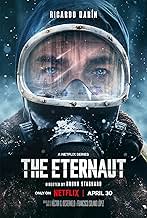
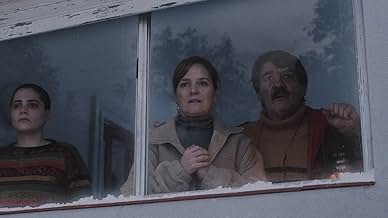
Acompanha Juan Salvo e um grupo de sobreviventes na luta contra uma ameaça alienígena que está sob a direção de uma força invisível depois que uma terrível nevasca ceifa a vida de milhões de... Ler tudoAcompanha Juan Salvo e um grupo de sobreviventes na luta contra uma ameaça alienígena que está sob a direção de uma força invisível depois que uma terrível nevasca ceifa a vida de milhões de pessoas.Acompanha Juan Salvo e um grupo de sobreviventes na luta contra uma ameaça alienígena que está sob a direção de uma força invisível depois que uma terrível nevasca ceifa a vida de milhões de pessoas.
- Prêmios
- 1 indicação no total
Explorar episódios
7,333.5K
1
2
3
4
5
6
7
8
9
10
Avaliações em destaque
I really like it
I read the comic as a child and then reread it as an adult, and let me tell you, this Netflix adaptation is much better than I expected.
Darin doesn't disappoint, and the rest of the cast is up to par. The effects are excellent, and the setting and filmmaking are also very well done.
While some key points differ from the original story, it's understandable given the complexity of adapting it to our times, but I didn't notice any unforgivable flaws in the script.
Overall, I really liked it. At times, it seemed a bit slow, but it's still enjoyable. A series that entertains without resorting to clichés.
Darin doesn't disappoint, and the rest of the cast is up to par. The effects are excellent, and the setting and filmmaking are also very well done.
While some key points differ from the original story, it's understandable given the complexity of adapting it to our times, but I didn't notice any unforgivable flaws in the script.
Overall, I really liked it. At times, it seemed a bit slow, but it's still enjoyable. A series that entertains without resorting to clichés.
Argentine apocalyptic series
One of the attractive points of this series is the use of special effects and new technologies in its production. Filming in different locations in Buenos Aires and using digital techniques to create the snow has contributed to the story's more realism. Also, the characters face moral and human challenges that make the viewer think
The series "The Eternaut" has managed to maintain the atmosphere of the original comic while providing updates to the story and characters. Bruno Stagnaro direction and the strong performances of the actors, especially Ricardo Darin, have made the viewer identify with the depth of emotions and challenges of the characters. In addition, the background of Buenos Aires as a living element in the story adds to the appeal of this work.
9 Stars, excellent adaptation!
Excellent. I didn't expect a good adaptation from Netflix, given its history of failures, but they did it. A 70-year-old comic had to be updated, and it's fine. The original story is a classic that particularly portrays the fight against fascism, and in its second version, against the Argentine military government. For audiences far removed from the social, cultural, and historical spheres of Latin America, it's probably difficult to identify with the plot or historical events like the Malvinas argentinas War. But a story that goes from - to +, and ends on a high note with pure science fiction is worth it, even for the most demanding audiences. It's highly recommended to read the original comic to get a taste for it. I can't wait for season two... I hope it doesn't take two years!
Some clarifications for the non-Latin American/Hispanic public. SPOILERS 👇
In Argentina, guns aren't sold the same way they are in the US, for example. Access to the legal market is almost nonexistent. That's why certain individuals don't want to pick up a gun, because it's abnormal in such a society, and it goes against their principles, in Elena's case, because she is a medical doctor.
Distrust isn't common around everyone; neighbors know and greet each other, and generally, coexistence is good; it's not a generally defensive society.
Many situations are impossible to translate, much less behaviors. What may seem strange is the common way of behaving in these countries. Things are taken for granted, obvious, and there's no need to express them; just act or think about them/reflect. Silences are normal and have their meanings depending on the context.
In Buenos Aires, it has only snowed twice in its entire history, and obviously not in the summer. Originally, they think it might be asbestos from the burning power station, but they quickly realize that the shiny snow is the cause. There is no other reason, and there can be no other reason. In the original comic, they realize it just as quickly.
For a character to leave even with the possibility of death, is part of human irrationality, and they must keep that in mind at all times. Humans in these situations are not rational.
The beetles originally appear in the comic, as do the other creatures. The design is very similar. Keep in mind that this comic was written in the 1950s and translated into several languages. It's a precursor to science fiction, not an imitation. It existed 70 years before and is very faithful to the original work.
The slow pace in the first four episodes is due to the psychological foundations being established, where the characters adapt to what is happening and feel paranoia taking over. Then everything speeds up.
The secondary narratives that seem pointless will later be resolved in what will be the second and final season. Remember that this is an already known work, and a comic book; not everything is given to the viewer.
P. S. Claiming that those who positively rate the series are likely relatives of the actors is deeply disrespectful. You may not like it, but that doesn't mean you should dismiss something because you simply don't understand it or don't like it. This is a work that has waited decades to be adapted, with a huge fan base, and above all, because it has a very distinctive idiosyncrasy from the Río de la Plata region, and because it is loved by millions of Argentinians. P. S. 2. Watch it with subtitles and stop complaining about the dubbing. We watch American movies all the time, and we don't complain.
Some clarifications for the non-Latin American/Hispanic public. SPOILERS 👇
In Argentina, guns aren't sold the same way they are in the US, for example. Access to the legal market is almost nonexistent. That's why certain individuals don't want to pick up a gun, because it's abnormal in such a society, and it goes against their principles, in Elena's case, because she is a medical doctor.
Distrust isn't common around everyone; neighbors know and greet each other, and generally, coexistence is good; it's not a generally defensive society.
Many situations are impossible to translate, much less behaviors. What may seem strange is the common way of behaving in these countries. Things are taken for granted, obvious, and there's no need to express them; just act or think about them/reflect. Silences are normal and have their meanings depending on the context.
In Buenos Aires, it has only snowed twice in its entire history, and obviously not in the summer. Originally, they think it might be asbestos from the burning power station, but they quickly realize that the shiny snow is the cause. There is no other reason, and there can be no other reason. In the original comic, they realize it just as quickly.
For a character to leave even with the possibility of death, is part of human irrationality, and they must keep that in mind at all times. Humans in these situations are not rational.
The beetles originally appear in the comic, as do the other creatures. The design is very similar. Keep in mind that this comic was written in the 1950s and translated into several languages. It's a precursor to science fiction, not an imitation. It existed 70 years before and is very faithful to the original work.
The slow pace in the first four episodes is due to the psychological foundations being established, where the characters adapt to what is happening and feel paranoia taking over. Then everything speeds up.
The secondary narratives that seem pointless will later be resolved in what will be the second and final season. Remember that this is an already known work, and a comic book; not everything is given to the viewer.
P. S. Claiming that those who positively rate the series are likely relatives of the actors is deeply disrespectful. You may not like it, but that doesn't mean you should dismiss something because you simply don't understand it or don't like it. This is a work that has waited decades to be adapted, with a huge fan base, and above all, because it has a very distinctive idiosyncrasy from the Río de la Plata region, and because it is loved by millions of Argentinians. P. S. 2. Watch it with subtitles and stop complaining about the dubbing. We watch American movies all the time, and we don't complain.
Is it possible to make quality science fiction in Argentina? Check out Héctor Germán Oesterheld's work and its adaptation...
For me, as a Uruguayan, the Argentine influence is always a constant; it's not for nothing that we're so closely related.
As a science fiction fan, Héctor Germán Oesterheld's work, published in the 1950s, marks a turning point for the genre... it predates "Dune" and "Star Wars," considered the fathers of science fiction. But it's also a work ahead of its time; perhaps today, with so much material about dystopian futures, its impact isn't as noticeable.
But also, as an advocate for social justice, it's impossible to separate what happened to the author and his family with that tragic ending that still hurts a lot to this day.
When I found out that Netflix would be making an adaptation, I was quite scared; it's not easy to capture the magnificence of this work on screen. However, people like Bruno Stagnaro, whom we know from "Pizza, Beer, Weed" or "Okupas," or people of the caliber of Ricardo Darín or Cesar Troncoso, gave me great peace of mind.
Its premiere marks a milestone in the history of Latin American fiction; along with "One Hundred Years of Solitude," it is one of the most financially invested works, and luckily we see that reflected on screen.
The story, adapted from Oesterheld's classic but in a modern era, with current problems and all of Argentina's history behind it, such as the references to political issues or the Falklands War, sets an extremely powerful context.
However, it is the setting of that vast and desolate Buenos Aires and some of the acting that elevate this series to become, over time, a cult favorite.
I have heard and read many criticisms about the series, which, in my opinion, are unjustified. I wish series from other countries with bigger budgets could convey what Stagnaro conveys, whether it's watching the protagonists play Truco, listening to Mercedes Sosa, or the mantra repeated by Tano Favalli, "No one saves themselves alone." "El Eternauta" is pure history; it's past, present, and future, and above all, it's a message from Argentina and Latin America to the world that we have stories, grit, heart, and talent to direct and act, that there's nothing to envy the rest of the world, and that this series will only get better and better...
As a science fiction fan, Héctor Germán Oesterheld's work, published in the 1950s, marks a turning point for the genre... it predates "Dune" and "Star Wars," considered the fathers of science fiction. But it's also a work ahead of its time; perhaps today, with so much material about dystopian futures, its impact isn't as noticeable.
But also, as an advocate for social justice, it's impossible to separate what happened to the author and his family with that tragic ending that still hurts a lot to this day.
When I found out that Netflix would be making an adaptation, I was quite scared; it's not easy to capture the magnificence of this work on screen. However, people like Bruno Stagnaro, whom we know from "Pizza, Beer, Weed" or "Okupas," or people of the caliber of Ricardo Darín or Cesar Troncoso, gave me great peace of mind.
Its premiere marks a milestone in the history of Latin American fiction; along with "One Hundred Years of Solitude," it is one of the most financially invested works, and luckily we see that reflected on screen.
The story, adapted from Oesterheld's classic but in a modern era, with current problems and all of Argentina's history behind it, such as the references to political issues or the Falklands War, sets an extremely powerful context.
However, it is the setting of that vast and desolate Buenos Aires and some of the acting that elevate this series to become, over time, a cult favorite.
I have heard and read many criticisms about the series, which, in my opinion, are unjustified. I wish series from other countries with bigger budgets could convey what Stagnaro conveys, whether it's watching the protagonists play Truco, listening to Mercedes Sosa, or the mantra repeated by Tano Favalli, "No one saves themselves alone." "El Eternauta" is pure history; it's past, present, and future, and above all, it's a message from Argentina and Latin America to the world that we have stories, grit, heart, and talent to direct and act, that there's nothing to envy the rest of the world, and that this series will only get better and better...
Yes recommend, watch with original dialogue & subtitles.
I'm a UK viewer watching the original version with English subtitles. I think this has a good slow-burn human story about an event & invasion, and all the problem solving & personal drama that ensues.
If you are after another US-centric, Hollywood cheese-fest, like Independence Day or Starship Troopers then look elsewhere.
But for those who like their plots to revolve around the unfolding of the narrative and human drama in sci-fi movies- this is a very decent watch. The principal male character is excellent, and i think I've seen him before in other Argentinian films.
I think the bad reviews will largely come from the US and the sort of sci fans that like explosion based fun and marvel film style battles, rather than drama.
If you are after another US-centric, Hollywood cheese-fest, like Independence Day or Starship Troopers then look elsewhere.
But for those who like their plots to revolve around the unfolding of the narrative and human drama in sci-fi movies- this is a very decent watch. The principal male character is excellent, and i think I've seen him before in other Argentinian films.
I think the bad reviews will largely come from the US and the sort of sci fans that like explosion based fun and marvel film style battles, rather than drama.
Você sabia?
- CuriosidadesBased on a serialized comic strip published between 1957 and 1959.
- Erros de gravaçãoThe battery pack connection that opens the garage gate is wrong. The batteries are in short circuit.
- ConexõesFeatured in The Eternaut Netflix Series Review - El Eternauta (2025)
Principais escolhas
Faça login para avaliar e ver a lista de recomendações personalizadas
- How many seasons does The Eternaut have?Fornecido pela Alexa
Detalhes
- Data de lançamento
- País de origem
- Central de atendimento oficial
- Idioma
- Também conhecido como
- The Eternaut
- Locações de filme
- Empresa de produção
- Consulte mais créditos da empresa na IMDbPro
- Tempo de duração
- 1 h(60 min)
- Cor
- Mixagem de som
- Proporção
- 2.39:1
Contribua para esta página
Sugerir uma alteração ou adicionar conteúdo ausente