IMDb RATING
7.4/10
14K
YOUR RATING


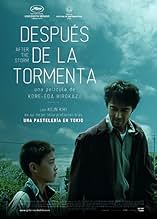
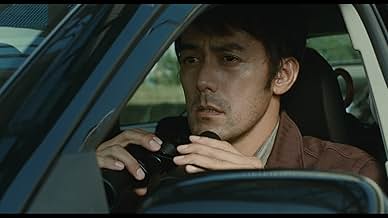
After the death of his father, a private detective struggles to find child support money and reconnect with his son and ex-wife.After the death of his father, a private detective struggles to find child support money and reconnect with his son and ex-wife.After the death of his father, a private detective struggles to find child support money and reconnect with his son and ex-wife.
- Awards
- 2 wins & 13 nominations total



Sosuke Ikematsu
- Kento Machida
- (as Sôsuke Ikematsu)


- Director
- Writer
- All cast & crew
- Production, box office & more at IMDbPro
7.413.9K
1
2
3
4
5
6
7
8
9
10
Featured reviews
That gentle Kore-eda magic
Such a gentle, sad film. It's a story of letting a good life slip away not through a single bad decision, but by a succession of small ones, something we learn about a guy (Hiroshi Abe) only gradually. He's quite a deadbeat, gambling away money when he gets his hands on it, not paying his child support or rent, and stealing things from his widowed mother (Kirin Kiki) to take to the pawn shop. He's a hard guy to like or sympathize with, and a disappointment to everyone around him, most touchingly his ex-wife (Yoko Maki) and son.
Kore-eda wisely doesn't turn the film into a melodrama by trying to explain everything that's happened in these people's lives, but we can connect some of the dots with what he shows us. I wondered if the main character had known that his father was secretly proud of the book he had written, whether that would have made a difference in how he turned out. Maybe that's one of the saddest things, being aware of failure but seemingly unable (or unwilling) to take control and start taking positive steps again.
Kiki is wonderful in her part, shining especially in a flash of emotion where she wonders how things could have ended up this way. The moment where his son innocently asks him "are you who you wanted to be?" hits pretty hard too. And yet, none of them demonize him, and I'm pretty sure I judged him more than they did, even if his ex-wife stood up to all his BS pretty well. That's part of Kore-eda's magic, to be so incredibly gentle and accepting despite dealing with dark subjects. He also doesn't offer any excuses or a flimsy feel-good resolution. We can decide for ourselves what will happen with these characters, much as we have control over at least some of the decisions in our lives.
Kore-eda wisely doesn't turn the film into a melodrama by trying to explain everything that's happened in these people's lives, but we can connect some of the dots with what he shows us. I wondered if the main character had known that his father was secretly proud of the book he had written, whether that would have made a difference in how he turned out. Maybe that's one of the saddest things, being aware of failure but seemingly unable (or unwilling) to take control and start taking positive steps again.
Kiki is wonderful in her part, shining especially in a flash of emotion where she wonders how things could have ended up this way. The moment where his son innocently asks him "are you who you wanted to be?" hits pretty hard too. And yet, none of them demonize him, and I'm pretty sure I judged him more than they did, even if his ex-wife stood up to all his BS pretty well. That's part of Kore-eda's magic, to be so incredibly gentle and accepting despite dealing with dark subjects. He also doesn't offer any excuses or a flimsy feel-good resolution. We can decide for ourselves what will happen with these characters, much as we have control over at least some of the decisions in our lives.
So, what do you want to be when you grow up?
After The Storm is an absolutely brilliant film, as it deals with the trials and tribulations of a father & perceived loser in the face of challenging life circumstances. Hiroshi Abe plays the role of Shinoda Ryota, a detective that is financially broke, divorced and living in the illusion of his past glory as an award winning author. He struggles to make ends meet and often resorts to gambling, stealing and backhand deals that involves extortion in order to support himself and to pay child support for his only son, Shingo.
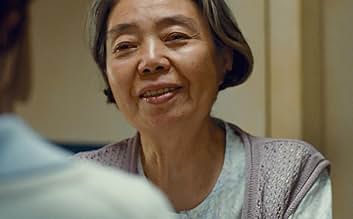
Another eye-catching performance to look put for is by Ryota's mom, Yoshiko, played by Kirin Kiki. She absolutely nails the role of a bewildered, lonely and regretful single grandmother, often dwelling on the unfortunate circumstances of the past and blaming her late husband for how her son turned out. She provides most of the comedic moments in the movie, as her tendency to be over-bearing and cheapskate at times, will make you giggle in the very least. She also seems obsessed and resigned to the idea that she will die alone, hence she keeps requesting her son & daughter to keep her company as much as possible. On top of that, she also harbors the faint hope that her son can be re-united with his ex-wife, and tries to set them up to sleep together during a night of storm.
Overall, the theme of After the Storm is dealing with the present circumstances in the face of unrealized dreams and broken hopes. This theme is strong in the characters of Ryota and Yoshiko. Additionally, Ryota's ex-wife, Kyoko (played by Yoko Maki) also plays an important role as she embodies the person whom manages to focus her life solely in the present times. Whilst Ryota still perceives himself as the father responsible for Shingo's journey through his current childhood phase, Kyoko has moved on and has accepted the fact that Ryota was never cut out to be a responsible father. She has even found a new boyfriend and except for the monthly visit, would rather Shingo not be spending time with his actual dad.
What really catches the eye about this movie, is that even in a fully developed country like Japan, with is high standards of living and apparent high-culture, there exists people like Ryota; someone who is left behind by the fast-moving economy and rebels against the norm of participating in the corporate rat-race to succeed career-wise. He can be pictured as someone who is very defensive whenever questioned on his life choices and habits. However, just like a starry-eyed young graduate, Ryota had dreams of his own for a stable government job, which somehow never came to be. However, the pride in him never dissolves, as the once Award-winning author still feels he deserves recognition for his past work.
Another eye-catching performance to look put for is by Ryota's mom, Yoshiko, played by Kirin Kiki. She absolutely nails the role of a bewildered, lonely and regretful single grandmother, often dwelling on the unfortunate circumstances of the past and blaming her late husband for how her son turned out. She provides most of the comedic moments in the movie, as her tendency to be over-bearing and cheapskate at times, will make you giggle in the very least. She also seems obsessed and resigned to the idea that she will die alone, hence she keeps requesting her son & daughter to keep her company as much as possible. On top of that, she also harbors the faint hope that her son can be re-united with his ex-wife, and tries to set them up to sleep together during a night of storm.
Overall, the theme of After the Storm is dealing with the present circumstances in the face of unrealized dreams and broken hopes. This theme is strong in the characters of Ryota and Yoshiko. Additionally, Ryota's ex-wife, Kyoko (played by Yoko Maki) also plays an important role as she embodies the person whom manages to focus her life solely in the present times. Whilst Ryota still perceives himself as the father responsible for Shingo's journey through his current childhood phase, Kyoko has moved on and has accepted the fact that Ryota was never cut out to be a responsible father. She has even found a new boyfriend and except for the monthly visit, would rather Shingo not be spending time with his actual dad.
What really catches the eye about this movie, is that even in a fully developed country like Japan, with is high standards of living and apparent high-culture, there exists people like Ryota; someone who is left behind by the fast-moving economy and rebels against the norm of participating in the corporate rat-race to succeed career-wise. He can be pictured as someone who is very defensive whenever questioned on his life choices and habits. However, just like a starry-eyed young graduate, Ryota had dreams of his own for a stable government job, which somehow never came to be. However, the pride in him never dissolves, as the once Award-winning author still feels he deserves recognition for his past work.
Contemplative cinema at its best
There are not many directors whose films I greet with enthusiasm, let alone Japanese ones. I think Hirokazu Koreeda is the only one. His films are a different breed - simple in design, but brilliant in architecture and sublime in closure.
Koreeda is the leading exponent in contemplative cinema. Under his minimalist approach, the essence of familial life and couplehood is distilled into abstract thoughts lingering like warm tendrils wrapped around your mind. The movie may be over but it refuses leave the confines of your consciousness and you would want to surrender to its warm lull again. The tone of After the Storm is pitch-perfect - nobody screams in your face, there are no pointing fingers, no low brow soap-opera. The acting is exquisite and nuanced. What is not said speaks louder than what is uttered. There is humour of the familiar kind; it is the kind of humour you laughed heartily because it is so familiar and you recognise the situations because you have gone through them before. There are not many filmmakers who are as sensitive as Koreeda. Above all else, this is a director who listens to characters' inner thoughts and emotions like an old master piano tuner and he knows how to calibrate the performances for everlasting emotional heft. For Koreeda, it is always about the small moments leading to the big truths.
After the Storm is not one of Koreeda's best films (it needlessly took too long to establish Ryota's character) but it easily transcends way above all the flashy films that inundate our cinemas like ants to candies. I wish I had a notebook last night because some of the metaphors are amazing. Here is one, asseverated by the grandmother Yoshiko, "The longer a stew sits, the more flavour it develops, just like people."
Koreeda is the leading exponent in contemplative cinema. Under his minimalist approach, the essence of familial life and couplehood is distilled into abstract thoughts lingering like warm tendrils wrapped around your mind. The movie may be over but it refuses leave the confines of your consciousness and you would want to surrender to its warm lull again. The tone of After the Storm is pitch-perfect - nobody screams in your face, there are no pointing fingers, no low brow soap-opera. The acting is exquisite and nuanced. What is not said speaks louder than what is uttered. There is humour of the familiar kind; it is the kind of humour you laughed heartily because it is so familiar and you recognise the situations because you have gone through them before. There are not many filmmakers who are as sensitive as Koreeda. Above all else, this is a director who listens to characters' inner thoughts and emotions like an old master piano tuner and he knows how to calibrate the performances for everlasting emotional heft. For Koreeda, it is always about the small moments leading to the big truths.
After the Storm is not one of Koreeda's best films (it needlessly took too long to establish Ryota's character) but it easily transcends way above all the flashy films that inundate our cinemas like ants to candies. I wish I had a notebook last night because some of the metaphors are amazing. Here is one, asseverated by the grandmother Yoshiko, "The longer a stew sits, the more flavour it develops, just like people."
Deep characters
Koreeda always knows how to make deep character portrayals that are calm on the surface but roiling underneath.
My love is deeper than the sea
Most films these days do not have something to 'say' anymore. They don't have a deeper meaning. And if they do, it's mostly superficial or so complex you don't really understand. 'After the Storm' by Hirokuzu Kore-eda has something to say, it's like a condensed moment of life. You will be dumbstruck by it's beauty.
The story deals with Ryota, struggling with financial problems, and trying to keep contact with his son after divorcement. He works as a private detective, spying on affairs and looking for lost cats while his real passion lies in writing literature.
The entire film is built around a central story part where they take shelter from a taifun, it involves scenes of such profound beauty, you will be moved to tears. The beauty lies in the things that are not spoken out, yet linger in the air like rain: the missed opportunities to be happy, love gone by and yet - still there.
To say the film deals with abandoned dreams in the face of reality is wrong, it's the contrary. The film says: If you keep waiting for beauty in life, you will not realize that it has already arrived. Just not the way you thought it would.
The story deals with Ryota, struggling with financial problems, and trying to keep contact with his son after divorcement. He works as a private detective, spying on affairs and looking for lost cats while his real passion lies in writing literature.
The entire film is built around a central story part where they take shelter from a taifun, it involves scenes of such profound beauty, you will be moved to tears. The beauty lies in the things that are not spoken out, yet linger in the air like rain: the missed opportunities to be happy, love gone by and yet - still there.
To say the film deals with abandoned dreams in the face of reality is wrong, it's the contrary. The film says: If you keep waiting for beauty in life, you will not realize that it has already arrived. Just not the way you thought it would.


Did you know
- TriviaAlbeit released later, this film wrapped earlier than Koreeda's previous film Our Little Sister (2015). The month-and-a-half filming of After the Storm took place starting in May 2014 in between the production of Our Little Sister, which was shot throughout a year.
- Quotes
Shinoda Yoshiko: I wonder why it is that men can't love the present. Either they just keep chasing whatever it is they've lost... or they keep dreaming beyond their reach.
- ConnectionsReferences My Neighbor Totoro (1988)
- SoundtracksShinkokyû
Music and lyrics by Takashi Nagazumi
Performed by Hanaregumi
Courtesy of Victor Records and Speedstar Records
- How long is After the Storm?Powered by Alexa
Details
- Release date
- Country of origin
- Official site
- Language
- Also known as
- Después de la tormenta
- Filming locations
- Kiyose, Tokyo, Japan(Train station)
- Production companies
- See more company credits at IMDbPro
Box office
- Gross US & Canada
- $272,132
- Opening weekend US & Canada
- $27,880
- Mar 19, 2017
- Gross worldwide
- $5,378,423
- Runtime
- 1h 58m(118 min)
- Color
- Sound mix
- Aspect ratio
- 1.85 : 1
Contribute to this page
Suggest an edit or add missing content