

A happily married professor, known for having many affairs with students, becomes the prime suspect when a young woman has gone missing.A happily married professor, known for having many affairs with students, becomes the prime suspect when a young woman has gone missing.A happily married professor, known for having many affairs with students, becomes the prime suspect when a young woman has gone missing.




- Director
- Writers
- All cast & crew
- Production, box office & more at IMDbPro
5.714.1K
1
2
3
4
5
6
7
8
9
10
Featured reviews
Started as a good mystery movie, ended as an overcomplicated psychological (philosophical?) thriller
The film's narrative evolved in complexity to the point that different paralel narratives, the blending of past and present, identities and versions of the same stories made everything confusing. Some people got that it was very deep because it questioned the reliability and indeed the concept of memory, etc., etc. However a more clear narrative and another, confusing finale would have been desirable
Great casting. Fresh perspective on a used and abused theme. Depth. But no wrapping up.
I loved to see Brosnan as an American homicide detective. The man has been becoming more and more of a genuine actor lately. Magnificently paired with Guy Pearce this time, providing the correct kind and dose of contrast. And maybe for the first time ever, I can state that Minnie Driver feels "right" in her role.
Though similar stories have been covered zillions of times, in the past decades mostly by TV shows like CSI, the focus is on something else here: The difference between reality and the perception of it. A mid-aged man teaching philosophy, one who raises genuine questions on his actual culpabilitiy, functions very well as the central character, more so than you might expect.
A couple of visual tricks helped the film grow on me as well. One was the shot in which we saw the pole to one side of which the poster for the (fake) bunny search was just stapled, whereas on the other side the suspect saw the poster for the missing girl. The other was how the dialogue between the husband and wife was shown, reflecting from two mirrors standing side by side, the couple talking to each other physically whereas the visual trick functioned to reveal they were rather speaking into oblivion in solitude, with their reflections looking the opposite ways. I wonder if this was a homage to a way older scene from the history of cinema, something by Tarkovski maybe, or if the filmmakers came up with the idea on their own.
There was almost nothing "wrong" with the movie. The scenes functioned, tension and mystery built up well enough till the final act. And then...
Well, the film ended in a way that you could expect. That's it.
As a viewer, I felt deprived of a potentially awesome version of that very same finale, which could have been created simply by re-editing certain scenes. Ending such a story with questions hanging in the air is not awkward at all, but there was either some laziness, or some confusion on what emotions to extract from the audiance.
With Pierce of previous "memento" problems in the cast, this could well have become as captivating as Seven. Maybe a false lead was needed to provide some distraction from the main issue.
Wasted opportunity but still worth a watch.
Though similar stories have been covered zillions of times, in the past decades mostly by TV shows like CSI, the focus is on something else here: The difference between reality and the perception of it. A mid-aged man teaching philosophy, one who raises genuine questions on his actual culpabilitiy, functions very well as the central character, more so than you might expect.
A couple of visual tricks helped the film grow on me as well. One was the shot in which we saw the pole to one side of which the poster for the (fake) bunny search was just stapled, whereas on the other side the suspect saw the poster for the missing girl. The other was how the dialogue between the husband and wife was shown, reflecting from two mirrors standing side by side, the couple talking to each other physically whereas the visual trick functioned to reveal they were rather speaking into oblivion in solitude, with their reflections looking the opposite ways. I wonder if this was a homage to a way older scene from the history of cinema, something by Tarkovski maybe, or if the filmmakers came up with the idea on their own.
There was almost nothing "wrong" with the movie. The scenes functioned, tension and mystery built up well enough till the final act. And then...
Well, the film ended in a way that you could expect. That's it.
As a viewer, I felt deprived of a potentially awesome version of that very same finale, which could have been created simply by re-editing certain scenes. Ending such a story with questions hanging in the air is not awkward at all, but there was either some laziness, or some confusion on what emotions to extract from the audiance.
With Pierce of previous "memento" problems in the cast, this could well have become as captivating as Seven. Maybe a false lead was needed to provide some distraction from the main issue.
Wasted opportunity but still worth a watch.
Almost good, mainstream thriller, spoiled by ending and heavy-handed symbolism
A good thriller is often referred to as a cat-and-mouse affair. Here there are literally multiple mice plaguing the home of a respectable Philosophy of Linguistic Professor, at precisely the same time as he is the mouse in the hunt for a female student's presumed murderer. Geddit? Don't worry: if you miss it the first time, you'll get it when it comes up again later, as it does again and again.
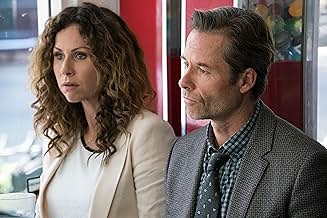
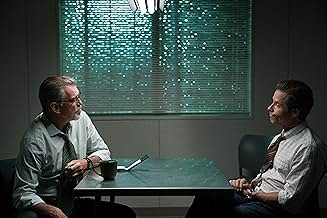
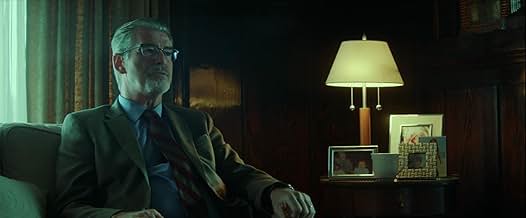
Pierce Brosnan plays (well) out of his usual range and assumes the puzzled gravitas of the cool-headed cop with a drinking past. Minnie Driver is ok as the Prof's doubting, suspicious wife, but she's not given much to do apart from doubt and be suspicious. Guy Pearce is de ent as aforementioned Prof, but his early arrogant posing gets a bit tedious as the story progresses. (His name, by the way, is Evan Birch, which in a movie that mixes its metaphors and symbols like a drunk in a cocktail lounge, must surely be meant to suggest both Evenness, if that's a word, and, well, that's he straight and upright as a birch.)
Alexandra Shipp, as the young female student the Prof is most recently entangled with, owns the screen at every appearance, and shows the kind of potential that makes everyone else look like they're simply passing the time while waiting for her undeniable star quality to be recognised.
Too much of the time, though, all this feels like something from 1988 rather than 2018 (the heavy-handed symbolism, the clichéd tortured genius who comes across to everyone around him as an arrogant monster, etc etc). As a fast ride through desire and guilt, fear and self-loathing, it has something going for it and might even have worked if it relied less on off-the-peg movie clichés and, instead, looked deeper into the central character's motivations.
The first half, at least, is more than watchable and quite engaging in its own way. The ending, as many other viewers have said here, is simply bad. Even/Evan awful. Between the two, there are intriguing glimpses of the better movie this might have been but isn't, not least because the young women in it all remain beautiful temptresses and not one is ever realised as a fully formed character in her own right.
That's a mistake. And a real pity. As every philosophy student knows, we are made, or revealed, in our interactions with others.
Pierce Brosnan plays (well) out of his usual range and assumes the puzzled gravitas of the cool-headed cop with a drinking past. Minnie Driver is ok as the Prof's doubting, suspicious wife, but she's not given much to do apart from doubt and be suspicious. Guy Pearce is de ent as aforementioned Prof, but his early arrogant posing gets a bit tedious as the story progresses. (His name, by the way, is Evan Birch, which in a movie that mixes its metaphors and symbols like a drunk in a cocktail lounge, must surely be meant to suggest both Evenness, if that's a word, and, well, that's he straight and upright as a birch.)
Alexandra Shipp, as the young female student the Prof is most recently entangled with, owns the screen at every appearance, and shows the kind of potential that makes everyone else look like they're simply passing the time while waiting for her undeniable star quality to be recognised.
Too much of the time, though, all this feels like something from 1988 rather than 2018 (the heavy-handed symbolism, the clichéd tortured genius who comes across to everyone around him as an arrogant monster, etc etc). As a fast ride through desire and guilt, fear and self-loathing, it has something going for it and might even have worked if it relied less on off-the-peg movie clichés and, instead, looked deeper into the central character's motivations.
The first half, at least, is more than watchable and quite engaging in its own way. The ending, as many other viewers have said here, is simply bad. Even/Evan awful. Between the two, there are intriguing glimpses of the better movie this might have been but isn't, not least because the young women in it all remain beautiful temptresses and not one is ever realised as a fully formed character in her own right.
That's a mistake. And a real pity. As every philosophy student knows, we are made, or revealed, in our interactions with others.
Not sure there was enough of a story here to make a movie out of
Mystery/thrillers can sometimes put themselves in a bind. They create a 'did he/didn't he' scenario and base their movie around it, but the problem with that is if the answer is one of the options (usually "he didn't") then you don't have a story worthy of a movie, and thus the answer is simple to work out. 'Spinning Man' finds itself in this predicament and takes a unique route to try and escape it. Did it work for me? Not really.
You leave the film with a little bit of a "what was the point?" mentality. The film being quite well made actually covers this up partially, but it's still there lurking at the back of your mind. The film is at its strongest when it is creating psychological parallels with the story that is going on. It's easy to tell the film was based off a book, because it is very well crafted in that sense. The acting from the main three - Guy Pearce, Pierce Brosnan and Minnie Driver - is also very strong and helps carry what could otherwise have been some very clunky dialogue in places.
The film shares a lot of similarities with 'Memento' (and no not just because Pearce is again in the lead role) yet it too often feels like an episode of 'CSI: Crime Scene Investigation'. The pacing is a little lazy in spots which creates this feeling. This is far from must-watch material, but there is still enough here to make for a perfectly passable film.
You leave the film with a little bit of a "what was the point?" mentality. The film being quite well made actually covers this up partially, but it's still there lurking at the back of your mind. The film is at its strongest when it is creating psychological parallels with the story that is going on. It's easy to tell the film was based off a book, because it is very well crafted in that sense. The acting from the main three - Guy Pearce, Pierce Brosnan and Minnie Driver - is also very strong and helps carry what could otherwise have been some very clunky dialogue in places.
The film shares a lot of similarities with 'Memento' (and no not just because Pearce is again in the lead role) yet it too often feels like an episode of 'CSI: Crime Scene Investigation'. The pacing is a little lazy in spots which creates this feeling. This is far from must-watch material, but there is still enough here to make for a perfectly passable film.
Unfairly reviewed
I will keep my summation brief as you will have either seen it already or read the synopsis.
What lies beneath this entire film, is the question of memory. How accurate is it? How reliable is any single person's account, of anything! What is truth? It's reflected in the philosophical teachings and comes into play within the context of a mystery thriller. In addition, what is guilt really? If a large number of people say something is so, does that make it real? Does having a personal philosophy have to match up with one's own actions?
The film raises these and other fascinating questions. I would hope that one would walk away wanting to explore philosophy in more depth. However, for the average popcorn going movie goer wanting their 'thriller' spoon fed to them, they will of course be disappointed.
Those seeking a little more substance will find this satisfying, playing out, exactly as it should.
The film raises these and other fascinating questions. I would hope that one would walk away wanting to explore philosophy in more depth. However, for the average popcorn going movie goer wanting their 'thriller' spoon fed to them, they will of course be disappointed.
Those seeking a little more substance will find this satisfying, playing out, exactly as it should.


Did you know
- TriviaThe movie plot has a very strong resemblance to the Italian movie "La ragazza nella nebbia" (literally "the girl in the fog"). It looks like an American remake of it, but with a different ending.
- GoofsThe map of Hillside Lake shown in Malloy's office (at 1:10:39) is Lake Constance (Bodensee) that is located in Switzerland, Germany and Austria.
- Quotes
Malloy: Take this little problem here on your board. The answer seems pretty plain to me.
Evan Birch: Does it? Well, be my guest. Prove this chair exists.
Malloy: What chair?
- ConnectionsFeatured in Conan: Minnie Driver/Ron Funches/Mary Mack (2018)
- How long is Spinning Man?Powered by Alexa
Details
- Release date
- Countries of origin
- Official site
- Language
- Also known as
- Falsa Evidencia
- Filming locations
- Production companies
- See more company credits at IMDbPro
Box office
- Budget
- $8,500,000 (estimated)
- Gross worldwide
- $283,755
- Runtime
- 1h 40m(100 min)
- Color
- Aspect ratio
- 2.39 : 1
Contribute to this page
Suggest an edit or add missing content