IMDb RATING
7.1/10
1.6K
YOUR RATING
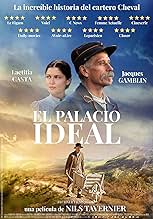
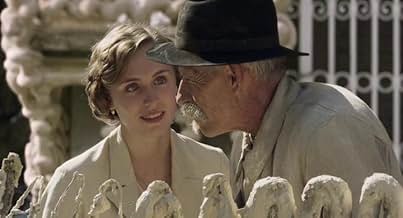
Cheval is a postman who travels every day along the Drôme. He meets the woman of his life, Philomena and from their union Alice was born. He then throws himself into a crazy gamble: to build... Read allCheval is a postman who travels every day along the Drôme. He meets the woman of his life, Philomena and from their union Alice was born. He then throws himself into a crazy gamble: to build her with his own hands, an incredible palace.Cheval is a postman who travels every day along the Drôme. He meets the woman of his life, Philomena and from their union Alice was born. He then throws himself into a crazy gamble: to build her with his own hands, an incredible palace.
- Director
- Writers
- Stars
- Director
- Writers
- All cast & crew
- Production, box office & more at IMDbPro
7.11.6K
1
2
3
4
5
6
7
8
9
10
Featured reviews
The life of a genius of naive art
This film based on real facts is incredibly powerful and moving. The relationship to his daughter Alice is the key to understand all what Cheval did. It's for her he will build this incredible palace. Most of the time he never speaks to anybody, but with Alice, the words spill out of his heart. He share with her his poetic vision of the world, full of legends, lost civilizations, ans symbolism. The way Cheval dies at the end of the movie is just so beautiful and moving... It's the most beautiful death of cinema history! Cheval was found of symbols, and interstingly enough, he died at the age of 88, symbol of eternity, and it took him 33 years to build his palace, the age of Christ. I like to believe that this was not just a coincidence...
To be watched for incredible story
With stunningly beautiful cinematography and the careful, quiet precision of good acting, this is always about 'the palace', after all.
An interesting and extreme reserved personality which many of his village thought meant he was backward or mad, a postman, with the most patient and beautiful wife who understands him despite her loneliness in doing so, builds a 'palace' for his adored and cherished daughter.
This amazing true story is nothing short of quite incredible, in the truest sense of the word. With imagination, heart, dedication and stubborn will, a simple postman creates by himself, a magical stone and mortar palace for his daughter. It still stands today.
Worth the watch, although it's a slow one, but nonetheless, worth the watch. If you're creative, this will resonate at many levels.
An interesting and extreme reserved personality which many of his village thought meant he was backward or mad, a postman, with the most patient and beautiful wife who understands him despite her loneliness in doing so, builds a 'palace' for his adored and cherished daughter.
This amazing true story is nothing short of quite incredible, in the truest sense of the word. With imagination, heart, dedication and stubborn will, a simple postman creates by himself, a magical stone and mortar palace for his daughter. It still stands today.
Worth the watch, although it's a slow one, but nonetheless, worth the watch. If you're creative, this will resonate at many levels.
A cinematic gem
The kind of movie that is very moving! A film that respects the intelligence of moviegoers: things can be guessed at, without the director feeling obliged to point them out to us in broad strokes, thus respecting the moviegoers who are going to see the film. The photography is remarkable, the performance of all the actors and actresses is sublime and the makeup work (aging) is perfect. The music, not bad but too ordinary compared to the whole, inhabits the scenes a little too much. We come away moved, overwhelmed and, despite everything, imbued with a feeling of tenderness towards humanity. A great film!
The true story of an artist who did not know he was one
At the end of the 19th century, Joseph Ferdinand Cheval is a simple letter carrier who travelled the Drôme from village to village every day. Lonely, he is upset when he meets the woman of his life, Philomène. From their union is born Alice. For this child whom he loves more than anything else, Cheval throws himself into a crazy bet: to build for her with his own hands, an incredible palace. Never spared from life's trials, this ordinary man will not give up and will devote 33 years to build an extraordinary work: "The Ideal Palace".
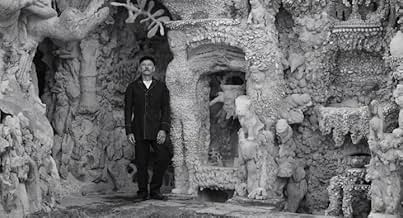
Joseph-Ferdinand Cheval, a postman in the rural département of Drôme, was undoubtedly entitled to a biopic. Derided at first like Le Douanier Rousseau, Séraphine de Senlis, Antonio Ligabue and many others, he is now lauded for what he is really worth, a major figure of "naïve art", a "school" bringing together artists having no notion of being artists, and all the more admirable for that. Cheval was a devoted public agent, walking from one isolated farm to another, covering come rain or come shine, twenty miles a day. He went through particularly hard times (losing several loved ones, falling into depression) but nothing ultimately prevented him from completing the work of his life, his "Palais idéal", a huge monument made of pebbles and stones collected during his routes to which he added various other elements, the whole thing assembled together apparently at random, at any rate not abiding by the laws of architecture. Inspired by a photo of the Angkor Vat temple he once saw in a magazine, the amazing work of his life has survived the years and is visited yearly by hundreds of thousands of people. Nils Tavernier obviously admires Cheval and his unique creation and it shows. He also loves both the place and time his hero lived and worked. The viewer is thus treated to beautiful views of the rolling landscape around Hauterives, and at various times of the year, alternating with realistic rural interiors. Hence a feeling of total immersion in the Cheval's everyday environment. Kudos to production designer Jérémy Duchier, costume designer Thierry Delettre and cinematographer Vincent Gallot who helped Tavernier to capture the reality of the 1880-1920 period. Gallot's contribution is particularly noticeable in the magic final sequence where Cheval, at the very end of his life, dances with... his (then dead) daughter. The main asset of the film though is Jacques Gamblin, exceptional as le Facteur Cheval. Totally invested in his role, he manages to make the rather autisitic postman/artist decipherable and therefore touching and engaging. Often silent or inarticulate, stammering, with bird-like head movements, Gamblin renders to perfection Cheval's uncommon attitudes often mistaken by others for haughtiness or lack of empathy. Without many lines to say or climactic scenes to play, the actor nonetheless manages to impose his character, gradually making us close to someone seeming so aloof at first. Great art indeed. Likewise, Nils Tavernier avoids any spectacular and easy effects, which proves more and more winning as the story unfurls. Like a wide river, the film moves slowly, regularly but more and more powerfully, throwing you into something close to a state of meditation. You will not be captivated like by a thriller but if you play the game you won't lose out in the affair, instead you will gradually become part of a whole world to which you no longer have access today. Accompanied by a melodious music by Baptiste and Pierre Colleu, "L'Incroyable histoire du facteur Cheval" is much better than the lazy biopic certain reviewers, systematically allergic to the genre, have tried to reduce it.
Building a life's work out of nothing but stones and perseverance
This amazing film of a true story is a unique masterpiece of its kind, like no other film, while the associations you get are mainly to the stylistic refinery of Carl Th. Dreyer, who had a knack of making quiet films with sustained inner life all through in spite of minimal action, thus producing a very high level of consistently serene style. The postman here is just an ordinary postman, he walks 32 kilometers every day to deliver his mail, when at the age of 53 he gets the idea to build a dream castle for his daughter. He has no talent but for dreaming, and yet he accomplishes in 33 years of daily toil an architectural wonder comparable with the cathedral of Antonio Gaudí, stone by stone, day by day, in incessant obstinacy against all objections by his wife and neighbours to his work, calling him a madman. Yet his life's work is there still standing today after 150 years, designed a national monument by the state. The film has tuned in perfectly to his mood and reticent character, it is a slow motion picture but of infinite poetry and beauty, and the true story is like a universal sermon that could but benefit anyone. It ends in serenity, crowning the poetical character of the film with an extra sense of timeless beauty.
Did you know
- TriviaAward: Best Actor Award to Jacques Gamblin at the Sarlat Film Festival.
- SoundtracksAu Fil de l'eau
Composed and played on the accordion by Marc Perrone.
- How long is The Ideal Palace?Powered by Alexa
Details
- Release date
- Countries of origin
- Official sites
- Language
- Also known as
- Brevbäraren som byggde ett palats
- Filming locations
- Hauterives, Drôme, France(construction of the Ideal Palace, Cheval's tomb)
- Production companies
- See more company credits at IMDbPro
Box office
- Gross worldwide
- $6,081,436
- Runtime
- 1h 45m(105 min)
- Aspect ratio
- 1.85 : 1
Contribute to this page
Suggest an edit or add missing content