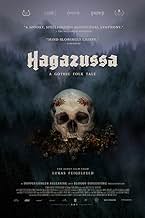
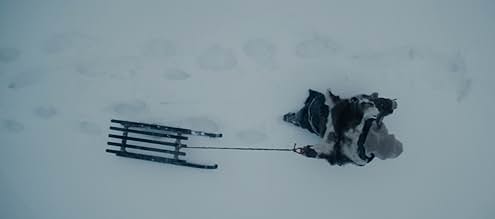
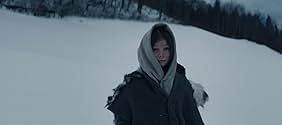
Hagazussa
- 2017
- 1h 42m
IMDb RATING
5.8/10
8.2K
YOUR RATING
After the loss of her tormented mother, the erratic behavior of a 15th century woman living in an isolated mountain village becomes a threat to the safety of her infant child.After the loss of her tormented mother, the erratic behavior of a 15th century woman living in an isolated mountain village becomes a threat to the safety of her infant child.After the loss of her tormented mother, the erratic behavior of a 15th century woman living in an isolated mountain village becomes a threat to the safety of her infant child.
- Awards
- 5 wins & 9 nominations total
Tanja Petrovsky
- Swinda
- (as Tanja Petrovskij)
Killian Abeltshauser
- Farmer
- (as Kilian Abeltshauser)
- Director
- Writer
- All cast & crew
- Production, box office & more at IMDbPro
5.88.2K
1
2
3
4
5
6
7
8
9
10
Featured reviews
A gorgeously shot German folk horror and a REALLY ODD witch movie.
Before watching a film like this, it's important to know what you're getting into in terms of tone .This film is heavily atmospheric and slow-paced .Like recent examples The Witch and Hereditary I am very happy to see more excellent films breaking the mold of Hollywood formulaic paced fanfare for ADD viewer consumption. This film features masterfully slow burn storytelling with a sense of history, mystery and mythic dread. It is also very artfully shot with a perfectly matched deep bass soundtrack from MMMD and an outstanding often intense performance by lead actress Aleksandra Cwen. Looking forward to more from first time director Lukas Feigelfeld who nailed this one. Its up on Prime video free if your a member.
STOP LYING! THIS WAS NOT BETTER THAN THE WITCH.
"HAGAZUSSA" For the most part is a very dark and grim atmospheric film that's beautifully shot and well performed by the actors. It had great potential to go beyond the depth of "The Witch" but doesn't scratch the surface enough for you to feel enlightened or better informed by what you just witnessed for an hour & 45 minutes. The lack luster ending that everyone falsely raves about is pathetic and that's a gross understatement. Did the film have it's moments yes but none of them were slam dunks and every one of those scenes left points on the board because it never followed through. Whether lying in bed with her mother or watching from behind her in the lake from 50 yards away, That's not enough when you compare it to films like "MIDSOMER" or "HEREDITARY".
Definitely had potential but nothing here is a must see or disturbing enough to make it memorable 6 months from now. And that's truly disappointing to waste such a good effort.
Germany's Answer To The VVitch, My Ass!
The slowest of slow burns that surely has no trouble whatsoever in setting up an atmosphere that reeks of dread & terror yet doesn't really know what to do with it, Lukas Feigelfeld's directorial debut landed on my radar due to its comparisons to The VVitch and though the two films are stylistically similar, everything about Hagazussa is vastly inferior to Robert Eggers' diabolical masterpiece.
Despite a foreboding aura pervading the frames at all times and additional boost provided by its remote setting, cold palette, methodical camerawork & menacing soundtrack, this is horror on a standstill, for the plot goes nowhere nor does it do something productive with the impressive set up, and features the same episodes repeated throughout its runtime which become frustrating after a while.
Its 102 minutes runtime is paced so glacially that the film feels twice as long. It's too slow, too silent & too obtuse for its own good. The suspense it creates is nail-biting but it's got nothing to follow it up with and ratchet things up even further. Aleksandra Kwen aptly renders her character's struggle to preserve her sanity but her contribution doesn't amount for much in the end, just like its tense ambience.
Slower than your usual slow-burn narratives and never for once taking advantage of its ominous vibe, Hagazussa is a splendidly photographed & finely acted horror that keeps hinting at a nightmare that's waiting to unfold but never actually does. A dull, dreary & dreadful cinema that doesn't hold a candle to the perfection that is The VVitch, this German folktale is one of the most boring & unrewarding films of the year.
Despite a foreboding aura pervading the frames at all times and additional boost provided by its remote setting, cold palette, methodical camerawork & menacing soundtrack, this is horror on a standstill, for the plot goes nowhere nor does it do something productive with the impressive set up, and features the same episodes repeated throughout its runtime which become frustrating after a while.
Its 102 minutes runtime is paced so glacially that the film feels twice as long. It's too slow, too silent & too obtuse for its own good. The suspense it creates is nail-biting but it's got nothing to follow it up with and ratchet things up even further. Aleksandra Kwen aptly renders her character's struggle to preserve her sanity but her contribution doesn't amount for much in the end, just like its tense ambience.
Slower than your usual slow-burn narratives and never for once taking advantage of its ominous vibe, Hagazussa is a splendidly photographed & finely acted horror that keeps hinting at a nightmare that's waiting to unfold but never actually does. A dull, dreary & dreadful cinema that doesn't hold a candle to the perfection that is The VVitch, this German folktale is one of the most boring & unrewarding films of the year.
Too sparse to have any lasting impact
Hagazussa is a film rightly compared to its contemporary in "The Witch" and it undoubtedly suffers for it.
Where The Witch laid out a basic narrative structure and sowed the seeds of malevolence in far more obvious terms, it did not lose its impact or atmosphere during the slower burning scenes. In fact, they served to highlight the ever growing sense of dread - allowing the mind to wander into dark possibilities without ever losing sense of itself.
Hagazussa approaches a similar theme - superstitions, isolation and how misconceptions about the natural world played into daily life during the 16th century, but delivers far less in terms of narrative.
This is more a trip through the life of an outcast Mother & Daughter and we the audience are left to piece together the elements one by one as events unfold.
For me the main question posed by the movie was whether Albrun was indeed going mad or whether she was a witch.
While there is a glaring lack of dialogue that would help to flesh out some of the themes pushed forward (the interactions with Nature, impacts of disease etc) there are enough clues in the imagery to understand that Albrun is undergoing a transformation of some kind, whether it be the loss of her own sanity or something more supernatural.
The presence of the plague and its impact on both Albrun and the local villagers are a catalyst for the films major plot points, as is the intense isolation and persecution of Albrun and its influence over her mental state.
Due to the space in between each element coming together, it is difficult to maintain focus as a viewer and I found myself distracted by my own mind wandering...asking myself if there was something I was missing.
There is a movie worth watching somewhere in here, but it is buried so deep under a pile of long takes and ambiguity, that many will simply look for answers in a different film altogether.
Where The Witch laid out a basic narrative structure and sowed the seeds of malevolence in far more obvious terms, it did not lose its impact or atmosphere during the slower burning scenes. In fact, they served to highlight the ever growing sense of dread - allowing the mind to wander into dark possibilities without ever losing sense of itself.
Hagazussa approaches a similar theme - superstitions, isolation and how misconceptions about the natural world played into daily life during the 16th century, but delivers far less in terms of narrative.
This is more a trip through the life of an outcast Mother & Daughter and we the audience are left to piece together the elements one by one as events unfold.
For me the main question posed by the movie was whether Albrun was indeed going mad or whether she was a witch.
While there is a glaring lack of dialogue that would help to flesh out some of the themes pushed forward (the interactions with Nature, impacts of disease etc) there are enough clues in the imagery to understand that Albrun is undergoing a transformation of some kind, whether it be the loss of her own sanity or something more supernatural.
The presence of the plague and its impact on both Albrun and the local villagers are a catalyst for the films major plot points, as is the intense isolation and persecution of Albrun and its influence over her mental state.
Due to the space in between each element coming together, it is difficult to maintain focus as a viewer and I found myself distracted by my own mind wandering...asking myself if there was something I was missing.
There is a movie worth watching somewhere in here, but it is buried so deep under a pile of long takes and ambiguity, that many will simply look for answers in a different film altogether.
Hagazussa: Delirious and Superstitious in Nature
This debut and thesis film,"Hagazussa" by Lukas Feigelfeld is an exploration of 15th century European "witch" mythology, rural folklore and superstitions. It's a slow burn but it's visuals and sound mixing are astounding, which is why it has received many nominations and awards since 2017.
His style is yet to evolve, since the film's weak point is telling a story unlike Robert Egger's "The Witch" (2015) does well, inspired by U.S. colonial history. Except for the usages of three title cards to break the narrative, the story gets muddled. After the film viewing, I had seen many confused faces, not understanding what has happened as they left the room.
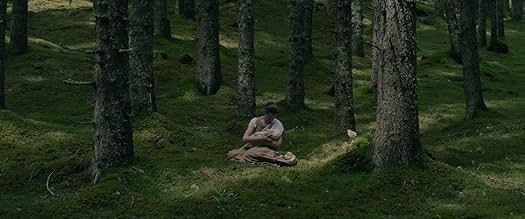
It's strengths of this emerging director to make the natural looks unnatural. The depictions of a bold performance by Aleksandra Cwen as "Alburn" amongst the Austrian landscape is truly visionary. But again for the general viewers it may not be enough to get into the story.
The film as a story explored moral conflicts amongst the villagers, referring to their persecution of Jews and others outside of the Christian spectrum.
His style is yet to evolve, since the film's weak point is telling a story unlike Robert Egger's "The Witch" (2015) does well, inspired by U.S. colonial history. Except for the usages of three title cards to break the narrative, the story gets muddled. After the film viewing, I had seen many confused faces, not understanding what has happened as they left the room.
It's strengths of this emerging director to make the natural looks unnatural. The depictions of a bold performance by Aleksandra Cwen as "Alburn" amongst the Austrian landscape is truly visionary. But again for the general viewers it may not be enough to get into the story.
The film as a story explored moral conflicts amongst the villagers, referring to their persecution of Jews and others outside of the Christian spectrum.
Did you know
- TriviaGraduation film of director Lukas Feigelfeld.
- ConnectionsFeatured in Woodlands Dark and Days Bewitched: A History of Folk Horror (2021)
- How long is Hagazussa?Powered by Alexa
Details
- Release date
- Countries of origin
- Language
- Also known as
- Hagazussa: A Heathen's Curse
- Production companies
- See more company credits at IMDbPro
Box office
- Gross US & Canada
- $13,253
- Opening weekend US & Canada
- $6,041
- Apr 21, 2019
- Gross worldwide
- $21,487
- Runtime
- 1h 42m(102 min)
- Color
- Aspect ratio
- 2.39:1
Contribute to this page
Suggest an edit or add missing content