
Three men in London compete for the love of a dance-hall girl.Three men in London compete for the love of a dance-hall girl.Three men in London compete for the love of a dance-hall girl.
- Director
- Writers
- Stars


Tyrone Power Sr.
- Street Preacher
- (as Tyrone Power)


Charles Fang
- Chinaman
- (uncredited)
- Director
- Writers
- All cast & crew
- Production, box office & more at IMDbPro
5.5230
1
2
3
4
5
6
7
8
9
10
Featured reviews
Carol Dempster and Ralph Graves Star
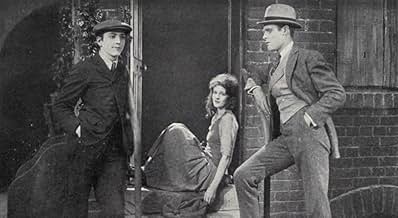
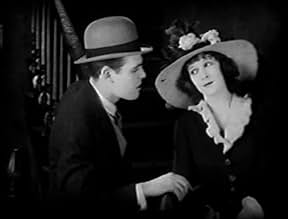
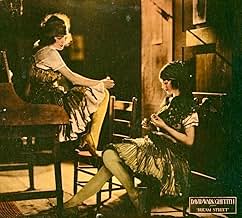
Film takes place in London's Limehouse district and concerns a dancer (Carol Dempster), two brothers (Ralph Graves, Charles Emmett Mack), and assorted colorful characters who represent good and evil. Source material are stories by Thomas Burke, same author whose story gave us BROKEN BLOSSOMS and the Colleen Moore film TWINKLETOES, all of which have white girls "involved" with Chinese men.
Griffith seems to have filmed this one between WAY DOWN EAST and ORPHANS OF THE STORM and maybe there was overlap. Although it's hard to tell from such a draggy copy, the pacing of DREAM STREET seems erratic, the sets dreary, the acting uneven. But there are some brilliant moments. I don't dislike Dempster though a lot of people do. I think she was excellent in several other films. Here, the 20-year-old seems out of her depth, or maybe Griffith was directing her as if she were Mae Marsh or a Gish sister. Mack does far too much grimacing. Graves in many ways gives the best performance, one that seems to spin from stock character performance to brilliance.
Griffith must have considered this a major production and not just a filler between big projects. He filmed a talkie intro with himself and a couple of sound sequences (Graves singing and a dice game scene), which were only used in New York City theaters which were wired specifically for for the sound sequences. No other theaters saw/heard this innovation (six years before THE JAZZ SINGER).
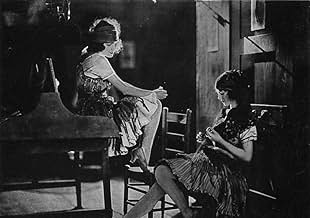
Dempster's music hall sequence with dances seems extraneous. As the film winds to its climax, it's clear that the music hall could have been excised, tightening the plot and shortening the film.
The film does not rank with Griffith's several great films, but it's not the disaster that many seem to think it is. Dempster and Graves try hard and often succeed. This was Mack's first starring role in a feature film.
If you seek out this film, look for a copy that runs 100-110 minutes and avoid those that drag along to a 140minute running time.
Griffith seems to have filmed this one between WAY DOWN EAST and ORPHANS OF THE STORM and maybe there was overlap. Although it's hard to tell from such a draggy copy, the pacing of DREAM STREET seems erratic, the sets dreary, the acting uneven. But there are some brilliant moments. I don't dislike Dempster though a lot of people do. I think she was excellent in several other films. Here, the 20-year-old seems out of her depth, or maybe Griffith was directing her as if she were Mae Marsh or a Gish sister. Mack does far too much grimacing. Graves in many ways gives the best performance, one that seems to spin from stock character performance to brilliance.
Griffith must have considered this a major production and not just a filler between big projects. He filmed a talkie intro with himself and a couple of sound sequences (Graves singing and a dice game scene), which were only used in New York City theaters which were wired specifically for for the sound sequences. No other theaters saw/heard this innovation (six years before THE JAZZ SINGER).
Dempster's music hall sequence with dances seems extraneous. As the film winds to its climax, it's clear that the music hall could have been excised, tightening the plot and shortening the film.
The film does not rank with Griffith's several great films, but it's not the disaster that many seem to think it is. Dempster and Graves try hard and often succeed. This was Mack's first starring role in a feature film.
If you seek out this film, look for a copy that runs 100-110 minutes and avoid those that drag along to a 140minute running time.
Disappointing Griffith Feature
Dream Street (1921)
** (out of 4)
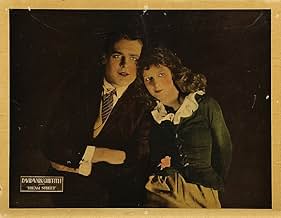
Typical love triangle has brothers (Charles Emmett Mack, Ralph Graves) falling in love with the same woman, Gypsy Fair (Carol Dempster) and soon their loving relationship starts to fall apart. Things take an even more dangerous turn when the evil Swan Way (Edward Peil Sr.) takes an interest in Gypsy. You can't help but watch this film and have BROKEN BLOSSOMS in the back of your mind since the stories from both films came from the same book. When this film was originally released it got mixed reviews with some calling it quite poor but others, like the Nation Board of Review, calling it one of the ten best films of the year. I'm going to have to fall on the negative side. I should mention that the film originally played with a sound introduction by Griffith as well as two other sound sequences but my copy didn't have any of this but I'm not sure how much that would have added to the film. With that said, the biggest problem is without question the acting which is pretty horrid. Most people hate Dempster with a passion but I think given the right role she could do nice work (see Griffith's THE SORROWS OF Satan) but this isn't that right role. She's all over the map here because at times she underplays scenes and then other times she's way too over the top. I also can't help but feel Griffith made her watch Gish's performance in that 1919 film and there's even a sequence here where the evil Chinese lord throws her into a closet and we get that "fear" sequence, which comes off incredibly bad even when you don't compare it to the masterful sequence by Gish. Mack doesn't fair any better as he too seems to be all over the place as is Graves. Tyrone Power, Sr. has a nice little part and Porter Strong, Griffith's blackface expert, has his typical comic relief part. Griffth's direction handles everything quite well but there's just no getting over the fact that the performances aren't very good and we're also missing G.W. Bitzer and this certainly takes away from the look of the film. Griffith fans will certainly want to check this one out just to complete their viewing pleasure but everyone else would be best to stay away.
** (out of 4)
Typical love triangle has brothers (Charles Emmett Mack, Ralph Graves) falling in love with the same woman, Gypsy Fair (Carol Dempster) and soon their loving relationship starts to fall apart. Things take an even more dangerous turn when the evil Swan Way (Edward Peil Sr.) takes an interest in Gypsy. You can't help but watch this film and have BROKEN BLOSSOMS in the back of your mind since the stories from both films came from the same book. When this film was originally released it got mixed reviews with some calling it quite poor but others, like the Nation Board of Review, calling it one of the ten best films of the year. I'm going to have to fall on the negative side. I should mention that the film originally played with a sound introduction by Griffith as well as two other sound sequences but my copy didn't have any of this but I'm not sure how much that would have added to the film. With that said, the biggest problem is without question the acting which is pretty horrid. Most people hate Dempster with a passion but I think given the right role she could do nice work (see Griffith's THE SORROWS OF Satan) but this isn't that right role. She's all over the map here because at times she underplays scenes and then other times she's way too over the top. I also can't help but feel Griffith made her watch Gish's performance in that 1919 film and there's even a sequence here where the evil Chinese lord throws her into a closet and we get that "fear" sequence, which comes off incredibly bad even when you don't compare it to the masterful sequence by Gish. Mack doesn't fair any better as he too seems to be all over the place as is Graves. Tyrone Power, Sr. has a nice little part and Porter Strong, Griffith's blackface expert, has his typical comic relief part. Griffth's direction handles everything quite well but there's just no getting over the fact that the performances aren't very good and we're also missing G.W. Bitzer and this certainly takes away from the look of the film. Griffith fans will certainly want to check this one out just to complete their viewing pleasure but everyone else would be best to stay away.
Broken Nightmare
Griffith returns to the Limehouse author of BROKEN BLOSSOMS to poor effect. Two years earlier we had Lilian Gish, Richard Barthelmess and Donald Crisp acting out a small melodramatic tragedy on sheer acting chops that, even today, through muddy prints, works beautifully. This time, however, we are confronted with Carol Dempster, Charles Emmett Mack and Ralph Graves -- and if you say "Who?" three times like an owl, this movie shows you the incredible loss of acting talent that Griffith had suffered. Confronted with three actors who couldn't act -- the scene where Dempster is terrified that Graves will rape her is clearly a gloss on Gish's terror in the closet of two years ago and so inferior that it seems sacrilegious to mention them in the same sentence -- Griffith directed them with a collection of affectations to try to make up for a lack of emotions, and tried to give the entire piece some direction using a framing device of Good Vs. Evil. The total effect is ludicrous.
There are some good scenes, but the three principals don't appear in any of them. Give this one a miss.
There are some good scenes, but the three principals don't appear in any of them. Give this one a miss.
Dreaming of Carol Dempster
Carol Dempster (as Gypsy Fair) is a dancer, trying to support her elderly father in a seedy Limehouse-type district. The "King" of the streets is Ralph Graves (as James "Spike" McFadden); he has conquered males with his fists, and females with his voice (he's a singer). Charles Mack (as Billie McFadden) is his devoted little brother, an aspiring songwriter. The film's other denizens include Tyrone Power (Sr.) as "The Minister of Good Words" and Morgan Wallace as "The Evil Influence". Porter Strong (as Samuel Jones) and Edward Peil (as Sway Wan) reprise their obligatory "Blackface" and "Yellowface" roles.
Director D.W. Griffith mixes unsavory with the "love triangle" formed by his three leading players. If "Dream Street" had featured the creative input of G.W. Bitzer, Robert Harron, and/or Lillian Gish, the results might have looked better. Mr. Griffith's ominous spoken-word introduction is unfulfilled; while it has its moments, and Mr. Mack is good, "Dream Street" is a relative failure. Seek out superior Griffith directed films from 1918-20, usually starring Gish and Harron, for more dreamy films.
*** Dream Street (4/12/21) D.W. Griffith ~ Carol Dempster, Ralph Graves, Charles Emmett Mack
Director D.W. Griffith mixes unsavory with the "love triangle" formed by his three leading players. If "Dream Street" had featured the creative input of G.W. Bitzer, Robert Harron, and/or Lillian Gish, the results might have looked better. Mr. Griffith's ominous spoken-word introduction is unfulfilled; while it has its moments, and Mr. Mack is good, "Dream Street" is a relative failure. Seek out superior Griffith directed films from 1918-20, usually starring Gish and Harron, for more dreamy films.
*** Dream Street (4/12/21) D.W. Griffith ~ Carol Dempster, Ralph Graves, Charles Emmett Mack
Dream Street
Despite the fact that there is a surfeit of almost theatrical ham on display here, I actually did quite enjoy this love triangle story. It's the dance hall "Gypsy" (Carol Dempster) who is the fulcrum for men who are keen to make her their's. Luckily, she isn't too worried that siblings "Billy" (Charles Emmett Mack) and "Spike" (Ralph Graves) are vying for her attention with all the charm and subtlety of an air raid, nor that after a scene that leave little to our imagination, she has caused the local Chinaman (Charles Fong) to get into trouble with the constabulary. Presently, as the plot thickens, enter the malevolent "Way" (Edward Pell Snr.) who also takes an interest in our flighty dancer and tensions duly mount. Whom might she choose, if anyone? It would be fairly easy to pick this apart, this film. Though I felt Pell probably held the best hand from amongst the characters, the bulk of the acting is really nothing much to write (or mime) home about. Dempster does manage to glisten a little, but like Mack she has a role that calls for too many, almost schizophrenic, persona changes that can at times make you feel almost dizzy. That said, though, it does move along efficiently with solid, if hardly remarkable, production techniques that whilst perhaps not DW Griffiths's finest hour behind the camera, provides a watchable drama from a still fairly embryonic industry that deliberately or otherwise manages to capture much of the seamy side of London's sordid Limehouse district. It's too long, but worth a watch.


Did you know
- TriviaThe first American feature film with a talking sequence, six years before The Jazz Singer (1927).
- ConnectionsReferenced in The Dawn of Sound: How Movies Learned to Talk (2007)
Details
- Release date
- Country of origin
- Languages
- Also known as
- Ulica sanjarenja
- Production company
- See more company credits at IMDbPro
- Runtime
- 1h 42m(102 min)
- Sound mix
- Aspect ratio
- 1.33 : 1
Contribute to this page
Suggest an edit or add missing content