

Missing for seven years and presumed dead, a woman returns home on the very day that her husband remarries.Missing for seven years and presumed dead, a woman returns home on the very day that her husband remarries.Missing for seven years and presumed dead, a woman returns home on the very day that her husband remarries.
- Nominated for 3 Oscars
- 3 wins & 3 nominations total


Jean Acker
- Postponed Case Witness
- (uncredited)

Murray Alper
- Yosemite Bartender
- (uncredited)

Leon Belasco
- Waiter - Pacific Club Poolside
- (uncredited)
Joe Cabrillas
- Phillip
- (uncredited)
Bill Cartledge
- Page Boy Paging Burkett
- (uncredited)

Chester Clute
- Shoe Salesman
- (uncredited)
Corky
- Corky the Dog
- (uncredited)
7.212.4K
1
2
3
4
5
6
7
8
9
10
Featured reviews
"You're Not Allowed To Have Two Wives, You Know"
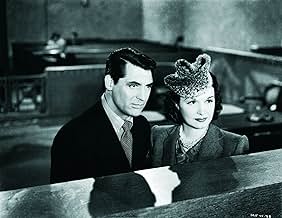
From the opening moments, when the big wooden doors part and usher us into a beautifully spare art deco courtroom with slanting shafts of sunlight enhancing the clean architectural lines, we know that this is going to be a deftly-made, elegant film. What follows does not disappoint us.
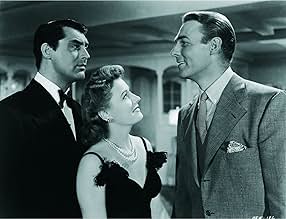
Attorney Nick Arden (Cary Grant) lost his wife Ellen in a shipwreck in the Pacific seven years ago. He has now decided to have her declared officially dead, so that he will be free to marry Bianca (Gail Patrick). The irascible judge eventually accedes to both the declaration and the marriage, and the newly-weds set off for a honeymoon in Yosemite. Meanwhile, who should turn up at the Arden residence, very much alive, but the long-lost Ellen? When she hears of the recent marriage, she heads straight for the honeymooners' hotel ...
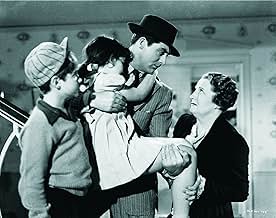
"My Favourite Wife" is a fine example of those early Cary Grant farces, the ones in which he gawps with surprise, double-takes and mutters to himself as only he can. Irene smoke-gets-in-your-eyes Dunn is great as Ellen, unveiling a hitherto unsuspected gift for witty comedy. Scotty Beckett and Mary Lou Harrington come close to stealing the show as the Ardens' cute little kids. Randolph Scott is interestingly cast as Steve Burkett, the muscle-bound Adonis who spent seven years on the desert island with Ellen.
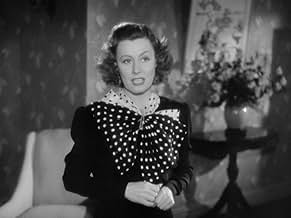
Some of the film's highlights are worth mentioning here, like the superimposition of Burkett performing gymnastic feats alongside Nick Arden's troubled face as he muses at his desk, conveying with economy the husband's jealous preoccupation. It is unfair to give away a film's jokes, but one gag which lose nothing in the telling is Ellen's outfit at the Yosemite hotel. She has been out of circulation for seven years, and she looks comically untrendy in her 1932 polkadots and lapels, and obtrusive hat. Watch for the derisive glances from the other hotel guests.
Such a light, charming piece of entertainment is hard to fault, but the film does have some shortcomings. Its central problem, which is not resolved, is what to do with Bianca. She married Nick in good faith and has done nothing wrong, yet she is neglected by Nick. Because there is no satisfactory way of dealing with her, she is simply dropped. Ellen's return from a watery grave after all those years would be a news story of international importance, but instead she arrives home having hitched a ride in a truck. Her entry into the country seems to have gone unannounced, even to her husband. The scene in which she persuades a shoe store clerk to pose as 'Adam' in front of Nick has enormous comic potential, but is abandoned after a few seconds. Nick's sleeping-in-the-attic scene is far too long for the humour it contains.
However, the film is a pleasant and very amusing romp, and such weaknesses as it contains do not detract from its appeal.
Attorney Nick Arden (Cary Grant) lost his wife Ellen in a shipwreck in the Pacific seven years ago. He has now decided to have her declared officially dead, so that he will be free to marry Bianca (Gail Patrick). The irascible judge eventually accedes to both the declaration and the marriage, and the newly-weds set off for a honeymoon in Yosemite. Meanwhile, who should turn up at the Arden residence, very much alive, but the long-lost Ellen? When she hears of the recent marriage, she heads straight for the honeymooners' hotel ...
"My Favourite Wife" is a fine example of those early Cary Grant farces, the ones in which he gawps with surprise, double-takes and mutters to himself as only he can. Irene smoke-gets-in-your-eyes Dunn is great as Ellen, unveiling a hitherto unsuspected gift for witty comedy. Scotty Beckett and Mary Lou Harrington come close to stealing the show as the Ardens' cute little kids. Randolph Scott is interestingly cast as Steve Burkett, the muscle-bound Adonis who spent seven years on the desert island with Ellen.
Some of the film's highlights are worth mentioning here, like the superimposition of Burkett performing gymnastic feats alongside Nick Arden's troubled face as he muses at his desk, conveying with economy the husband's jealous preoccupation. It is unfair to give away a film's jokes, but one gag which lose nothing in the telling is Ellen's outfit at the Yosemite hotel. She has been out of circulation for seven years, and she looks comically untrendy in her 1932 polkadots and lapels, and obtrusive hat. Watch for the derisive glances from the other hotel guests.
Such a light, charming piece of entertainment is hard to fault, but the film does have some shortcomings. Its central problem, which is not resolved, is what to do with Bianca. She married Nick in good faith and has done nothing wrong, yet she is neglected by Nick. Because there is no satisfactory way of dealing with her, she is simply dropped. Ellen's return from a watery grave after all those years would be a news story of international importance, but instead she arrives home having hitched a ride in a truck. Her entry into the country seems to have gone unannounced, even to her husband. The scene in which she persuades a shoe store clerk to pose as 'Adam' in front of Nick has enormous comic potential, but is abandoned after a few seconds. Nick's sleeping-in-the-attic scene is far too long for the humour it contains.
However, the film is a pleasant and very amusing romp, and such weaknesses as it contains do not detract from its appeal.
Not quite The Awful Truth, but an entertaining film regardless
This is not my favourite screwball comedy of all time or anything, but I did really enjoy it. It is compared to The Awful Truth, and I will say I do prefer The Awful Truth, and while people may find this blasphemous I preferred 1963's Move Over Darling too.
Where the film doesn't quite succeed is that it felt a little too short, the film's end takes a little too long and felt misplaced and there are some moments in the middle where the film drags a bit.
However, it looks good, is well directed, is well scored, while the story is great, the screenplay a lot of fun and the performances from Irene Dunne, Gail Patrick and especially Cary Grant are fun. In terms of casting, the only weak link is Randolph Scott, not that he was terrible or anything but he is very underused seeing his role feels I agree more of a cameo than a fully-fleshed out character. So overall, good but not great, worth seeing for Grant. 6.5/10 Bethany Cox
Where the film doesn't quite succeed is that it felt a little too short, the film's end takes a little too long and felt misplaced and there are some moments in the middle where the film drags a bit.
However, it looks good, is well directed, is well scored, while the story is great, the screenplay a lot of fun and the performances from Irene Dunne, Gail Patrick and especially Cary Grant are fun. In terms of casting, the only weak link is Randolph Scott, not that he was terrible or anything but he is very underused seeing his role feels I agree more of a cameo than a fully-fleshed out character. So overall, good but not great, worth seeing for Grant. 6.5/10 Bethany Cox
Mostly Funny
After his shipwrecked wife is declared dead and he takes on a new wife, Grant's first wife resurfaces, rescued after seven years on an island. This reteaming of Grant and Dunne after their success with "The Awful Truth" is pretty funny for the most part, as Grant tries to solve the problem of one wife too many while dealing with jealousy after learning that Dunne had a male companion (Scott) on that island. The only complaint is that the laughs stop in the last quarter of the movie, which is rather uninteresting as the focus shifts from comedy to romance. Bates, who is hilarious as a flustered judge, died in July 1940 but managed to act in 12 films released that year!
Entertaining Screwball
...albeit a little slow-paced in the first half. Leo McCarey's chaotic pace which made The Awful Truth so much fun is missed here, but Garson Kanin directs capably in his absence and the script and actors deliver enough good wit and chemistry to keep it all balanced out in the end.
Cary Grant gets himself into an unwitting romantic pickle when he's confronted by his thought to be long dead wife on his honeymoon with his new bride. Hilarity ensues, as it does in every brilliant screwball comedy Grant was the star of, and there are some priceless moments along the way.
As in The Awful Truth, Grant and Irene Dunne make a fetching and compatible screen couple. Dunne's comedic felinity and tendency to affect nutty stereotypes in order to get what she wants is better than Katharine Hepburn's imitation of her in Bringing Up Baby and The Philadelphia Story. Grant and Hepburn were terrific in their movies together too, and not taking anything away from Great Kate, but Grant and Dunne's chemistry was just that much better and it's a shame they never made more comedies together.
Hilarious in-jokey scenes between Grant and Randolph Scott, and a near scene stealing turn by Granville Bates as The Judge round out a pretty funny flick.
The Doris Day/James Garner remake "Move Over, Darling" is memorable in its own right and viewed right after this would make for a good video double-bill.
Cary Grant gets himself into an unwitting romantic pickle when he's confronted by his thought to be long dead wife on his honeymoon with his new bride. Hilarity ensues, as it does in every brilliant screwball comedy Grant was the star of, and there are some priceless moments along the way.
As in The Awful Truth, Grant and Irene Dunne make a fetching and compatible screen couple. Dunne's comedic felinity and tendency to affect nutty stereotypes in order to get what she wants is better than Katharine Hepburn's imitation of her in Bringing Up Baby and The Philadelphia Story. Grant and Hepburn were terrific in their movies together too, and not taking anything away from Great Kate, but Grant and Dunne's chemistry was just that much better and it's a shame they never made more comedies together.
Hilarious in-jokey scenes between Grant and Randolph Scott, and a near scene stealing turn by Granville Bates as The Judge round out a pretty funny flick.
The Doris Day/James Garner remake "Move Over, Darling" is memorable in its own right and viewed right after this would make for a good video double-bill.
My Favorite Wife
A curious one that leaves a mildly bitter taste in the mouth. It's funny alright (but never hilarious), and the acting from - and chemistry between - Irene Dunne and Cary Crant is exquisite as always. But the film's fundamental problem is that none of the characters are particularly likable. Throughout the film three of the four main characters take their turn to behave despicably, yet the new wife - a woman who's merely unpleasant - is the villain of the piece; constantly the butt of jokes and fair game for ridicule even though she's done absolutely nothing to warrant it. At times it's like watching two spoilt brats from the Hamptons bullying their visiting second-cousin from the Bronx.
The script is also strangely stunted, best witnessed in the scenes before the judge. They really should have been classic screwball moments - the ingredients were there - yet between the lengthy silences and repetitive parrot-dialogue it falls almost completely flat. The gaping plot holes and poor script continuity can't be forgiven either, even allowing for the fact the film's seventy years old.
Don't get me wrong, I laughed, and I enjoyed myself, and I thought it was a decent film. It's just that the character's actions don't stand up too well under scrutiny.
The script is also strangely stunted, best witnessed in the scenes before the judge. They really should have been classic screwball moments - the ingredients were there - yet between the lengthy silences and repetitive parrot-dialogue it falls almost completely flat. The gaping plot holes and poor script continuity can't be forgiven either, even allowing for the fact the film's seventy years old.
Don't get me wrong, I laughed, and I enjoyed myself, and I thought it was a decent film. It's just that the character's actions don't stand up too well under scrutiny.


Did you know
- TriviaCary Grant and Randolph Scott, who play rivals in this film, lived together on and off between 1932 and 1944.
- GoofsWhen Ellen has her first hot shower in seven years, she wears a bathing cap rather than washing her hair in the shower.
- Quotes
Nick Arden: I came here with my wife... hum... my bride really. Now my wife, not my bride... my wife... Why should I bore you with details?
Hotel clerk: I won't be bored.
Nick Arden: Listen, it's just simple as A B C.
Hotel clerk: Don't tell me you got someone in B?
- Crazy creditsRather than the normal "The End" title as the movie concludes, "Good Night" is drawn in cursive handwriting.
- ConnectionsEdited into Marilyn: Something's Got to Give (1990)
- SoundtracksJingle Bells
(1857) (uncredited)
Written by James Pierpont
Played as part of the score when Cary Grant dons his Santa Claus costume
- How long is My Favorite Wife?Powered by Alexa
Details
- Runtime
- 1h 28m(88 min)
- Color
- Aspect ratio
- 1.37 : 1
Contribute to this page
Suggest an edit or add missing content