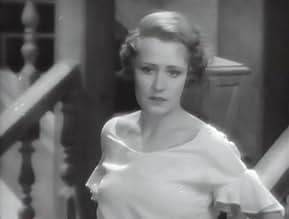
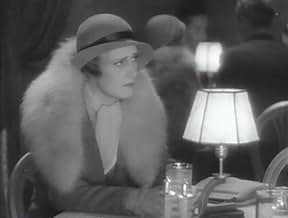
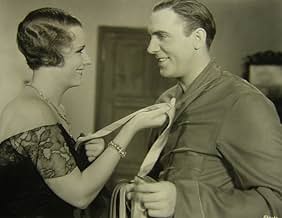
In prohibition-era Manhattan, shopkeeper Mary Brown loses Aubrey, her childhood sweetheart, when he marries a rich woman. Reporter Steve "Rollo" Porter has lost his childhood sweetheart Elai... Read allIn prohibition-era Manhattan, shopkeeper Mary Brown loses Aubrey, her childhood sweetheart, when he marries a rich woman. Reporter Steve "Rollo" Porter has lost his childhood sweetheart Elaine, who has also married another. Mary and Steve become friends, and make a marriage of co... Read allIn prohibition-era Manhattan, shopkeeper Mary Brown loses Aubrey, her childhood sweetheart, when he marries a rich woman. Reporter Steve "Rollo" Porter has lost his childhood sweetheart Elaine, who has also married another. Mary and Steve become friends, and make a marriage of convenience, based on a shared sense of whimsical humor as well as their mutual losses. When... Read all
- Awards
- 3 wins total
- Undetermined Role
- (uncredited)
- Elaine's Butler
- (uncredited)
- Mulligan - a Policeman
- (uncredited)
- Dog Show Attendee
- (uncredited)
- Dog Owner
- (uncredited)
- Justice of the Peace
- (uncredited)
- Kate - Mary's Maid
- (uncredited)
- Celebrant in Ship's Cabin
- (uncredited)
- Traffic Police Officer
- (uncredited)
- Man Picking Up Stack of Newspapers
- (uncredited)
- Dog Show Attendee
- (uncredited)
- Director
- Writers
- All cast & crew
- Production, box office & more at IMDbPro
Featured reviews
Irene Dunne's first starring role in a passable domestic melodrama.
Watch for the scene where Dunne and O'Brien drive by New York's RKO Mayfair. Its marquee is emblazoned with lights heralding two RKO features shown earlier in 1931, A Woman of Experience and Millie. You can even pick out ZaSu Pitts on the marquee, but a large screen TV and a VCR in the slow motion mode will help.
The Consolation Here Is That Both Leads Went On To Far Better Things
This one is a real case of no matter what.
(For the record, the others include Jean Harlow, Jean Arthur, and Constance Bennett.)
This is a women's picture, directed at a snail's pace.
In it, Ms. Dunne sports an exceptionally unflattering hair design, which makes her virtually unrecognizable as the star of such classics as the above-mentioned "Awful Truth," Theodora Goes Wild," and "Showboat."
She looks like Edna May Oliver. She looks like Eleanor Roosevelt (my greatest heroine of the past two or three hundred years but hardly a beauty.)
In this poky tale, Dunne actually leaves her child briefly. The child is indeed pudgy and very unappealing but women must have stalked out of theaters at that point.
She and Pat O'Brien are not the most likely of couples but they are meant in the plot not to be. They are certainly more believable than Dunne and Spencer Tracy in unendurable "A Guy Named Joe."
Sparkling dialogue in a story that creaks with age, as it should.
Discussing the ending would be akin to drowning a kitten. Suffice it to say that this is soap opera at its best and once the two weak sisters re-appear and disappear, we are left with an ending that allows us to feel morally uplifted. The material is dated but the inter-action between these two beginning stars of yesteryear makes up for any weaknesses. To fault the film for its age is simply ridiculous and makes such critics even less aware of just how good Hollywood films once were -- crowsfeet and all.
An odd one
I'm inconsolable
"Consolation Marriage" is from 1931 and stars Irene Dunne, Pat O'Brien, Myrna Loy, John Halliday, and Lester Vail. Dunne is Mary Brown Porter, who loses her childhood sweetheart, Aubrey (Lester Vail) to a rich woman. Mary tends to be a fairly understanding woman. Or else she's masochistic.
She meets Steve Porter (O'Brien), another jiltee, and they decide to get married, even though they aren't in love. There's an understanding that Steve is still in love with the girl of his dreams, Elaine (Myrna Loy), but they keep breaking up. Mary again goes along with this arrangement.
When I saw that Myrna Loy was supposed to be playing the other woman, I thought it was a mistake when I saw her. She did not look remotely like herself. Later I realized it was indeed Loy, who made a dazzling blond, beautifully gowned and coiffed.
Steve and Mary get a dog and have a baby, but Steve slips away often to be involved with Elaine. Then Mary gets her big chance with Jeff (John Halliday). Will she take it? And will Steve ever leave her for Elaine?
It's the rare woman who has the other woman over to her house and helps her dress.
This is a movie about class distinction, a big topic in the old days, so it has a certain formality found in the theater and film before the Depression brought in the working man playwrights.
I always liked Pat O'Brien, but I've never quite understood why he was used as a leading man in these romantic movies. Comedy, certainly. However, unlike the other character actors who became leads - Bogart, Robinson, Cagney, etc. - O'Brien was not as successful.
Irene Dunne is lovely in a difficult role, that of a woman being walked all over, putting up with it, and keeping her dignity.
John Halliday refers to himself as an "old man," and I thought to myself, "I'll bet he's 40" - you know how differently age was perceived in those days. Turned out he was 50.
This is one of Dunne's first films, and if you're a huge fan, you may want to see it. I don't recommend it. At around 90 minutes, it seems like it's four hours long.
Did you know
- TriviaIn August of 1931 entertainment columns reported that Robert Williams had been injured in fall, requiring the recasting of his role in the film; Matt Moore took his place.
- GoofsAs the camera follows Mary and Steve to their taxi after their wedding, crew and equipment, including a stepladder, can be seen reflected in the limo's left rear window, which is partially rolled down, and, as is the case in many films, the limo's polished finish has been dulled to matte to prevent reflections.
- ConnectionsReferenced in Max Steiner: Maestro of Movie Music (2019)
- SoundtracksDevotion
(1931) (uncredited)
Music by Max Steiner
Lyrics by Myles Connolly
Played on piano and sung by Irene Dunne
Reprised on piano later by Lester Vail
Details
- Runtime
- 1h 21m(81 min)
- Color