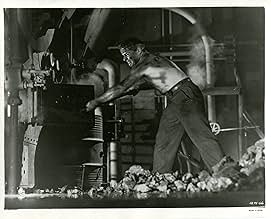
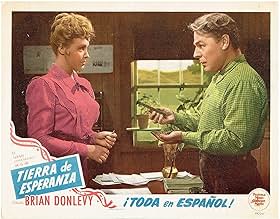
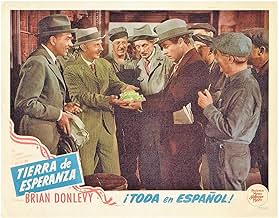
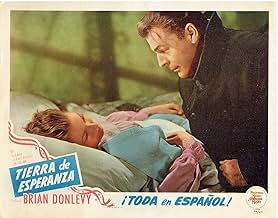
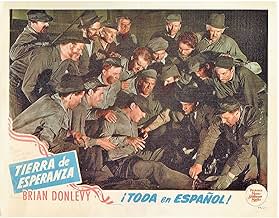
Stefan Dangos, an immigrant, starts working in iron mines and steel mills. Through hard work, he rises through the ranks, eventually becoming a successful American industrialist.Stefan Dangos, an immigrant, starts working in iron mines and steel mills. Through hard work, he rises through the ranks, eventually becoming a successful American industrialist.Stefan Dangos, an immigrant, starts working in iron mines and steel mills. Through hard work, he rises through the ranks, eventually becoming a successful American industrialist.
- Awards
- 2 wins total
Stephen McNally
- Teddy Roosevelt Dangos
- (as Horace McNally)
- …
Ernie Adams
- Man and Dog Act
- (uncredited)
Fred Aldrich
- Assembly Line Worker
- (uncredited)
Axel Anderson
- Immigrant
- (uncredited)
King Baggot
- Graduation Ceremony Attendee
- (uncredited)
Charles Bates
- Teddy Roosevelt Dangos - Age 8
- (uncredited)
Barbara Bedford
- Hospitable Farm Woman
- (uncredited)
Arthur Belasco
- Drowsy Miner
- (uncredited)
Leon Belasco
- Cigar Store Proprietor
- (uncredited)
Art Berry Sr.
- Customs Man
- (uncredited)
Anna Marie Biggs
- Girl Soprano
- (uncredited)
6.7643
1
2
3
4
5
6
7
8
9
10
Featured reviews
By Dint of his own hard work ethic
Watching this film tonight and for the first time in about 40 years I also was seeing it in color for the first time and made me even more curious as to why no name stars were in the title roles with such an expensive production. From Robert Osborne I learned tonight that Spencer Tracy was originally going to be Steven Danglos instead of Brian Donlevy. Personally I would have waited for Tracy to become available and not because Donlevy gave a bad performance.
Donlevy's role is that of an Eastern European immigrant who starts work at a steel mill and by dint of his own hard work ethic rises to become a captain of industry. Along the way he woos and weds Ann Richards and they have a girl and four boys. A lot of immigrants did it that way and some are still doing it though many are illegal now. Back when we had virtually unlimited immigration because we wanted to grow the country a lot of stories like Donlevy's were possible although few rose to his heights. On both sides of my family that story could be told modified quite a bit.
In the end Donlevy is confronted with of all things labor management problems. He proves as stubborn as people like Henry Ford in that regard. If you remember in Citizen Kane a drunken Joseph Cotten tells off Orson Welles that something called organized labor is coming on the scene and what you gave your employees as largess is now thought of as their rights. Donlevy has the same paternalistic approach.
American Romance is also a tribute to the power of American industry which was growing to what we thought in 1944 as having unlimited potential. It was the backbone of our war effort and the last ten minutes without words show what Donlevy's Steven Danglos was a part of.
For reasons I think that no name star was in the lead, American Romance did not do that well. That's a pity because it's a fine film with wonderful cinematography which I finally saw on a color TV. Nice casting all around with such familiar folks as Walter Abel, John Qualen, and Stephen McNally. I hope TCM broadcasts it again soon.
Donlevy's role is that of an Eastern European immigrant who starts work at a steel mill and by dint of his own hard work ethic rises to become a captain of industry. Along the way he woos and weds Ann Richards and they have a girl and four boys. A lot of immigrants did it that way and some are still doing it though many are illegal now. Back when we had virtually unlimited immigration because we wanted to grow the country a lot of stories like Donlevy's were possible although few rose to his heights. On both sides of my family that story could be told modified quite a bit.
In the end Donlevy is confronted with of all things labor management problems. He proves as stubborn as people like Henry Ford in that regard. If you remember in Citizen Kane a drunken Joseph Cotten tells off Orson Welles that something called organized labor is coming on the scene and what you gave your employees as largess is now thought of as their rights. Donlevy has the same paternalistic approach.
American Romance is also a tribute to the power of American industry which was growing to what we thought in 1944 as having unlimited potential. It was the backbone of our war effort and the last ten minutes without words show what Donlevy's Steven Danglos was a part of.
For reasons I think that no name star was in the lead, American Romance did not do that well. That's a pity because it's a fine film with wonderful cinematography which I finally saw on a color TV. Nice casting all around with such familiar folks as Walter Abel, John Qualen, and Stephen McNally. I hope TCM broadcasts it again soon.
Unabashed schmaltzy patriotism that works...
"An American Romance" is the sort of film that was the perfect film for the perfect time. It is chock full of unabashed patriotism and is a bit schmaltzy--all in the midst of WWII. So, this sort of gung-ho worked well then but probably would be seen by many today as dated. However, I think that compared to many such films of the era, this one actually holds up well and is worth seeing today, as there is excellent acting and a bit of a history lesson here we could enjoy.
The film begins with Stefan Dubechek aka Steve Dangos (Brian Donlevy) arriving in America. He knows no English but like any good citizen, has a strong desire to work hard and make something of himself. So, starting off at the bottom at a steel mill, he is able to work his way up through the company. Eventually, he and a new friend find they have a great idea for a new car--and soon leave to start a company of their own.
The film is basically the American success story. Of course not every guy with vision and drive makes it--but this film seems to indicate that such an individual will. And, it also stresses the importance of such a strong-minded and committed person to the new war effort, as the film ends with Dangos organizing his factory for the mass production of aircraft.
While this could have been a dry documentary-type film, little bits of humanity and charm make this film work well. Well worth seeing.
By the way, if you do watch, pay attention to Donlevy's accent. Especially towards the end, he forgot it in a scene or two and in the next he's speaking with this strong accent once again!
The film begins with Stefan Dubechek aka Steve Dangos (Brian Donlevy) arriving in America. He knows no English but like any good citizen, has a strong desire to work hard and make something of himself. So, starting off at the bottom at a steel mill, he is able to work his way up through the company. Eventually, he and a new friend find they have a great idea for a new car--and soon leave to start a company of their own.
The film is basically the American success story. Of course not every guy with vision and drive makes it--but this film seems to indicate that such an individual will. And, it also stresses the importance of such a strong-minded and committed person to the new war effort, as the film ends with Dangos organizing his factory for the mass production of aircraft.
While this could have been a dry documentary-type film, little bits of humanity and charm make this film work well. Well worth seeing.
By the way, if you do watch, pay attention to Donlevy's accent. Especially towards the end, he forgot it in a scene or two and in the next he's speaking with this strong accent once again!
Great documentary scenes
Wonderful shots of ca 1940 industry. The iron mine and ore docks were beautifully done, the open hearth and rolling mill was also great. Loved the Plymouths re-badged as "Dantons", apparently these were '41 leftovers as passenger car production was halted during the war. But the credits say the airplane factory was Douglas, some of the close ups of the Rosie the riveters may have been Douglas, but surely the B-17 line was at a Boeing plant? Or did Douglas also build B-17s?
But the drama was kind of corny. Not that immigrants didn't or couldn't become industrialists, but I don't think GMs steel turret tops cars could possibly have been invented in a backyard shed. In 1910 an innovative individual might have made a real improvement in auto production; by the thirties this could only have been done by a large industrial firm like GM with millions of dollars and hundreds of engineers.
Historical value
As A career merchant seaman on the Great Lake's ore carriers, and working for a large steel maker, I found this movie most interesting and well done. This motion picture contains many historical shots of early lake vessels at the locks in Sault Ste. Marie and docking in Gary, Indiana. The story seems to be based on the life of Andrew Carnegie who was also an immigrant from Scotland. My family came from the Pittsburgh area and were employed with a large steel company, so I can relate well to the plot. Brian Donlevey visited aboard some of our vessels while making this movie in the port of Gary, Indiana. I liked this movie and watch it when I find it advertised to be shown on TV. I would own it if I could buy it because of its historical value..
American success story.
I saw this movie as a nine year old child and never forgot it. Later it appeared on television and more recently on TCM. I was impressed by the hero's fortitude in walking to Minnesota to join his cousin at the Mesabe Iron Range, his hard work, and his learning to read and eventually marrying the teacher. Each of his male children was named for a president after a friend remarked their child might reach that office. The movie taught me how iron ore was shipped east and processed into steel. Dangos also moves east and becomes a foreman. He eventually becomes an automobile manufacturer and his new ideas bring him success. His children succeed by achieving through the benefits of education. The movie ends after a documentary of American industry's contribution to the war effort. The Technicolor was gorgeous and Donlevy's performance believable. I still enjoy watching this film and believe King Vidor put his heart into it.
Did you know
- TriviaDuring World War II, there were no passenger car assembly lines in operation. As a result, Vidor had to borrow cars from Chrysler, take them apart and re-assemble them in a simulated assembly line. Seen emerging from the factory are 1942 Plymouths with a Danton insignia and hubcaps. These were the last passenger cars manufactured by Chrysler before the World War II shutdown.
- GoofsAs Steve Dangos closes his front door (after arriving home from the board meeting), a hand and lower arm can also be seen closing the door from the outside.
- Alternate versionsOriginal version premiered at 151 minutes; later cut to 122 minutes.
- SoundtracksAmerica, My Country Tis of Thee
(1832) (uncredited)
Music by Lowell Mason, based on the Music by Henry Carey from "God Save the King" (1744)
Played during the opening credits
Reprised at the end
Details
Box office
- Budget
- $3,000,000 (estimated)
- Runtime
- 2h 31m(151 min)
- Aspect ratio
- 1.37 : 1
Contribute to this page
Suggest an edit or add missing content