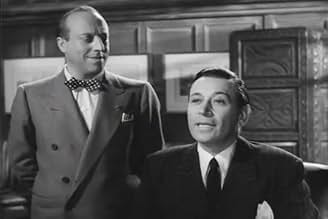
A rich society woman uses a gangster to win a congressional election.A rich society woman uses a gangster to win a congressional election.A rich society woman uses a gangster to win a congressional election.
Joyce Bryant
- Nightclub Singer
- (as Joyce Bryant and the Flennoy Trio)
Stanley Andrews
- Tomahawk Club Boss
- (uncredited)
Walter Baldwin
- Bookie - Party Guest
- (uncredited)
Brooks Benedict
- Man Entering Elevator
- (uncredited)
Truman Bradley
- Radio Forum Moderator
- (uncredited)
Gordon B. Clarke
- Nightclub Pianist
- (uncredited)
James Conaty
- Party Guest
- (uncredited)
Lester Dorr
- Reporter at Party
- (uncredited)
Ben Erway
- Tomahawk Club Politico
- (uncredited)
Mary Field
- Lady with Question on Radio Forum
- (uncredited)
- Director
- Writer
- All cast & crew
- Production, box office & more at IMDbPro
6.1248
1
2
3
4
5
6
7
8
9
10
Featured reviews
Quite forward looking film
Women in politics weren't common in 1947 when this came out. Therefore, this was a surprisingly straight forward look at the theme with an ambitious socialite who's no sweet "goody goody". I do agree with the reviewer who would have liked more emphasis on Sylvia Sidney and her campaign and less on George Raft and the inevitable romance.
And so this is disappointingly mediocre, not going where it could have gone. Even so, it's an interesting film to watch, especially in this age. And actually, I believe that it stands as a better "woman in politics" movie than most with the theme. Don't expect a gangster movie although Raft naturally is close to being one in this.
An ideological mess of historic interest
This film's makers probably were aiming at a kind of political satire that Capra and Sturges sometimes brought off, but a lack of focus and fear of breaching the production code resulted in a script that lurches one way and then another.
Sylvia Sidney is excellent as a female politician, back when such things were rare, doing her best to conceal her ambition and ruthlessness behind an attractive demeanor with a fixed smile. The script doesn't quite know what to make of her. At first she seems not only wholly self-centered but frigid, having driven her husband, whom she married for his wealth and position, into the arms of other women without her much caring about it. Later she becomes more sympathetic for not being corrupt like most of the other pols around her, and for having to walk a fine line between being ladylike and being "one of the boys."
George Raft is his usual stoic self as a hard-bitten political with hinted-at mob connections whose only ideology is winning and graft (or G. Raft).
Sidney's idea is to lure him away from the machine candidate to back her. In one scene she inveigles him into spending the night at her place with apparent intentions of seducing him, but then the movie gets cold feet and the scene fizzles out, as do many others.
Still the film addresses, albeit timidly, political corruption and the ease with which the masses can be manipulated, and also reminds us of the pervasive sexism of that era. Sidney is repeatedly told "you're too attractive to run for office." Was ugliness considered a necessary attribute of female politicians in those days?
As you'd expect, some romantic sparks eventually fly between the two co-stars en route to its wildly implausible ending.
Good cinematography and some lavish interior decoration. If you're the type who enjoys watching old films for a window into the political atmosphere of their times, this is for you.
Sylvia Sidney is excellent as a female politician, back when such things were rare, doing her best to conceal her ambition and ruthlessness behind an attractive demeanor with a fixed smile. The script doesn't quite know what to make of her. At first she seems not only wholly self-centered but frigid, having driven her husband, whom she married for his wealth and position, into the arms of other women without her much caring about it. Later she becomes more sympathetic for not being corrupt like most of the other pols around her, and for having to walk a fine line between being ladylike and being "one of the boys."
George Raft is his usual stoic self as a hard-bitten political with hinted-at mob connections whose only ideology is winning and graft (or G. Raft).
Sidney's idea is to lure him away from the machine candidate to back her. In one scene she inveigles him into spending the night at her place with apparent intentions of seducing him, but then the movie gets cold feet and the scene fizzles out, as do many others.
Still the film addresses, albeit timidly, political corruption and the ease with which the masses can be manipulated, and also reminds us of the pervasive sexism of that era. Sidney is repeatedly told "you're too attractive to run for office." Was ugliness considered a necessary attribute of female politicians in those days?
As you'd expect, some romantic sparks eventually fly between the two co-stars en route to its wildly implausible ending.
Good cinematography and some lavish interior decoration. If you're the type who enjoys watching old films for a window into the political atmosphere of their times, this is for you.
Any film where a sociopathic guy suddenly turns good has a HUGE strike against it.
Margaret Wyndom Chase (Sylvia Sidney) is a hard-driven Congresswoman who is bent on becoming her state's next governor. She is a tough dame and seems willing to jump into the pig sty that is politics to get elected. However, one of the movers and shakers in the state, Eddie Ace (George Raft) has decided not only not to help her but work against her because of his brilliant and modern thinking that 'a pretty woman has no place in politics'!! But after he does what he can to sink her candidacy, Eddie inexplicably helps her with a second chance...presumably because he's suddenly developed a conscience! Considering that he's supposed to be a hard-bitten and rather amoral man, this is utterly preposterous...severely undermining the film.
George Raft is relatively wooden (as usual) and Sidney and the rest are reasonably good. But the huge plot problem I mentioned above does a lot to hurt the film. I honestly think the film could have worked very well if they'd removed the leading character (Eddie Ace) from the film!! The notion of a woman fighting for respect and acceptance in politics in the 1940s would have been really interesting.
Rich woman runs for Congress.
Interesting political film from 1946 with the always excellent Sylvia Sidney. Particulary liked the scene where she discusses politics ( interupted by a phone call from her ex husband ) while having a massage. Worth a look.
Politics Makes Strange Bedfellows
Although George Raft plays the title role in Mr. Ace, the film such as it is really belongs to Sylvia Sidney as the ambitious Congresswoman who wants to become her state's first female governor. The Mr. Ace of the title is Eddie Ace, noted political boss in the state whose backing Sidney wants.
In fact two female governors had already been elected in the USA at the point in time Mr. Ace was made, Nellie Tayloe Ross in Wyoming and Miriam Ferguson in Texas. The script makes reference to both these ladies and to the 29 members of the House of Representatives that had been elected up to that point. It had been done before, but it was still a relatively new phenomenon.
For a smart political boss Raft sure gets his hormones involved in his decision making. His problem with Sidney is that she's tough and independent minded and won't take his orders or anything else from him. Raft's decision making is not coming from his head, that's for sure.
Sidney is also fighting an attraction to Raft as well even though she's married to Alan Edwards albeit they are estranged and do divorce during the film.
There's a whole lot of maneuvering done and at times it's more hormone driven than politically driven. These are supposed to be professional people you know.
Roman Bohnen plays Sidney's former political science professor and mentor in her younger days. He still appeals to the better angels of her nature. Sidney has two political operatives in Jerome Cowan and Sara Haden who do her bidding. Watch Haden's performance, a very understated one with definite lesbian undertones.
Sid Silvers is Raft's factotum and Stanley Ridges his rival within his own organization who Sidney successfully subverts for a while.
The emphasis of this film should have been on Sidney rather than Raft. Her's is the real story here and Mr. Ace would have been a better film had it been entitled Mrs. Chase.
Sidney's name in the film is Margaret Chase and in 1948 one Margaret Chase Smith won election to the United States Senate to become the first woman elected in her own right to that body without having been appointed by the state governor to fill a vacancy.
Mr. Ace does have its moments and one might want to view it just to see how things have so changed for women in politics.
In fact two female governors had already been elected in the USA at the point in time Mr. Ace was made, Nellie Tayloe Ross in Wyoming and Miriam Ferguson in Texas. The script makes reference to both these ladies and to the 29 members of the House of Representatives that had been elected up to that point. It had been done before, but it was still a relatively new phenomenon.
For a smart political boss Raft sure gets his hormones involved in his decision making. His problem with Sidney is that she's tough and independent minded and won't take his orders or anything else from him. Raft's decision making is not coming from his head, that's for sure.
Sidney is also fighting an attraction to Raft as well even though she's married to Alan Edwards albeit they are estranged and do divorce during the film.
There's a whole lot of maneuvering done and at times it's more hormone driven than politically driven. These are supposed to be professional people you know.
Roman Bohnen plays Sidney's former political science professor and mentor in her younger days. He still appeals to the better angels of her nature. Sidney has two political operatives in Jerome Cowan and Sara Haden who do her bidding. Watch Haden's performance, a very understated one with definite lesbian undertones.
Sid Silvers is Raft's factotum and Stanley Ridges his rival within his own organization who Sidney successfully subverts for a while.
The emphasis of this film should have been on Sidney rather than Raft. Her's is the real story here and Mr. Ace would have been a better film had it been entitled Mrs. Chase.
Sidney's name in the film is Margaret Chase and in 1948 one Margaret Chase Smith won election to the United States Senate to become the first woman elected in her own right to that body without having been appointed by the state governor to fill a vacancy.
Mr. Ace does have its moments and one might want to view it just to see how things have so changed for women in politics.
Did you know
- Trivia"The Hedda Hopper Show - This Is Hollywood" broadcast a 30 minute radio adaptation of the movie on January 25, 1947 with George Raft and Sylvia Sidney reprising their film roles.
- Quotes
Margaret Wyndham Chase: You'll make a very impressive governor's husband, darling.
Details
- Release date
- Country of origin
- Language
- Also known as
- Uma Mulher no Poder
- Production company
- See more company credits at IMDbPro
- Runtime
- 1h 24m(84 min)
- Color
- Aspect ratio
- 1.37 : 1
Contribute to this page
Suggest an edit or add missing content