

An investigator from the War Crimes Commission travels to Connecticut to find an infamous Nazi.An investigator from the War Crimes Commission travels to Connecticut to find an infamous Nazi.An investigator from the War Crimes Commission travels to Connecticut to find an infamous Nazi.
- Nominated for 1 Oscar
- 2 nominations total



David Bond
- Student
- (uncredited)
John Brown
- Passport Photographer
- (uncredited)

Nancy Evans
- Undetermined Role
- (uncredited)

Adolph Faylauer
- War Crimes Commision Member
- (uncredited)
Fred Godoy
- Undetermined Role
- (uncredited)

Theodore Gottlieb
- Fairbright
- (uncredited)
Joseph Granby
- Undetermined Role
- (uncredited)

Ethan Laidlaw
- Todd
- (uncredited)
7.330.3K
1
2
3
4
5
6
7
8
9
10
Featured reviews
Taught, suspenseful thriller
This film has been knocked by many people saying that Orson Welles was forced to work within the strict confines of the Hollywood system. I have absolutely no problem with this. Welles is a master craftsman. He made great films, period. In an interview he said that the studio cut out " a couple of reels" that take place in South America at the beginning of the story that he felt was the best part of the movie. As a viewer I feel that the film is compact and taut. Adding more to it would not help(in my opinion). On the contrary, I think adding more might make the film sluggish. As it stands the film remains dark. You feel that evil is present. You are just not sure what is going to happen next.
The performances in this film are for the most part excellent. Edward G. Robinson is amazing. This could have been a cardboard thin good-guy part. Instead he turns the character of Wilson into a smart, cunning hero. He is self-assured not obsessed. He understands what most people in the town don't: Kindler is a monster who is capable of anything. To catch such a man you have to be several steps ahead of him. Also excellent is Konstantin Shayne as Meinike. You can see the fear and madness in his eyes as he repeats "I am travelling for my health, I am travelling for my health..." before going through customs. Make no mistake, this man is "an obscenity that must be destroyed" to quote Wilson. Just look at his scene with the photographer in South America. He is used to people following his orders. Welles is also very good as Kindler/Rankin. There are moments that you actually feel sympathy for him. His obsession with fixing the town clock is very significant. Here is a man who needs things to be precise and structured. He wants total control of his environment(a good example is how he treats his wife). Welles hints at this man's mania but keeps him human. Even though you want him to be caught, you can't help wondering if he'll get away. Loretta Young is unfortunately just average in this film. She has some good moments (especially in the final scene when she confronts Rankin/Kindler)but her hysterics are just too much. The scene where Wilson is showing her the Nazi atrocities is well played. She keeps a certain composure that works well.
Overall, a very well made thriller with top notch performances and solid direction by one of cinema's masters. I give it 8 clock towers out of 10.
The performances in this film are for the most part excellent. Edward G. Robinson is amazing. This could have been a cardboard thin good-guy part. Instead he turns the character of Wilson into a smart, cunning hero. He is self-assured not obsessed. He understands what most people in the town don't: Kindler is a monster who is capable of anything. To catch such a man you have to be several steps ahead of him. Also excellent is Konstantin Shayne as Meinike. You can see the fear and madness in his eyes as he repeats "I am travelling for my health, I am travelling for my health..." before going through customs. Make no mistake, this man is "an obscenity that must be destroyed" to quote Wilson. Just look at his scene with the photographer in South America. He is used to people following his orders. Welles is also very good as Kindler/Rankin. There are moments that you actually feel sympathy for him. His obsession with fixing the town clock is very significant. Here is a man who needs things to be precise and structured. He wants total control of his environment(a good example is how he treats his wife). Welles hints at this man's mania but keeps him human. Even though you want him to be caught, you can't help wondering if he'll get away. Loretta Young is unfortunately just average in this film. She has some good moments (especially in the final scene when she confronts Rankin/Kindler)but her hysterics are just too much. The scene where Wilson is showing her the Nazi atrocities is well played. She keeps a certain composure that works well.
Overall, a very well made thriller with top notch performances and solid direction by one of cinema's masters. I give it 8 clock towers out of 10.
Stylish Cat and Mouse
Stylish noir trading on public's concern with escaped Nazis following WWII. First part is especially intriguing since we can't be sure what's happening or who Franz Kindler is. The atmosphere is typically Wellesian— shadows galore, imaginative camera set-ups, along with dramatic use of sound. Two features, however, standout for me.
Once the plot comes into focus, we know Kindler (Welles) must do away with Meinicke (Shayne), but how. The forest scene is inspired, more menacing I think than the finale. The two men are on bended knee, in apparent communion with the forces of good, except one of them is not.
Second is Welles' depiction of small town America through druggist Potter (House, in a splendid performance). Grossly over-weight, he sits all day in front of his checkerboard, hoping to entice some sucker into a game, so he can cheat them out of a quarter. Worse, he makes customers serve themselves, apparently so he won't have to move his bulk. Not exactly the neighborly small town of Shadow of a Doubt (1943), for example.
Given the movie's many arresting features, I'm not sure why its profile isn't higher among both noirs and the Welles canon. My best guess concerns a general absence of ambiguity among both characters and situations. Instead, the screenplay is a straight pursuit film of good vs. evil that makes good use of cat and mouse, and of atmosphere, but is unexceptional in storyline. So if you're looking for stylish suspense without tricky moral complications, this is a movie to catch.
Once the plot comes into focus, we know Kindler (Welles) must do away with Meinicke (Shayne), but how. The forest scene is inspired, more menacing I think than the finale. The two men are on bended knee, in apparent communion with the forces of good, except one of them is not.
Second is Welles' depiction of small town America through druggist Potter (House, in a splendid performance). Grossly over-weight, he sits all day in front of his checkerboard, hoping to entice some sucker into a game, so he can cheat them out of a quarter. Worse, he makes customers serve themselves, apparently so he won't have to move his bulk. Not exactly the neighborly small town of Shadow of a Doubt (1943), for example.
Given the movie's many arresting features, I'm not sure why its profile isn't higher among both noirs and the Welles canon. My best guess concerns a general absence of ambiguity among both characters and situations. Instead, the screenplay is a straight pursuit film of good vs. evil that makes good use of cat and mouse, and of atmosphere, but is unexceptional in storyline. So if you're looking for stylish suspense without tricky moral complications, this is a movie to catch.
10zetes
Vastly underrated Welles - one of his best films, one of the best thrillers ever
The Stranger is a little slow to start. Edward G. Robinson, playing a war crimes detective named Wilson, lets loose one of the right-hand men of an important Nazi war criminal named Franz Kindler (Orson Welles) who escaped prison and managed to erase his identity. He was the mastermind behind the concentration camps. No photographs exist of him, and only this goon might know where he is. Wilson tracks the goon to a small town in Connecticut, where Franz Kindler is posing as a history professor about to marry the daughter of an important politician. Immediately the goon disappears, but the professor arouses Wilson's suspicion.
After the setup is over, The Stranger bolts ahead at a breathless pace. All the clues point to the professor, though there is nothing definitive. When his wife, Mary, finds out (played by Loretta Young), she refuses to believe it. Kindler feeds her a nice lie explaining everything, and she's desperate to believe it. He's not sure that he can trust her.
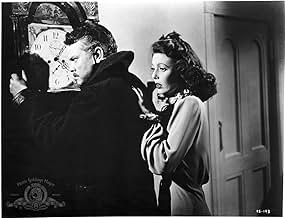
Welles pulls a ton of suspense out of the situation. He's so good at creating points of tension out of both the simplest means, like a group of college boys on a paper chase, a dog who won't stop digging in the leaves, or something much more gothic, like the ancient, broken-down clock in the church tower. Kindler was an expert on clocks (which is one of the biggest clues), and when he revives this old monster, an iron angel with a sword chases away the devil and then rings the bell to the hour. To get to the top of the tower, an extraordinarily tall ladder must be climbed. This leads to as much or more suspense as existed in the cognate scenes in Hitchcock's Vertigo. In fact, I'm sure Hitchcock watched and liked this film. Everyone knows he admired Welles' later Touch of Evil, which he mimicked in his own Psycho, so why not this film?
The acting is quite brilliant as well. We would expect it from Orson Welles, of course. This is actually one of his very best roles. He is amazing at telling believable lies to his wife and friends, but with the dramatic irony in which the audience is in possession, we see the depth and the nervousness and the evil. Edward G. Robinson has a pretty thankless role for a long time, but nearer the end he begins to expand. We cringe when he coldly suggests that Mary is in mortal danger. He is simply great in the climactic scene (which I won't mention except to say that it is one of the best in film history, although some might find it a bit silly). Loretta Young is also great as a naive wife who so desperately wants to be the perfect wife and believe everything her husband says. If this movie were to be remade today, her character would have been developed further psychologically, but what is here is good. She is also great in the climactic sequence.
Welles' films often have thriller elements, but this is his most thrilling. It's also probably his least philosophical, and almost certainly his most conventional. He made the film as a concession. I think he was allowed to make The Lady of Shanghai in return, which is an even better film than this. That is no matter, though. It's a masterpiece anyway. 10/10.
After the setup is over, The Stranger bolts ahead at a breathless pace. All the clues point to the professor, though there is nothing definitive. When his wife, Mary, finds out (played by Loretta Young), she refuses to believe it. Kindler feeds her a nice lie explaining everything, and she's desperate to believe it. He's not sure that he can trust her.
Welles pulls a ton of suspense out of the situation. He's so good at creating points of tension out of both the simplest means, like a group of college boys on a paper chase, a dog who won't stop digging in the leaves, or something much more gothic, like the ancient, broken-down clock in the church tower. Kindler was an expert on clocks (which is one of the biggest clues), and when he revives this old monster, an iron angel with a sword chases away the devil and then rings the bell to the hour. To get to the top of the tower, an extraordinarily tall ladder must be climbed. This leads to as much or more suspense as existed in the cognate scenes in Hitchcock's Vertigo. In fact, I'm sure Hitchcock watched and liked this film. Everyone knows he admired Welles' later Touch of Evil, which he mimicked in his own Psycho, so why not this film?
The acting is quite brilliant as well. We would expect it from Orson Welles, of course. This is actually one of his very best roles. He is amazing at telling believable lies to his wife and friends, but with the dramatic irony in which the audience is in possession, we see the depth and the nervousness and the evil. Edward G. Robinson has a pretty thankless role for a long time, but nearer the end he begins to expand. We cringe when he coldly suggests that Mary is in mortal danger. He is simply great in the climactic scene (which I won't mention except to say that it is one of the best in film history, although some might find it a bit silly). Loretta Young is also great as a naive wife who so desperately wants to be the perfect wife and believe everything her husband says. If this movie were to be remade today, her character would have been developed further psychologically, but what is here is good. She is also great in the climactic sequence.
Welles' films often have thriller elements, but this is his most thrilling. It's also probably his least philosophical, and almost certainly his most conventional. He made the film as a concession. I think he was allowed to make The Lady of Shanghai in return, which is an even better film than this. That is no matter, though. It's a masterpiece anyway. 10/10.
Good Thriller With Welles, Robinson, & More
It's quite interesting to see two acting legends like Orson Welles and Edward G. Robinson working together, and with a cast that includes those two plus Loretta Young, along with an interesting story, "The Stranger" is a pretty good thriller.
Welles and Robinson play an interesting cat-and-mouse game in the search for a former Nazi who is hiding out in a peaceful Connecticut town. It's fair to point out, as others have done, that the dialogue at times leaves a little to be desired, but Welles and Robinson have more than enough ability to carry it off anyway.
Loretta Young has a difficult role as the wife of Welles's character. The script does her no favors, either, but she gives a creditable performance as a character who is important to the story. Among the supporting cast, Billy House particularly stands out, getting surprisingly good mileage out of his role as the store-keeper.
Perhaps the most creative aspect of the movie is the effective use of the clock tower, both as a plot device and as an idea, along with the related themes of clocks and time. The tense climax makes good use of all of these elements.
Welles and Robinson were both parts of so many outstanding movies that sometimes their merely good movies can seem to suffer by comparison. As long as you don't try to compare "The Stranger" with some other film, but just watch it for itself, it's a good thriller and an entertaining movie.
Welles and Robinson play an interesting cat-and-mouse game in the search for a former Nazi who is hiding out in a peaceful Connecticut town. It's fair to point out, as others have done, that the dialogue at times leaves a little to be desired, but Welles and Robinson have more than enough ability to carry it off anyway.
Loretta Young has a difficult role as the wife of Welles's character. The script does her no favors, either, but she gives a creditable performance as a character who is important to the story. Among the supporting cast, Billy House particularly stands out, getting surprisingly good mileage out of his role as the store-keeper.
Perhaps the most creative aspect of the movie is the effective use of the clock tower, both as a plot device and as an idea, along with the related themes of clocks and time. The tense climax makes good use of all of these elements.
Welles and Robinson were both parts of so many outstanding movies that sometimes their merely good movies can seem to suffer by comparison. As long as you don't try to compare "The Stranger" with some other film, but just watch it for itself, it's a good thriller and an entertaining movie.
Welles's least favorite and least personal film is one of his most enjoyable; an exciting film noir with an excellent performance from Edward G. Robinson
The IMDb trivia page says this is Orson Welles's least favorite and least personal film. Aside from "Citizen Kane" and "The Magnificent Ambersons," I think this potent film noir is his most enjoyable—certainly more so than the ugly "Lady from Shanghai" or the overbaked and convoluted "Touch of Evil."
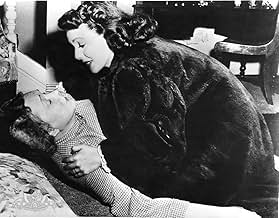
Charles Rankin (Orson Welles) is a professor in a respectable Connecticut town about to marry the daughter of a U.S. Supreme Court justice. But his name is fake and his past is filthy. An earnest convert to Christianity (Konstantin Shayne), who once ran a Nazi concentration camp, is capable of exposing him. "Rankin" kills this little old man and buries his body in the forest. But he isn't safe because an investigator (Edward G. Robinson) from the War Crimes Commission is on his tail. Rankin needs his own wife (Loretta Young) to help him elude capture. But his fascination with the local clock tower may prove his undoing.
As a director, Welles strains a bit too hard for effect in this film—and much too hard in everything but "Kane" and "Ambersons." In those two films all of his technical effects, striking as they are, seem effortless and exactly the right choices. Here, he has imperfect moments—such as the scene where his character is frantically, and inexplicably, trying to pick up pieces of paper—but everything else is splendid, especially the climax.
As an actor he's always compelling, but I think he makes one bad choice here. He's too guilty-looking in the early scenes. It makes us wonder why no one suspects him; and it robs us of a dramatic contrast when he begins to realize he's in imminent danger.
Loretta Young is generally a dull actress. She doesn't have enough skill to make an impression in the early scenes; but once the part requires histrionics she performs her duties well enough. Certainly her character is morally dubious and therefore fascinating in itself.
The best performance by far is Edward G. Robinson's. One of the great actors of his time, this ugly man has enough talent and star quality to underplay his role to great effect.
Orson Welles fans might find this exciting, well-plotted thriller too un-Wellesian to suit them. Otherwise, this is highly recommended.
Charles Rankin (Orson Welles) is a professor in a respectable Connecticut town about to marry the daughter of a U.S. Supreme Court justice. But his name is fake and his past is filthy. An earnest convert to Christianity (Konstantin Shayne), who once ran a Nazi concentration camp, is capable of exposing him. "Rankin" kills this little old man and buries his body in the forest. But he isn't safe because an investigator (Edward G. Robinson) from the War Crimes Commission is on his tail. Rankin needs his own wife (Loretta Young) to help him elude capture. But his fascination with the local clock tower may prove his undoing.
As a director, Welles strains a bit too hard for effect in this film—and much too hard in everything but "Kane" and "Ambersons." In those two films all of his technical effects, striking as they are, seem effortless and exactly the right choices. Here, he has imperfect moments—such as the scene where his character is frantically, and inexplicably, trying to pick up pieces of paper—but everything else is splendid, especially the climax.
As an actor he's always compelling, but I think he makes one bad choice here. He's too guilty-looking in the early scenes. It makes us wonder why no one suspects him; and it robs us of a dramatic contrast when he begins to realize he's in imminent danger.
Loretta Young is generally a dull actress. She doesn't have enough skill to make an impression in the early scenes; but once the part requires histrionics she performs her duties well enough. Certainly her character is morally dubious and therefore fascinating in itself.
The best performance by far is Edward G. Robinson's. One of the great actors of his time, this ugly man has enough talent and star quality to underplay his role to great effect.
Orson Welles fans might find this exciting, well-plotted thriller too un-Wellesian to suit them. Otherwise, this is highly recommended.


Did you know
- TriviaKnowing Orson Welles' reputation for long exposition scenes, International Pictures gave editor Ernest J. Nims the freedom to cut any sequences from the film he felt were unnecessary. To Welles' disgust, Nims ended up cutting almost 30 minutes of Welles' final version, including 19 minutes from the film's opening. The footage is believed lost, as even the original negatives have gone missing.
- GoofsTwo palm trees are visible in the first scene depicting the fictional Connecticut town.
- Quotes
Mr. Wilson: Well, who but a Nazi would deny that Karl Marx was a German because he was a Jew?
- Alternate versionsAlso available in a computer-colorized version.
- ConnectionsEdited into Ninja the Mission Force: Citizen Ninja (2012)
Details
Box office
- Budget
- $1,034,000 (estimated)
- Runtime
- 1h 35m(95 min)
- Color
- Aspect ratio
- 1.37 : 1
Contribute to this page
Suggest an edit or add missing content