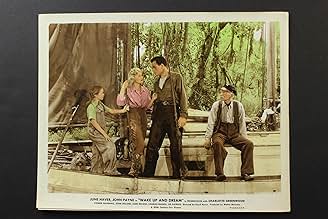
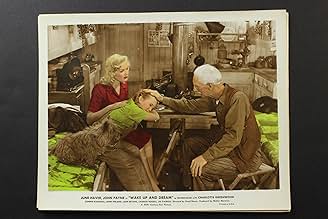
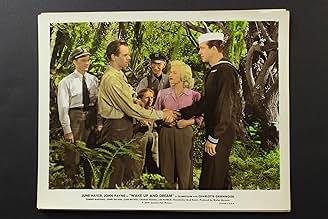
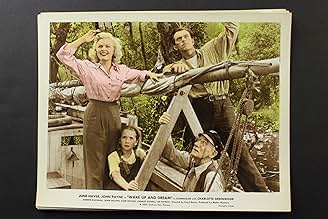
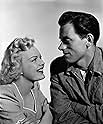
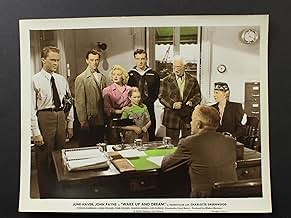
A little girl asks her guardians to take her by boat to a nearby swamp believing her older brother, a sailor who recently went M.I.A. in WWII, is somehow there. She finds a grumpy old Crusoe... Read allA little girl asks her guardians to take her by boat to a nearby swamp believing her older brother, a sailor who recently went M.I.A. in WWII, is somehow there. She finds a grumpy old Crusoe-like hermit, instead, but there's still hope.A little girl asks her guardians to take her by boat to a nearby swamp believing her older brother, a sailor who recently went M.I.A. in WWII, is somehow there. She finds a grumpy old Crusoe-like hermit, instead, but there's still hope.
Eddie Acuff
- Bus Driver
- (uncredited)
Ernest Anderson
- Black Man
- (uncredited)
Stanley Andrews
- Conductor
- (uncredited)
Oliver Blake
- Mr. Agrippa
- (uncredited)
Harlan Briggs
- Praddle
- (uncredited)
George Cleveland
- Prof. Feverfew
- (uncredited)
Marvin Davis
- Lester Lucash
- (uncredited)
Francis Ford
- Old Man at Counter
- (uncredited)
- Director
- Writers
- All cast & crew
- Production, box office & more at IMDbPro
6.1179
1
2
3
4
5
6
7
8
9
10
Featured reviews
That Simple Life
In case anyone is asking Wake Up And Dream is not a musical version of the Thirties Cole Porter review, nor is it a remake of the Universal film from the Thirties of the same title. This film is a whole other creature altogether and mainly known for introducing the song Give Me The Simple Life.
In fact the film starts out with John Payne singing Give Me The Simple Life to his little sister Connie Marshall. Payne's decided to enlist in the Navy and he does and then strangely disappears for most of the film until the end.
That's because he's reported missing in action and little Connie decides to use the good services of Clem Bevans who's built a sailing craft in his landlocked town and wants to offer to the U.S. Navy in time of war. And also to get away occasionally from his wife Charlotte Greenwood. Bevans and Marshall together with June Haver a server at the local diner all start out humoring the child's fantasy about finding her missing brother. Along the way they pick up a discharged seaman in John Ireland who joins their merry crew.
Wake Up And Dream is a strange film that quite frankly I didn't get most of the time. This one was strictly for the kid trade back in 1946.
Still it did introduce a very popular song, sung first by Payne and then by June Haver on the screen. But Darryl F. Zanuck frowned on his stars making records and the hit record in 1946 was done by Bing Crosby. The song perfectly fits his style. Back in the day Bing must have insisted to Jack Kapp at Decca records that he record Give Me The Simple Life which was written by Harry Ruby and Rube Bloom.
If you like the song and the stars than you should see Wake Up And Dream, otherwise you can sleep through it and not miss all that much.
In fact the film starts out with John Payne singing Give Me The Simple Life to his little sister Connie Marshall. Payne's decided to enlist in the Navy and he does and then strangely disappears for most of the film until the end.
That's because he's reported missing in action and little Connie decides to use the good services of Clem Bevans who's built a sailing craft in his landlocked town and wants to offer to the U.S. Navy in time of war. And also to get away occasionally from his wife Charlotte Greenwood. Bevans and Marshall together with June Haver a server at the local diner all start out humoring the child's fantasy about finding her missing brother. Along the way they pick up a discharged seaman in John Ireland who joins their merry crew.
Wake Up And Dream is a strange film that quite frankly I didn't get most of the time. This one was strictly for the kid trade back in 1946.
Still it did introduce a very popular song, sung first by Payne and then by June Haver on the screen. But Darryl F. Zanuck frowned on his stars making records and the hit record in 1946 was done by Bing Crosby. The song perfectly fits his style. Back in the day Bing must have insisted to Jack Kapp at Decca records that he record Give Me The Simple Life which was written by Harry Ruby and Rube Bloom.
If you like the song and the stars than you should see Wake Up And Dream, otherwise you can sleep through it and not miss all that much.
Give me the simple life
This is a good will feel good movie filmed in beautiful technicolor based in Robert Nathan's book The enchanted voyage. A young girl (Connie Marshall) whose brother (John Payne) has enlisted the army runs away from home when she receives a letter from the government saying he is missed. With the help of her brother's fiancée (June Haver) an old neighbour (Clem Beavans) who has built a ship on land and to avoid the ship is being sold and a man they meet (John Ireland) and decides to help them, they sail along the river to reach for the sea, living an adventure to find the missing brother where they even met mr. Robinson Crusoe, preceeded by The wizard of Oz music. Although not a musical, some enjoyable songs appear, such as the opening Give me the simple life and Bell bottom trousers. As a curiosity, this song with completely changed lyrics, was sung by Arthur Kaps, Franz Joham & Hertha Frankel from Austrian group Els vienesos in Spain during the forties with big success. A delightful fable with a happy ending and agreeable characters that emphasizes on people's good will and benefits from beautiful landscapes and good characterizations. If you liked this one try The little Ark, Flipper's new adventure, Toby Tyler or ten weeks with a circus and Follow that dream.
As a bonus, both John Payne and June Haver sing Give me the simple life in separate scenes beautifully. Nice to watch.
A pleasant little family film
Although some may argue that the best part of this film is the frequently used song "Give Me the Simple Life," I found it to be relaxing and charming.
When viewing any film like this, I believe it's important to remember that it was released after our nation had endured a decade of depression followed by 4 years of the horror of WWII. This quiet little film provided relief from the stress of those traumatic years, and a glimmer of hope for the future.
The entire cast was down home friendly and comfortable to watch. The color photography is warm and welcoming, and the background score provides the appropriate mood for each scene and some hope for the future.
I watched it on Classic Reel one chilly Spring morning and enjoyed every minute.
When viewing any film like this, I believe it's important to remember that it was released after our nation had endured a decade of depression followed by 4 years of the horror of WWII. This quiet little film provided relief from the stress of those traumatic years, and a glimmer of hope for the future.
The entire cast was down home friendly and comfortable to watch. The color photography is warm and welcoming, and the background score provides the appropriate mood for each scene and some hope for the future.
I watched it on Classic Reel one chilly Spring morning and enjoyed every minute.
Absolutely Terrible
Starts out with a sappy WW II romance between waitress June Haver and farmer John Payne. He's too shy and she's impatient. He's got a mopey kid sister (Connie Marshall) and then there's the town crank (Clem Bevans) who's been building a boat even though they are nowhere near water. Payne enlists and goes off to war.
When they get a letter saying Payne's missing in action, they (accidentally) set off on a boat journey to find him. Here's where the film tries to link to THE WIZARD OF OZ by playing the theme song over and over again. On the road, the trio runs into a failed dentist (John Ireland) who joins the quest. He becomes useful, especially when they finally find a river.
They get lost on the waterways and come upon a nutty recluse (the wizard?) but a navy plane spots the stranded boat and they are rescued ... just about the time Payne returns unharmed.
Nothing about the plot makes any sense at all. The main story about the boat is annoying because it's so stupid, and the analogies to the Oz story makes no sense either.
Haver comes off best but that's no great prize. Payne is hardly in the film. Ireland is good but his character is strange. Bevans is way too hammy, and Marshall seems to be channeling Margaret O'Brien as a weepy and nearly hysterical child. George Cleveland plays the recluse. Charlotte Greenwood is totally wasted as the landlady (she may be the wife) of the Bevans character. Other familiar faces include Charles D. Brown as the commander, Minerva Urecal as the gossip, Charles Russell as Coles, and Lee Patrick who seems to be the woman sitting on a stool.
The song "Give Me the Simple Life" is the only good thing to come out of this mess.
When they get a letter saying Payne's missing in action, they (accidentally) set off on a boat journey to find him. Here's where the film tries to link to THE WIZARD OF OZ by playing the theme song over and over again. On the road, the trio runs into a failed dentist (John Ireland) who joins the quest. He becomes useful, especially when they finally find a river.
They get lost on the waterways and come upon a nutty recluse (the wizard?) but a navy plane spots the stranded boat and they are rescued ... just about the time Payne returns unharmed.
Nothing about the plot makes any sense at all. The main story about the boat is annoying because it's so stupid, and the analogies to the Oz story makes no sense either.
Haver comes off best but that's no great prize. Payne is hardly in the film. Ireland is good but his character is strange. Bevans is way too hammy, and Marshall seems to be channeling Margaret O'Brien as a weepy and nearly hysterical child. George Cleveland plays the recluse. Charlotte Greenwood is totally wasted as the landlady (she may be the wife) of the Bevans character. Other familiar faces include Charles D. Brown as the commander, Minerva Urecal as the gossip, Charles Russell as Coles, and Lee Patrick who seems to be the woman sitting on a stool.
The song "Give Me the Simple Life" is the only good thing to come out of this mess.
Enjoyable but very, very schmaltzy.
"Wake Up and Dream" is not a film for everyone. This is because the plot is VERY schmaltzy and might make some cringe...while others will enjoy the movie. Don't say I didn't warn you!
The film begins with Jeff (John Payne) going off to war. He leaves his little sister behind (even though he had a deferment since he was her sole caretaker) and promises if he's lost, he'll be 'waiting on their island'...whatever that means. Well, soon he is missing in action and the young sister goes off on a hairbrained search for him. While this is hard to believe, adults agreeing to go with her on a boating trip from the Midwest does seem amazingly far-fetched! Does it get more difficult to believe? You betcha!
I enjoyed most of the film despite its heavy infusion of schmaltz. However, the ending really laid it on thick...too thick...to the point where it became a bit annoying and ridiculous. Decent acting but I just couldn't love this film despite all its good qualities.
The film begins with Jeff (John Payne) going off to war. He leaves his little sister behind (even though he had a deferment since he was her sole caretaker) and promises if he's lost, he'll be 'waiting on their island'...whatever that means. Well, soon he is missing in action and the young sister goes off on a hairbrained search for him. While this is hard to believe, adults agreeing to go with her on a boating trip from the Midwest does seem amazingly far-fetched! Does it get more difficult to believe? You betcha!
I enjoyed most of the film despite its heavy infusion of schmaltz. However, the ending really laid it on thick...too thick...to the point where it became a bit annoying and ridiculous. Decent acting but I just couldn't love this film despite all its good qualities.
Did you know
- TriviaThe jukebox in the cafe when June Haver dances with and sings "I Wish I Could Tell You" to John Payne is a Wurlitzer 412, circa 1936, of which more than 30,000 were produced. The machine held only a dozen 78-rpm records and could only play one side. During WW2, production of jukeboxes was halted as materials were needed for the war effort, and since this film is set in 1943, it stands to reason that a small cafe would still be making good use of its 1936 jukebox. After WW2, jukeboxes went back into full production, and thousands upon thousands were placed in cafes, diners, bars and restaurants nationwide.
- ConnectionsReferences The Wizard of Oz (1939)
Details
- Release date
- Country of origin
- Language
- Also known as
- The Enchanted Voyage
- Filming locations
- Production company
- See more company credits at IMDbPro
- Runtime
- 1h 32m(92 min)
- Aspect ratio
- 1.37 : 1
Contribute to this page
Suggest an edit or add missing content