Release calendarTop 250 moviesMost popular moviesBrowse movies by genreTop box officeShowtimes & ticketsMovie newsIndia movie spotlight
    What's on TV & streamingTop 250 TV showsMost popular TV showsBrowse TV shows by genreTV news
    What to watchLatest trailersIMDb OriginalsIMDb PicksIMDb SpotlightFamily entertainment guideIMDb Podcasts
    OscarsHoliday Watch GuideGotham AwardsSTARmeter AwardsAwards CentralFestival CentralAll events
    Born todayMost popular celebsCelebrity news
    Help centerContributor zonePolls
For industry professionals
  • Language
  • Fully supported
  • English (United States)
    Partially supported
  • Français (Canada)
  • Français (France)
  • Deutsch (Deutschland)
  • हिंदी (भारत)
  • Italiano (Italia)
  • Português (Brasil)
  • Español (España)
  • Español (México)
Watchlist
Sign in
  • Fully supported
  • English (United States)
    Partially supported
  • Français (Canada)
  • Français (France)
  • Deutsch (Deutschland)
  • हिंदी (भारत)
  • Italiano (Italia)
  • Português (Brasil)
  • Español (España)
  • Español (México)
Use app
  • Cast & crew
  • User reviews
  • Trivia
  • FAQ
IMDbPro

Young Mr. Lincoln

  • 1939
  • Approved
  • 1h 40m
IMDb RATING
7.5/10
9.8K
YOUR RATING
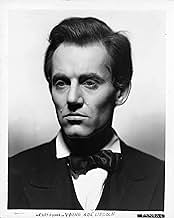
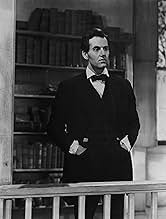
Henry Fonda in Young Mr. Lincoln (1939)
Legal DramaPolitical DramaBiographyDrama

A fictionalized account of the early life of the American president as a young lawyer facing his greatest court case.A fictionalized account of the early life of the American president as a young lawyer facing his greatest court case.A fictionalized account of the early life of the American president as a young lawyer facing his greatest court case.

  • Director
    • John Ford
  • Writers
    • Lamar Trotti
    • Rosemary Benét
  • Stars
    • Henry Fonda
    • Alice Brady
    • Marjorie Weaver
  • See production info at IMDbPro
  • IMDb RATING
    7.5/10
    9.8K
    YOUR RATING
    • Director
      • John Ford
    • Writers
      • Lamar Trotti
      • Rosemary Benét
    • Stars
      • Henry Fonda
      • Alice Brady
      • Marjorie Weaver
    • 185User reviews
    • 55Critic reviews
    • 91Metascore
  • See production info at IMDbPro
  • See production info at IMDbPro
    • Nominated for 1 Oscar
      • 6 wins & 2 nominations total

    Photos106

    View Poster
    View Poster
    View Poster
    View Poster
    View Poster
    View Poster
    + 100
    View Poster

    Top Cast61

    Edit
    Henry Fonda
    Henry Fonda
    • Abraham Lincoln
    Alice Brady
    Alice Brady
    • Abigail Clay
    Marjorie Weaver
    Marjorie Weaver
    • Mary Todd
    Arleen Whelan
    Arleen Whelan
    • Sarah Clay
    Eddie Collins
    Eddie Collins
    • Efe Turner
    Pauline Moore
    Pauline Moore
    • Ann Rutledge
    Richard Cromwell
    Richard Cromwell
    • Matt Clay
    Donald Meek
    Donald Meek
    • Prosecutor John Felder
    Judith Dickens
    • Carrie Sue
    • (credit only)
    Eddie Quillan
    Eddie Quillan
    • Adam Clay
    Spencer Charters
    Spencer Charters
    • Judge Herbert A. Bell
    Ward Bond
    Ward Bond
    • John Palmer Cass
    Ernie Adams
    Ernie Adams
    • Man with Lynch Mob
    • (uncredited)
    Sam Ash
    Sam Ash
    • Townsman Dancing at Party
    • (uncredited)
    Arthur Aylesworth
    Arthur Aylesworth
    • New Salem Townsman
    • (uncredited)
    Dorris Bowdon
    Dorris Bowdon
    • Carrie Sue
    • (uncredited)
    Virginia Brissac
    Virginia Brissac
    • Peach Pie Baker
    • (uncredited)
    Paul E. Burns
    Paul E. Burns
    • Loafer
    • (uncredited)
    • Director
      • John Ford
    • Writers
      • Lamar Trotti
      • Rosemary Benét
    • All cast & crew
    • Production, box office & more at IMDbPro

    User reviews185

    7.59.7K
    1
    2
    3
    4
    5
    6
    7
    8
    9
    10

    Featured reviews

    9craig_smith9

    Young Henry Fonda is young Mr. Lincoln

    Henry Fonda brilliantly captures what we have long believed Abraham Lincoln was like. It is a fooler. Through Fonda's performance we are led to believe (on the surface) that Abraham Lincoln was a country bumpkin. But, through his confrontation with the lynch mob and especially during the court proceedings, you can see that beneath the exterior posturings is a brilliant man who has a very good command of what is going on around him and how to influence the people around him.

    In this movie Henry Fonda shows that he has a very good grasp of how to present humor. It is an aspect of him that has been lost over the years. When he is telling stories and jokes he has the timing down perfect. There is a sequence in the trial that had me laughing quite hard. He shows this gift again in The Lady Eve in 1940.

    The ending by John Ford is absolutely brilliant with Henry Fonda going to the top of a hill and in the distance a tremendous storm symbolic of the Civil War. He goes forward into history. The movie is fiction but the insight into Lincoln is tremendous. Definitely worth seeing again.
    10coop-16

    Symbol, history, and myth.

    In his otherwise excellent book, Lincoln in American Memory, the historian Merrill Peterson calls Young Mr.Lincoln a "boring, dreadful, film". This amazingly wrongheaded analysis simply proves that great historians are rarely fine film critics. I am working on a doctoral dissertation on Abraham Lincoln and Frederick Douglass. As part of my preparation for writing the dissertation, I made a careful analysis of this film, and of Tag Gallaghers brilliant interpretation of it in his seminal book on Ford. Young Mr. Lincoln comes out that culminating year of the first phase of Ford's cinematic authorship, 1939.In that greatest of Hollywood years, Ford directed three superb, still not fully appreciated films: Drums Along the Mohawk, Stagecoach,and Young Mr.Lincoln. It might seem odd to say that Stagecoach is not fully appreciated, all but the most purblind of critics must perceive that it is one of of the greatest Westerns, and perhaps even one of the hundred greatest films of all time. However, what is NOT fully appreciated is that these three films work together as a kind of trilogy-a triptych, in fact. Ford is creating a sort of mythic history of America on screen. Drums Along the Mohawk is the Revolutionary War. Young Mr.Lincoln is pre-Civil War America.Finally, Stagecoach is Post Civil War America. What the three films have in common is that they are an extended meditation on the American Adam and his "errand into the Wilderness". What are the Psychic and social costs of American manifest destiny, as America strives to build a new human city in the wilderness?Lincoln symbolizes Americas journey, as he seeks to reconcile the civilizational inmpulse (law), with the freedom of the wilderness.Young Mr.Lincoln is not history, ( It is full of historical "howlers'-as both Ford and Trotti were well aware), but myth. This is Lincoln, the symbol of justice and mercy, Lincoln, the man of the wilderness, striving to found a civilization within himself, and to become the "remarkable lawgiver' of young America. Young Mr. Lincoln is not history-like James Agee's long forgotten teleplay about Lincoln, and like Sandburgs biography, it is an epic poem...a very beautiful epic poem.
    eibon09

    Henry Fonda is Terrific

    Young Mr. Lincoln(1939) was released in the same year as another classic by John Ford called Stagecoach(1939). Its amazing that two great films like these were overlooked for the Best Picture award of 1939. Tells the fictitious but compelling story of the early days of Abraham Lincolm when he was a young struggling lawyer. He shows traits that made him famous during his role as the President of the United States. He does have a touch of the Sherlock Holmes method of solving crimes for he uses it to have defend a man falsely accused of murder.

    Patriototic motion picture that is one of my favorite films from John Ford. Henry Fonda is perfect in the role of the young Abraham Lincoln. In fact, he bears a little resemblence to the late admired and revered, Abraham Lincoln. Fonda gives a performance of admiring humaine tenderness. Many of the scenes in Young Mr Lincoln(1939) are done with beauty and finesse.
    muvphan

    Appealing and accurate in its own way

    Amazingly, I have just seen this film for the first time. I was not expecting such a wonderful portrayal by Mr. Fonda and the accuracy (within Hollywood limits of the time) by Mr. Ford. I am no Lincoln historian, but I have read enough about him that I recognize the truth in the spirit of this film. A number of details could certainly be noted as historically inaccurate; on the other hand, the image of Mr. Lincoln as a lawyer who cares for people, truth, and mercy is quite accurate. One reviewer writes that Mr. Lincoln is made to appear as a country bumpkin, using humor when he is unable to use anything useful. To the contrary, Mr. Lincoln was realistic about his country origins; he used humor to convince, drive home an important point, and win people to his view; he was self-effacing. The manner in which Mr. Fonda portrays him in this film does homage to the man. The film may conflate history for entertainment purposes (it is, after all, a Hollywood production), but it is not as unhistorical as many believe. While sentimental (as to be expected of a 1939 film about an American icon), Young Mr. Lincoln is an admirable presentation of the spirit of the man.
    roy-4

    Great Ford, and Great Americana

    Why does this movie get so little attention? Maybe because it came out in that overstuffed great-movie year, 1939 (Wizard of Oz, Dark Victory, Grand Illusion, GWTW [which I can't stand]). But I really think it's because YML is a transitional film for Ford -- it's stuck between his early expressionistic period ("The Informer") and his classic Western period, with one stylistic foot in each. And it's unabashedly patriotic, only hinting at the dark reimagining of the American experience that the Master would come to in "The Searchers" and "The Man Who Shot Liberty Valance" -- but still hinting at it enough to turn off the McVeighs among us.

    Maybe that's why I love it. You can see Ford coming to terms with the grand, Griffithesque vision of America through its most complicated avatar, Lincoln. Ford's love for his country was more like Lincoln's than Griffith's, anyway: like Lincoln, he acknowledged the genius of the democratic experiment, but he was also aware of its dangers: mob rule and self-satisfaction. YML's greatest scenes are all about this.

    First, there's the local parade Abe attends, surrounded by yahoos whom he loves but also sees for what they are. (We see him in another scene accepting a legal case from one of these -- and warily biting the coin offered him for a retainer.) Veterans of the recent War of 1812 and Indian Wars march through; the crowd is wild for them, Abe merely respectful.Then a agon of old men in tricorners is pulled through the parade route. No one seems to know who they are. Lincoln quietly informs his friends that they are veterans of the War for Independence -- and gravely doffs his stovepipe hat. His friends, mildly ashamed (it appears) of their prevous jingoistic glee, follow suit, and stand silent and hatless as the old men pass.

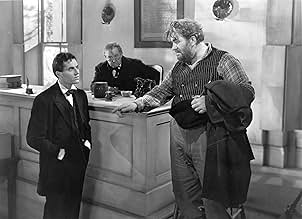
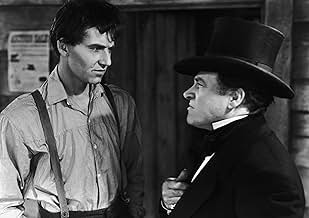
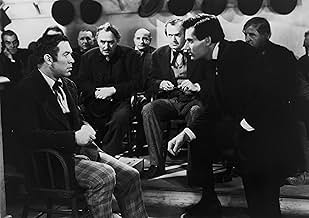
    Then the mildly ludicrous plot -- about two brothers accused of another man's murder -- kicks in, and Abe goes to work. The scene where he confronts a lynch mob, putting his foot up against the log they're using for a battering-ram against the jailhouse door, is a classic by any standard. But note how Abe talks to the mob on its own level while remaining, in spirit, resolutely on his own higher plane. After appealing to their macho impulses by offering to "lick any man here," he delivers a house-divided speech that soothes their savagery and leaves them confused and irresolute. "Dontcha wanna put that log down now, boys?" he asks when they have been flummoxed by his eloquence. "Ain't it gettin' a mite heavy?"

    Throughout Ford indulges in shameless historical foreshadowings that would have made Stephen Vincent Benet blush. Abe meets Mary Todd and Stephen Douglas; he rides down a dirt road with a bumpkin who's playing a new tune called "Dixie" on a jaw-harp. "Kinda makes you feel like marchin'!" says the bumpkin, as he and Abe ride through a muddy patch in the road.

    The ending is impossible to describe without inviting derision, but I swear to you, it works. Having won his case, Lincoln allows as how he might take a walk -- "maybe to the top of that hill." As he trudges on, the skies send down rain and lightning -- and Abe seems to know what this is a prelude to.

    I acknowledge the superiority of the great Ford films that came after, but I will always have a special place in my heart for "Young Mr. Lincoln." Independence Day (the federal day of observance, not the movie) is coming; you could do far worse than to watch this great film before the barbecue.

    More like this

    Drums Along the Mohawk
    7.0
    Drums Along the Mohawk
    Wagon Master
    7.1
    Wagon Master
    Fort Apache
    7.4
    Fort Apache
    My Darling Clementine
    7.7
    My Darling Clementine
    Stagecoach
    7.8
    Stagecoach
    The Sun Shines Bright
    6.9
    The Sun Shines Bright
    The Informer
    7.3
    The Informer
    She Wore a Yellow Ribbon
    7.2
    She Wore a Yellow Ribbon
    They Were Expendable
    7.2
    They Were Expendable
    The Prisoner of Shark Island
    7.2
    The Prisoner of Shark Island
    The Quiet Man
    7.7
    The Quiet Man
    Rio Grande
    7.0
    Rio Grande

    Related interests

    Tom Cruise, Demi Moore, and Kevin Pollak in A Few Good Men (1992)
    Legal Drama
    Martin Sheen in The West Wing (1999)
    Political Drama
    Ben Kingsley, Rohini Hattangadi, and Geraldine James in Gandhi (1982)
    Biography
    Naomie Harris, Mahershala Ali, Janelle Monáe, André Holland, Herman Caheej McGloun, Edson Jean, Alex R. Hibbert, and Tanisha Cidel in Moonlight (2016)
    Drama

    Storyline

    Edit

    Did you know

    Edit
    • Trivia
      John Ford and producer Darryl F. Zanuck fought an extended battle over control of the film. Ford even had unused takes of the film destroyed so the studio could not insert them into the movie. One scene that Ford insisted on cutting was a scene where Lincoln met his future assassin, a very young John Wilkes Booth.
    • Goofs
      Lincoln is shown playing "Dixie" on a Jew's harp. That portion of the film is ostensibly set in the year 1837, but most reliable sources indicate that "Dixie" wasn't written, publicly performed nor published before 1859. During the Civil War, Lincoln was known to be partial to the tune (it was almost as popular in the North in the 1860s as in the South), but it's unlikely he would have heard it in the 1830s.
    • Quotes

      Abe Lincoln: [cross-examining Cass] J. Palmer Cass.

      John Palmer Cass: Yes, sir.

      Abe Lincoln: What's the "J" stand for?

      John Palmer Cass: John.

      Abe Lincoln: Anyone ever call you Jack?

      John Palmer Cass: Yeah, but...

      Abe Lincoln: Why "J. Palmer Cass?" Why not "John P. Cass?"

      John Palmer Cass: Well, I...

      Abe Lincoln: Does "J. Palmer Cass" have something to hide?

      John Palmer Cass: No.

      Abe Lincoln: Then what do you part your name in the middle for?

      John Palmer Cass: I got a right to call myself anything I want as long as it's my own name!

      Abe Lincoln: Well then if it's all the same to you, I'll call you Jack-cass.

      [Roar of laughter from spectators]

    • Connections
      Featured in The Blue Bird (1940)
    • Soundtracks
      The Battle Cry of Freedom
      (1862) (uncredited)

      Written by George Frederick Root

      Played during the opening credits and sung by an unidentified chorus

    Top picks

    Sign in to rate and Watchlist for personalized recommendations
    Sign in

    FAQ19

    • How long is Young Mr. Lincoln?Powered by Alexa
    • Is this film based on a novel?
    • Is this film based on real events?

    Details

    Edit
    • Release date
      • June 9, 1939 (United States)
    • Country of origin
      • United States
    • Language
      • English
    • Also known as
      • Mladost prezidenta Lincolna
    • Filming locations
      • Sacramento, California, USA(river scenes)
    • Production companies
      • Cosmopolitan Productions
      • Twentieth Century Fox
    • See more company credits at IMDbPro

    Box office

    Edit
    • Budget
      • $1,500,000 (estimated)
    See detailed box office info on IMDbPro

    Tech specs

    Edit
    • Runtime
      • 1h 40m(100 min)
    • Color
      • Black and White
    • Aspect ratio
      • 1.37 : 1

    Contribute to this page

    Suggest an edit or add missing content
    • Learn more about contributing
    Edit page

    More to explore

    Recently viewed

    Please enable browser cookies to use this feature. Learn more.
    Get the IMDb App
    Sign in for more accessSign in for more access
    Follow IMDb on social
    Get the IMDb App
    For Android and iOS
    Get the IMDb App
    • Help
    • Site Index
    • IMDbPro
    • Box Office Mojo
    • License IMDb Data
    • Press Room
    • Advertising
    • Jobs
    • Conditions of Use
    • Privacy Policy
    • Your Ads Privacy Choices
    IMDb, an Amazon company

    © 1990-2025 by IMDb.com, Inc.