
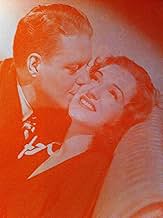
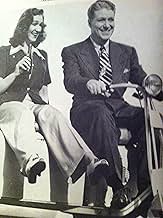
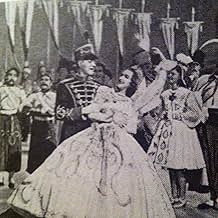
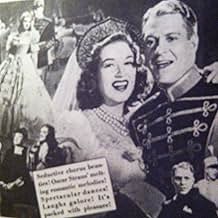
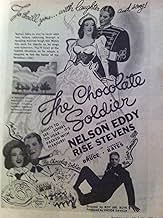
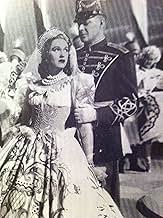
Maria and Karl Lang are the singing duo of Vienna. Maria is very flirtatious and Karl very jealous. Karl decides to masquerade as a Russian guardsman and attempts to make Maria flirt with hi... Read allMaria and Karl Lang are the singing duo of Vienna. Maria is very flirtatious and Karl very jealous. Karl decides to masquerade as a Russian guardsman and attempts to make Maria flirt with him - to test her loyalty to him. As the Russian, Karl makes a vigorous attempt to seduce Ma... Read allMaria and Karl Lang are the singing duo of Vienna. Maria is very flirtatious and Karl very jealous. Karl decides to masquerade as a Russian guardsman and attempts to make Maria flirt with him - to test her loyalty to him. As the Russian, Karl makes a vigorous attempt to seduce Maria. For a moment she accepts then rejects him. Karl is left in turmoil.
- Nominated for 3 Oscars
- 3 wins & 3 nominations total



- Magda
- (as Dorothy Gilmore)


- Undetermined Secondary Role
- (uncredited)
- Singer - 'Seek the Spy' Sequence
- (uncredited)

- Emile, Voice Coach
- (uncredited)

- Waiter at the Double Eagle
- (uncredited)
- Messenger with Note
- (uncredited)
- Performer in Gypsy Café Sequence
- (uncredited)

- Stage Manager
- (uncredited)

- Flute Player
- (uncredited)
Featured reviews
Neither fish nor fowl, but good red fun!
The history of the original operetta is fairly well known: Straus wanted to adapt one of G.B. Shaw's earliest and arguably funniest plays, ARMS AND THE MAN to the operetta stage. Shaw was amenable but doubted the result would work and didn't want to undercut the ongoing royalty stream of one of his most successful plays (it is regularly performed to this day).
In compromise, Shaw demanded a number of conditions: 1) they WOULD use his basic plot (in fact the authors and Stanislaus Strange in his English language translation shoehorned most of Shaw's interpersonal comedy into the first and third acts of their operetta but omitted almost entirely the Fabian class comedy Shaw held dear to his heart), 2) they would not use any of the original character names or a single actual LINE of his dialogue, 3) all programs for productions in England had to carry the producers apologies to Shaw "for this unauthorized PARODY of one of his plays." 4) In return for these concessions, Shaw would decline ANY royalties for the operetta (but reserved the right to hate the result - which he did - probably at least in part as a result of the fortune he had declined on principle). Straus and company happily accepted the deal.
As Shaw expected, the operetta left out most of his best and funniest ideas; to his great surprise, it retained ENOUGH and had music GOOD enough that it was an enormous success anyway.
In 1940, when MGM wanted to continue their series of successful operetta films with Nelson Eddy, they found they had to approach the still very active Shaw - who had won an Oscar for Best Screenplay just two years before for his adaptation of his own play, PYGMALION. The great man was willing to be persuaded but unenthusiastic. He really didn't like the bowdlerization of one of his best perennial plays.
MGM had hoped/expected to snap up the rights to the old show on the cheap, but Shaw was not to be shortchanged. No deal could be struck on terms as cheap as MGM wanted. Still, MGM HAD the rights to the music and lyrics and the famous title so they went ahead anyway.
Technically they used Molnar's play THE GUARDSMAN as the basis for their film (it's really a generic but funny "jealous husband tests wife's fidelity with a masquerade she sees through" tale that's as old as the hills and Lubitch did it better in the 30's), but they didn't bother trying to adapt it to the old score.
Instead, they justified the TITLE and score they had bought by having the leads fairly obviously performing the operetta on stage between the off-stage comedy scenes (the credits in the opening "crawl" are among the most bizarre you will see anywhere). They just didn't show the plot scenes from the operetta and near the end rather outrageously had Eddy's character play the Second Act Finale from the operetta on the Act I set and in a brand new costume to make an offstage point - as if the audience in the theatre in the film wouldn't notice (watch the reactions of the delightful Nigel Bruce, tossed in as the befuddled best friend/observer).
MGM might as well have done DIE FLEDERMAUS for the same basic story and even better music, but what they got was and remains good fun - and Eddy wasn't ever up to a ...FLEDERMAUS in vocal or acting ability. Risë Stevens, a more down to earth actress than the bubbly MacDonald who usually left Eddy in the dust (and with a singing voice every bit as good), proved to be a solid, believable acting partner for him and (together with a relatively solid comedy book) makes Eddy seem to give one of his best performances on screen.
It's our loss that the declining popularity of Eddy and the quality of his vehicles deprived us of more pairings with Stevens who was so perfect for him. MacDonald was back for I MARRIED AN ANGEL (1942), he really didn't have a leading lady for the Claude Rains PHANTOM OF THE OPERA (1943) or KNICKERBOCKER HOLIDAY (1944) and then, except for NORTHWEST OUTPOST (1947), it was all but over.
Now that both are in the public domain, it would be wonderful to get actual movies of ARMS AND THE MAN (the original 1932 British film has not been seen in years) and the *real* CHOCOLATE SOLDIER (there was a 1915 silent film of the 1909 operetta co-directed by the American translator) with the Stanislaus Strange libretto out of Shaw, but until they are appear, this hybrid comedy with healthy glimpses of an over produced version of the original is good fun.
fun and rather sweet
"I Am Just a Chocolate Soldier Man in a Uniform so Pretty."
If nothing else, Louis B. Mayer prided himself on bringing class to the cinema and he never met a diva he didn't want to sign for MGM. Eddy, who didn't really get along with Mayer and was soon to leave MGM after a spat with him, I think knew just how much it would cost to sign someone from the outside and he made Mayer spend the dough.
Rise Stevens had appeared with him on radio so Nelson's motives weren't completely to hurt Mayer financially. They worked well together here and maybe they could have been a screen team themselves. Rise Stevens had a good gift for comedy, very much like that other singer/actress Irene Dunne. But after The Chocolate Soldier and an appearance in Going My Way with Bing Crosby, she left the silver screen.
Like the Eddy/MacDonald feature Sweethearts this utilizes the music, but not the plot. Like Sweethearts the leads are appearing on stage in The Chocolate Soldier, but it's a backstage story for the plot. And the plot used is The Guardsman which MGM owned the rights to, having filmed it in 1931 with Alfred Lunt and Lynne Fontanne.
Eddy and Stevens look so good and sing so beautifully on stage, but that doesn't account for Eddy's all consuming jealousy over his wife. His Othello act doesn't even need an Iago for a boost, he's creating all kinds of imaginary lovers for Stevens. Finally he decides to put her to the test, playing a phony Russian opera singer with beard and Cossack costume. Stevens however is up to the challenge and it's a pretty funny film that follows.
The two leads have some nice duets together, particularly the My Hero duet from Oscar Straus's Chocolate Soldier. But the big hits of this film are Moussorgsky's Song of the Flea and another song While My Lady Sleeps written by Bronislau Kaper and Gus Kahn. Both were standard items in Nelson Eddy concerts. Eddy recorded both, however the version I have of the Song of the Flea is in English and in The Chocolate Soldier, Nelson sings it in the original Russian.
It was a good teaming Eddy and Stevens and since right after this Jeanette and Nelson would be doing their last film together, I Married an Angel, it's unfortunate Stevens and Eddy did not do a few more films together themselves.
Excellent Musical Fluff
Endless but the music and singing are beautiful
It takes a long time, but the music is beautiful, including "My Hero," "Mon coeur" from Samson and Delilah, "Evening Star" from Tannhauser (in English - I'm guessing in 1941, no one wanted to hear German), and many others. A friend of mine worked for Stevens, and she would occasionally comment that she was quite a looker in her day, to which my friend would reply, "Yeah, Miss Stevens, you were all right." She was a little more than that, at a time when opera singers who had true glamor was rarer than it is today.
Eddy and MacDonald were reteamed for one more film; the world had changed too much for their operatic fantasies. When Mario Lanza starred in films that used opera ten years later, he played, among other things, a truck driver and a soldier. It's too bad; Stevens and Eddy and MacDonald and Eddy both made beautiful teams.


Did you know
- TriviaThis has interesting origins from musical and non-musical plays. In 1909, the operetta "The Chocolate Soldier" opened in New York. This was based on the non-musical play "Arms and the Man" by George Bernard Shaw. However, Shaw voiced objections to his play being adapted as an operetta. A silent film adaptation, The Chocolate Soldier (1914), based on the New York operetta, omitted any reference to George Bernard Shaw. In 1911, a Hungarian non-musical play "Testör" ("The Guardsman") by Ferenc Molnár, opened in Budapest. In 1941 when this film was made, George Bernard Shaw was still alive. Therefore, the music of the New York operetta and the plot of the Hungarian non-musical play "The Guardsman" were used.
- GoofsWhen Eddy is impersonating a Russian singer, the nightclub impresario introduces him as a bass, but then Eddy sings. He is a baritone.
- ConnectionsFeatured in We Must Have Music (1941)
- SoundtracksMy Hero
(1909) (uncredited)
Music by Oscar Straus
Musical adaptation by Bronislau Kaper and Herbert Stothart (1941)
Original lyrics by Rudolph Bernauer and Leopold Jacobson
English lyrics by Hugh Stanislaus Stange (as Stanislaus Stange)
Additional lyrics by Gus Kahn (1941)
Sung by Risë Stevens and Nelson Eddy in the show
Hummed a cappella by Florence Bates
Sung by Risë Stevens in the Gypsy Café
Reprised by Risë Stevens and Nelson Eddy in the show at the end
Details
- Runtime
- 1h 42m(102 min)
- Color
- Aspect ratio
- 1.37 : 1