IMDb RATING
7.1/10
4.3K
YOUR RATING


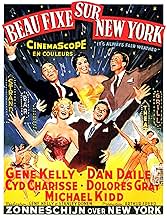
Three soldiers meet ten years after their last meeting in New York, and find out that they have little in common now.Three soldiers meet ten years after their last meeting in New York, and find out that they have little in common now.Three soldiers meet ten years after their last meeting in New York, and find out that they have little in common now.
- Directors
- Writers
- Stars
- Nominated for 2 Oscars
- 3 nominations total



David Ahdar
- Dancing Boxer
- (uncredited)
Betty Arlen
- Girl
- (uncredited)

Phil Arnold
- Butch - Assistant at Stillman's Gym
- (uncredited)
Sybil Bacon
- Woman on Skates
- (uncredited)
Walter Bacon
- Bartender
- (uncredited)

Jimmy Baird
- Child Dancer
- (uncredited)

Tom Bernard
- Page
- (uncredited)
Rodney Bieber
- Dancing Boxer
- (uncredited)

Madge Blake
- Mrs. Stamper
- (uncredited)
Willie Bloom
- Bar Patron
- (uncredited)
- Directors
- Writers
- All cast & crew
- Production, box office & more at IMDbPro
7.14.2K
1
2
3
4
5
6
7
8
9
10
Featured reviews
On The Turn
A perfect antidote or bookend to ON THE TOWN this excellent, mature and solid cinemascope musical is an absolute knockout. Made by MGM to placate Kelly for refusing to loan him to Samuel Goldwyn for GUYS AND DOLLS this film is probably one of the few 50s MGM efforts that plays well to audiences in 2004........but only of one sees it in cinemascope. Inventive use of the widescreen allows superb choreography to become ironic and witty......and the bewildering idiocy of TV stations to only show the center of the screen is an insult to any audience seeking to enjoy this clever and thoughtful musical. A small profit on first release and a drive in future saw this pic drop from view early in its life. the dance numbers are uniformly (no pun) astonishing and sometimes hilarious (especially Dolores Gray) BUT... I yi yi...Cyd Charisse in Baby You Knock Me Out lives up to its title. Trivia alert: one of the old boxers at Stillman's Gym is Gus Mecurio, father of STRICTLY BALLROOM lead dancer and actor Paul Mecurio. Kelly on skates is as good as Kelly singin in the rain...it's the same number but on wheels!.....this is a great film and a perfect musical. Imagine Kelly's rage at MGM after refusing him the Guys and Dolls loan out and they they distribute that film for Goldwyn anyway! No wonder WEATHER is such a suitably dark film of the disillusionment met head on in the American mid 50s. A full revival is much deserved.
The weather begins to turn for the big MGM musicals
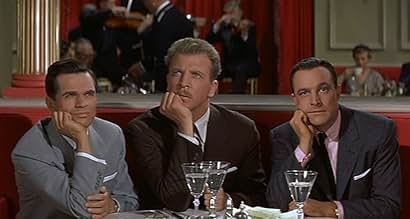
The age of the big MGM musical production was beginning to wind down by the time this film was made. It has more story to it than most MGM musicals, revolving around three G.I. buddies and their vow in 1945 to meet in a particular bar ten years later. They all keep their word and keep the date, but each is vastly disappointed in how the other two have turned out and initially have nothing much to say to each other. There's some interesting commentary here on life in the 50's and in particular the early days of TV and advertising's place in it. Gene Kelly is entertaining as always, but I was really surprised by Dan Dailey's talent as the ad executive that comes to a startling self-realization at an inopportune time and does quite a performance dancing and singing about his plight.
This film was a product of the famed Arthur Freed unit, which made many lavish musicals in their time. Its fate parallels the fate of this film, due to the managerial chaos at MGM and changing audience tastes. Betty Comden of the Arthur Freed unit said that the staff was accustomed to seeing their musicals open at the best movie theaters, and were surprised when "It's Always Fair Weather" opened at numerous drive-ins! That's when they knew they were nearing the end of an era.
This film was a product of the famed Arthur Freed unit, which made many lavish musicals in their time. Its fate parallels the fate of this film, due to the managerial chaos at MGM and changing audience tastes. Betty Comden of the Arthur Freed unit said that the staff was accustomed to seeing their musicals open at the best movie theaters, and were surprised when "It's Always Fair Weather" opened at numerous drive-ins! That's when they knew they were nearing the end of an era.
Stormy Weather Ahead
It's Always Fair Weather will go down in history as the film musical which "could have been". Had it been made a few years earlier it could have been in the same leagues as Singin' In the Rain and On the Town but several shortcomings, some determined by the period the film was made prevent it from being so. Even the studio had that little faith in it they dumped it as a second feature alongside Bad Day At Black Rock.
It's Always Fair Weather differs from other musicals of its time in its sombre tone with the tale of three war buddies who are reunited ten years later to find out they can't stand each other upon discovering one is a hick, a snob and a goon. This is juxtaposed to a world of beautiful, bright colours and welcome artificiality with urban sets to die for. It's Always Fair Weather was originally conceived as a sequel to On the Town, reuniting Gene Kelly with co-stars Frank Sinatra and Jules Munshin. However, by 1955, Munshin no longer had box office credibility while Sinatra was too big a star that the studio was unwilling to work with him. In their place, we get Dan Dailey and Michael Kidd, both of whom get the job done but lack the same electric chemistry Kelly's On the Town co-stars possessed. Frank Sinatra in particular I find is sorely missed as I loved his three-picture partnership with Kelly in which they made an excellent comedic duo. None the less the roaster does get a big boost with the casting of the great Cyd Charisse, whom like Ann Miller in On the Town, plays a glamorous woman with contradictory personality and an encyclopedic knowledge of well, pretty much any topic.
However, I find It's Always Fair Weather's biggest drawback are the sections of the film which are uneventful and doesn't have the lightning-fast pace of On The Town or Singin' In The Rain. The film could definitely benefit from the trimming or removal of whole scenes; there is a faster-paced, snappier film in here. The film does help make up for this though in its musical numbers. It's Always Fair Weather does showcase some of the best moments of any MGM musical with the soundtrack being one of the best in the MGM catalogue. The musical numbers and compositions are fantastic and all written for the film itself by the great Betty Comden and Adolph Green, while the majority of MGM musicals took their songs from their back catalogue as well as other stage musicals.
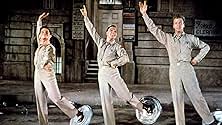
The five-minute Gershwin like dance number "The Binge" showcases the then-new cinemascope format by having three dancers occupy their own third of the screen as they dance and create percussion with trash can lids on their feet as they work together in great physical tandem of drunken joy. Once Upon a Time, on the other hand, is a heart aching number if there was one as the three men sing about their broken dreams while Music is Better Than Words couldn't be more enchanting if you asked for it. The centrepiece of the film, however, is Gene Kelly's number 'I Like Myself', featuring him tap dancing on roller skates, no trickery! Like Singin' In the Rain, the number is an encapsulation of pure happiness (just look at the faces of the onlooking extras). This is of my favourite musical numbers of all time and is an unbelievable display of talent if I ever saw it. The film's only crime in the song and dance department is the lack of a dance number between Gene Kelly and Cyd Charisse, despite one actually being filmed.
I feel widescreen technology came too late the MGM musicals which could have used it to great advantage but by 1955 musicals had already lost most of their economic viability due to the rise of television. It's Always Fair Weather is Hollywood coming to terms with the existence of its rival television but relishes the opportunity to satirize the format as superficial and ridden with advertising.
It's Always Fair Weather differs from other musicals of its time in its sombre tone with the tale of three war buddies who are reunited ten years later to find out they can't stand each other upon discovering one is a hick, a snob and a goon. This is juxtaposed to a world of beautiful, bright colours and welcome artificiality with urban sets to die for. It's Always Fair Weather was originally conceived as a sequel to On the Town, reuniting Gene Kelly with co-stars Frank Sinatra and Jules Munshin. However, by 1955, Munshin no longer had box office credibility while Sinatra was too big a star that the studio was unwilling to work with him. In their place, we get Dan Dailey and Michael Kidd, both of whom get the job done but lack the same electric chemistry Kelly's On the Town co-stars possessed. Frank Sinatra in particular I find is sorely missed as I loved his three-picture partnership with Kelly in which they made an excellent comedic duo. None the less the roaster does get a big boost with the casting of the great Cyd Charisse, whom like Ann Miller in On the Town, plays a glamorous woman with contradictory personality and an encyclopedic knowledge of well, pretty much any topic.
However, I find It's Always Fair Weather's biggest drawback are the sections of the film which are uneventful and doesn't have the lightning-fast pace of On The Town or Singin' In The Rain. The film could definitely benefit from the trimming or removal of whole scenes; there is a faster-paced, snappier film in here. The film does help make up for this though in its musical numbers. It's Always Fair Weather does showcase some of the best moments of any MGM musical with the soundtrack being one of the best in the MGM catalogue. The musical numbers and compositions are fantastic and all written for the film itself by the great Betty Comden and Adolph Green, while the majority of MGM musicals took their songs from their back catalogue as well as other stage musicals.
The five-minute Gershwin like dance number "The Binge" showcases the then-new cinemascope format by having three dancers occupy their own third of the screen as they dance and create percussion with trash can lids on their feet as they work together in great physical tandem of drunken joy. Once Upon a Time, on the other hand, is a heart aching number if there was one as the three men sing about their broken dreams while Music is Better Than Words couldn't be more enchanting if you asked for it. The centrepiece of the film, however, is Gene Kelly's number 'I Like Myself', featuring him tap dancing on roller skates, no trickery! Like Singin' In the Rain, the number is an encapsulation of pure happiness (just look at the faces of the onlooking extras). This is of my favourite musical numbers of all time and is an unbelievable display of talent if I ever saw it. The film's only crime in the song and dance department is the lack of a dance number between Gene Kelly and Cyd Charisse, despite one actually being filmed.
I feel widescreen technology came too late the MGM musicals which could have used it to great advantage but by 1955 musicals had already lost most of their economic viability due to the rise of television. It's Always Fair Weather is Hollywood coming to terms with the existence of its rival television but relishes the opportunity to satirize the format as superficial and ridden with advertising.
A Unique Hybrid Of A Musical
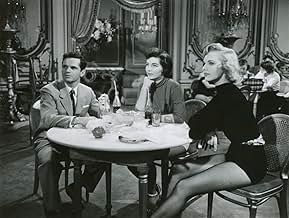
Keep in mind that the era of the movie musical was pretty much in the dust when IT'S ALWAYS FAIR WEATHER hit the screens in 1955. Yet the story is an odd hybrid for benign musicals, and a rather dark story of three GI's coming home from the war, vowing a loyal, buddy-buddy reunion, then, upon reuniting years later, realizing they have outgrown one another and have virtually nothing in common. There is a reunion dinner at a posh nightclub, and try as they might, hostility and acrimony flare up among the men as they gradually discern they have now little in common. The movie also teams Dan Daily and Michael Kyd with Kelly, a Grade A, winning combination for the few, but excellent numbers, they perform.
However, this movie should be seen for one and one reason only: Gene Kelly's dance on roller skates to one of the most beautiful tunes ever written by Comden and Green. As the story goes, Kelly had been searching for just the right opportunity to dance on skates in a film for years. Betty Comden has said she lived close to Kelly in Beverly Hills and that he had purchased skates years before at a hardware store near-by and that she'd watched Kelly take his daughter skating many times. It's not a stretch that Kelly spent a lot of hours imagining just where and when he'd do a roller skates number as he flew around Beverly Hills on wheels.
Another delight is the very robust and creative "trash can lids" number featuring Kelly, Dan Daily, and Michael Kyd. With a trash can lid stuck to one foot, the trio bounce up and down a street to a snappy melody while still in uniform. For those who thought lanky Dan Daily was "just another hoofer," this number proves he could hold his own with the best of them.
I have heard Comden and Green also relate the story that after the movie opened someone told them they had seen the film in a drive-in. "I knew that the end had come," (for the movie musical) commented Adolf Green.
IT'S ALWAYS FAIR WEATHER is very much worth seeing for being one of the last studio movie musicals of its kind. Moreover, the novelty of watching Kelly teamed with Dan Daily and Michael Kyd--the only time those three dancers appeared together--is supremely enoyable. IT'S ALWAYS FAIR WEATHER remains underrated to this day and serves as one of the final signposts for the demise of the great screen musical.
Dennis Caracciolo
However, this movie should be seen for one and one reason only: Gene Kelly's dance on roller skates to one of the most beautiful tunes ever written by Comden and Green. As the story goes, Kelly had been searching for just the right opportunity to dance on skates in a film for years. Betty Comden has said she lived close to Kelly in Beverly Hills and that he had purchased skates years before at a hardware store near-by and that she'd watched Kelly take his daughter skating many times. It's not a stretch that Kelly spent a lot of hours imagining just where and when he'd do a roller skates number as he flew around Beverly Hills on wheels.
Another delight is the very robust and creative "trash can lids" number featuring Kelly, Dan Daily, and Michael Kyd. With a trash can lid stuck to one foot, the trio bounce up and down a street to a snappy melody while still in uniform. For those who thought lanky Dan Daily was "just another hoofer," this number proves he could hold his own with the best of them.
I have heard Comden and Green also relate the story that after the movie opened someone told them they had seen the film in a drive-in. "I knew that the end had come," (for the movie musical) commented Adolf Green.
IT'S ALWAYS FAIR WEATHER is very much worth seeing for being one of the last studio movie musicals of its kind. Moreover, the novelty of watching Kelly teamed with Dan Daily and Michael Kyd--the only time those three dancers appeared together--is supremely enoyable. IT'S ALWAYS FAIR WEATHER remains underrated to this day and serves as one of the final signposts for the demise of the great screen musical.
Dennis Caracciolo
Note the mise en scene of his dance routines!
Just an aside,really:
You notice how sparsely Gene Kelly's finest numbers are shot? Long takes,little in the way of cinematic flair? Well,ponder this for a moment-he will often do something truly spectacular at the end of a take,leading one to wonder just how many times the poor chap put himself through the preceding minutes before getting it right...
A case in point is the justly famed (among those in the know) "Rollerskate Number":In order to demonstrate that the skates are,indeed,authentic,Kelly will swap-flawlessly-from "tap" to "glide" at the end of each take.
Incredible.
Compare and contrast,by the way,with protege Donald O'Connor's emulation in "I Love Melvin"-we never see thetwo movements co-existing within the same shot.
Gene Kelly made me want to dance when I was 11,and not feel like a poof for doing so.
You notice how sparsely Gene Kelly's finest numbers are shot? Long takes,little in the way of cinematic flair? Well,ponder this for a moment-he will often do something truly spectacular at the end of a take,leading one to wonder just how many times the poor chap put himself through the preceding minutes before getting it right...
A case in point is the justly famed (among those in the know) "Rollerskate Number":In order to demonstrate that the skates are,indeed,authentic,Kelly will swap-flawlessly-from "tap" to "glide" at the end of each take.
Incredible.
Compare and contrast,by the way,with protege Donald O'Connor's emulation in "I Love Melvin"-we never see thetwo movements co-existing within the same shot.
Gene Kelly made me want to dance when I was 11,and not feel like a poof for doing so.


Did you know
- TriviaGene Kelly bought the roller skates for the "I Like Myself" number down the block from his house at Pioneer Hardware on Beverly Drive. He also mentioned that the skates were not altered in any way; they weren't locked to his shoes, so when he tapped in them, he had no help.
- GoofsIn the 1945-1955 montage, the shot of the 1953 New Years Eve crowds at Times Square shows Sundown (1941) at the Criterion Theatre, so it's obviously New Years Eve 1941-1942 footage.
- Quotes
Doug Hallerton: There must be some more dignified way to sell Klenzrite... like you, taking a bath in it, stark naked in Macy's window.
- ConnectionsEdited into American Masters: Gene Kelly: Anatomy of a Dancer (2002)
- SoundtracksMarch, March
(1955) (uncredited)
Music by André Previn
Lyrics by Betty Comden and Adolph Green
Performed by Gene Kelly, Michael Kidd (dubbed by Jud Conlon) and Dan Dailey
- How long is It's Always Fair Weather?Powered by Alexa
Details
- Release date
- Country of origin
- Languages
- Also known as
- Fair Weather
- Filming locations
- Production company
- See more company credits at IMDbPro
Box office
- Budget
- $2,771,000 (estimated)
- Gross worldwide
- $1,309
- Runtime
- 1h 41m(101 min)
- Color
- Aspect ratio
- 2.55 : 1
Contribute to this page
Suggest an edit or add missing content