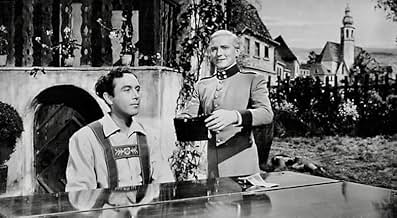
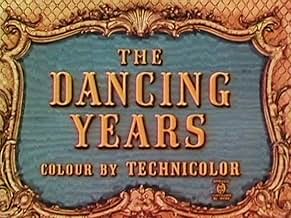
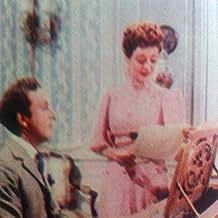
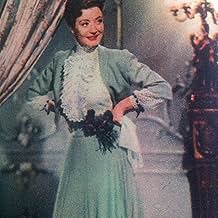
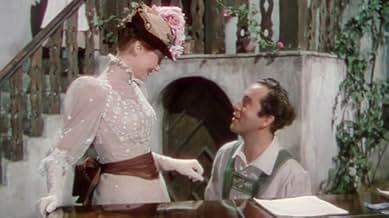
Rudi Kleiber's story in old Vienna revolves around two women: Maria Zeitler, his sweetheart-turned-mistress and secret mother of his unknown son, and Greta, his first love who returned in hi... Read allRudi Kleiber's story in old Vienna revolves around two women: Maria Zeitler, his sweetheart-turned-mistress and secret mother of his unknown son, and Greta, his first love who returned in his later years.Rudi Kleiber's story in old Vienna revolves around two women: Maria Zeitler, his sweetheart-turned-mistress and secret mother of his unknown son, and Greta, his first love who returned in his later years.
- Director
- Writers
- Stars
- Awards
- 1 nomination total
Gisèle Préville
- Maria Zeidler
- (as Gisele Preville)
- Director
- Writers
- All cast & crew
- Production, box office & more at IMDbPro
6.185
1
2
3
4
5
6
7
8
9
10
Featured reviews
Better Unseen
I have no idea if Ivor Novello would have liked this film. The fact that a great slab of his Operetta was cut out does not inspire confidence that he did. I wasn't there, but I did order the film having fallen in love with the music after hearing the superb Valerie Masterson on CD, beautifully conducted and performed. I then saw the film.
It was so awful that I avoided the music for months, and now listening to it again I feel I have to say that the film didn't deliver any of the magic I felt. Why? It is visually dull and has Dennis Price in the male lead role. For some reason this man had a great deal of popularity in his day, but the role needed charisma of which he has none. Good actor that he could be, in my opinion he was bad at romantic leads and he ruined this work, and along with the general lack of bite and failure to come to grips with the bitter sweet lyrics he made me want to look away. But it was 1950 and a pity that Laurence Harvey who appears in a bit part was not well known enough to be put into Price's role (dubbed for singing like Edmund Purdom). They should have waited!!!
Why did he do this
Dennis Price didn't do anything likes this again.It is positively antediluvan.The sort of stuff they did in Hollywood twenty years earlier. It is truly excrutiating to watch.
Pure escapism and none the worse for that
Both my mother and grandmother were avid Novello fans - a great-aunt even made soft furnishings for his London flat above The Strand Theatre. Therefore all my life I have been totally prejudiced against his sickly-sweet tunes and dated 'Ruritanian' fantasies. However recently I was asked to lecture on Novello as part of a course for a charity and so came about my damascene moment. To get the same effect you have to imagine yourself in a Europe on the brink of war a mere twenty years after a previous conflict had decimated the youth of your country. Amidst all the dark swirling storm clouds you yearn for some relief and decide to escape for a couple of hours to a West End theatre. There you enter into an enchanted parallel world where romance, love, trust, honour and beauty are the norm. Yet this wouldn't matter if the work you were watching was of a poor or insincere quality. Novello provides the dream-scape and for a short while you become enchanted. This 1976 version is 'big' for a TV production but cannot compare with a full-fledged Broadway or Hollywood spectacular yet it has the ring of truth. The book is so well written and the music so adeptly suited to the mood of the moment that all seems artless and sincere. You start to care for the fate of Rudi,Grete and Maria and become fretful as the final scene plays out to its inevitable conclusion. Okay, I've wandered into a dreamy state with this review but so might you. Please grab any chance to see it, watch with cynicism excised and perhaps you too will fall under the Novello spell.
Tinny Film Version of a West End Hit
With Stafford Cripps currently Chancellor of the Exchequor audiences needed a break from rationing and austerity and lapped this nonsense up in 1950. But despite the trappings of Technicolor and occasional sunlit Austrian locations this tinny big screen version of Ivor Novello's long-running West End hit of 1939 (originally directed on stage by Leontine Sagan) feels drab and cheap, with many of the exteriors obviously shot in the studio.
Dennis Price is stiff and charmless in lederhosen in the romantic lead as (in Bosley Crowther's words) a "minor-league Johann Strauss", played originally by Novello himself. (In the original he was also Jewish and the action reached the Anschluss, whereas this version ends rather abruptly in 1926.)
(His starchy romantic rival for the hand of prima donna Maria Zeitler is ironically played by Anthony Nicholls, who with Price ten years later found himself reluctantly on Derren Nesbitt's mailing list in 'Victim'.)
Remarkably, the hero is permitted to father a child while remaining unmarried; though not, sadly, by Patricia Dainton, who, despite being delightfully bright-eyed and bushy-tailed as juvenile second female lead Grete, is given dismayingly short shrift throughout.
Dennis Price is stiff and charmless in lederhosen in the romantic lead as (in Bosley Crowther's words) a "minor-league Johann Strauss", played originally by Novello himself. (In the original he was also Jewish and the action reached the Anschluss, whereas this version ends rather abruptly in 1926.)
(His starchy romantic rival for the hand of prima donna Maria Zeitler is ironically played by Anthony Nicholls, who with Price ten years later found himself reluctantly on Derren Nesbitt's mailing list in 'Victim'.)
Remarkably, the hero is permitted to father a child while remaining unmarried; though not, sadly, by Patricia Dainton, who, despite being delightfully bright-eyed and bushy-tailed as juvenile second female lead Grete, is given dismayingly short shrift throughout.
Ivor must have been pleased
As the above poster said, it's pleasant, and as these misbegotten adaptations go, faithful to its origins. The 1939 operetta was a megahit in the West End, thanks to a lavish production, Novello's lovely melodies, and characters rather more three-dimensional than the genre generally invited. Rudi and Maria are flawed, interesting people, self-absorbed but kind, loving but suspicious, and a reasonable amount of their adult qualities make the transition from stage to screen. (There's even a love child involved, and the movie doesn't judge its parents for that.) Some pretty songs are missing, as is all of Act Three, in which Rudi -- an Austrian Jew, in the stage version -- runs afoul of some nasty Nazis and is rescued through the last-minute intervention of Maria. (What with a Salzburg music festival, a heroine named Maria, and snarling Nazis, the work actually shares quite a lot with "The Sound of Music.") What remains tends toward soap opera, and Price isn't a truly charismatic leading man. But it's a nice surprise to encounter so much intact stage dialog and music, performed by a generally capable cast (and Patricia Dainton is delightful). Pretty Technicolor, too.
Did you know
- TriviaAccording to Elaine Parker's biography of Price, the actor spent breaks in location filming trying to teach the Austrian crew how to play cricket using a ball made from tape and a bat improvised from something found by the props department.
- Crazy creditsOpening credits prologue: VIENNA 1910
- ConnectionsFeatured in Elstree Story (1952)
Details
- Runtime
- 1h 38m(98 min)
- Aspect ratio
- 1.37 : 1
Contribute to this page
Suggest an edit or add missing content