
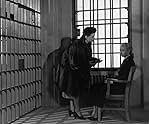
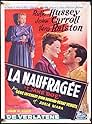
WWII pilot secretly marries French woman despite having wife at home. When war bride follows him to America and kills him, his widow becomes her defense attorney.WWII pilot secretly marries French woman despite having wife at home. When war bride follows him to America and kills him, his widow becomes her defense attorney.WWII pilot secretly marries French woman despite having wife at home. When war bride follows him to America and kills him, his widow becomes her defense attorney.


Abdullah Abbas
- Courtroom Spectator
- (uncredited)

John Alban
- Courtroom Spectator
- (uncredited)
Dave Anderson
- Black Man
- (uncredited)
- Director
- Writers
- All cast & crew
- Production, box office & more at IMDbPro
6.7183
1
2
3
4
5
6
7
8
9
10
Featured reviews
Silent in court
No murder mystery here. Vera Ralston pulls the trigger, abruptly ending the life of former airman, John Carroll, together with his time as a playboy, charmer, schemer and serial liar. The mystery surrounds Ralston's identity, with her forged passport and stark refusal to say....anything!
Identified only as Jane Doe, her unbroken silence, leads to the inevitable guilty verdict and the death penalty. The subsequent revelation that she is pregnant, theoretically leads only to a delay in proceedings, but a profound shift in her fortunes is about to occur. Carroll's widow, lawyer Ruth Hussey, presses for a retrial, offering her own services as council for the defence.
Still following this? GREAT! If not, there are further unanticipated twists, turns and revelations when the case is re-opened, in a movie which raises a few controversial issues, deeply held convictions and a dark secret....or two.
Vera Ralston's limited acting abilities are well documented. Fortunately, her role requires comparatively little animation, while Ruth Hussey shines as the resilient widow, determined to defend her husband's killer.
Courtroom meanderings aside, 'Jane Doe' is a most unusual, if slightly sentimental picture, astutely incorporating elements of melodrama, soap, war and noir.
Identified only as Jane Doe, her unbroken silence, leads to the inevitable guilty verdict and the death penalty. The subsequent revelation that she is pregnant, theoretically leads only to a delay in proceedings, but a profound shift in her fortunes is about to occur. Carroll's widow, lawyer Ruth Hussey, presses for a retrial, offering her own services as council for the defence.
Still following this? GREAT! If not, there are further unanticipated twists, turns and revelations when the case is re-opened, in a movie which raises a few controversial issues, deeply held convictions and a dark secret....or two.
Vera Ralston's limited acting abilities are well documented. Fortunately, her role requires comparatively little animation, while Ruth Hussey shines as the resilient widow, determined to defend her husband's killer.
Courtroom meanderings aside, 'Jane Doe' is a most unusual, if slightly sentimental picture, astutely incorporating elements of melodrama, soap, war and noir.
If You Don't Love Ruth Hussey...
...skip this awful film. The script is amateurish, the acting is sub-par, while Ruth Hussey does her icy best. Her acting is okay, but she's just not believable as the altruistic wife/attorney.
That's Not How Any Of This Works, Especially Trials
Vera Ralston shows up from France on a forged passport and kills attorney John Carroll. After she's found guilty, the judge sentences her to death. She collapses and it turns out she's expecting. Carroll's widow, Ruth Hussey, decides to defend her by asking for another trial.
That's not how any of this works, of course, but the sensational aspects of this movie, which should have gotten it banned by the Hays Office, are only the least of its troubles. It's a soap opera, with Miss Hussey calling everyone and his brother to the witness box (with everyone expressing great surprise), and Assistant District Attorney Gene Lockhart objecting to everything, including Miss Ralston's Czech-accented testimony.
John Auer directs a cast that includes John Howard, Leon Belasco, Adele Mara, and John Litel competently, but very little of it makes sense.
That's not how any of this works, of course, but the sensational aspects of this movie, which should have gotten it banned by the Hays Office, are only the least of its troubles. It's a soap opera, with Miss Hussey calling everyone and his brother to the witness box (with everyone expressing great surprise), and Assistant District Attorney Gene Lockhart objecting to everything, including Miss Ralston's Czech-accented testimony.
John Auer directs a cast that includes John Howard, Leon Belasco, Adele Mara, and John Litel competently, but very little of it makes sense.
Wishful legal thinking as two women band together to punish faithless husband
Sadly, I know very little about Director John Auer, having only watched one of his films, CITY THAT NEVER SLEEPS - which I liked, and was a far better opus than I, JANE DOE.
From the start, I, JANE DOE struck me as a Girls United versus womanizing male narrative. First, you have Ruth Hussey and pal Benay Venuta praising the former's faithless hubby, John Carroll, on his good looks. This kind of praise promptly had my suspicious brain ticking that Venuta had designs on her pal's male. Needless to say, I was dead wrong. Venuta stayed loyal, Carroll was the one who careened off the marriage's narrow path big time and ended up shot dead.
Upshot: Vera Ralston stoically resists identifying herself, apparently producing some Portuguese ID, but her real nationality eventually turns out to be French (why this bureaucratic foreign nationality intrigue beats me, as Ralston speaks faultless American English). Her stoicism makes for such thoroughly wooden acting that the legal establishment had no option but name her as Jane Doe, a classification usually reserved for the deceased. Those legal shenanigans aside, baffling that US authorities failed to arrive at her proper name, especially in a case of murder, where you certainly want the culprit properly fingered and punished. (Think of it: one unidentified Jane Doe executed on the electric chair. Who really was the executed person? That would sure go down in history as a major justice cockup, to put it mildly)
Then Carroll's grieving wife, Ruth Hussey - a former lawyer - decides to resume her legal career and defend Jane Doe, who finally identifies herself in court as Mrs Steven Curtis. Wait a minute: that is Ruth Hussey's name too! Ah, so that's it: despicably egregious bigamist Carroll married the two girls who now unite to save the second Mrs Curtis from the electric chair. That ain't all, either! During the court case, no less than the DA is called as a witness and he confirms that he removed a gun from the first Mrs Curtis' hand, who was about to smoke her cheating husband. So, both Mrs wanted to commit murder and curtains for Curtis! No wonder the first Mrs was ready to defend the second Mrs Curtis... and how happy the ladies were at the end, having crushed their hubby who had helped himself to action beyond just serving the US military! Hussey at least manages some credible acting in a film where acting is generally substandard.
I doubt that any US court, even in 1948, would function as this court did, so one needs to suspend one's disbelief to preposterous wishful thinking proportions, which does not bode well for Lawrence Kimble's obviously deceitful screenplay.
Cinematography by Reggie Lanning is strictly OK, somewhat better than the film's pervasive mediocrity.
I doubt I will rewatch. 5/10.
From the start, I, JANE DOE struck me as a Girls United versus womanizing male narrative. First, you have Ruth Hussey and pal Benay Venuta praising the former's faithless hubby, John Carroll, on his good looks. This kind of praise promptly had my suspicious brain ticking that Venuta had designs on her pal's male. Needless to say, I was dead wrong. Venuta stayed loyal, Carroll was the one who careened off the marriage's narrow path big time and ended up shot dead.
Upshot: Vera Ralston stoically resists identifying herself, apparently producing some Portuguese ID, but her real nationality eventually turns out to be French (why this bureaucratic foreign nationality intrigue beats me, as Ralston speaks faultless American English). Her stoicism makes for such thoroughly wooden acting that the legal establishment had no option but name her as Jane Doe, a classification usually reserved for the deceased. Those legal shenanigans aside, baffling that US authorities failed to arrive at her proper name, especially in a case of murder, where you certainly want the culprit properly fingered and punished. (Think of it: one unidentified Jane Doe executed on the electric chair. Who really was the executed person? That would sure go down in history as a major justice cockup, to put it mildly)
Then Carroll's grieving wife, Ruth Hussey - a former lawyer - decides to resume her legal career and defend Jane Doe, who finally identifies herself in court as Mrs Steven Curtis. Wait a minute: that is Ruth Hussey's name too! Ah, so that's it: despicably egregious bigamist Carroll married the two girls who now unite to save the second Mrs Curtis from the electric chair. That ain't all, either! During the court case, no less than the DA is called as a witness and he confirms that he removed a gun from the first Mrs Curtis' hand, who was about to smoke her cheating husband. So, both Mrs wanted to commit murder and curtains for Curtis! No wonder the first Mrs was ready to defend the second Mrs Curtis... and how happy the ladies were at the end, having crushed their hubby who had helped himself to action beyond just serving the US military! Hussey at least manages some credible acting in a film where acting is generally substandard.
I doubt that any US court, even in 1948, would function as this court did, so one needs to suspend one's disbelief to preposterous wishful thinking proportions, which does not bode well for Lawrence Kimble's obviously deceitful screenplay.
Cinematography by Reggie Lanning is strictly OK, somewhat better than the film's pervasive mediocrity.
I doubt I will rewatch. 5/10.
HOT-TOPIC MORALITY TALE TOLD BARE & BOLD...ALOOF WOMANIZER PAYS THE PRICE...BUT SO DOES 1 OF HIS VICTIMS
1 of the Movie-Magnets that Attract "Buffs" to Film-Noir is its Bolder Attempts to Bring-to-the-Game of Movie-Messaging are the More-Risky Subjects that the Main-Stream is Hesitant, Reluctant, and Stay Far-Away of Anything that is Not-Ticket-Friendly.
But Another Studio's Poison is Another's Food-for-Thought.
This Suspenseful "Soap" Plotted and Not-Shy about Things Critcal to the Murder-Trial of a War-Time-Woman in France Wooed by a "Playboy" American Flyer into an Illegal Marriage and a Romance Filled with Lies of the Worst Kind.
It Seems that this Handsome Cad is Not Beyond Anything it Takes to Complete a Conquest, Once Consummated, Moves On Routinely to a New Edition, Throwing "Yesterday's Papers" on the Recycling-Pile.
On Trial for Murder in the 1st Degree is a Woman He Drove to Near-Madness Leading to a Spontaneous Physical Argument where He is Killed, Intentionally or Not is Anybody's Guess.
Also, it's learned that He Impregnated Her During the "Affair", and His Subsequent Bigamy, and that Leads to Terminating the Pregnancy Included in the Story.
"Abortion" is Never, almost Never a Part of a Script and Wasn't Even Hinted.
So, It was Film-Noir that Dared Make Movies a Part of that Post-War Cynicism and a More Sophisticated Citizenry that had a New Open-Mindedness about Controversial Topics of Everyday Life.
After-All the Trauma of WWII had a Powerful Force, Reconsideration, that Caused a Break-Down of Conventional Wisdom and Unwritten and Written Laws and Codes of Behavior to at Least be Discussed, Debated, and Deliberately Drawn into the Light and Not Hidden in Back-Alleys and Back-Rooms, but Commented On by "The People".
It's Another Over-Looked Film-Noir and the Fertile and Rich Filmography is Still Being Unearthed, Rediscovered, and Appreciated.
A Treasure-Trove of Cultural Riches from...
"The Most Popular Art-Form of the 20th Century"
But Another Studio's Poison is Another's Food-for-Thought.
This Suspenseful "Soap" Plotted and Not-Shy about Things Critcal to the Murder-Trial of a War-Time-Woman in France Wooed by a "Playboy" American Flyer into an Illegal Marriage and a Romance Filled with Lies of the Worst Kind.
It Seems that this Handsome Cad is Not Beyond Anything it Takes to Complete a Conquest, Once Consummated, Moves On Routinely to a New Edition, Throwing "Yesterday's Papers" on the Recycling-Pile.
On Trial for Murder in the 1st Degree is a Woman He Drove to Near-Madness Leading to a Spontaneous Physical Argument where He is Killed, Intentionally or Not is Anybody's Guess.
Also, it's learned that He Impregnated Her During the "Affair", and His Subsequent Bigamy, and that Leads to Terminating the Pregnancy Included in the Story.
"Abortion" is Never, almost Never a Part of a Script and Wasn't Even Hinted.
So, It was Film-Noir that Dared Make Movies a Part of that Post-War Cynicism and a More Sophisticated Citizenry that had a New Open-Mindedness about Controversial Topics of Everyday Life.
After-All the Trauma of WWII had a Powerful Force, Reconsideration, that Caused a Break-Down of Conventional Wisdom and Unwritten and Written Laws and Codes of Behavior to at Least be Discussed, Debated, and Deliberately Drawn into the Light and Not Hidden in Back-Alleys and Back-Rooms, but Commented On by "The People".
It's Another Over-Looked Film-Noir and the Fertile and Rich Filmography is Still Being Unearthed, Rediscovered, and Appreciated.
A Treasure-Trove of Cultural Riches from...
"The Most Popular Art-Form of the 20th Century"


Details
- Runtime
- 1h 25m(85 min)
- Color
- Aspect ratio
- 1.37 : 1
Contribute to this page
Suggest an edit or add missing content