
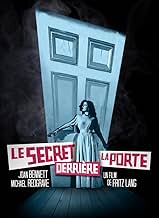
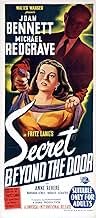
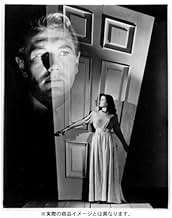
After a lovely woman and her new husband settle in an ancient mansion on the East coast, she discovers that he may want to kill her.After a lovely woman and her new husband settle in an ancient mansion on the East coast, she discovers that he may want to kill her.After a lovely woman and her new husband settle in an ancient mansion on the East coast, she discovers that he may want to kill her.


- Altar Boy
- (uncredited)
- Townsman
- (uncredited)

- Sarah
- (uncredited)

- Guest in Home Tour
- (uncredited)

- Guest in Home Tour
- (uncredited)

- Judge
- (uncredited)
- Small Mexican Knife Fighter
- (uncredited)

- Country Squire
- (uncredited)
- Director
- Writers
- All cast & crew
- Production, box office & more at IMDbPro
Featured reviews
The Suspicion of Spellbound Rebecca by Gaslight
Being the 40's the Freudian overtones are overpowering, as the husband, Michael Redgrave in his first Hollywood role, seems to be over-reacting to years of unhealthy female influence and dominance in his life as his mood swings like, well, I guess you'd say, a door.
In the background there's an apparently disfigured housekeeper Miss Robey, Redgrave's supportive sister and his difficult, moody son but the main tension is between the leads as it builds gradually to a fiery ending.
The plot may creak at times like an old floorboard, Redgrave and Bennett are somewhat stiff and cold in their parts and the continuity isn't all it could be, but if like me you like film noir settings then this is for you too. Thus we get Bennett's interior monologues, lots of shots of her in front of mirrors, lots of scenes with darkened doors and symbolic keys, and even a shroud-like mist followed by a thunderstorm on the climactic night. There are some great shots of starkly-lit corridors and a wonderfully imaginative dream sequence (yes, it has those too) of Redgrave's where he's prosecuting himself in front of a judge and jury whose faces are in shadow. Dmitri Tiompkin's atmospheric score adds a lot to the overall mystery and dread, particularly at the end.
This may not be Lang's best American film but there was more than enough in it to keep an avowed fan like me keenly watching.
Lovely Hollywood mystery fluff for rainy days!
Why would Joan marry and stay with someone so utterly stiff and charmless as Michael Redgrave?? The male lead should have been given to someone more mysterious and attractive. They were hoping for a new Laurence Olivier...
Joan is a treat as always. I love how she comes across as a spoiled debutante who can hardly care to utter her lines with any conviction. She´s a good actress -just a bit too laid back at times. I love her, she is so stunningly beautiful and cool in her Hollywood wardrobes.
I love the whole atmosphere of the movie. It´s slow at first and then from the honeymoon in Mexico and forward so mysterious! I love her bedroom with the tapestry! The thing with the room-collecting was quite farfetched but fun. Who would REALLY aquire complete scenes of murders at home???? I´m going to see it again soon and learn some lines. They don´t make them like they used to!
Sub-Rebecca melodrama that has its moments visually but no consistency or substance in the material
I watched this on the back of positive reviews from a couple of people on this site; perhaps I should have read further though because I didn't find the wonderfully intelligent noir that they claimed to have seen. Perhaps these commentators have not seen the film Rebecca which sort of covers similar themes but does it much, much better than this film does, but for me I found it hard to care about this. Visually I liked it and credit to Lang because his direction and work with his cinematographer does produce some really well set up scenes that do have great atmosphere. However this is not repeated in the material which is not as intelligent as it would like to think itself. Indeed it is terribly overwrought and melodramatic and offers little to counter it.
As a result the cast have to thanklessly play it up the best they can. I thought than Bennett did as good a job as she could have hoped to have done. She isn't brilliant though but she plays detective well. More important but not much cop is Redgrave; OK the blame lies more on the material than in his performance but given how little was conveyed by words at times, his performance was important but not up to the task.
Overall then, a fairly overdone melodrama that doesn't really convince in how it uses psychoanalysis to inform and direct its narrative. It may look great but the substance just isn't there from the start right down to the insultingly simplistic final scene.
Children of Cain.
After a whirlwind romance, Celia Barrett (Bennett) marries Mark Lamphere (Redgrave) but finds once the honeymoon is over his behaviour becomes quite odd...
A troubled production and troubling reactions to it by the critics and Lang himself! Secret Beyond the Door is very much in the divisive half of Lang's filmic output. Taking its lead from classic era Hollywood's keen interest with all things Freudian, and doffing its cap towards a number of "women in peril at home" films of the 1940s, it's a picture that's hardly original. Yet in spite of some weaknesses in the screenplay that revolve around the psychological troubles of Mark Lamphere, this is still a fascinating and suspenseful picture.
I married a stranger.
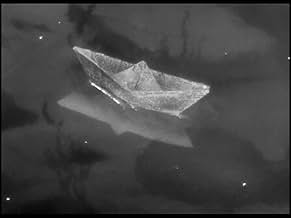
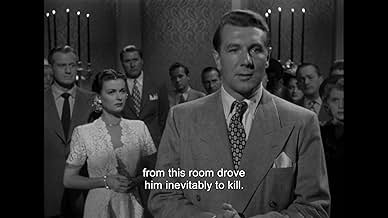
Draped in Gothic overtones and astonishingly beautiful into the bargain, it's unmistakably a Lang film. His ire towards the cast and studio, where he was usurped in the cutting room and with choice of cinematographer, led Lang to be very dismissive towards the piece. However, it contains all that's good about the great director. Scenes such as the opening involving a paper boat on ripples of water, or a sequence that sees Mark dream he is in a courtroom full of faceless jurors, these are indelible images. Then there's the lighting techniques used around the moody Lamphere mansion that are simply stunning, with Cortez (The Night of the Hunter) photographing with atmospheric clarity.
Blades Creek, Levender Falls.
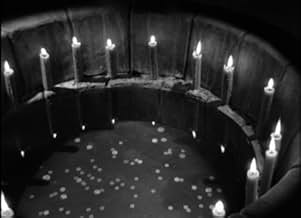
Elsewhere the characterisations are intriguing. Mark is troubled by something and we learn it's about women in his life, while his "hobby" of reconstructing famous murder scenes in the rooms of the mansion, is macabre and really puts a kinky distortion in the narrative. Celia marries in haste but is surprisingly strong, her character arc given heft by the fact we think she may well be prepared to die for love. Then there's the house secretary, Miss Robey (O'Neil), a shifty woman with a headscarf covering an unsightly scar on one side of her face, and Mark's young son David (Mark Dennis) who is cold and detached and has some disturbing theories on his father's means and motivations.
Lilacs and locked doors.
Cast performances are not all top grade, and even though Redgrave doesn't push himself to required darker territories, the performances are involving and worthy of the viewer's undivided attention. Rózsa's musical score is a cracker, deftly switching from the romantic swirls that accompany Mark and Celia during their love courting, to being a stalking menace around the Lamphere house and misty grounds when danger and psychological distortion is near by. Technically it's a remarkable movie, where even allowing for some daftness involving the psychobabble, it's a picture that Lang fans can easily love. There are those who detest it, very much so, but if it does hit your spot it will get inside you and stay there for some time afterwards. 8/10
Another Fritz Lang-Joan Bennett collaboration
The story concerns a beautiful woman, Celia (Joan Bennett) who falls madly in love with a mysterious and moody man, Mark Lamphere (Michael Redgrave) whom she meets while on a trip. She goes to live with him at the family home, which is run by his sister (Anne Revere). It's there she discovers a few things. One is that Mark was married before, is a widower, and has a son (Mark Dennis). Mark also has a secretary (Barbara O'Neil) who covers one side of her face with a scarf to cover a scar from a fire. Mark, she finds, also has a wing where he houses a collection of rooms in which famous murders have taken place. There is one room, however, which is always kept locked. Celia wants to know what's beyond that door, and what makes her husband so moody.
"Beyond the Door" takes inspiration from two other Hitchcock films, Spellbound and Notorious, and taps into the postwar interest in psychology. There is a voice-over narration from the troubled Celia, who recounts her dreams. The film is very atmospheric, the music grand and suspenseful and, though one may be able to guess how it ends, the story is very intriguing. The ending, due to some narrative gaps, is somewhat disappointing.
This isn't Lang's best film but one can certainly see the master's touch in the gloom, the fixation on the door, and the cinematography. Joan Bennett (whom I saw in person and was unbelievably tiny) shines as she usually did under Lang's direction. She could play both sophisticated and glamorous as well as trashy and sweet-smart. Here, in a funny way, she combines both - the character is a bit of a classy femme fatale. Redgrave is properly passionate one minute and distant and a little weird the next. I would have loved to have seen someone like Dirk Bogarde tackle this role a few years later.
Derivative but very good.


Did you know
- TriviaThe grove of trees through which Celia (Joan Bennett) runs when she flees the house is the same grove through which the Wolf Man ran in The Wolf Man (1941), also made by Universal. In particular, the tree, against which she leans, is the same one under which the Wolf Man was beaten.
- GoofsWhen Celia takes an impression of the key in wax, she only takes the impression on one side, which would render the key made from that impression useless without the reverse side.
- Quotes
Mark Lamphere: You were living that fight. You soaked it all in - love, hate, the passion. You've been starved for feelings - any real feelings. I thought: 20th Century Sleeping Beauty. Wealthy American girl who has lived her life wrapped in cotton wool but she wants to wake up. Maybe she can.
Celia Barrett: Is it as hard as all that?
Mark Lamphere: Most people are asleep.
- ConnectionsFeatured in Vampira Returns: Secret Beyond the Door... 1947 (1956)
- How long is Secret Beyond the Door...?Powered by Alexa
Details
- Release date
- Country of origin
- Languages
- Also known as
- Secret Beyond the Door
- Filming locations
- Production company
- See more company credits at IMDbPro
Box office
- Budget
- $1,500,000 (estimated)
- Runtime
- 1h 39m(99 min)
- Color
- Aspect ratio
- 1.33 : 1