IMDb RATING
7.0/10
3.2K
YOUR RATING


A provincial doctor's wife's romantic illusions about life and social status lead her to betray her naive husband, take on lovers, and run up ruinous debts.A provincial doctor's wife's romantic illusions about life and social status lead her to betray her naive husband, take on lovers, and run up ruinous debts.A provincial doctor's wife's romantic illusions about life and social status lead her to betray her naive husband, take on lovers, and run up ruinous debts.
- Director
- Writers
- Stars
- Nominated for 1 Oscar
- 2 wins & 1 nomination total
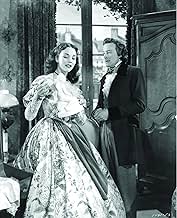
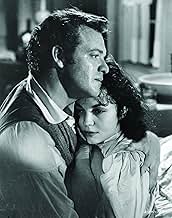




Alf Kjellin
- Leon Dupuis
- (as Christopher Kent)


Harry Morgan
- Hyppolite
- (as Henry Morgan)


- Director
- Writers
- All cast & crew
- Production, box office & more at IMDbPro
7.03.2K
1
2
3
4
5
6
7
8
9
10
Featured reviews
Flaubert revisited by Hollywood.
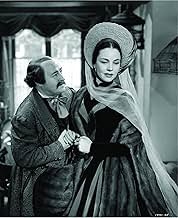
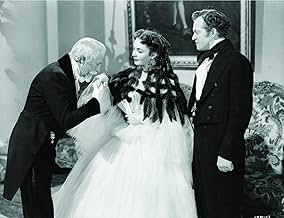
Three versions stand out as far as Flaubert's classic is concerned:the Jean Renoir one,with Valentine Tessier,which has not worn well,the acting has become unconvincing and almost lurid when you see it today,Minelli's version and Claude Chabrol's starring Isabelle Huppert ,which doesn't avoid totally academism,despite Jean-François Balmer's portrayal of Charles that steals the show . Now for Minelli 's attempt:some have been hard on his rendition,and however,it features the best Emma ever:Jennifer Jones,the romantic heroine par excellence.Her savage beauty,looking tense,triumphs here. The supporting acts are well-chosen:Van Heflin is oafish,meek.The French Louis Jourdan is well-cast as Rodolphe Boulanger,Emma's lover who betrays her and leaves her to despair.Their final confrontation,in Boulanger's luxury mansion oozes hatred and contempt. The main drawback is the rural background:Minelli did not realize how this country life disgusted Emma:the wedding,a very very peasant one ,which Flaubert describes in lavish detail,is too short on the screen.The farms are too clean-Emma dreamed her childhood away because she could not stand the mediocrity of her milieu.She jumped out of the frying pan into the fire:a two-bit doctor,a would-be sawbones who 's totally incompetent.Van Heflin's rendering makes up for Minelli's weaknesses.The movie is sandwiched between two brief scenes of Flaubert 's trial (He was accused of immorality in his book),that's redundant.It would have been better to tell the audience about Emma's daughter's terrible fate:after the doctor's death,an orphan,she becomes a worker in a spinning mill.Supreme decay for a mother who was longing to be a socialite.
Do you know, Charles, why that clock strikes? To announce the death of another hour.
Madame Bovary is directed by Vincente Minnelli and adapted to screenplay by Robert Ardrey from the Gustave Flaubert novel. It stars Jennifer Jones, Van Heflin, Louis Jourdan, Alf Kjellin, Gene Lockhart and James Mason. Music is by Miklós Rózsa and cinematography by Robert H. Planck.
It's most interesting now watching Minnelli's picture and being able to place it in the time it was made. Also of major interest is reading up on what the critics of the time had to say about it. This version is an undoubted lesson in the technical crafts of film making, the visuals, the sound, art design, costuming and a literary pumped screenplay that allows the cast to play it classical. It's also black hearted, perfectly in keeping with the gathering storm of the era that was film noir.
Here is the monster.
Some of the complaints about the film, to me anyway, just don't add up. Why do we need to care about anyone in this story? It's a dark tale of illicit passions, greed, betrayals, bad parenting and etc. Is this frowned upon in some circles because of love for the classic novel? Or because there's some esteem held for other versions? The criticism of Jones is also very suspect given it's a classic femme fatale performance, Emma is cold and driven and shallow to others feelings, Jones works it perfectly.
As Rózsa's beautiful lush and poignant musical arrangements drift and hover over the various story instalments, Minnelli brings the film making guile. His camera work is sublime, like a ghost moving about the characters for the more vibrant scenes, tracking and roving, dizzyingly beautiful. At others it's close and personal, imbuing Emma's claustrophobia, with the black and white contrasts superbly photographed by Planck.
So it doesn't capture the essence of Flaubert's intent, then? Emma Bovary a figure of hate instead of sympathy, the lack of a caustic aside on a society of double standards? So what! Outstanding film making is just that, especially when it can tune into a style of film making prevalent at its birth. Madame Bovary - maybe the most film noir movie not actually considered a film noir. Brilliant. 9/10
It's most interesting now watching Minnelli's picture and being able to place it in the time it was made. Also of major interest is reading up on what the critics of the time had to say about it. This version is an undoubted lesson in the technical crafts of film making, the visuals, the sound, art design, costuming and a literary pumped screenplay that allows the cast to play it classical. It's also black hearted, perfectly in keeping with the gathering storm of the era that was film noir.
Here is the monster.
Some of the complaints about the film, to me anyway, just don't add up. Why do we need to care about anyone in this story? It's a dark tale of illicit passions, greed, betrayals, bad parenting and etc. Is this frowned upon in some circles because of love for the classic novel? Or because there's some esteem held for other versions? The criticism of Jones is also very suspect given it's a classic femme fatale performance, Emma is cold and driven and shallow to others feelings, Jones works it perfectly.
As Rózsa's beautiful lush and poignant musical arrangements drift and hover over the various story instalments, Minnelli brings the film making guile. His camera work is sublime, like a ghost moving about the characters for the more vibrant scenes, tracking and roving, dizzyingly beautiful. At others it's close and personal, imbuing Emma's claustrophobia, with the black and white contrasts superbly photographed by Planck.
So it doesn't capture the essence of Flaubert's intent, then? Emma Bovary a figure of hate instead of sympathy, the lack of a caustic aside on a society of double standards? So what! Outstanding film making is just that, especially when it can tune into a style of film making prevalent at its birth. Madame Bovary - maybe the most film noir movie not actually considered a film noir. Brilliant. 9/10
must see for all women
I thought this movie was great and should be seen by all women and girls. I think it had a great message of how greed and envy can consume a person. I think that a lot of women suffer from this kind of wander lust. Jennifer Jones' Madame Bovary reminds me of Scarlett O'Hara in Gone with the Wind. Both women wanting what they can't have and not appreciating the men who truly love them or their beautiful little girls. This movie also teaches the evils of over extending oneself on credit! Van Heflins portrayal of Dr. Bovary is a little weak but then so was the character, so maybe he didn't do so bad. I loved the costumes in Madame Bovary. Call me an old fashioned girl but I just loved this movie and the old fashioned message.
Luminous star
Jennifer Jones was a star I knew well from visits to the cinema with my family during the 1950's: "The Man in the Grey Flannel Suit", "The Barretts of Whimpole Street", "Love is a Many Splendored Thing" and "A Farewell to Arms".
I cut in on her at a certain stage in her career. She was a bit older than my mum, and although I liked her she didn't have the effect on a prepubescent lad that Yvette Mimieux or Tuesday Weld were having.
It wasn't until later, when we got television, that I saw the movies she made earlier in her career; "Song of Bernadette, "Duel in the Sun", "Portrait of Jennie", "Carrie" and this one: Vincente Minnelli's "Madame Bovary". What an absolute stunner she was.
Emma Bovary (Jennifer Jones) is the beautiful daughter of a poor French family, but she has an overactive imagination fostered by romantic novels.
She marries a country doctor Charles Bovary (Van Heflin) who she doesn't really love hoping to advance her standing in society and pursue her romantic dreams. However she soon outspends her husband's capacity to earn. In an era before credit cards, she maxes-out on credit notes.
Emma attracts men like moths to a flame, and cheats on her husband who still loves her despite everything. There are tears before the final fade out.
The film is bookended with the trial of Gustave Flaubert who wrote the original novel. Apparently the story so outraged the French hierarchy that they took old Gustave to court. He got off and of course the book became a bestseller.
The filmmakers used the trial to allow Gustave (James Mason) to narrate the story - quoting passages of Flaubert's prose. Although narration can be a lazy device in film, in this case, Mason's mellifluous voice puts us in the picture quickly. More importantly, Emma is seen sympathetically despite being hopelessly self-focused.
Two actors added the final touch of class to the 1949 version. Van Heflin is such a nice guy here that we are waiting for someone to smack Emma to her senses. Louis Jordan gives another variation on that smooth roué he played in "Letter to an Unknown Woman" - a not dissimilar drama.
Composer Miklos Rozsa surpassed himself with the score. With its beautiful main theme for Emma and flowing melodies it sweeps you along.
A 2014 version did away with narration. It's more low-key, but quite good with a totally different vibe to the Minnelli version. It was filmed in France and is more explicit with a fair bit of nudity. Jennifer Jones was fortunate that her movie career was in an era where she didn't have to worry about getting in shape for that kind of thing.
I cut in on her at a certain stage in her career. She was a bit older than my mum, and although I liked her she didn't have the effect on a prepubescent lad that Yvette Mimieux or Tuesday Weld were having.
It wasn't until later, when we got television, that I saw the movies she made earlier in her career; "Song of Bernadette, "Duel in the Sun", "Portrait of Jennie", "Carrie" and this one: Vincente Minnelli's "Madame Bovary". What an absolute stunner she was.
Emma Bovary (Jennifer Jones) is the beautiful daughter of a poor French family, but she has an overactive imagination fostered by romantic novels.
She marries a country doctor Charles Bovary (Van Heflin) who she doesn't really love hoping to advance her standing in society and pursue her romantic dreams. However she soon outspends her husband's capacity to earn. In an era before credit cards, she maxes-out on credit notes.
Emma attracts men like moths to a flame, and cheats on her husband who still loves her despite everything. There are tears before the final fade out.
The film is bookended with the trial of Gustave Flaubert who wrote the original novel. Apparently the story so outraged the French hierarchy that they took old Gustave to court. He got off and of course the book became a bestseller.
The filmmakers used the trial to allow Gustave (James Mason) to narrate the story - quoting passages of Flaubert's prose. Although narration can be a lazy device in film, in this case, Mason's mellifluous voice puts us in the picture quickly. More importantly, Emma is seen sympathetically despite being hopelessly self-focused.
Two actors added the final touch of class to the 1949 version. Van Heflin is such a nice guy here that we are waiting for someone to smack Emma to her senses. Louis Jordan gives another variation on that smooth roué he played in "Letter to an Unknown Woman" - a not dissimilar drama.
Composer Miklos Rozsa surpassed himself with the score. With its beautiful main theme for Emma and flowing melodies it sweeps you along.
A 2014 version did away with narration. It's more low-key, but quite good with a totally different vibe to the Minnelli version. It was filmed in France and is more explicit with a fair bit of nudity. Jennifer Jones was fortunate that her movie career was in an era where she didn't have to worry about getting in shape for that kind of thing.
Incorporating the Author
Though I'm sure that the various French dramatizations of Madame Bovary are probably superior to this film, this English language version that MGM did in 1949 is as good as any we would have gotten from Hollywood. of that era. Jennifer Jones, Van Heflin, Louis Jourdan, and James Mason were unfortunately hampered by the Code in this version.
MGM's version incorporates the author right into his story. James Mason plays Gustave Flaubert and the film opens with him on trial for authoring indecent material as the French censors of the day saw Madame Bovary. While on the witness stand defending his work, he tells the story of his creation Emma Bovary, a girl with silly romantic notions who brings tragedy all around because of them.
Jennifer Jones is Emma and imagine Bernadette Soubirous who instead of having a divine experience has the misfortune to have other things peak her interest as an adolescent. She reads a whole lot of romantic novels who give her exaggerated notions about the nature of love.
She lives in a pretty dull town in Normandy which was also where Flaubert himself hailed from and which he satirizes in acid in this work. She marries solid, dependable Van Heflin who's a doctor and who she hopes will give her a better life.
It's in Heflin's character that the Code watered down what Flaubert was trying to say. Here he's an upright guy, a lot on the dull side, but dependable. In the novel he's as much desiring of social climbing as Jones is. In fact in the film he refuses to perform an operation that might gain him fame and success because he knows he's not qualified to do it. In the novel he does the operation and it ends in disaster all around.
Jones takes lovers Louis Jourdan and Alf Kjellin and runs up bills that put Heflin into financial disaster. All the while refusing to face the truth about life and herself.
Given the Code restrictions director Vincente Minnelli does as best as he can with his cast. James Mason makes a brilliant and erudite Flaubert on the stand. But considering he was on trial for indecency by not showing the alleged indecency to the fullest the Code defeated what could have been a classic.
MGM's version incorporates the author right into his story. James Mason plays Gustave Flaubert and the film opens with him on trial for authoring indecent material as the French censors of the day saw Madame Bovary. While on the witness stand defending his work, he tells the story of his creation Emma Bovary, a girl with silly romantic notions who brings tragedy all around because of them.
Jennifer Jones is Emma and imagine Bernadette Soubirous who instead of having a divine experience has the misfortune to have other things peak her interest as an adolescent. She reads a whole lot of romantic novels who give her exaggerated notions about the nature of love.
She lives in a pretty dull town in Normandy which was also where Flaubert himself hailed from and which he satirizes in acid in this work. She marries solid, dependable Van Heflin who's a doctor and who she hopes will give her a better life.
It's in Heflin's character that the Code watered down what Flaubert was trying to say. Here he's an upright guy, a lot on the dull side, but dependable. In the novel he's as much desiring of social climbing as Jones is. In fact in the film he refuses to perform an operation that might gain him fame and success because he knows he's not qualified to do it. In the novel he does the operation and it ends in disaster all around.
Jones takes lovers Louis Jourdan and Alf Kjellin and runs up bills that put Heflin into financial disaster. All the while refusing to face the truth about life and herself.
Given the Code restrictions director Vincente Minnelli does as best as he can with his cast. James Mason makes a brilliant and erudite Flaubert on the stand. But considering he was on trial for indecency by not showing the alleged indecency to the fullest the Code defeated what could have been a classic.


Did you know
- TriviaAfter the expensive box-office failure of The Pirate (1948), director Vincente Minnelli worked hard to cut corners on this film, fearing he might be accused of extravagance. However, he devoted a great deal of time to the ball sequence, which he regarded as the most important scene in the film; he even had composer Miklós Rózsa compose the waltz theme used in it well in advance of the start of filming.
- GoofsWhen Madame Bovary asks Leon for money, he reacts by punching out one of the glass window panes. But on the next cut, the previously shattered window pane is now intact.
- Quotes
Emma Bovary: Do you know, Charles, why that clock strikes? To announce the death of another hour.
- Alternate versionsAlso shown in a computer colorized version.
- ConnectionsFeatured in Some of the Best: Twenty-Five Years of Motion Picture Leadership (1949)
- How long is Madame Bovary?Powered by Alexa
Details
- Release date
- Country of origin
- Official site
- Language
- Also known as
- Madame Bovary und ihre Liebhaber
- Filming locations
- Production company
- See more company credits at IMDbPro
Box office
- Budget
- $2,076,000 (estimated)
- Runtime
- 1h 54m(114 min)
- Color
- Aspect ratio
- 1.37 : 1
Contribute to this page
Suggest an edit or add missing content