IMDb RATING
7.0/10
1.1K
YOUR RATING

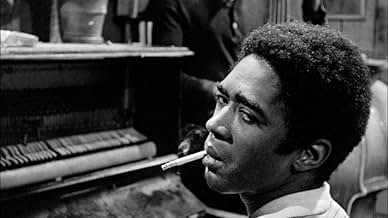
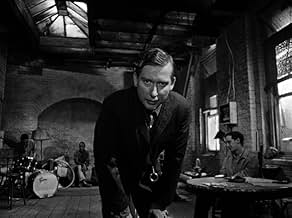
Men sent their own way await heroin in Leach's apartment.Men sent their own way await heroin in Leach's apartment.Men sent their own way await heroin in Leach's apartment.


Jerome Raphael
- Solly
- (as Jerome Raphel)
Jim Anderson
- Sam
- (as James Anderson)

Roscoe Lee Browne
- J.J. Burden
- (as Roscoe Browne)

- Director
- Writer
- All cast & crew
- Production, box office & more at IMDbPro
7.01.1K
1
2
3
4
5
6
7
8
9
10
Featured reviews
9/10
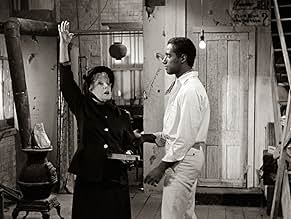
This is a very difficult film, austere and hard, but after about ten minutes you can calibrate yourself to its rhythm, which is slow -- or, not so much slow as not fast, with extremely long takes in a one-room setting. The film, which is about a group of jazz musicians waiting for "the connection" (heroin) in an apartment, is essentially a filmed piece of experimental theater; it's very interesting, I think, and valuable for its honest portrayals of blacks (not all of the characters are black, but those who are are allowed to give equal amounts of monologues to the camera). The film itself, which is a product of the beat culture, is an experiment in subtle documentary satire -- the film is a film that's being made by a documentarian and his camera assistant; the documentarian becomes involved in the "film" himself by interacting with the musicians, trying to get them to act naturally for the camera by saying he's one of them, that he "reads" them. (The film is also a kind of Method film in the sense that the performances are strained and melodramatic -- the main character who owns the apartment has a boil that makes him scream at a few points -- and that everything is about the documentarian retaining emotional truth.) As the documentarian gets involved with the group (and after the connection arrives, with a female religious preacher in toe), the film feels almost like a public service announcement. It's a really fascinating document. 9/10
I much preferred the play
Jack Gelber's play, "The Connection" ran in London not long after its run in New York, with the same cast and same musicians. The film follows the play faithfully: it couldn't really be any other way. I much preferred the play, mainly because of its immediacy and its intimacy as the action unfolds right before your eyes, especially when the 'connection' arrives', and one by one, the players disappear into the bathroom. I don't for one second believe that the actors actually injected themselves, but on stage, the feeling is that they were doing just that. Don't get me wrong, Shirley Clarke's film of Gelber's play is a brilliant testament of how to make a film about a bunch of guys sitting around in one room (most of the time), waiting for their 'connection', without becoming bored or jaded. In fact, the film is on some levels, better than the play. For a start, if you are a fan of jazz and Jackie McLean in particular, you got to see lots close-ups of the band in full flight. Shirley Clarke was/is, one of the many underrated film directors around. If you liked "The Connection" (though 'like' isn't really the correct verb here), her documentary, "Portrait Of Jason" is another gem to seek out.
faux documentary of its day
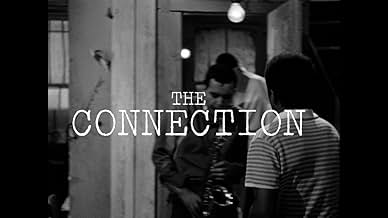
The opening text states that documentary filmmaker Jim Dunn gave all the footage to J. J. Burden who claims responsibility for putting this film together. Rather quickly, an experienced modern film watcher can pick out the obvious clues that this is a play rather than a documentary. The actors are talking too well and clearly. They are professional actors doing lines from a script, not lines lines. They don't look bad enough. Some of the actors have good hair. The black guys probably didn't trim for a week. That's not junkie enough. Then, there is the room itself. It looks like a stage. Look out windows. The fake backdrop is right there. The big giveaway is that the lighting is too good. The audience can see everything. Finally, the traditional closing credits tell the story. Then I consider the era and maybe the closing credits weren't there. Back then, the audience was probably not looking for the found footage genre. They could be fooled. Of course, Fargo still got people in the 90's although they didn't claim that it was a documentary. Looking at this like a stage play. I can see this off-Broadway. It could be edgy enough to get some attention. Like I said, the actors are solid professionals. This may be experimental back in the day, but it is well-made.
Interesting as the grandfather of the mockumentary genre
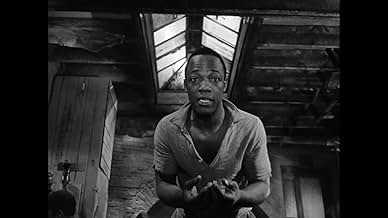
This is an arthouse drama about a group of heroin addicts hanging around an apartment in Harlem, waiting for their connection to arrive with the day's fix. The characters monologize about their pathetic lives, while a few of them play jazz music. The film is presented as a documentary being filmed by a director (William Redfield) and his cameraman (Roscoe Lee Browne, in his debut). Featuring Warren Finnerty, Jerome Raphael, Jim Anderson, Barbara Winchester, Henry Proach, and Carl Lee. Shirley Clarke directed this film version of a play which structurally resembles the later mockumentary genre, only without the humor. The subject matter and the presentation ensure that this will have little appeal outside of the arthouse crowd, as most audiences will find this tedious, self-indulgent and of minimal entertainment. I applaud the effort and the intent, but the end product isn't something I'd want to revisit.
In Defense...
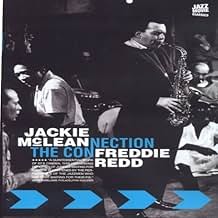
I'd like to clear up this jazz/heroin confusion (ignorance) that may stop you from watching this great film. Leach is the connection to Cowboy, and Cowboy is the connection to a dealer. The IMDb plot summary says that Cowboy is bringing "the connection" back to Leach's house, but he is really just bringing heroin. The fact that some of the people waiting for heroin are jazz musicians doesn't mean all jazz musicians were addicts, although most of the good ones were. With that said, I would advise any bee-bop fan to watch this film just for the amazing, and sole, footage of Blue Note heavies Jackie McLean and Freddie Redd. You will most likely also like the free-jazz directorial treatment of what was originally a stage play. The film also deserves credit for it's honest portrayal (in 1961!) of heroin addiction, neither glamorizing nor condemning it. The only problem I had was the slightly over-theatrical styles of some of the actors. Overacting did become the Leach character, however: "OHHH, MY BOIL!!!" If you liked "The Incident" or "The Pawnbroker," you'll like this one.


Did you know
- TriviaThis film was held up for release after the Board of Regents of the Motion Picture Division of New York State's Dept. of Education viewed the film and refused to grant it a license to be commercially shown. This was mostly due to the repeated use (seven times) of a four-letter word that rhymes with "hit" and is used as a slang synonym for heroin. The film was judged obscene but opened without a license anyway at the D.W. Griffith Theater on October 3, 1962, only to receive several bad reviews from the major N.Y. film critics. Director Shirley Clarke sued and a month later, the highest court in the state reversed the decision of the Board of Regents. However, the reputation of the film was already damaged and to this day, it has never recouped its original $167,000 budget.
Details
Box office
- Budget
- $167,000 (estimated)
- Runtime
- 1h 50m(110 min)
- Color
- Aspect ratio
- 1.37 : 1
Contribute to this page
Suggest an edit or add missing content