IMDb RATING
6.6/10
1.7K
YOUR RATING

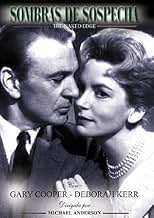
Five years after George Radcliffe was the chief witness in a high profile murder case, his wife receives a blackmailing letter accusing him of the crime.Five years after George Radcliffe was the chief witness in a high profile murder case, his wife receives a blackmailing letter accusing him of the crime.Five years after George Radcliffe was the chief witness in a high profile murder case, his wife receives a blackmailing letter accusing him of the crime.




Peter Forbes-Robertson
- Chauffeur
- (as Peter Wayn)

Jim Brady
- Prisoner Escort
- (uncredited)
- Director
- Writers
- All cast & crew
- Production, box office & more at IMDbPro
6.61.7K
1
2
3
4
5
6
7
8
9
10
Featured reviews
Great Hitchcockian thriller!
The suspense of this film evokes the work of Alfred Hitchcock. It doesn't quite live up to such a comparison but nonetheless the plot and character interactions should rivet most viewers to the film. Creative shot selection (especially the preparation of the wife's death), fine performances (especially from Deborah Kerr), and a compelling plot create an entertaining movie experience, 7/10. I think this was Gary Cooper's last screen performance.
Fantastic suspenseful thriller
This movie might have been called The Cutting Edge for all the boundaries of 1961 it pushed! It utilizes innovative camera and editing techniques that echo Alfred Hitchcock's scary scenes from Psycho, alludes to sex in a way few films had been able to do since the fall of the Hays Code, and put the word "naked" in the title!
Even the first shot of the film is unusual, making you wonder, "Why did they show that? What am I missing?" for the first of many times as the mystery continues throughout the film. A bead of sweat is shown running down Gary Cooper's face. He's in court, ready to testify as a key witness to a murder. His accounting condemns a man to life imprisonment, and the guilt rattles him after the trial. Years later, he's a successful businessman, and he and his wife Deborah Kerr are living a life of luxury. He receives a threatening letter, making Deborah doubt his testimony all those years ago. . .
The Naked Edge is one scary movie! I'm not his biggest fan, but Gary Cooper gives a more energetic performance than he usually does. Although Deborah's character isn't written to be the smartest tool in the shed, she does a good job exuding her fear and doubt without turning it into a melodrama. Usually, Gary plays likable, earnest roles. This is the only movie I've seen where Gary Cooper plays a bad guy! This one's pretty scary and very suspenseful, so rent it on Halloween and cuddle up to your honey—or don't. . .
DLM Warning: If you suffer from vertigo or dizzy spells, like my mom does, there's one part of the movie that might that will make you sick. There's a scene where Deborah Kerr gets lost and when she runs up and down the streets, the camera is hand-held. In other words, "Don't Look, Mom!"
Even the first shot of the film is unusual, making you wonder, "Why did they show that? What am I missing?" for the first of many times as the mystery continues throughout the film. A bead of sweat is shown running down Gary Cooper's face. He's in court, ready to testify as a key witness to a murder. His accounting condemns a man to life imprisonment, and the guilt rattles him after the trial. Years later, he's a successful businessman, and he and his wife Deborah Kerr are living a life of luxury. He receives a threatening letter, making Deborah doubt his testimony all those years ago. . .
The Naked Edge is one scary movie! I'm not his biggest fan, but Gary Cooper gives a more energetic performance than he usually does. Although Deborah's character isn't written to be the smartest tool in the shed, she does a good job exuding her fear and doubt without turning it into a melodrama. Usually, Gary plays likable, earnest roles. This is the only movie I've seen where Gary Cooper plays a bad guy! This one's pretty scary and very suspenseful, so rent it on Halloween and cuddle up to your honey—or don't. . .
DLM Warning: If you suffer from vertigo or dizzy spells, like my mom does, there's one part of the movie that might that will make you sick. There's a scene where Deborah Kerr gets lost and when she runs up and down the streets, the camera is hand-held. In other words, "Don't Look, Mom!"
Gary Cooper's last movie and unfortunately not one of his best
Heavy handed drama where every move and action, no matter how insignificant it is, is followed by a loud blast of orchestra-like music that almost blows you out of your seat. In many cases the music is aided by quick and ultra-sharp close-ups that makes you think that your seeing a Mel Brooks comedy of an Alfred Hitchcock film like the 1977 movie "High Anxiety". These techniques are done over and over in the movie "The Naked Edge" that after a while you forget what the story is all about in the first place.
Gary Cooper in his last movie, before he died on May 13, 1961, looks drawn and tired as George Radcliffe a witness to the murder of his boss Jason Roote, Martin Boddey,and the robbery of 60,000 pound-sterling from the London office of the Jason Roote Air-Fright corp where he works.
It was Radcliffe's testimony that sent fellow worker Donald Heath, Ray MacAnally, away for life. Radcliffe seems to be hiding something about the crime that happened at the Jason Roote office from his wife Martha, Deborah Kerr. That's the main core of the story in the movie "The Naked Edge" but you have to suffer through almost 90 minutes of ridicules Hitchcock-like dramatics to get to the truth in the last ten minutes or so of the movie which, the films totally contrived ending, didn't seem worth sitting through.
Even top stars like Gary Cooper and Deborah Kerr as well as Eric Portman and Peter Cushing couldn't save this turkey. We see at the start of the movie George Radcliffe testify about a murder and robbery at the Jason Roote office in a weird dream-like flash-back where Roote is murdered, off-screen. The killer, unrecognizable in dark shadow, takes off with a sack of the companies daily c.o.d's amounting to 60,000 pound-sterling. Searching for the killer the police find Heath in the boiler room drunk but the money is nowhere to be found.
Identified by Radcliffe as the murder Heath is convicted and sent to prison for life. It's right after that were bombarded with clues and innuendos to who the real killer is. It's not until almost the end of the movie that we finally find out just who he is when Radcliffe finally regains his lost memory of the event. Watching the film is like going 15 rounds in the ring with a 30 year-old Rocky Marciano that in the end leaves you totally punch-drunk from the pounding to your five senses that the movie gives you. The blasts of music and eye-popping close-ups as well as the strain on your brain make any kind of sense of what your seeing on the screen moot.
A key piece of evidence shows up five years after the Roote murder that's in a letter that was lost in the mail addressed to Radcliffe that's being used to blackmail him for the crime. Radcliffe also came into a large sum of money just after the Roote murder which he tells his confused and surprised wife Martha that he made in a "Killing" in the stock market.
You sit through the rest of the movie wondering if Radcliffe did or did not kill Jason Roote and stole the 60,000 in pound-sterling. Radcliffe at the same time does everything possible to convince you, and his wife Martha, that he did and almost drives her to commit suicide.
The really off-the-wall and obnoxious ending in the movie is far worse then the murder/robbery in the film "The Naked Edge". It just about does you in and leaves you in an almost comatose state of mind.
Gary Cooper in his last movie, before he died on May 13, 1961, looks drawn and tired as George Radcliffe a witness to the murder of his boss Jason Roote, Martin Boddey,and the robbery of 60,000 pound-sterling from the London office of the Jason Roote Air-Fright corp where he works.
It was Radcliffe's testimony that sent fellow worker Donald Heath, Ray MacAnally, away for life. Radcliffe seems to be hiding something about the crime that happened at the Jason Roote office from his wife Martha, Deborah Kerr. That's the main core of the story in the movie "The Naked Edge" but you have to suffer through almost 90 minutes of ridicules Hitchcock-like dramatics to get to the truth in the last ten minutes or so of the movie which, the films totally contrived ending, didn't seem worth sitting through.
Even top stars like Gary Cooper and Deborah Kerr as well as Eric Portman and Peter Cushing couldn't save this turkey. We see at the start of the movie George Radcliffe testify about a murder and robbery at the Jason Roote office in a weird dream-like flash-back where Roote is murdered, off-screen. The killer, unrecognizable in dark shadow, takes off with a sack of the companies daily c.o.d's amounting to 60,000 pound-sterling. Searching for the killer the police find Heath in the boiler room drunk but the money is nowhere to be found.
Identified by Radcliffe as the murder Heath is convicted and sent to prison for life. It's right after that were bombarded with clues and innuendos to who the real killer is. It's not until almost the end of the movie that we finally find out just who he is when Radcliffe finally regains his lost memory of the event. Watching the film is like going 15 rounds in the ring with a 30 year-old Rocky Marciano that in the end leaves you totally punch-drunk from the pounding to your five senses that the movie gives you. The blasts of music and eye-popping close-ups as well as the strain on your brain make any kind of sense of what your seeing on the screen moot.
A key piece of evidence shows up five years after the Roote murder that's in a letter that was lost in the mail addressed to Radcliffe that's being used to blackmail him for the crime. Radcliffe also came into a large sum of money just after the Roote murder which he tells his confused and surprised wife Martha that he made in a "Killing" in the stock market.
You sit through the rest of the movie wondering if Radcliffe did or did not kill Jason Roote and stole the 60,000 in pound-sterling. Radcliffe at the same time does everything possible to convince you, and his wife Martha, that he did and almost drives her to commit suicide.
The really off-the-wall and obnoxious ending in the movie is far worse then the murder/robbery in the film "The Naked Edge". It just about does you in and leaves you in an almost comatose state of mind.
Cooper and Kerr in a Hitchcock-Like that is Hitchcock-Lite
During after hours in a nearly empty London office, a man is murdered and a sack of cash stolen. George Radcliffe, an American associate, is working late and witnesses the murderer's escape. Later, he is the key witness in a trial that sends the accused man to prison. But was he guilty? Where did the money go? Michael Anderson's 1961 thriller, "The Naked Edge," is a nicely done mystery that echoes Hitchcock's "Suspicion" in many respects. Hitchcock is also linked to the film through screenwriter Joseph Stefano, who earlier wrote "Psycho" and adapted the novel "First Train to Babylon" for this film. At age 60, Gary Cooper was at the end of his career and near the end of his life. Although looking tired as Radcliffe, Cooper manages, like Cary Grant in "Suspicion," to maintain his nice-guy image, while suggesting something darker and enigmatic. Lovely Deborah Kerr matches Joan Fontaine as the loving, but doubting wife. Kerr is at the center of the film as clues surface, her suspicions grow, and she seeks the truth behind both the murder and her husband's inexplicable behavior.
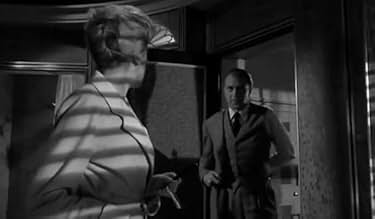
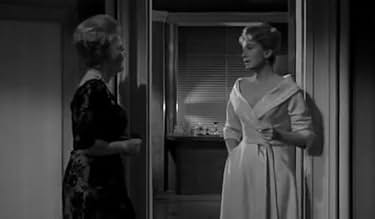
A stellar cast of stalwart British actors support the stars; led by Hermione Gingold and the priceless Wilfred Lawson, the list includes Michael Wilding, Peter Cushing, Eric Porter, and Diane Cilento. The black-and-white cinematography by Erwin Hillier captures appropriately gritty images of working class London and shadowy atmospherics that enhance the climactic suspense. Only William Alwyn's music tends to overwhelm early in the film, when the composer telescopes the action and loudly punctuates critical moments. While Anderson is not Hitchcock, and "The Naked Edge" is not "Suspicion," the director manages to maintain a brisk pace, build tension and suspense, and reach an exciting and satisfying climax.
Well done throughout, "The Naked Edge" will grip viewers and keep them absorbed to the end and beyond, when a voice-over warns the audience not to divulge the ending. Of interest for more than just a great American star's final role or for another opportunity to admire the always radiant Deborah Kerr, the film is a taut thriller that delivers. Although Hitchcock-like and Hitchcock-lite, "The Naked Edge" is worthwhile, even if dedicated crime buffs will likely outpace Kerr and guess the outcome.
A stellar cast of stalwart British actors support the stars; led by Hermione Gingold and the priceless Wilfred Lawson, the list includes Michael Wilding, Peter Cushing, Eric Porter, and Diane Cilento. The black-and-white cinematography by Erwin Hillier captures appropriately gritty images of working class London and shadowy atmospherics that enhance the climactic suspense. Only William Alwyn's music tends to overwhelm early in the film, when the composer telescopes the action and loudly punctuates critical moments. While Anderson is not Hitchcock, and "The Naked Edge" is not "Suspicion," the director manages to maintain a brisk pace, build tension and suspense, and reach an exciting and satisfying climax.
Well done throughout, "The Naked Edge" will grip viewers and keep them absorbed to the end and beyond, when a voice-over warns the audience not to divulge the ending. Of interest for more than just a great American star's final role or for another opportunity to admire the always radiant Deborah Kerr, the film is a taut thriller that delivers. Although Hitchcock-like and Hitchcock-lite, "The Naked Edge" is worthwhile, even if dedicated crime buffs will likely outpace Kerr and guess the outcome.
Sound direction with Hitchcockian touches, plush photography
Michael Anderson does a great job with this Hitchcockian melodrama, that even boasts a musical score reminiscent of Bernard Herrmann.
THE NAKED EDGE was, sadly, the against type epitaph to Gary Cooper's memorable career as an actor. Although he was dead by the time the finished film hit the screens, and he shows signs of some physical decay, Coop retains his economy of gestures and the expressive eyes. I found it odd that Kerr's name should come first in the opening credits, after all Coop had won two Oscars by then, while Kerr never picked up the statuette. At any, Coop and Kerr complement each other's acting, he as the hubby who appears to have something to hide, she as the doubting wife. The always dependable Portman as the heavy, Cushing as the prosecution lawyer, and Diane Cilento as the wife of the wrongly accused man complete the great cast.
Interesting to compare Cilento's instinctive defense of her husband with Kerr's instinctive condemnation of hers.
The story is not that great or unusual, and you can easily spot some credibility holes, but it is very atmospheric. The sole drawback is that it pads the narrative with repetitive shots of similar facial expressions, and it could have done with 10 minutes less, especially the part where you see Cooper go into Portman's place, and then only shoes and trousers for a good 8 minutes, and suddenly everyone is back at Cooper's and Kerr's.
Ultimately, despite its flaws THE NAKED EDGE rates a must-see film noir, a definite must-see for the fans of that wonderful actor, Gary Cooper.
THE NAKED EDGE was, sadly, the against type epitaph to Gary Cooper's memorable career as an actor. Although he was dead by the time the finished film hit the screens, and he shows signs of some physical decay, Coop retains his economy of gestures and the expressive eyes. I found it odd that Kerr's name should come first in the opening credits, after all Coop had won two Oscars by then, while Kerr never picked up the statuette. At any, Coop and Kerr complement each other's acting, he as the hubby who appears to have something to hide, she as the doubting wife. The always dependable Portman as the heavy, Cushing as the prosecution lawyer, and Diane Cilento as the wife of the wrongly accused man complete the great cast.
Interesting to compare Cilento's instinctive defense of her husband with Kerr's instinctive condemnation of hers.
The story is not that great or unusual, and you can easily spot some credibility holes, but it is very atmospheric. The sole drawback is that it pads the narrative with repetitive shots of similar facial expressions, and it could have done with 10 minutes less, especially the part where you see Cooper go into Portman's place, and then only shoes and trousers for a good 8 minutes, and suddenly everyone is back at Cooper's and Kerr's.
Ultimately, despite its flaws THE NAKED EDGE rates a must-see film noir, a definite must-see for the fans of that wonderful actor, Gary Cooper.


Did you know
- TriviaGary Cooper's cancer was at such an advanced stage that frequent breaks were required during filming for him to receive oxygen so he would be able to proceed to the next scene.
- GoofsNo-one stands on the edge of a gigantic cliff like that - especially if one is in an emotional state - and more especially if accompanied by someone that one suspects to be a calculating killer. One of many plot holes.
- Quotes
George Radcliffe: Do you think a woman could live with a man and sleep with him and not know she was sleeping with a murderer?
Martha Radcliffe: Do murderers make love differently?
- Crazy credits"Ladies and gentlemen, you now know who killed Jason Roote. Please do not reveal the secret to anyone."
- ConnectionsFeatured in Gary Cooper: The Face of a Hero (1998)
- How long is The Naked Edge?Powered by Alexa
Details
- Release date
- Countries of origin
- Official sites
- Language
- Also known as
- Gola ostrica
- Filming locations
- Production companies
- See more company credits at IMDbPro
Box office
- Gross worldwide
- $1,185
- Runtime
- 1h 37m(97 min)
- Color
- Aspect ratio
- 1.66 : 1
Contribute to this page
Suggest an edit or add missing content