
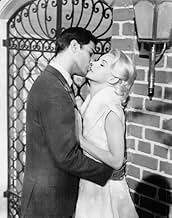
A millionaire with a mysterious fiancee hires a detective to discover the truth about her past.A millionaire with a mysterious fiancee hires a detective to discover the truth about her past.A millionaire with a mysterious fiancee hires a detective to discover the truth about her past.
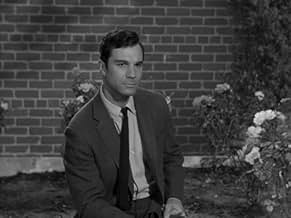
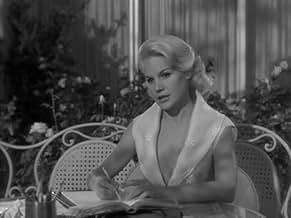


Ricky Allen
- Boy in Library
- (uncredited)

Val Avery
- Pudgey Smith
- (uncredited)
- Director
- Writers
- All cast & crew
- Production, box office & more at IMDbPro
6.7452
1
2
3
4
5
6
7
8
9
10
Featured reviews
Sylvia Is An Enriching Movie Experience
Sylvia is a well developed film, from cast to direction. It was far ahead of its' time. The plot is slow in the beginning but quickly moves to a steady pace. Sylvia confronts difficult issues few movies can handle with any lasting credibility. The characters are rich and diverse in their perspectives. Carroll Baker delivers a superb performance as the female lead. Carroll Baker's supporting actors and actresses enrich the weave of the emotional undercurrents of the film. Sylvia is also complemented with the use of vivid symbolism and well formed dialogue.
In a good tradition
Sylvia certainly has a great tradition of similar films to fall back on. Chicago Deadline, The Mask Of Dimitrios, and the great Citizen Kane all deal with someone trying to pick up the real story of somebody by interviewing people from the past and getting flashback incidents.
Peter Lawford has hired PI George Maharis to trace down the background of Sylvia, the girl he plans to marry. What Carroll Baker in the title role has given him is completely bogus though she's pretty well fixed on her own and doesn't need Lawford's millions. But he's a careful sort and Maharis begins his work.
I have to say that it was a clever idea for him to use her writings, she's a poet, for traces of local idiomatic expressions. Maharis has a linguistics professor on call who tells him his starting point should be Pittsburgh.
After that Maharis starts on his hunt and meets a variety of characters played by some really fine character actors. It's the best thing Sylvia has going for it. These people really make the film. The most memorable for me are Ann Sothern who works in a penny arcade and is a drunk and Viveca Lindfors as a librarian from Pittsburgh who gives Maharis his first bit of real information.
Baker does well as a woman who really graduated summa cum laude from the school of hard knocks. The film was supposed to be a breakout film for George Maharis who left his TV series Route 66 for a career on the big screen. It never quite worked out that way. He does all right in the part of the PI, but I think either Paul Newman or Robert Mitchum would have aced the part of the private eye.
Still Sylvia is worth watching for one of the best cast of character players ever assemble this side of John Ford or Frank Capra.
Peter Lawford has hired PI George Maharis to trace down the background of Sylvia, the girl he plans to marry. What Carroll Baker in the title role has given him is completely bogus though she's pretty well fixed on her own and doesn't need Lawford's millions. But he's a careful sort and Maharis begins his work.
I have to say that it was a clever idea for him to use her writings, she's a poet, for traces of local idiomatic expressions. Maharis has a linguistics professor on call who tells him his starting point should be Pittsburgh.
After that Maharis starts on his hunt and meets a variety of characters played by some really fine character actors. It's the best thing Sylvia has going for it. These people really make the film. The most memorable for me are Ann Sothern who works in a penny arcade and is a drunk and Viveca Lindfors as a librarian from Pittsburgh who gives Maharis his first bit of real information.
Baker does well as a woman who really graduated summa cum laude from the school of hard knocks. The film was supposed to be a breakout film for George Maharis who left his TV series Route 66 for a career on the big screen. It never quite worked out that way. He does all right in the part of the PI, but I think either Paul Newman or Robert Mitchum would have aced the part of the private eye.
Still Sylvia is worth watching for one of the best cast of character players ever assemble this side of John Ford or Frank Capra.
Carroll Baker plays ex-hooker with much pathos!
Excellent Carroll Baker flick. Made just before Harlow almost ruined her career. Carroll plays a rich novelist who's engaged to sleaze-bag Peter Lawford. Lawford knows squat about her past so he hires second rate P.I. George Maharis to find out about her life. What he uncovers is on the tawdry side. Carroll endured many a degredation before turning to prostitution. Some scenes are a little campy. I love the scene where she gets a job in a hooker pick up joint run by a drag queen who's idea of warbling a song is climaxed by him/her karate chopping some blocks of wood on stage. Good supporting cast including Joanne Dru and the ever talented Ann Southern playing a frumpy has-been hooker. Lloyd Bocher plays a client who has some rather kinky-S&M ideas about foreplay, quite shocking for 1964, tame by today's standards. I really liked this movie as the viewer starts to feel much empathy for Carroll's character after surviving all the crap she went through in her life. Not your typical Hollywood ending either.
It loses steam half-way through.
The movie begins well enough and we think we will deal with some Preminger-like mystery ("Laura" "Bunny Lake is missing" "Anatomy of murder") or even a Mankiewicz extravaganza ("the barefoot comtessa").One of the first scenes in the library with Viveca Lindfords is intriguing.The books play a prominent part and there's a strange children's omnipresence.
Then the accumulation of melodramatic elements and the abuse of flashbacks end up wearing thin .Interest only occasionally comes back:Ann Sothern's barfly act,her entry in the posh restaurant ,for instance.Carroll Baker only appears in flashbacks in the first hour which preserved her mystery charm.Then,when the private meets her,it peters out.And it's not hard to guess the ending.
Then the accumulation of melodramatic elements and the abuse of flashbacks end up wearing thin .Interest only occasionally comes back:Ann Sothern's barfly act,her entry in the posh restaurant ,for instance.Carroll Baker only appears in flashbacks in the first hour which preserved her mystery charm.Then,when the private meets her,it peters out.And it's not hard to guess the ending.
Piece by piece construction of a leading lady, with gobs of fascinating character actors
Sylvia (1965)
A movie far out of its time, yet ahead of its genre. By 1965 this kind of small black and white film had migrated to television productions, or had disappeared. While clearly low budget without any stars, it keeps a tight formal structure and strong production throughout. And the idea, gradually piecing together someone's identity, makes for a great movie.
Even if it does borrow, in terms of structure only, from "Citizen Kane," no less. That is, an investigator is set off to learn who the real Sylvia is, and by meeting with one important contact after another, and going through a series of well done flashbacks, we are able to piece together the complicated life of the title character. The biggest difference from Kane (besides virtuosic style) is that Sylvia is an ordinary person. Or she seems ordinary until you learn in stages the nuances and integrity of her survival.
There are many things left unanswered, and I'm not sure that's totally for the best. We never quite understand her meandering through dramatic (and noble) moments one after another. What kind of childhood set her off this way ("Kane," significantly, pivoted around a childhood event). Sylvia is a construction, apparently beautiful (in movie terms), but more importantly interesting, strong, independent. A great role model.
The investigator, called Mack, is played by George Maharis, who has a steady and calm approach all through. What happens after the establishment of his role is really terrific, because each person he encounters offers a new scenario, a new setting and story and conversation, and then a new flashback. And some of these side characters are fabulous true characters. So you get captivated time and after time. In some ways the least interesting character is this hopeless perfect and yet tainted paradigm, Sylvia, who by the end gets her own long segment, a present tense adjustment of all of what we've seen so far.
It's a little stilted at times, and the patient pace isn't always a benefit. The ending might actually seem a bit inevitable, too, which is fair enough. But in the big view you almost want to see it again to catch some of the piece you might have missed. It's filmed a decade after the last great noirs, and so isn't a big in the mode (though some people throw every b&w movie into the mix if they have a loner guy and a blonde). And it is a terrific tonic to the bigger Hollywood machine made stuff coming out in widescreen color (a lot of it). But when you see the changes in the medium with "Who's Afraid of Virginia Woolf" and so on the next year or two, it's really really old fashioned.
Check it out.
A movie far out of its time, yet ahead of its genre. By 1965 this kind of small black and white film had migrated to television productions, or had disappeared. While clearly low budget without any stars, it keeps a tight formal structure and strong production throughout. And the idea, gradually piecing together someone's identity, makes for a great movie.
Even if it does borrow, in terms of structure only, from "Citizen Kane," no less. That is, an investigator is set off to learn who the real Sylvia is, and by meeting with one important contact after another, and going through a series of well done flashbacks, we are able to piece together the complicated life of the title character. The biggest difference from Kane (besides virtuosic style) is that Sylvia is an ordinary person. Or she seems ordinary until you learn in stages the nuances and integrity of her survival.
There are many things left unanswered, and I'm not sure that's totally for the best. We never quite understand her meandering through dramatic (and noble) moments one after another. What kind of childhood set her off this way ("Kane," significantly, pivoted around a childhood event). Sylvia is a construction, apparently beautiful (in movie terms), but more importantly interesting, strong, independent. A great role model.
The investigator, called Mack, is played by George Maharis, who has a steady and calm approach all through. What happens after the establishment of his role is really terrific, because each person he encounters offers a new scenario, a new setting and story and conversation, and then a new flashback. And some of these side characters are fabulous true characters. So you get captivated time and after time. In some ways the least interesting character is this hopeless perfect and yet tainted paradigm, Sylvia, who by the end gets her own long segment, a present tense adjustment of all of what we've seen so far.
It's a little stilted at times, and the patient pace isn't always a benefit. The ending might actually seem a bit inevitable, too, which is fair enough. But in the big view you almost want to see it again to catch some of the piece you might have missed. It's filmed a decade after the last great noirs, and so isn't a big in the mode (though some people throw every b&w movie into the mix if they have a loner guy and a blonde). And it is a terrific tonic to the bigger Hollywood machine made stuff coming out in widescreen color (a lot of it). But when you see the changes in the medium with "Who's Afraid of Virginia Woolf" and so on the next year or two, it's really really old fashioned.
Check it out.


Did you know
- TriviaTo prepare herself to play the heroine with a checkered past, Carroll Baker actually worked a shift in an all-night diner (where she went unnoticed), made change in a penny arcade booth, visited a Tijuana brothel and so forth - publicity stunt "research" that was documented in a lengthy February 27 1965 Saturday Evening Post picture story called "The Lady Was A Tramp".
- GoofsIn the library sequence, none of books are marked with the Dewey Decimal System coding or other markings that would enable anyone to easily find or shelve books.
- Quotes
Alan Macklin: You mentioned something about a job.
Frederic Summers: Sylvia West. I want to know who she is. I want to know everything there is to know about Sylvia West. Everything a prospective husband has a right to know.
- ConnectionsReferenced in What's My Line?: Lee Remick (2) (1965)
- SoundtracksSylvia
Lyrics by Paul Francis Webster
Music by David Raksin
Sung by Paul Anka
Thru the courtesy of RCA Victor Records
- How long is Sylvia?Powered by Alexa
Details
- Release date
- Country of origin
- Languages
- Also known as
- Das Vorleben der Sylvia West
- Filming locations
- Beverly Amusement Park, 8500 Beverly Blvd., Los Angeles, California, USA(lunch scene after the bookshop)
- Production company
- See more company credits at IMDbPro
- Runtime
- 1h 55m(115 min)
- Color
Contribute to this page
Suggest an edit or add missing content