
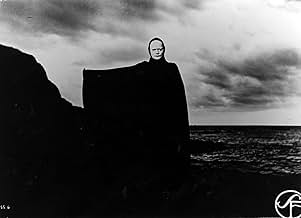
A knight returning to Sweden after the Crusades seeks answers about life, death, and the existence of God as he plays chess against the Grim Reaper during the Black Plague.A knight returning to Sweden after the Crusades seeks answers about life, death, and the existence of God as he plays chess against the Grim Reaper during the Black Plague.A knight returning to Sweden after the Crusades seeks answers about life, death, and the existence of God as he plays chess against the Grim Reaper during the Black Plague.
- Awards
- 9 wins & 2 nominations total






Siv Aleros
- Flagellant
- (uncredited)
Sten Ardenstam
- Knight
- (uncredited)
Harry Asklund
- The Landlord
- (uncredited)

Benkt-Åke Benktsson
- Merchant at the Inn
- (uncredited)
- Director
- Writer
- All cast & crew
- Production, box office & more at IMDbPro
8.1213.1K
1
2
3
4
5
6
7
8
9
10
Summary
Reviewers say 'The Seventh Seal' delves into mortality, faith, and existential questions through its medieval setting. The chess game with Death symbolizes humanity's struggle against fate. Themes of societal chaos and religious fervor are depicted through plague, witch burnings, and flagellants. Characters like the knight, squire, and actors provide varied perspectives on life and death, enriching the narrative. The film's allegorical approach resonates with contemporary audiences, highlighting the timeless nature of its themes.
Featured reviews
Chilling, audacious, and awe-inspiring. An undisputed masterpiece.
The mysteries of religion and death have long been a popular focus among artists of all media, including film. And while many films question these mysteries, they seldom provide any real insight into the world of the unknown. In Ingmar Bergman's THE SEVENTH SEAL, these mysteries are not only questioned; they are dissected, splayed, and scrutinized.
THE SEVENTH SEAL could very well serve as sort of a manifesto for existentialism. Its deep acuity and haunting imagery is powerful enough to jar even passive viewers out of their complacency and force them to examine their own reality. The delicately crafted story centers around a 14th century knight named Antonius Block and his ongoing game of chess with a shadowy, hooded figure: Death. Bergman uses this allegory not just to personify death, but to illustrate the lengths man will go to in order to avoid it. In the end, however, Death is a much better player than any of us, and though he may humor some of his opponents by letting them think that they have the advantage, the end result is inevitable: Death always wins. No matter how skillfully we plan our moves or how determined we are to win, we can never beat Death.
In Antonius's search for answers, he encounters a variety of very unique characters, each with their own outlook on life, death, faith, fear and love. Their commentary on such matters is often dryly funny and always brilliant, continuously and effectively challenging our perceptions of the world around us. For me, the dialogue was definitely the high point of the film, as it was extremely thought-provoking and carefully constructed throughout. Almost every line spoken is, in one way or another, daunting and unforgettable. Jöns's description of love as "the blackest of all plagues" is a quote that will forever be engraved in my mind.
THE SEVENTH SEAL truly is a remarkable accomplishment in the world of cinema. It is a deep, mesmerizing, and darkly beautiful work of art. More importantly, THE SEVENTH SEAL is one of those rare movies that doesn't just entertain, but also has the power to change the way one thinks.
THE SEVENTH SEAL could very well serve as sort of a manifesto for existentialism. Its deep acuity and haunting imagery is powerful enough to jar even passive viewers out of their complacency and force them to examine their own reality. The delicately crafted story centers around a 14th century knight named Antonius Block and his ongoing game of chess with a shadowy, hooded figure: Death. Bergman uses this allegory not just to personify death, but to illustrate the lengths man will go to in order to avoid it. In the end, however, Death is a much better player than any of us, and though he may humor some of his opponents by letting them think that they have the advantage, the end result is inevitable: Death always wins. No matter how skillfully we plan our moves or how determined we are to win, we can never beat Death.
In Antonius's search for answers, he encounters a variety of very unique characters, each with their own outlook on life, death, faith, fear and love. Their commentary on such matters is often dryly funny and always brilliant, continuously and effectively challenging our perceptions of the world around us. For me, the dialogue was definitely the high point of the film, as it was extremely thought-provoking and carefully constructed throughout. Almost every line spoken is, in one way or another, daunting and unforgettable. Jöns's description of love as "the blackest of all plagues" is a quote that will forever be engraved in my mind.
THE SEVENTH SEAL truly is a remarkable accomplishment in the world of cinema. It is a deep, mesmerizing, and darkly beautiful work of art. More importantly, THE SEVENTH SEAL is one of those rare movies that doesn't just entertain, but also has the power to change the way one thinks.
"I want knowledge! Not faith, not assumptions, but knowledge."
THE SEVENTH SEAL is a film that presents a dramatic fantasy game between meaning of life and fear of death. A knight and his squire have returned to their country after a ten-year crusade. Deadly disease ravaged country. Knight faces Death. He calls Death on the multi-day game of chess...
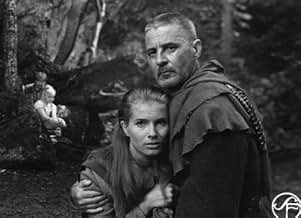
The story has touched serious philosophical and religious topics. However, the story is full of intrigue, dark humor and hope. The protagonists are distracted between the vicious disease, self-pity and torture. It is interesting to see a deeply disillusioned knight, a cynical squire who hates women, a cheating wife, evil priests, a mute girl and seemingly healthy and happy family on the same road. The truth is all around them. The main protagonist used to persistently ask questions to which only he has a valid response. This film reveals some controversial issues. Is deadly disease greater threat to man or the man is the greatest enemy to himself? Mr. Bergman has painted realistic effects of fear, horror, cynicism, surprises, love and health on human faces.
Max von Sydow as Antonius Block, the knight is a more serious version of Don Quixote. Gunnar Björnstrand Jöns, the squire is a character who never changes his mood. He always has some sort of cynical jokes or words of contempt for each occurrence. Bengt Ekerot is Death in the true sense of that word. Nils Poppe as Jof is a juggler who has strange predictions. Fortunately, no one believes him. Bibi Andersson as Mia, Jof's wife is a beautiful and cheerful woman who does not fit into the landscape.
Life is a hard journey. The rare moments of happiness are a sort of salvation. The end of the film emphasizes the transience of life and the power of death which no one can escape. Of course, only in the eyes of one of the protagonists.
The story has touched serious philosophical and religious topics. However, the story is full of intrigue, dark humor and hope. The protagonists are distracted between the vicious disease, self-pity and torture. It is interesting to see a deeply disillusioned knight, a cynical squire who hates women, a cheating wife, evil priests, a mute girl and seemingly healthy and happy family on the same road. The truth is all around them. The main protagonist used to persistently ask questions to which only he has a valid response. This film reveals some controversial issues. Is deadly disease greater threat to man or the man is the greatest enemy to himself? Mr. Bergman has painted realistic effects of fear, horror, cynicism, surprises, love and health on human faces.
Max von Sydow as Antonius Block, the knight is a more serious version of Don Quixote. Gunnar Björnstrand Jöns, the squire is a character who never changes his mood. He always has some sort of cynical jokes or words of contempt for each occurrence. Bengt Ekerot is Death in the true sense of that word. Nils Poppe as Jof is a juggler who has strange predictions. Fortunately, no one believes him. Bibi Andersson as Mia, Jof's wife is a beautiful and cheerful woman who does not fit into the landscape.
Life is a hard journey. The rare moments of happiness are a sort of salvation. The end of the film emphasizes the transience of life and the power of death which no one can escape. Of course, only in the eyes of one of the protagonists.
Didn't like it but will definitely see it again in the distant future
First of all, I have taken the time to read some posts on this movie before writing my review because I was searching for lots of answers. Didn't get many though, the popular thing fans like to say (and please, no pun intended) is that it just takes time to understand and appreciate this movie. To this I quickly reply that my perception of "Det Sjunde Inseglet" was that it is a rather dull, if not eventless, movie. It has some really nice moments (and for some reason I really liked the concept of a man playing chess with death itself) but in the end almost nothing is resolved except from the main protagonist who, at the brink of his death, discovers that it's love that makes people want to live ,very roughly put, I apologize, but even this revelation was hidden from the writer of this comment. And this is what bothered me the most, I couldn't read (for the lack of a better word) any of these important details, the movie very coldly rolled in front of my eyes and I just didn't get it! Now the easiest and dumbest thing to say is that this is all the fault of the director for not having a more universal way of film-making, rather the viewer has to decipher such information if he wants to fully appreciate his movies. I've just realized that I could say the same for Kubrick's visionary movies, I didn't like most, scratch that, none of them the first time around, they grew on me after a second viewing. And I dig Kubrick, a lot!!!
I was also surprised with the admiration the cinematography received, it did not impact me whatsoever (and I am more so a visual that a sensual movie buff and love this kind of stuff). All in all, as Antonius Block, I am searching for answers, important ones. It bothers me a lot that I don't appreciate this movie, and I ask anyone to help me resolve my problem.
What am I missing? What don't I get? What should I know about "The Seventh Seal", its meaning, its importance, its making, its director...?
Thank you for your time
I was also surprised with the admiration the cinematography received, it did not impact me whatsoever (and I am more so a visual that a sensual movie buff and love this kind of stuff). All in all, as Antonius Block, I am searching for answers, important ones. It bothers me a lot that I don't appreciate this movie, and I ask anyone to help me resolve my problem.
What am I missing? What don't I get? What should I know about "The Seventh Seal", its meaning, its importance, its making, its director...?
Thank you for your time
10Xstal
The Curse of Existence...
An abstraction of your fears, conjured progressively through years, walks beside you every day, may cause some to halt, then pray; it's a demon that's passed on, through generations come and gone, as fixed and certain as the tide, nowhere for you to run, or hide; is there a game that you can play, that extends your time and stay, with instructions and some rules, that don't leave you, as the fool; can the clock that's counting down, tick half as fast before you frown, and gaze with stoical askance, as you begin, your macabre dance.
Signed, sealed and delivered as many times as you may care for, but the curse of existence is never knowing how the story really ends, or why it was started in the first instance.
Signed, sealed and delivered as many times as you may care for, but the curse of existence is never knowing how the story really ends, or why it was started in the first instance.
Checkmate
Death, Death, Death. No matter the moves you make, Death will, in time, have you in checkmate. The Seventh Seal is a rightfully highly regarded film. It is a unique film, and unlike any I have ever seen. I have just finished my second viewing of the film. I have watched several Bergman films since I first saw this, but this is the one that has always stuck out to me the most. I would describe it as a dark and powerful film. There is nothing lacking in this film, in my opinion. The soundtrack is perfectly subtle, acting is agreeable, cinematography fitting and well done, etc. My favorite aspect of this film is simply the premise. A game of chess that is a matter of life and death. If nothing else, that concept is enough to make an interesting film at the very least. Death is the most persistent theme throughout the film, and is often juxtaposed to stark scenes of life, often quickly and without warning. This film was one of the first I watched in my everlasting pursuit of classic cinema, and I would readily recommend it as a starting point for anyone interested in classic or foreign films. Bergman will not disappoint in this one or elsewhere in his filmography. This is probably his most famous and accessible films. This is a staple of classic cinema, watch it and find out why.


Did you know
- TriviaIngmar Bergman credited the film with helping him overcome his crippling fear of death. Because the film dealt so overtly with the subject, he found it a highly cathartic experience.
- GoofsThe chess players focus on capturing the Queen. The Queen was not a super-powerful piece until centuries later when a recent chess-variant initially called "chess of the mad queen" became more popular than the classic game.
- Quotes
Antonius Block: We must make an idol of our fear, and call it god.
- ConnectionsEdited into Severed Ways: The Norse Discovery of America (2007)
Details
- Release date
- Country of origin
- Languages
- Also known as
- El séptimo sello
- Filming locations
- Hovs Hallar - Naturreservat, Skåne län, Sweden(Opening beach scene and ending scene)
- Production company
- See more company credits at IMDbPro
Box office
- Budget
- $150,000 (estimated)
- Gross worldwide
- $312,104
- Runtime
- 1h 36m(96 min)
- Color
- Aspect ratio
- 1.37 : 1
Contribute to this page
Suggest an edit or add missing content