

A hospital's chief-of-staff struggles to find meaning in his life during a spate of staff deaths.A hospital's chief-of-staff struggles to find meaning in his life during a spate of staff deaths.A hospital's chief-of-staff struggles to find meaning in his life during a spate of staff deaths.
- Won 1 Oscar
- 7 wins & 5 nominations total
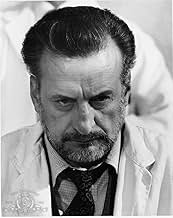
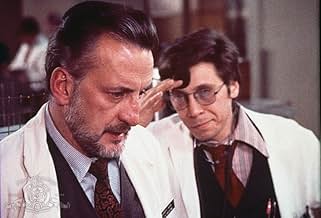


Richard Dysart
- Dr. Welbeck
- (as Richard A. Dysart)


- Director
- Writer
- All cast & crew
- Production, box office & more at IMDbPro
7.18K
1
2
3
4
5
6
7
8
9
10
Featured reviews
10cer1
A must see for anyone who's spent any time in one!
Certainly the highlight of this film is it's cast.
Diana Rigg, George C. Scott, Bernard Hughes to mention a few.
I have accumulated more time in hospitals and with doctors over the years than I care to think about.
This comedy attacks the pomp and pretension in all aspects of our society, through the setting of one of it's "Most Haughty" institutions... the Medical profession.
The idea that such goings on could be possible, might be a shock to some, but is a delight to anyone with the perspective of experience.
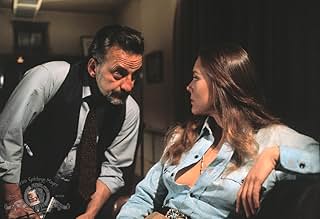
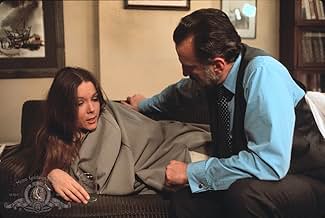
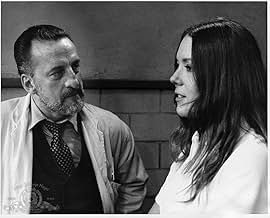
Dr Brock (Scott) undergoes a mid-life crisis of monumental proportions before our eyes as we, and he, become enamored with the prospect of his involvement with Miss Drummond (Rigg).
The thread of the absurd is woven into this wonderful mix in the form of the irony that the Hospital appears to be killing it's own workers as they mismanage their affairs in it.
The climax is unpredictable (unless you've seen it) and made even more hilarious if you happen to guess.
It's not everyone's brand of humor, to be sure, and has uproariously funny "Dark Moments" if you're open to them.
I loved every minute, and was delighted to see it out on DVD.
Diana Rigg, George C. Scott, Bernard Hughes to mention a few.
I have accumulated more time in hospitals and with doctors over the years than I care to think about.
This comedy attacks the pomp and pretension in all aspects of our society, through the setting of one of it's "Most Haughty" institutions... the Medical profession.
The idea that such goings on could be possible, might be a shock to some, but is a delight to anyone with the perspective of experience.
Dr Brock (Scott) undergoes a mid-life crisis of monumental proportions before our eyes as we, and he, become enamored with the prospect of his involvement with Miss Drummond (Rigg).
The thread of the absurd is woven into this wonderful mix in the form of the irony that the Hospital appears to be killing it's own workers as they mismanage their affairs in it.
The climax is unpredictable (unless you've seen it) and made even more hilarious if you happen to guess.
It's not everyone's brand of humor, to be sure, and has uproariously funny "Dark Moments" if you're open to them.
I loved every minute, and was delighted to see it out on DVD.
A Warm Up to "Network"
"The Hospital" feels like a warm up to "Network," the classic satire that would come out five years later.
Both were written by Paddy Chayefsky and both suffer a little bit from age. But "Network" still feels prescient and sharp as a tack in its lampooning of news media, while "The Hospital" feels messy and confused in its lampooning of...what...the American medical system? America in general?
That's the problem with "The Hospital." I wasn't entirely sure what Chayefsky was criticizing. The movie is at its best, and funniest, when it's a straight up satire about the running of an urban hospital. For example, one of the most memorable scenes is one in which an unfazed nurse wanders around the emergency room obliviously asking bleeding, doubled over patients to fill out insurance forms. But there are all these other plot strands involving the mid-life crisis of the hospital's director (George C. Scott) and his romance with the hippie-dippie daughter of one of the hospital's patients; and protests against the hospital's plan to appropriate housing from poor members of the community; and a mysterious serial killer offing doctors and nurses. This last storyline is tantalizing at first, but Chayefsky wraps it up in a thuddingly literal, murder mystery way, and it turns out to be stupid.
Scott is terrific and received a Best Actor Oscar nomination for his performance, but it's a case of a good performance being hampered by mediocre material. He brilliantly commands the first couple of scenes he's in, but he's eventually undermined by the screenplay and his performance loses impact the longer the movie goes on.
I'm clearly in the minority, though, for thinking that the screenplay is the weakest link in "The Hospital." Chayefsky won the Original Story and Screenplay Oscar in 1971 for this movie.
Grade: C+
Both were written by Paddy Chayefsky and both suffer a little bit from age. But "Network" still feels prescient and sharp as a tack in its lampooning of news media, while "The Hospital" feels messy and confused in its lampooning of...what...the American medical system? America in general?
That's the problem with "The Hospital." I wasn't entirely sure what Chayefsky was criticizing. The movie is at its best, and funniest, when it's a straight up satire about the running of an urban hospital. For example, one of the most memorable scenes is one in which an unfazed nurse wanders around the emergency room obliviously asking bleeding, doubled over patients to fill out insurance forms. But there are all these other plot strands involving the mid-life crisis of the hospital's director (George C. Scott) and his romance with the hippie-dippie daughter of one of the hospital's patients; and protests against the hospital's plan to appropriate housing from poor members of the community; and a mysterious serial killer offing doctors and nurses. This last storyline is tantalizing at first, but Chayefsky wraps it up in a thuddingly literal, murder mystery way, and it turns out to be stupid.
Scott is terrific and received a Best Actor Oscar nomination for his performance, but it's a case of a good performance being hampered by mediocre material. He brilliantly commands the first couple of scenes he's in, but he's eventually undermined by the screenplay and his performance loses impact the longer the movie goes on.
I'm clearly in the minority, though, for thinking that the screenplay is the weakest link in "The Hospital." Chayefsky won the Original Story and Screenplay Oscar in 1971 for this movie.
Grade: C+
A bustling, sharply written, dated but also timely look at the changing world of 1971
Hospital (1971)
George C. Scott is amazing, just terrific as a struggling, aging, world-weary doctor. A couple of the speeches he gives (from the sharply written screenplay) are first rate quotable stuff. See this movie for him alone.
Overall, this is certainly a New Hollywood movie, straight out of the late 1960s politics and sexual revolution. It's also a bit of a middle-aged male fantasy (the director and writer and main actor being of course all middle aged males). I mean, a key line in the movie is when young and slightly batty Barbara, played by Diana Rigg (Emma Peel in the television series "The Avengers"), says to the very middle aged George C. Scott, "I have a thing for middle aged men." Or something to that effect--and you know what happens next.
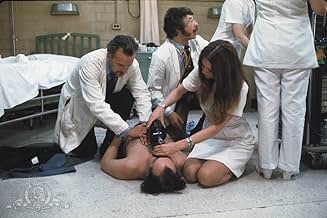
But that's the weakest part of the movie. The best part is the hospital scene itself, the chaotic and scary lack of medical professionalism at an under-funded big city medical center. Scott plays the chief of medicine, Dr. Bock, and he gradually sniffs out a truly murderous element to the place, a kind of whodunnit built into this otherwise growing drama of doctors inside and protesters outside (usually) and a general sense that the old order isn't able to keep order against the rising restlessness of young people and their demands.
In a way, the flakiness of Barbara and the rock-steady but yet suicidal authority of Bock are symbolic of the two sides, the two generations, that signified so much back then. Barbara suggests dropping out and turning on, and the doctor grows to the idea. I mean, who wouldn't in his shoes, having Diana Rigg begging you to leave your miserable job and life and moving to the mountains of Mexico to make babies. That's no exaggeration--that's the carrot, and the doctor sees it the way many people saw it then, the escape as a reasonable alternative to a crumbling world.
And yet, the hospital has needs, like dying people, and a group of people displaced from their apartment building next door, and of course this murderer on the loose.
In a way, it's a sloppy, terribly constructed movie. But it has an element of abandonment and realism from the era that really works. If you just go along with the superficial parts of the plot, which are fun, you might just get sucked into the tawdry medical world in 1971 Manhattan.
The writer, by the way, is Paddy Chayefsky, and he won his second Oscar for this screenplay. It was considered that timely and sharp at the time, and there is some terrific writing, some really good dialog to keep it humming. (He did a ton of television, but also next wrote the screenplay for "Network," winning his third Oscar for that.)
The director, Arthur Hiller, moved from 1960s television to movie directing and made a lot of middling fare, though a few became well known such as "Love Story" (1970) and "Man of La Mancha" (1972). The cinematographer Victor J. Kemper is straight out of New Hollywood and his style feels beautifully unpolished and complex (he went on to do a lot of solid movies, some really terrific like "Dog Day Afternoon"), and this helps hold the disparate plot elements together.
George C. Scott is amazing, just terrific as a struggling, aging, world-weary doctor. A couple of the speeches he gives (from the sharply written screenplay) are first rate quotable stuff. See this movie for him alone.
Overall, this is certainly a New Hollywood movie, straight out of the late 1960s politics and sexual revolution. It's also a bit of a middle-aged male fantasy (the director and writer and main actor being of course all middle aged males). I mean, a key line in the movie is when young and slightly batty Barbara, played by Diana Rigg (Emma Peel in the television series "The Avengers"), says to the very middle aged George C. Scott, "I have a thing for middle aged men." Or something to that effect--and you know what happens next.
But that's the weakest part of the movie. The best part is the hospital scene itself, the chaotic and scary lack of medical professionalism at an under-funded big city medical center. Scott plays the chief of medicine, Dr. Bock, and he gradually sniffs out a truly murderous element to the place, a kind of whodunnit built into this otherwise growing drama of doctors inside and protesters outside (usually) and a general sense that the old order isn't able to keep order against the rising restlessness of young people and their demands.
In a way, the flakiness of Barbara and the rock-steady but yet suicidal authority of Bock are symbolic of the two sides, the two generations, that signified so much back then. Barbara suggests dropping out and turning on, and the doctor grows to the idea. I mean, who wouldn't in his shoes, having Diana Rigg begging you to leave your miserable job and life and moving to the mountains of Mexico to make babies. That's no exaggeration--that's the carrot, and the doctor sees it the way many people saw it then, the escape as a reasonable alternative to a crumbling world.
And yet, the hospital has needs, like dying people, and a group of people displaced from their apartment building next door, and of course this murderer on the loose.
In a way, it's a sloppy, terribly constructed movie. But it has an element of abandonment and realism from the era that really works. If you just go along with the superficial parts of the plot, which are fun, you might just get sucked into the tawdry medical world in 1971 Manhattan.
The writer, by the way, is Paddy Chayefsky, and he won his second Oscar for this screenplay. It was considered that timely and sharp at the time, and there is some terrific writing, some really good dialog to keep it humming. (He did a ton of television, but also next wrote the screenplay for "Network," winning his third Oscar for that.)
The director, Arthur Hiller, moved from 1960s television to movie directing and made a lot of middling fare, though a few became well known such as "Love Story" (1970) and "Man of La Mancha" (1972). The cinematographer Victor J. Kemper is straight out of New Hollywood and his style feels beautifully unpolished and complex (he went on to do a lot of solid movies, some really terrific like "Dog Day Afternoon"), and this helps hold the disparate plot elements together.
Worthwhile Black Comedy
A hospital chief deals with a crisis while battling his own demons. This satire exaggerates situations to drive home its points, but it's a worthwhile black comedy. As with most of his films, Cheyefsky seems more interested in hitting his targets and pontificating than in telling a good story. The Scott character is similar to the William Holden character in "Network," a man with a failing marriage and suffering from menopause who has a chance to rekindle his manhood with a younger woman. Scott is quite good in conveying the middle-aged weariness and bitterness. Rigg is also fine as a hippie, but their instant love affair is not believable.
Indecisive
The Hospital's one big flaw is lack of decision. It tries to hit too much and fails at most. At its best, The Hospital is a fantastic character study; George C. Scott is fantastic, giving one of the best performances of his celebrated career, and he creates a complex, flawed, believable character over the course of the film. The supporting cast is fine too - Barnard Hughes is hammy but terrific, and the others do well too. The film has some fantastic character establishing dialogs that are the heart of the story.
The problem is that it isn't satisfied with being a character driven drama. The Hospital also dips into black comedy, social satire, murder mystery and romance, and when it goes anywhere near any of those, it becomes disappointingly bland and predictable. Unfortunately, those scenes take up over half of the film.
On a side note, I do recommend The Hospital to anyone with an obsession for medical dramas - It's more realistic and better researched than most such movies made before ER.
The problem is that it isn't satisfied with being a character driven drama. The Hospital also dips into black comedy, social satire, murder mystery and romance, and when it goes anywhere near any of those, it becomes disappointingly bland and predictable. Unfortunately, those scenes take up over half of the film.
On a side note, I do recommend The Hospital to anyone with an obsession for medical dramas - It's more realistic and better researched than most such movies made before ER.


Did you know
- TriviaWhen Dr. Herbert Bock rants, "We have established the most enormous, medical...entity ever conceived and people are sicker than ever!" the slight pause, searching for the word "entity", was spontaneously ad-libbed by George C. Scott to save the take. The scripted line was, "we have ASSEMBLED the most enormous medical ESTABLISHMENT ever conceived." Scott heard his slip in mid-sentence, so he reworded the line so as to not make it repetitive. Director Arthur Hiller loved the save so much he used that take in the movie.
- GoofsBarbara Drummond says that she lived for a year with the Hopi Indians, but she mispronounces "Hopi" as "Ho-pye."
- Quotes
Herbert Bock: I mean, where do you train your nurses, Mrs. Christie--Dachau?
- Crazy creditsAlthough Barnard Hughes played two distinct roles, the end credits lists Hughes as playing the role of Drummond but not Dr. Mallory.
- ConnectionsFeatured in Best! Movies! Ever!: Hospitals (2007)
- How long is The Hospital?Powered by Alexa
Details
Box office
- Gross US & Canada
- $19,711,560
Contribute to this page
Suggest an edit or add missing content