IMDb RATING
7.7/10
7.5K
YOUR RATING

The chauvinist Alexandre balances relationships with several women in the post-1968 intellectual scene of Paris.The chauvinist Alexandre balances relationships with several women in the post-1968 intellectual scene of Paris.The chauvinist Alexandre balances relationships with several women in the post-1968 intellectual scene of Paris.
- Awards
- 3 wins & 1 nomination total
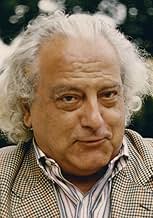

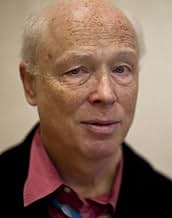
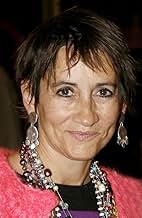

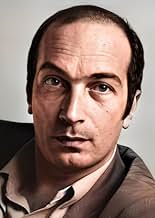




Jean-Claude Biette
- Un homme aux Deux Magots
- (uncredited)


Jean Douchet
- Un homme au Café de Flore
- (uncredited)

Bernard Eisenschitz
- Maurice
- (uncredited)

Jean Eustache
- Le mari de Gilberte
- (uncredited)
- …


Noël Simsolo
- Un homme au Café de Flore
- (uncredited)
- Director
- Writer
- All cast & crew
- Production, box office & more at IMDbPro
7.77.5K
1
2
3
4
5
6
7
8
9
10
Featured reviews
"In Paris, lovers have their own strange ways."
In what could have been seen as a coup towards the sexual "revolution" (purposefully I use quotations for that word), Jean Eustache wrote and directed The Mother and the Whore as a poetic, damning critique of those who can't seem to get enough love. If there is a message to this film- and I'd hope that the message would come only after the fact of what else this Ben-Hur length feature has to offer- it's that in order to love, honestly, there has to be some level of happiness, of real truth. Is it possible to have two lovers? Some can try, but what is the outcome if no one can really have what they really want, or feel they can even express to say what they want?
What is the truth in the relationships that Alexandre (Jean-Pierre Leaud) has with the women around him? He's a twenty-something pseudo-intellectual, not with any seeming job and he lives off of a woman, Marie (Bernadette Lafont) slightly older than him and is usually, if not always, his lover, his last possible love-of-his-life left him, and then right away he picks up a woman he sees on the street, Veronika (Françoise Lebrun), who perhaps reminds him of her. Soon what unfolds is the most subtly torrid love triangle ever put on film, where the psychological strings are pulled with the cruelest words and the slightest of gestures. At first we think it might be all about what will happen to Alexandre, but we're mistaken. The women are so essential to this question of love and sex that they have to be around, talking on and on, for something to sink in.
We're told that part of the sexual revolution, in theory if not entirely in practice (perhaps it was, I can't say having not been alive in the period to see it first-hand), was that freedom led to a lack of inhibitions. But Eustache's point, if not entirely message, is that it's practically impossible to have it both ways: you can't have people love you and expect to get the satisfaction of ultimate companionship that arrives with "f***ing", as the characters refer over and over again.
The Mother and the Whore's strengths as far as having the theme is expressing this dread beneath the promiscuity, the lack of monogamy, while also stimulating the intellect in the talkiest talk you've ever seen in a movie. At the same time we see a character like Alexandre, who probably loves to hear himself talk whether it's about some movie he saw or something bad from his past, Eustache makes it so that the film itself isn't pretentious- though it could appear to be- but that it's about pretentiousness, what lies beneath those who are covering up for their internal flaws, what they need to use when they're ultimately alone in the morning.
If you thought films like Before Sunrise/Sunset were talky relationship flicks, you haven't met this. But as Eustache revels in the dialogs these characters have, sometimes trivial, or 'deep', or sexual, or frank, or occasionally extremely (or in a subdued manner) emotional, it's never, ever uninteresting or boring. On the contrary, for those who can't get enough of a *good* talky film, it's exceptional. While his style doesn't call out to the audaciousness that came with his forerunners in the nouvelle vague a dozen years beforehand, Eustache's new-wave touch is with the characters, and then reverberating on them.
This is realism with a spike of attitude, with things at time scathing and sarcastic, crude and without shame in expression. All three of the actors are so glued to their characters that we can't ever perceive them as 'faking' an emotion or going at all into melodrama. It's almost TOO good in naturalistic/realism terms, but for Eustache's material there is no other way around it. Luckily Leaud delivers the crowning chip of his career of the period, and both ladies, particularly Labrun as the "whore" Veronika (a claim she staggeringly refutes in the film's climax of sorts in one unbroken shot). And, as another touch, every so often, the director will dip into a quiet moment of thought, of a character sitting by themselves, listening to a record, and in contemplation or quiet agony. This is probably the biggest influence on Jim Jarmusch, who dedicated his film Broken Flowers to Eustache and has one scene in particular that is lifted completely (and lovingly) in approach from the late Parisian.
Sad to say, before I saw Broken Flowers, I never heard of Eustache or this film, and procuring it has become quite a challenge (not available on US DVD, and on VHS so rare it took many months of tracking at various libraries). Not a minute of that time was wasted; the Mother and the Whore is truly beautiful work, one of the best of French relationship dramas, maybe even just one of the most staggeringly lucid I've seen from the country in general. It's complex, it's sweet, it's cold, it's absorbing, and it's very long, perhaps too long. It's also satisfying on the kind of level that I'd compare to Scenes from a Marriage; true revelations about the human condition continue to arise 35 years after each film's release.
What is the truth in the relationships that Alexandre (Jean-Pierre Leaud) has with the women around him? He's a twenty-something pseudo-intellectual, not with any seeming job and he lives off of a woman, Marie (Bernadette Lafont) slightly older than him and is usually, if not always, his lover, his last possible love-of-his-life left him, and then right away he picks up a woman he sees on the street, Veronika (Françoise Lebrun), who perhaps reminds him of her. Soon what unfolds is the most subtly torrid love triangle ever put on film, where the psychological strings are pulled with the cruelest words and the slightest of gestures. At first we think it might be all about what will happen to Alexandre, but we're mistaken. The women are so essential to this question of love and sex that they have to be around, talking on and on, for something to sink in.
We're told that part of the sexual revolution, in theory if not entirely in practice (perhaps it was, I can't say having not been alive in the period to see it first-hand), was that freedom led to a lack of inhibitions. But Eustache's point, if not entirely message, is that it's practically impossible to have it both ways: you can't have people love you and expect to get the satisfaction of ultimate companionship that arrives with "f***ing", as the characters refer over and over again.
The Mother and the Whore's strengths as far as having the theme is expressing this dread beneath the promiscuity, the lack of monogamy, while also stimulating the intellect in the talkiest talk you've ever seen in a movie. At the same time we see a character like Alexandre, who probably loves to hear himself talk whether it's about some movie he saw or something bad from his past, Eustache makes it so that the film itself isn't pretentious- though it could appear to be- but that it's about pretentiousness, what lies beneath those who are covering up for their internal flaws, what they need to use when they're ultimately alone in the morning.
If you thought films like Before Sunrise/Sunset were talky relationship flicks, you haven't met this. But as Eustache revels in the dialogs these characters have, sometimes trivial, or 'deep', or sexual, or frank, or occasionally extremely (or in a subdued manner) emotional, it's never, ever uninteresting or boring. On the contrary, for those who can't get enough of a *good* talky film, it's exceptional. While his style doesn't call out to the audaciousness that came with his forerunners in the nouvelle vague a dozen years beforehand, Eustache's new-wave touch is with the characters, and then reverberating on them.
This is realism with a spike of attitude, with things at time scathing and sarcastic, crude and without shame in expression. All three of the actors are so glued to their characters that we can't ever perceive them as 'faking' an emotion or going at all into melodrama. It's almost TOO good in naturalistic/realism terms, but for Eustache's material there is no other way around it. Luckily Leaud delivers the crowning chip of his career of the period, and both ladies, particularly Labrun as the "whore" Veronika (a claim she staggeringly refutes in the film's climax of sorts in one unbroken shot). And, as another touch, every so often, the director will dip into a quiet moment of thought, of a character sitting by themselves, listening to a record, and in contemplation or quiet agony. This is probably the biggest influence on Jim Jarmusch, who dedicated his film Broken Flowers to Eustache and has one scene in particular that is lifted completely (and lovingly) in approach from the late Parisian.
Sad to say, before I saw Broken Flowers, I never heard of Eustache or this film, and procuring it has become quite a challenge (not available on US DVD, and on VHS so rare it took many months of tracking at various libraries). Not a minute of that time was wasted; the Mother and the Whore is truly beautiful work, one of the best of French relationship dramas, maybe even just one of the most staggeringly lucid I've seen from the country in general. It's complex, it's sweet, it's cold, it's absorbing, and it's very long, perhaps too long. It's also satisfying on the kind of level that I'd compare to Scenes from a Marriage; true revelations about the human condition continue to arise 35 years after each film's release.
The Overrated and Dull Sexual Adventures of a Pedantic Chauvinist
In Paris, the pedantic Alexandre (Jean-Pierre Léaud) lives with his mate Marie (Bernadette Lafont) in her apartment, an open relationship. Alexandre, who is idle and chauvinist, spends his days reading, drinking and shagging women. After flirting with his former affair, Gilberte (Isabelle Weingarten), who tells him that she will marry soon her boyfriend, Alexandre meets the Laenne Hospital nurse Veronika Osterwald (Françoise Lebrun) and they schedule a date. Alexandre learns that Veronika is a promiscuous woman that loves to shag and introduces her to Marie. They have a threesome and Alexandre has a crush on Veronika.
"La Maman et la Putain" is an overrated and dull French New Wave cult-movie by Jean Eustache about the sexual adventures of a pedantic chauvinist. I do not have the intention to offend the umpteen fans of this director and film, but I really did not like this long film of three and half hours. There are witty dialogs and situations, but in general I found it very dull with empty characters.
The expensive DVD released in Brazil by Lume Distributor is a shameful recording of French television broadcasting with an announcement in the credits. My vote is five.
Title (Brazil): "A Mãe e a Puta" ("The Mother and the Whore")
"La Maman et la Putain" is an overrated and dull French New Wave cult-movie by Jean Eustache about the sexual adventures of a pedantic chauvinist. I do not have the intention to offend the umpteen fans of this director and film, but I really did not like this long film of three and half hours. There are witty dialogs and situations, but in general I found it very dull with empty characters.
The expensive DVD released in Brazil by Lume Distributor is a shameful recording of French television broadcasting with an announcement in the credits. My vote is five.
Title (Brazil): "A Mãe e a Puta" ("The Mother and the Whore")
A beautiful film
This is a wonderful film. My personal second best film of all time. ("Les Mepris" by Jean -Luc Goddard being the first.) La Maman et La Putain is beautiful in its evocation of the complicated emotions that arise in loving and / or sexual relationships. Jean Eustache is a man I would have liked to have had a chat with. He was an intelligent observer of l'etat humaine.No daftie. This film was made over thirty years ago but to me is contemporary in the manner in which it discusses the eternal themes of human interaction. The monolgue by the character Veronika is sheer brilliance..in acting and writing...this particular scene is cinema or drama at its best. Never seen anything to compete with it in the cinema yet. Thoroughly recommend this film. Three and a half hours. So?
10yarns
one of the greatest films ever made
It is not an easy film to watch - it is over three and a half hours long and it is composed entirely of conversations. Yet it is so incredibly compelling and ruthlessly observational of the human character, that it is, in my humble opinion, one of the very greatest films of all time.
The film is depressing, cynical and cruel. (If you want something uplifting, see Jacques Rivette's fantastic Céline and Julie Go Boating, which was made around the same time). It shows the idealism of the late 1960s to be nothing different from the society that it was trying to change.
It involves a supposedly liberated ménage-à-trois between Alexandre (played by Jean-Pierre Leaud), Marie (Bernadette Lafont) and Veronika (Francoise Lebrun). Yet Alexandre is shown to be as chauvinistic and jealous as any other man. The women are exposed as being willingly subservient and defining their femininity through the male gaze.
The film is an extremely icy end to the highly revolutionary French New Wave. This movement was one of the most significant movements in film history and had a profound effect on cinema as we know it. Jean-Pierre Leaud was one of the key actors of the New Wave, having starred (among other films) in the influential Les Quatres Cent Coups (1959) by Francois Truffaut as a rebellious teenager. Director Jean Eustache is not as well known as other directors from the New Wave, but he should be.
There is no improvisation (unlike in John Cassavetes's similar films made in the US) and the dialogue comes from real-life conversations. The film is resonant with Eustache's personal experiences. For example, Francoise Lebrun was a former lover of Eustache. Eustache himself committed suicide in 1981 and the real-life person that the character Marie was based on, did too. The anger and bitterness all culminate in a harrowing monologue by Veronika delivered directly to the audience, breaking down the coldly objective nature of the rest of the film. This mesmerising, personal, and honest filmic statement remains one of the most revealing films of human nature around.
The film is depressing, cynical and cruel. (If you want something uplifting, see Jacques Rivette's fantastic Céline and Julie Go Boating, which was made around the same time). It shows the idealism of the late 1960s to be nothing different from the society that it was trying to change.
It involves a supposedly liberated ménage-à-trois between Alexandre (played by Jean-Pierre Leaud), Marie (Bernadette Lafont) and Veronika (Francoise Lebrun). Yet Alexandre is shown to be as chauvinistic and jealous as any other man. The women are exposed as being willingly subservient and defining their femininity through the male gaze.
The film is an extremely icy end to the highly revolutionary French New Wave. This movement was one of the most significant movements in film history and had a profound effect on cinema as we know it. Jean-Pierre Leaud was one of the key actors of the New Wave, having starred (among other films) in the influential Les Quatres Cent Coups (1959) by Francois Truffaut as a rebellious teenager. Director Jean Eustache is not as well known as other directors from the New Wave, but he should be.
There is no improvisation (unlike in John Cassavetes's similar films made in the US) and the dialogue comes from real-life conversations. The film is resonant with Eustache's personal experiences. For example, Francoise Lebrun was a former lover of Eustache. Eustache himself committed suicide in 1981 and the real-life person that the character Marie was based on, did too. The anger and bitterness all culminate in a harrowing monologue by Veronika delivered directly to the audience, breaking down the coldly objective nature of the rest of the film. This mesmerising, personal, and honest filmic statement remains one of the most revealing films of human nature around.
Almost brilliant film carries off the challenge of its extreme length
The movie carries off the daunting challenge set by its extreme length: the first half or so is essentially a comedy of manners, with Leaud's rampant intellectualism constantly tipping over into borderline absurdity (underlined by the deadpan sketches of his friends and their wantonly do-nothing, posturing world; his manipulation of women almost masterful. But the spectrum shifts to show the psychological complexity beneath the 'whore' - in her long final monologue asserting her humanity and then traveling beyond that to assert the aridness of a relationship that doesn¹t generate children: it's as if the posturing were being ripped apart, as if everything was being reanalyzed from the most basic biology. And that reanalysis elevates the women - they both have careers whereas we¹re never sure how he finances himself; their friendship when it comes seems intuitive to an extent that he lacks, so that he's reduced to moping and grasping at opportunities. The final hour or so is an amazing topography of emotional upheaval, discovery and raw pain. An almost brilliant film that expresses the lie of the facile attitudinizing of the times and has an awesome grasp of psychological ambiguity and rawness.


Did you know
- TriviaThis film is based on the real-life relationship between director Jean Eustache and actress Françoise Lebrun (who plays Veronika). The character based on her is named Gilberte in the movie and is played by Isabelle Weingarten.
- GoofsAlexandre can be seen drinking a bottle of 1970 Gevrey-Chambertin, which would have been far too expensive for him to have purchased. This error is illuminated by his notable lack of money during the cafe scene, in which his date pays for his bill.
- ConnectionsFeatured in Étoiles et toiles: L'érotisme au cinéma (1983)
- SoundtracksIch weiß, es wird einmal ein Wunder gescheh'n
Written by Bruno Balz, Michael Jary and Ralph Benatzky
Performed by Zarah Leander
- How long is The Mother and the Whore?Powered by Alexa
Details
- Release date
- Country of origin
- Official sites
- Language
- Also known as
- Die Mama und die Hure
- Filming locations
- Café Les Deux Magots - 6 place Saint-Germain-des-Prés, Paris 6, Paris, France(Alexandre's usual café)
- Production companies
- See more company credits at IMDbPro
Box office
- Budget
- FRF 700,000 (estimated)
- Gross US & Canada
- $40,555
- Opening weekend US & Canada
- $5,135
- Jun 25, 2023
- Gross worldwide
- $47,344
- Runtime
- 3h 30m(210 min)
- Color
- Sound mix
- Aspect ratio
- 1.37 : 1
Contribute to this page
Suggest an edit or add missing content