

The saga of a drifter who turns to illicit bare-knuckle boxing in Depression-era New Orleans.The saga of a drifter who turns to illicit bare-knuckle boxing in Depression-era New Orleans.The saga of a drifter who turns to illicit bare-knuckle boxing in Depression-era New Orleans.
- Director
- Writers
- Stars



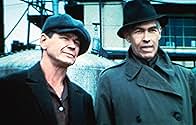


Margaret Blye
- Gayleen Schoonover
- (as Maggie Blye)


- Director
- Writers
- All cast & crew
- Production, box office & more at IMDbPro
7.213.3K
1
2
3
4
5
6
7
8
9
10
Featured reviews
The Mysterious Street Fighter
During the Great Depression, the mysterious drifter Chaney (Charles Bronson) befriends the promoter of illegal street fights Speed (James Coburn) and they go to New Orleans to make money fighting on the streets. Speed is welcomed by his mistress Gayleen Schoonover (Maggie Blye) and invites his former partner Poe (Strother Martin) to team-up with them. Meanwhile Chaney has a love affair with the local Lucy Simpson (Jill Ireland). Speed has a huge debt with the dangerous loan shark Doty (Bruce Glover) and borrows money to promote the fight of Chaney and the local champion Jim Henry (Robert Tessier), who is managed by the also promoter (Michael Mcguire). Casey wins the fight, they make a lot of money but Speed is an addicted gambler and loses his share in the dice table. But Doty wants his money back and Speed's only chance is Chaney accepts to bet his own money that he is saving and fight a winner that Gandil brought from Chicago. Will he accept the challenge?
"Hard Times" is a good film by Walter Hill with the reconstitution of the period of the Great Depression in New Orleans. Charles Bronson and James Coburn have top-notch performances in the role of a mysterious street fighter and a promoter of illegal fights respectively. The character Chaney is not developed and his origins and plans are not disclosed. Did he learn to fight in the prison? The question is not answered and the viewer only knows that he is an outstanding street fighter and loyal friend. My vote is seven.
Title (Brazil): "Lutador de Rua" ("Street Fighter")
"Hard Times" is a good film by Walter Hill with the reconstitution of the period of the Great Depression in New Orleans. Charles Bronson and James Coburn have top-notch performances in the role of a mysterious street fighter and a promoter of illegal fights respectively. The character Chaney is not developed and his origins and plans are not disclosed. Did he learn to fight in the prison? The question is not answered and the viewer only knows that he is an outstanding street fighter and loyal friend. My vote is seven.
Title (Brazil): "Lutador de Rua" ("Street Fighter")
This film n Charles Bronson sure was something man.
I first saw this when i was a kid in the late 80s on a vhs. Had heard a lot about this movie from my grandfather and was dying to revisit this film for a long time.
Revisited it few days back.
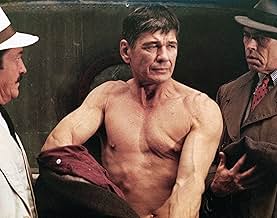
To see Bronson in such a remarkable physical condition is truly inspiring. He was about 54 that time.
The film has a western n country feel to it, soothing n without the hustle and bustle. The music too is simple.
A man named Chaney (Charles Bronson) arrives somewhere in Louisiana during the Great Depression. We don't kno whether he is a hobo, an ex convict, a deserter or an asylum seeker but he sure is a freighthopper n a very good fighter.
He comes upon a street fighting competition n after observing a bare knuckled fight, he approaches the manager (James Coburn) of the losing fighter n asks the manager to set a fight for him but cautions the manager that he needs only enough money to fill a few in-betweens before moving on.
Before his first fight the opponent finds our hobo a little too old to be participating in such kinda fights to which our hobo responds to him with his knockout punch.
In one of the competition in the bayou side, our hero is cheated n not given his winning amount.
This one is replicated in Christian Bale's Out of Furnace where Woody Harrelson's character doesn't give the winning amount to Casey Affleck's character.
A bad image of the Southern sportsmanship.
Our hobo gets to fight Jim Henry (Robert Tessier) a well built, grinning, head-butting skinhead.
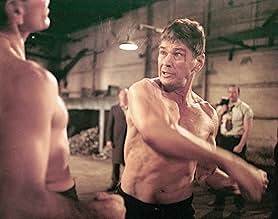
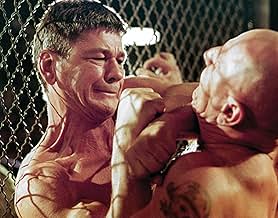
The film has good fights minus the blood.
The elaborate period recreations is top notch.
Inspite of the Great Depression, the debts n the gambling habits, James Coburn's character is seen sitting in his open balcony with his feet upwards.
Now that is something so relaxing n carefree attitude.
Revisited it few days back.
To see Bronson in such a remarkable physical condition is truly inspiring. He was about 54 that time.
The film has a western n country feel to it, soothing n without the hustle and bustle. The music too is simple.
A man named Chaney (Charles Bronson) arrives somewhere in Louisiana during the Great Depression. We don't kno whether he is a hobo, an ex convict, a deserter or an asylum seeker but he sure is a freighthopper n a very good fighter.
He comes upon a street fighting competition n after observing a bare knuckled fight, he approaches the manager (James Coburn) of the losing fighter n asks the manager to set a fight for him but cautions the manager that he needs only enough money to fill a few in-betweens before moving on.
Before his first fight the opponent finds our hobo a little too old to be participating in such kinda fights to which our hobo responds to him with his knockout punch.
In one of the competition in the bayou side, our hero is cheated n not given his winning amount.
This one is replicated in Christian Bale's Out of Furnace where Woody Harrelson's character doesn't give the winning amount to Casey Affleck's character.
A bad image of the Southern sportsmanship.
Our hobo gets to fight Jim Henry (Robert Tessier) a well built, grinning, head-butting skinhead.
The film has good fights minus the blood.
The elaborate period recreations is top notch.
Inspite of the Great Depression, the debts n the gambling habits, James Coburn's character is seen sitting in his open balcony with his feet upwards.
Now that is something so relaxing n carefree attitude.
The Original Fight Club? More In-Between
With this, his first directing job, Walter Hill showed his tendency for archetypal characters (see the later "The Driver" - where the characters didn't even have proper names - and, of course, "The Warriors"). Here, Bronson is 'The Fighter'...Coburn is 'The Hustler'...Martin is 'The Addict-Medic'...and so forth. Bronson's final opponent is simply named 'Street' while the big guy who damages The Hustler's automobile with a big hammer is just called 'Hammerman.' They all present striking, impressive figures; you don't easily forget any of them. They stride or shuffle through a page of history, in this case Depression-era New Orleans, nicely atmospheric as shown here. Times are hard. People need to be hard, as well. One way to make good money is in pick up fights, street fights in warehouses, on docks or, in one case of rich atmosphere, in the bayou.
Chaney, aka The Fighter, as played by Bronson, true to director Hill's method of archetypes, first appears on a slow moving train from places unknown. We never learn anything of his past history, even though there's about 50 years worth there. We learn only of his incredible hitting ability in the current time frame of the story's progression. In a way, Bronson was born to play this role: he's certainly not a young man here but he looks so tough we have no trouble believing he can wipe out men 20 years his junior. With the archetype of The Fighter, the story plays out like some Depression times fable, the tale of a mystery man or warrior arrived in a city to astonish all the onlookers with his formidable fighting abilities. The fights themselves are quite memorable; the viewer has the good fortune to witness these with the shouting hordes of betting men from the safety of a couch at home. We're a part of the spectacle, a guilty participant in a brutal spectator sport, a much more gritty version of modern boxing, and we wouldn't have it any other way.
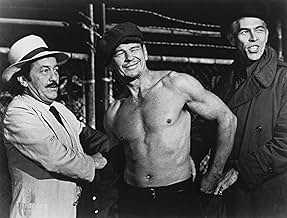
The rest of the cast is super: Coburn was never better as Speed 'The Hustler' and Chaney's front-man/manager. It's mostly through him that we hear all the phrases and quips common to those places & times, and Coburn delivers them all with a gusto & panache few are capable of. You really believe he was born as the 19th century was ending, grew up in the twenties and adjusted to the Depression accordingly. You'll always remember his retorts to the bayou residents and his last insult about fish to Gandil, the bigshot. Speed and Chaney need each other and their relationship is another strong point; Speed is all about the money, sure, but you sense he has a strong admiration for Bronson's power and quiet nobility (this is confirmed at the end). As Poe, Strother Martin created & added another indelible character to the long list on his resume. Other actors would've been saddled with some of the odd dialog he has to deliver, but he just breezes through it like a song. Glover (Crispin's dad) is also very good as a loan shark, as is McGuire as the rich Gandil. Mention should also be made of the top two fighters (Tessier & Dimitri). The film needed characters who could pose a threat to Chaney and these two looked just as tough. Now if only Chaney would explain more about those 'in-betweens'... but he doesn't say much.
Chaney, aka The Fighter, as played by Bronson, true to director Hill's method of archetypes, first appears on a slow moving train from places unknown. We never learn anything of his past history, even though there's about 50 years worth there. We learn only of his incredible hitting ability in the current time frame of the story's progression. In a way, Bronson was born to play this role: he's certainly not a young man here but he looks so tough we have no trouble believing he can wipe out men 20 years his junior. With the archetype of The Fighter, the story plays out like some Depression times fable, the tale of a mystery man or warrior arrived in a city to astonish all the onlookers with his formidable fighting abilities. The fights themselves are quite memorable; the viewer has the good fortune to witness these with the shouting hordes of betting men from the safety of a couch at home. We're a part of the spectacle, a guilty participant in a brutal spectator sport, a much more gritty version of modern boxing, and we wouldn't have it any other way.
The rest of the cast is super: Coburn was never better as Speed 'The Hustler' and Chaney's front-man/manager. It's mostly through him that we hear all the phrases and quips common to those places & times, and Coburn delivers them all with a gusto & panache few are capable of. You really believe he was born as the 19th century was ending, grew up in the twenties and adjusted to the Depression accordingly. You'll always remember his retorts to the bayou residents and his last insult about fish to Gandil, the bigshot. Speed and Chaney need each other and their relationship is another strong point; Speed is all about the money, sure, but you sense he has a strong admiration for Bronson's power and quiet nobility (this is confirmed at the end). As Poe, Strother Martin created & added another indelible character to the long list on his resume. Other actors would've been saddled with some of the odd dialog he has to deliver, but he just breezes through it like a song. Glover (Crispin's dad) is also very good as a loan shark, as is McGuire as the rich Gandil. Mention should also be made of the top two fighters (Tessier & Dimitri). The film needed characters who could pose a threat to Chaney and these two looked just as tough. Now if only Chaney would explain more about those 'in-betweens'... but he doesn't say much.
Bronson plays "The Streetfighter" during the Depression in New Orleans
"Hard Times" was Walter Hill's 1975 directorial debut. He also wrote the screenplay. His preferred (more accurate and better) title was "The Streetfighter," as it was/is known in Europe. Hill went on to do more popular films like "The Warriors" (1979) and "The Long Riders" (1980). The reason I was interested in checking out "Hard Times" is because it had garnered a bit of a cult reputation over the years (although not as cult-ish as "The Warriors").
THE PLOT: Charles Bronson plays a poor drifter/loner, Chaney, during the Depression who travels by boxcar to New Orleans. He spies an illegal bare-knuckle fight in a warehouse and offers his fighting talents to a fast-talking gambler, Speed (James Coburn). Chaney proves himself a formidable and profitable fighter, but Speed can't hold on to money because of his gambling addiction and is in constant trouble with the mob.
One thing that's amazing is that Bronson was 53 freakin' years-old when the film was made, yet physically looks better than most guys half that age. Bronson's beautiful wife, Jill Ireland, plays his love interest (as usual) and was 39 years old at the time.
Although very little is revealed in the film about Chaney's past (we know he had experience as a coal miner), it becomes fairly certain that he had a lot of experience with bare knuckle fighting. We know this because he is supremely confident of his skills despite his age. Chaney is not big or ultra-muscular, but he's fearless, calmly self-controlled, doesn't bleed easy and expertly knows how to READ other fighters. Chaney's weakness is that he's a loner and doesn't talk much, hence he NEEDS Speed to do the talking' for him and set up matches in order to make money from his uncommon skills.
I first saw "Hard Times" two years ago and thought it was decent, but I didn't quite get the 'great cult film' hoopla. Perhaps I wasn't prepared for the ugly/dirty Depression era sets and New Orleans locations; or maybe I just wasn't in the mood for a fight film. I just saw it again, however, and appreciate it more.
"Hard Times" has numerous memorable scenes, lines and characters. I was entertained throughout its 90 minute runtime -- grinning, frequently busting out laughing and even clapping (huh?). Speaking of the runtime, I love it when pictures aren't needlessly overlong.
Here's one sample of some of the great dialogue: Chaney's date asks him what he does for a living. Chaney simply responds that he makes money by knocking people down. She mockingly asks, "What does it feel like to knock somebody down?" He brilliantly replies, "It makes me feel a hell of a lot better than it does him." Although Chaney is depicted as a likable, honorable, bold and compassionate person, his downfall is that he is unable to make long-term commitments, preferring to be "free" and mysterious. ***SPOILER ALERT! -- THE REMAINDER OF THIS PARAGRAPH AND THE NEXT TWO*** Because of this flaw he ultimately loses his beautiful girl to someone else. He then leaves New Orleans as mysteriously as he came, albeit now a streetfighting legend and carrying a lot of cash.
The ending leaves many questions to ponder: What prompts Chaney to change his mind and try to save Speed by taking on an expert fighter from Chicago? Didn't Speed dig his own pit? Chaney himself angrily told Speed that he didn't owe him anything. Perhaps, as Chaney laid on his bed under the ceiling fan in his dump of an apartment, he realized that maybe he DID owe Speed for granting him the opportunity to utilize his talents and make money. In other words, without Speed he wouldn't have had his success. Perhaps he decided he wanted to make even MORE money in one final fight before leaving New Orleans. Possibly, it dawned on him that, although Speed is certainly to blame for his own problems, Chaney realized that he had fallen into his OWN-dug pits in the past and needed someone to help him get out. Or maybe he realized that, in all the world, he had less friends than can be counted on three fingers and felt it was his duty to help Speed (and Poe) out.
Regardless of his reasons, the ending expertly shows Chaney's loyal and generous character. He may be a man of few words, but he certainly CARED about those connected to him, even if they were severely flawed addicts and con-artists. Heck, he even LOVED his cat!
***END SPOILER***
FINAL WORD: "Hard Times" is worthy of its cult film status. Enjoy.
GRADE: B
THE PLOT: Charles Bronson plays a poor drifter/loner, Chaney, during the Depression who travels by boxcar to New Orleans. He spies an illegal bare-knuckle fight in a warehouse and offers his fighting talents to a fast-talking gambler, Speed (James Coburn). Chaney proves himself a formidable and profitable fighter, but Speed can't hold on to money because of his gambling addiction and is in constant trouble with the mob.
One thing that's amazing is that Bronson was 53 freakin' years-old when the film was made, yet physically looks better than most guys half that age. Bronson's beautiful wife, Jill Ireland, plays his love interest (as usual) and was 39 years old at the time.
Although very little is revealed in the film about Chaney's past (we know he had experience as a coal miner), it becomes fairly certain that he had a lot of experience with bare knuckle fighting. We know this because he is supremely confident of his skills despite his age. Chaney is not big or ultra-muscular, but he's fearless, calmly self-controlled, doesn't bleed easy and expertly knows how to READ other fighters. Chaney's weakness is that he's a loner and doesn't talk much, hence he NEEDS Speed to do the talking' for him and set up matches in order to make money from his uncommon skills.
I first saw "Hard Times" two years ago and thought it was decent, but I didn't quite get the 'great cult film' hoopla. Perhaps I wasn't prepared for the ugly/dirty Depression era sets and New Orleans locations; or maybe I just wasn't in the mood for a fight film. I just saw it again, however, and appreciate it more.
"Hard Times" has numerous memorable scenes, lines and characters. I was entertained throughout its 90 minute runtime -- grinning, frequently busting out laughing and even clapping (huh?). Speaking of the runtime, I love it when pictures aren't needlessly overlong.
Here's one sample of some of the great dialogue: Chaney's date asks him what he does for a living. Chaney simply responds that he makes money by knocking people down. She mockingly asks, "What does it feel like to knock somebody down?" He brilliantly replies, "It makes me feel a hell of a lot better than it does him." Although Chaney is depicted as a likable, honorable, bold and compassionate person, his downfall is that he is unable to make long-term commitments, preferring to be "free" and mysterious. ***SPOILER ALERT! -- THE REMAINDER OF THIS PARAGRAPH AND THE NEXT TWO*** Because of this flaw he ultimately loses his beautiful girl to someone else. He then leaves New Orleans as mysteriously as he came, albeit now a streetfighting legend and carrying a lot of cash.
The ending leaves many questions to ponder: What prompts Chaney to change his mind and try to save Speed by taking on an expert fighter from Chicago? Didn't Speed dig his own pit? Chaney himself angrily told Speed that he didn't owe him anything. Perhaps, as Chaney laid on his bed under the ceiling fan in his dump of an apartment, he realized that maybe he DID owe Speed for granting him the opportunity to utilize his talents and make money. In other words, without Speed he wouldn't have had his success. Perhaps he decided he wanted to make even MORE money in one final fight before leaving New Orleans. Possibly, it dawned on him that, although Speed is certainly to blame for his own problems, Chaney realized that he had fallen into his OWN-dug pits in the past and needed someone to help him get out. Or maybe he realized that, in all the world, he had less friends than can be counted on three fingers and felt it was his duty to help Speed (and Poe) out.
Regardless of his reasons, the ending expertly shows Chaney's loyal and generous character. He may be a man of few words, but he certainly CARED about those connected to him, even if they were severely flawed addicts and con-artists. Heck, he even LOVED his cat!
***END SPOILER***
FINAL WORD: "Hard Times" is worthy of its cult film status. Enjoy.
GRADE: B
Not Only Brilliant, But Honest and Authentic In Every Way
A desperate hobo boxes to make some extra money in the Depression. No love story, no cute little kids, no happy ending, no redemption. Just a hard man doing what he has to in order to survive. But on his terms.
To understand why HARD TIMES is a masterpiece, compare it to other films from around this time.
BONNIE AND CLYDE, THE STING, and PAPER MOON were all massive box office hits, set in the Depression. All three movies "strain" for a sense of desperate characters in a dog-eat-dog world, but every one of them cops out with Hollywood glitz and glamor. Here's giggly Warren Beatty pretending he knows what it's like to be poor. And here's Faye Dunaway, the dead-end girl, wearing scrumptious couture while she robs banks. Here's Robert Redford, the ultimate preppy blonde pretty boy, delicately hobnobbing with down-to-earth "Negroes" and glowing with his own virtue. Here's Ryan O'Neil, tough as nails and a real fighter, but hey, it's okay -- he's got a cute little girl along for the ride! One close up of Charles Bronson's face takes you to a place no other Depression picture dares to go. The ugly violence and the hopelessness in this film are so real that they actually build up the character even more than Bronson's natural authority and physical presence. It's the perfect vehicle for the perfect star.
Bronson is enough -- but there's so much more. James Coburn as the manager Speed, so dishonest yet completely likable and in his own way a real hero. Maggie Blye and Jill Ireland, both sexy and authentic as Depression women -- Jill too sickened by failure to ever love again, Maggie too aware of how short life is to ever let a minute go by without a laugh. Either one of them could wipe the floor with "Bonnie" from Bonnie and Clyde. Strother Martin as Poe, the dope addict cut man who adds his own humor, sadness and resignation to a movie utterly packed to the brim with memorable characters.
This is the most powerful and honest movie ever made about hard times.
To understand why HARD TIMES is a masterpiece, compare it to other films from around this time.
BONNIE AND CLYDE, THE STING, and PAPER MOON were all massive box office hits, set in the Depression. All three movies "strain" for a sense of desperate characters in a dog-eat-dog world, but every one of them cops out with Hollywood glitz and glamor. Here's giggly Warren Beatty pretending he knows what it's like to be poor. And here's Faye Dunaway, the dead-end girl, wearing scrumptious couture while she robs banks. Here's Robert Redford, the ultimate preppy blonde pretty boy, delicately hobnobbing with down-to-earth "Negroes" and glowing with his own virtue. Here's Ryan O'Neil, tough as nails and a real fighter, but hey, it's okay -- he's got a cute little girl along for the ride! One close up of Charles Bronson's face takes you to a place no other Depression picture dares to go. The ugly violence and the hopelessness in this film are so real that they actually build up the character even more than Bronson's natural authority and physical presence. It's the perfect vehicle for the perfect star.
Bronson is enough -- but there's so much more. James Coburn as the manager Speed, so dishonest yet completely likable and in his own way a real hero. Maggie Blye and Jill Ireland, both sexy and authentic as Depression women -- Jill too sickened by failure to ever love again, Maggie too aware of how short life is to ever let a minute go by without a laugh. Either one of them could wipe the floor with "Bonnie" from Bonnie and Clyde. Strother Martin as Poe, the dope addict cut man who adds his own humor, sadness and resignation to a movie utterly packed to the brim with memorable characters.
This is the most powerful and honest movie ever made about hard times.


Did you know
- TriviaThe most grueling filming was the climactic match between Charles Bronson's character and the fighter promoted by Michael McGuire's character. Shooting took more than a week because of the fight's complicated movements. It was filmed in a riverfront warehouse on Tchoupitoulas Street, a very rough area of New Orleans. Bronson and Nick Dimitri spent days squaring off under the hot lights, watched intently by McGuire and his hoods, James Coburn, Strother Martin, and a few dozen cameramen, technicians and crew members. To create the illusion of being a seafood warehouse, several Styrofoam oyster bins were stocked with real, very smelly oyster shells. An attempt to cloak the fumes with a commercial disinfectant made the smell worse.
- GoofsDollar bills Chaney waves around at oyster bar are contemporary currency.
- ConnectionsFeatured in Behind the Action: Stuntmen in the Movies (2002)
- SoundtracksHard Time Blues
(uncredited)
Written by Julius Farmer, Alfred Roberts, Percy Randolph & Ed Stanall
- How long is Hard Times?Powered by Alexa
Details
- Release date
- Country of origin
- Official site
- Language
- Also known as
- Street Fighter
- Filming locations
- Production companies
- See more company credits at IMDbPro
Box office
- Budget
- $2,700,000 (estimated)
Contribute to this page
Suggest an edit or add missing content