IMDb RATING
6.8/10
7.8K
YOUR RATING


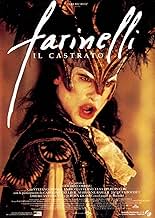
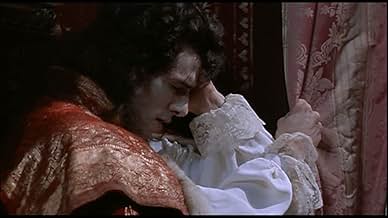
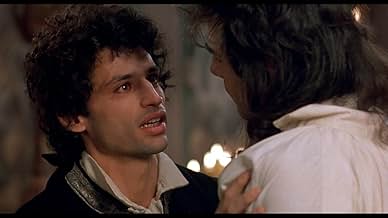
The story of castrato opera singer Carlo Broschi, who enthralled 18th-century European audiences under his stage name Farinelli.The story of castrato opera singer Carlo Broschi, who enthralled 18th-century European audiences under his stage name Farinelli.The story of castrato opera singer Carlo Broschi, who enthralled 18th-century European audiences under his stage name Farinelli.
- Director
- Writers
- Stars
- Nominated for 1 Oscar
- 6 wins & 4 nominations total


- Director
- Writers
- All cast & crew
- Production, box office & more at IMDbPro
6.87.7K
1
2
3
4
5
6
7
8
9
10
Featured reviews
Castrated story but enjoyable
I think some long periods of Farinelli's life are left out. The film is too focused on his love life, making it definitely a female movie. There were a lot of other aspects to explore. We also get to see the obligatory scenes of audiences being mesmerized by opera, as if they were some island natives and not opera house regulars. Nevertheless, being a high budget movie, it has great costumes and beautiful scenery. Most of all you get the chance to explore the divine music of Haendel.
Wonderful movie but has many inaccuracies
I know I'm being sort of anal by mentioning this, but this movie, as beautiful and enchanting as it is, has many inaccuracies.
Farinelli, in addition to his handsome features and heavenly voice, was also a very humble person and hardly displayed the raucous behavior of a "rock star" as depicted in the film.
Second, the singer was known as disinterested in sex, thus I have no idea why the sex scenes in the film were included. True, there WERE castrati who did engage in pleasures of the flesh, but Farinelli was NOT one of them, or at least there are no historical records suggesting so.
All that aside, this movie was a lavishly done production and a must-see!
Farinelli, in addition to his handsome features and heavenly voice, was also a very humble person and hardly displayed the raucous behavior of a "rock star" as depicted in the film.
Second, the singer was known as disinterested in sex, thus I have no idea why the sex scenes in the film were included. True, there WERE castrati who did engage in pleasures of the flesh, but Farinelli was NOT one of them, or at least there are no historical records suggesting so.
All that aside, this movie was a lavishly done production and a must-see!
Good yarn, great music, rotten history
Farinelli is not nearly as awful as I feared it would be. It's similar in many ways to Amadeus. Like Amadeus, it has glorious music beautifully performed. Like Amadeus, it tells a good (if melodramatic) story. Like Amadeus, it has a marvelous period feel. Like Amadeus, the characters in this story have the names and occupations of real people, but their portrayal on the screen is not even caricature: a caricature necessarily starts with something recognizeable.
Farinelli was famous in history not merely for a phenomenal voice and outstanding musicianship and musical connoisseurship, but for poise, dignity, and perfect-pitch judgement of human character; he is portrayed throughout as a hysteric. Handel is shown as a pompous, bullying nervous wreck verging on the psychotic, quite at variance with all reliable accounts of his humor, sturdiness, practicality, and reputation for scrupulous probity toward his musicians and singers.
Handel could not have said, to Farinelli, during the latter's first sensational season with the Opera of the Nobility, that he would never write another opera, and not just because Handel was no faux-Freudian opera queen: Lady History inconveniently discloses that after that 1733-34 season Handel composed and presented Ariodante, Alcina, Atalanta, Giustino, Arminio, Berenice, Faramondo, Serse, and Imeneo; his last opera, Deidamia, went unperformed, but several in that list were significant successes, and some were revived more than once.
The two rival opera companies in London went down the drain more or less simultaneously, notwithstanding the enormous draw of Farinelli for the Nobility company, and notwithstanding the high quality of the music of its principal composers (Porpora, Hasse, undervalued today) and the stupendous quality of Handel's music (also undervalued); rather, the people with the money to afford the (by our standards) enormous ticket prices had simply lost interest.
One commentator here is skeptical about many "period" details. And rightly: for starters, that's not the way boys were castrated, but you don't need to know the truth. Relax, just enjoy the music and the costumes and the actors chewing the scenery.
Farinelli was famous in history not merely for a phenomenal voice and outstanding musicianship and musical connoisseurship, but for poise, dignity, and perfect-pitch judgement of human character; he is portrayed throughout as a hysteric. Handel is shown as a pompous, bullying nervous wreck verging on the psychotic, quite at variance with all reliable accounts of his humor, sturdiness, practicality, and reputation for scrupulous probity toward his musicians and singers.
Handel could not have said, to Farinelli, during the latter's first sensational season with the Opera of the Nobility, that he would never write another opera, and not just because Handel was no faux-Freudian opera queen: Lady History inconveniently discloses that after that 1733-34 season Handel composed and presented Ariodante, Alcina, Atalanta, Giustino, Arminio, Berenice, Faramondo, Serse, and Imeneo; his last opera, Deidamia, went unperformed, but several in that list were significant successes, and some were revived more than once.
The two rival opera companies in London went down the drain more or less simultaneously, notwithstanding the enormous draw of Farinelli for the Nobility company, and notwithstanding the high quality of the music of its principal composers (Porpora, Hasse, undervalued today) and the stupendous quality of Handel's music (also undervalued); rather, the people with the money to afford the (by our standards) enormous ticket prices had simply lost interest.
One commentator here is skeptical about many "period" details. And rightly: for starters, that's not the way boys were castrated, but you don't need to know the truth. Relax, just enjoy the music and the costumes and the actors chewing the scenery.
Fascinating World of Castrati Overshadowed by Brotherly Co-Dependency
Something seems strangely amiss with what could have been a fascinating historical glimpse into the world of the castrati (castrated male opera singers) in 18th-century Europe. This 1994 Belgian film is an opulent production full of stunning costumes and set decorations, but director Gerard Corbiau is far more focused on the co-dependency between two real-life brothers, Carlo Broschi, the swoon-worthy castrato known to the world as Farinelli, and his marginally talented composer brother Riccardo. Although there are glimpses of the castration that occurred when Carlo was ten, the narrative deals very little with the psychological anguish of this act, instead showing extravagantly vainglorious scenes of Farinelli's impact on audiences at the time. It's as if the story structure of the Baroque operas written at that time took over the sensibility of the screenplay and trivialized the human complexities into exaggerated melodrama.
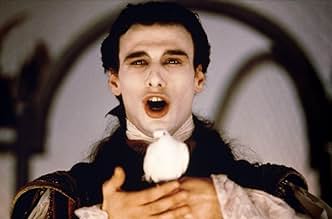
Despite a valiant effort by Stefano Dionisi in the title role, Farinelli is portrayed as a moody, self-centered egotist rather than a misunderstood artist. Compounding the problem is the fact that his masculine speaking voice is at odds with his ethereal singing voice (obviously a creative decision so as not to alienate the general audience from the character's plight). Moreover, the computerized melding of countertenor Derek Lee Ragin and soprano Ewa Mallas Godlewska into Farinelli's voice simply does not sync up well with Dionisi's lip and throat movements. In other words, you simply don't believe it's Dionisi's voice coming out of him. When the film finally takes flight in the last third of the film, it's because the focus has shifted to the competitive, intense relationship between Farinelli and the great composer of the age, Handel. Jeroen Krabbe - familiar to American audiences for his nasty turn as Barbra Streisand's condescending husband in "The Prince of Tides" - plays Handel with such passionate fury that I wish the film was more about his character. This sequence climaxes with the film's musical highlight, a trio of wonderful, truly classic arias from Handel's "Rinaldo".
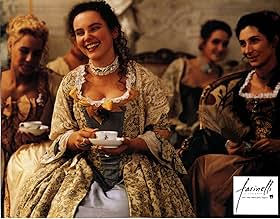
Unfortunately, the remaining musical performances are not nearly as absorbing and rather repetitive. The film again flails toward the end when we are given a rather silly scene involving a solar eclipse and gratuitous nudity with a ménage a trois among Farinelli, Riccardo and Alexandra, the woman who is - quite literally - between them. The remaining performances are fine with Enrico LoVerso conveying his Salieri-like inferiority with appropriate fervor, Elsa Zylberstein beguiling as Alexandra and Caroline Cellier doing a fine Jeanne Moreau impersonation as the jaded Margareth Hunter. Overall it's still a relatively disappointing movie saved by Handel's musical genius. Except for a few trailers, there are no extras with the DVD. For those interested in the world of the castrati in more penetrating detail, I suggest reading Anne Rice's 1982 novel, "Cry to Heaven", and the "Rinaldo" arias are better served by countertenor David Daniels and mezzo-soprano Cecilia Bartoli on their 2002 cast recording conducted by Christopher Hogwood.
Despite a valiant effort by Stefano Dionisi in the title role, Farinelli is portrayed as a moody, self-centered egotist rather than a misunderstood artist. Compounding the problem is the fact that his masculine speaking voice is at odds with his ethereal singing voice (obviously a creative decision so as not to alienate the general audience from the character's plight). Moreover, the computerized melding of countertenor Derek Lee Ragin and soprano Ewa Mallas Godlewska into Farinelli's voice simply does not sync up well with Dionisi's lip and throat movements. In other words, you simply don't believe it's Dionisi's voice coming out of him. When the film finally takes flight in the last third of the film, it's because the focus has shifted to the competitive, intense relationship between Farinelli and the great composer of the age, Handel. Jeroen Krabbe - familiar to American audiences for his nasty turn as Barbra Streisand's condescending husband in "The Prince of Tides" - plays Handel with such passionate fury that I wish the film was more about his character. This sequence climaxes with the film's musical highlight, a trio of wonderful, truly classic arias from Handel's "Rinaldo".
Unfortunately, the remaining musical performances are not nearly as absorbing and rather repetitive. The film again flails toward the end when we are given a rather silly scene involving a solar eclipse and gratuitous nudity with a ménage a trois among Farinelli, Riccardo and Alexandra, the woman who is - quite literally - between them. The remaining performances are fine with Enrico LoVerso conveying his Salieri-like inferiority with appropriate fervor, Elsa Zylberstein beguiling as Alexandra and Caroline Cellier doing a fine Jeanne Moreau impersonation as the jaded Margareth Hunter. Overall it's still a relatively disappointing movie saved by Handel's musical genius. Except for a few trailers, there are no extras with the DVD. For those interested in the world of the castrati in more penetrating detail, I suggest reading Anne Rice's 1982 novel, "Cry to Heaven", and the "Rinaldo" arias are better served by countertenor David Daniels and mezzo-soprano Cecilia Bartoli on their 2002 cast recording conducted by Christopher Hogwood.
Worth seeing and listening to, but somewhat thin story.
Visually and sound-wise this is a beautiful film that can be recommended. The flash-backs when Ricardo looks back on childhood are good, showing the tight links between the two brothers. But, one is waiting through the whole film for the continuation of the early scene where Carlo (Farinelli) does not try to prevent the soldiers from taking Ricardo away by force. There is too much focus on the brothers' conquests and maybe too little on the singing. But the songs that we hear are beautiful and when one knows the amount of work that has been put into the reconstruction of Farinelli's unique voice (covering one octave more than any singer alive today) one should probably not complain.


Did you know
- TriviaBoth male and female voices were combined to create the sound of Farinelli's singing voice. The male voice was Derek Lee Ragin, a British countertenor and the female Ewa Malas-Godlewska, a Polish mezzo-soprano.
- GoofsLIGHTING. In scenes that show stage lights and chandeliers, the focus on them is softened, but it can still be seen that the "lamps" and "candles" are in fact far too steady, and too smokeless, to be or to contain live flame. Gaslight was not brought into theatres until just after 1800 (in England), and limelight -- with real quicklime -- around 1820. Also, some outdoor lighting -- outside palaces, etc. -- is obviously too bright, blue- or green-shaded, smokeless, and sharp-edged to come from a bonfire.
- Quotes
Carlo Broschi: I admire your nerve, madame, in daring to defy Handel.
Countess Mauer: Women are very strong, signor Farinelli. Men's weaknesses make it necessary.
- ConnectionsFeatured in The 52nd Annual Golden Globe Awards (1995)
- SoundtracksOmbra fedele anch'io
[Dario's Solo: Act II, Scene XI, from Opera "Idaspe"]
Composed by Riccardo Broschi, Libretto by G.P. Candi and Domenico Lalli (1730, Venice)
Vocals performed by Ewa Malas-Godlewska (Soprano) and Derek Lee Ragin (Countertenor)
- How long is Farinelli?Powered by Alexa
Details
Box office
- Gross US & Canada
- $1,573,411
- Gross worldwide
- $1,600,226
Contribute to this page
Suggest an edit or add missing content