IMDb RATING
6.3/10
1K
YOUR RATING

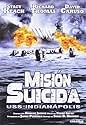
True story of the sinking of the U.S.S. Indianapolis, its crew's struggle to survive the sharks and exposure, and the captain's scape-goat court-martial.True story of the sinking of the U.S.S. Indianapolis, its crew's struggle to survive the sharks and exposure, and the captain's scape-goat court-martial.True story of the sinking of the U.S.S. Indianapolis, its crew's struggle to survive the sharks and exposure, and the captain's scape-goat court-martial.



Joseph Carberry
- Spilner
- (as Joe Carberry)


- Director
- Writer
- All cast & crew
- Production, box office & more at IMDbPro
6.31K
1
2
3
4
5
6
7
8
9
10
Featured reviews
Accurate, unfortunately.
An accurate portrayal of the sinking of USS Indianapolis and worthwhile for telling a tale of survival under the most desperate conditions which can be imagined. Also the most damning indictment of leadership failure since Tennyson's Charge of the Light Brigade.
It was my misfortune, and that of the US Navy, that I viewed this production less than 3 days before I was to report to RECTRACOMGLAKES to begin what I expected to be my naval career. My confidence in the superiors appointed over me was shattered, particularly in Officers O-6 and above who might be reasonably expected not to misplace something as substantial as a heavy cruiser. My service was short, to my regret.
As for the court-martial of CAPT C.B. McVey, the practice of choosing a scapegoat in the aftermath of preventable disaster causing great loss of life appears to be endemic in the USN. Decades later, in the wake of the gun turret explosion aboard USS Iowa, naval investigators fabricated a fantastic tale of 'gay romance run amok' as the cause.
In the near twenty years gone by I hope that things have improved in the Navy. Most, enlisted and officers alike serve with great dedication and professionalism. Unfortunately a few bad apples spoils the barrel.
jHh
It was my misfortune, and that of the US Navy, that I viewed this production less than 3 days before I was to report to RECTRACOMGLAKES to begin what I expected to be my naval career. My confidence in the superiors appointed over me was shattered, particularly in Officers O-6 and above who might be reasonably expected not to misplace something as substantial as a heavy cruiser. My service was short, to my regret.
As for the court-martial of CAPT C.B. McVey, the practice of choosing a scapegoat in the aftermath of preventable disaster causing great loss of life appears to be endemic in the USN. Decades later, in the wake of the gun turret explosion aboard USS Iowa, naval investigators fabricated a fantastic tale of 'gay romance run amok' as the cause.
In the near twenty years gone by I hope that things have improved in the Navy. Most, enlisted and officers alike serve with great dedication and professionalism. Unfortunately a few bad apples spoils the barrel.
jHh
So So movie
I'm glad a movie was made about the sinking of the USS Indianapolis but as usual, Hollywood has to screw it all up and use fictional characters, with the exception of Captain McVay, and fictional incidents. For instance, Richard Thomas's character was called Lieutenant Steven Scott but was based on Dr. Lewis Haynes. Why can't Hollywood just tell the story as it really happened and use real names like they did with Capt. McVay is beyond me.
I saw this movie first before reading the book "In Harms Way" which really gave you insight as to what happened and the negligence on the Navy's part. The Navy failed to give Cpt. McVay the intelligence it had that Japanese subs were in fact lurking along the Peddie route he was taking. A US destroyer had been sunk in the vicinity a week earlier. This is information Navy Commodore James Carter knew about but did not give Capt. McVay, even as the two met prior to the Indy setting sail.
Secondly, Capt. McVay had requested a destroyer escort for his route to Leyte since the Indy did not have any sonar gear and destroyers did, but he did not get one.
When the Indy was struck by 2 torpedoes, several messages of being struck by torpedoes and her sinking and coordinates were in fact picked up by 3 different radio stations on Leyte. Several tugs were dispatched but 7 hours into a 21 hour trip, the tugs were recalled when Commodore Gillette, acting commander of the Phillipine Sea Frontier, learned they had been dispatched without his permission. No explanation was ever given to his reasoning. It also appears that at the time. it was the Navy's protocol to dismiss any messages that couldn't be confirmed as pranks. Commodore never followed up to see if the Indy had arrived as scheduled.
The whole thing was a travesty and a pattern of a Navy that always wants to fix the blame on everyone but itself, just like they did with the USS Iowa explosion. Of all the ships the Navy lost, why was Cpt. McVay the only Captain who was court-martial ed? Of course, Admiral Nimitz and Admiral Spruance were against a court martial and suggested a letter of reprimand however Admiral King, Chief of Naval Operations wanted a court martial and pressed Naval Secretary James Forrestal for one and he agreed. How ironic that Admiral King was the man pressing for a court martial when it was Admiral Kings incompetence that cost the lives of many merchant seamen along the east coast of this country in 1942 by refusing to deal with the growing U-Boat menace and only did so when the shipping companies were going to refuse to sail unless they received Naval escorts.
But Adm. King got his wish and Cpt. McVay was court martial ed and convicted on a charge of failure to zig zag despite a U.S. sub captain and expert on submarine warfare testifying that zig zagging made no difference in his ability to sink a target. Even the Japanese commander of the sub which sank the Indy was brought into testify and also stated he still would've sunk the Indy whether it was zig zagging or not.
This was not the Navy's finest hour though had it not been for a stroke of luck by Lt. Chuck Gwinn, piloting a PV-1. The plane had a loran navigation system but the antenna had broken off. A crewman had tried to make repairs in flight and Lt. Gwinn had gone back to help him. As he was making his way back, he happened to look out the window at the right time and saw the men in the water below otherwise it's most likely that every man in the water would've perished to the elements. Of course this was downplayed in the movie which shows Gwinn's character slipping just kicking back and looking at the side window though it did show what in reality, was a very tricky and one way landing.
I saw this movie first before reading the book "In Harms Way" which really gave you insight as to what happened and the negligence on the Navy's part. The Navy failed to give Cpt. McVay the intelligence it had that Japanese subs were in fact lurking along the Peddie route he was taking. A US destroyer had been sunk in the vicinity a week earlier. This is information Navy Commodore James Carter knew about but did not give Capt. McVay, even as the two met prior to the Indy setting sail.
Secondly, Capt. McVay had requested a destroyer escort for his route to Leyte since the Indy did not have any sonar gear and destroyers did, but he did not get one.
When the Indy was struck by 2 torpedoes, several messages of being struck by torpedoes and her sinking and coordinates were in fact picked up by 3 different radio stations on Leyte. Several tugs were dispatched but 7 hours into a 21 hour trip, the tugs were recalled when Commodore Gillette, acting commander of the Phillipine Sea Frontier, learned they had been dispatched without his permission. No explanation was ever given to his reasoning. It also appears that at the time. it was the Navy's protocol to dismiss any messages that couldn't be confirmed as pranks. Commodore never followed up to see if the Indy had arrived as scheduled.
The whole thing was a travesty and a pattern of a Navy that always wants to fix the blame on everyone but itself, just like they did with the USS Iowa explosion. Of all the ships the Navy lost, why was Cpt. McVay the only Captain who was court-martial ed? Of course, Admiral Nimitz and Admiral Spruance were against a court martial and suggested a letter of reprimand however Admiral King, Chief of Naval Operations wanted a court martial and pressed Naval Secretary James Forrestal for one and he agreed. How ironic that Admiral King was the man pressing for a court martial when it was Admiral Kings incompetence that cost the lives of many merchant seamen along the east coast of this country in 1942 by refusing to deal with the growing U-Boat menace and only did so when the shipping companies were going to refuse to sail unless they received Naval escorts.
But Adm. King got his wish and Cpt. McVay was court martial ed and convicted on a charge of failure to zig zag despite a U.S. sub captain and expert on submarine warfare testifying that zig zagging made no difference in his ability to sink a target. Even the Japanese commander of the sub which sank the Indy was brought into testify and also stated he still would've sunk the Indy whether it was zig zagging or not.
This was not the Navy's finest hour though had it not been for a stroke of luck by Lt. Chuck Gwinn, piloting a PV-1. The plane had a loran navigation system but the antenna had broken off. A crewman had tried to make repairs in flight and Lt. Gwinn had gone back to help him. As he was making his way back, he happened to look out the window at the right time and saw the men in the water below otherwise it's most likely that every man in the water would've perished to the elements. Of course this was downplayed in the movie which shows Gwinn's character slipping just kicking back and looking at the side window though it did show what in reality, was a very tricky and one way landing.
Good job, shows horrors of war but not in graphic way
The movie starts with a 15-year reunion of the men who served on the U.S.S. Indianapolis. Actually, many of the men are not there, and you will find out why when you watch. But the hero of this ship is Captain Charles McVay, and those who served under him cheer as he enters the room.
During World War II, the Indianapolis had an important mission. The sailors wonder why that box is so heavily guarded. There is lots of speculation; some claim it is special toilet paper for MacArthur. Down below, a high-ranking officer is informing McVay of something he seems to already know but won't confirm. That box contains the most deadly weapon ever developed. Those of us who know the outcome of World War II know exactly what that means.
There seems to be some disagreement on how best to avoid an attack by a Japanese sub. One sailor tells his superiors they are wrong in not trying to deceive the Japanese. Perhaps they should have listened to him, but he is sternly reminded who is in charge.
The Japanese are shown getting ready to attack, and perhaps the outcome of the war would have been somewhat different if they had succeeded. At this point, the sub commander doesn't believe an attack can succeed.
But the second time ...
In all the chaos, it's hard to believe anyone would have known what to do. Capt. McVay's attitude seems to be that abandoning ship would be the coward's way out. We know he survives to see the 15-year reunion. Eventually, it is clear there is only one course of action.
One would think the men would be rescued quickly, but there are procedures to keep the Japanese from knowing too much, and that may have contributed to a delay. So the men have more of an adventure than we might have expected.
This movie shows both sides of what it means to fight in a war. Stacy Keach gives a very strong performance as a leader who is tough but friendly and well-liked. How could anyone believe he was anything but a hero? But if you watch you'll find out some think he was not. There are plenty of courageous and even heroic actions, particularly those of the ship's doctor played by Richard Thomas. And then there are the men who need a leader to keep them from following their selfish desires. There are also cowards; you can't call them anything else. But would we do any better in such a situation?
Compared to "Saving Private Ryan", this would be a fireworks show on the Fourth of July gone awry followed by a dangerous kids' adventure at sea. It's hard to watch--this is war--but not graphic.
The Japanese seem cold and unfeeling, as one might expect. That's the image we have of them. But Hashimoto, who gave the order to fire on the Indianapolis, is shown to be human after all. He had a duty, and he succeeded. Not every time, but eventually. One scene with him later in the movie is pretty amazing.
This is certainly worth seeing.
During World War II, the Indianapolis had an important mission. The sailors wonder why that box is so heavily guarded. There is lots of speculation; some claim it is special toilet paper for MacArthur. Down below, a high-ranking officer is informing McVay of something he seems to already know but won't confirm. That box contains the most deadly weapon ever developed. Those of us who know the outcome of World War II know exactly what that means.
There seems to be some disagreement on how best to avoid an attack by a Japanese sub. One sailor tells his superiors they are wrong in not trying to deceive the Japanese. Perhaps they should have listened to him, but he is sternly reminded who is in charge.
The Japanese are shown getting ready to attack, and perhaps the outcome of the war would have been somewhat different if they had succeeded. At this point, the sub commander doesn't believe an attack can succeed.
But the second time ...
In all the chaos, it's hard to believe anyone would have known what to do. Capt. McVay's attitude seems to be that abandoning ship would be the coward's way out. We know he survives to see the 15-year reunion. Eventually, it is clear there is only one course of action.
One would think the men would be rescued quickly, but there are procedures to keep the Japanese from knowing too much, and that may have contributed to a delay. So the men have more of an adventure than we might have expected.
This movie shows both sides of what it means to fight in a war. Stacy Keach gives a very strong performance as a leader who is tough but friendly and well-liked. How could anyone believe he was anything but a hero? But if you watch you'll find out some think he was not. There are plenty of courageous and even heroic actions, particularly those of the ship's doctor played by Richard Thomas. And then there are the men who need a leader to keep them from following their selfish desires. There are also cowards; you can't call them anything else. But would we do any better in such a situation?
Compared to "Saving Private Ryan", this would be a fireworks show on the Fourth of July gone awry followed by a dangerous kids' adventure at sea. It's hard to watch--this is war--but not graphic.
The Japanese seem cold and unfeeling, as one might expect. That's the image we have of them. But Hashimoto, who gave the order to fire on the Indianapolis, is shown to be human after all. He had a duty, and he succeeded. Not every time, but eventually. One scene with him later in the movie is pretty amazing.
This is certainly worth seeing.
Horrible ordeal, great movie!
Other than a mention about the mission of the Indianapolis in Spielberg's "Jaws", many people have never heard of the sacrifice made by the men who delivered the atom bomb, before it's final, inevitable destination in Hiroshima. The horrors of war are of course often portrayed in film, but man vs. nature is a rarer occurrence in war movie history. The scapegoat portrayal of Keech's character should remind us all that being in command is quite often more of a burden, than an honour. War history buffs should check out this flick, as it is well worth your while.
With more attention to true details, this could have been an Oscar-quality film!
This is my first review, but I feel I must say something. Having just finished reading Doug Stanton's In Harm's Way, I see important opportunities missed in this film. There were true details omitted - probably for time's sake - that would have made this a more memorable film. For example, when the plane approaches a group of survivors, the crew seriously wonders who they are because their faces are smudged black from the huge oil slick that we never see in the film. As a test, a crew member calls out, "What city do the Dodgers play in?" A feeble voice answers, "Brooklyn." Wouldn't that have been a vintage, human touch?
Dr. Lewis Haynes, incorrectly named as mentioned by other reviewers, had a powerful but ignored role in helping the men to heal psychologically by explaining at reunions why so many turned on each other and acted like barbarians in the water. Most had been unaware that they were witnessing not the moral failings of their friends, but instead the effects of salt water ingestion, exposure to extreme heat, continuous lowering of body temperature, horrific fear, etc., on both body and mind. Add to that survivors' guilt and the Navy's total lack of caring. At that time nobody knew of PTSD.
Thus I mourn for what could have been done in this film. The one bright spot was Stacy Keach's acting. He was masterful and at his finest.
I believe we owe it to those who survived as well as to those who perished, and to their loved ones, to tell this story again on film, and GET IT RIGHT!
Dr. Lewis Haynes, incorrectly named as mentioned by other reviewers, had a powerful but ignored role in helping the men to heal psychologically by explaining at reunions why so many turned on each other and acted like barbarians in the water. Most had been unaware that they were witnessing not the moral failings of their friends, but instead the effects of salt water ingestion, exposure to extreme heat, continuous lowering of body temperature, horrific fear, etc., on both body and mind. Add to that survivors' guilt and the Navy's total lack of caring. At that time nobody knew of PTSD.
Thus I mourn for what could have been done in this film. The one bright spot was Stacy Keach's acting. He was masterful and at his finest.
I believe we owe it to those who survived as well as to those who perished, and to their loved ones, to tell this story again on film, and GET IT RIGHT!


Did you know
- TriviaThis is the very mission that Quint (Robert Shaw) talked about being a member of in a famous scene from Jaws (1975).
- GoofsIn the scene where a seaplane lands at sea to rescue the crew, the plane used is a Grumman Albatross. However, this aircraft was not put into service until 1949. The real life aircraft that rescued the crew, was a Catalina PBY.
- Quotes
Hashimoto: Captain. You are a man who believes in fate?
Capt. Charles Butler McVay: No. I'm a man who was trying to accept it.
Hashimoto: It is not easy being a survivor.
- Crazy credits(Contents of Title Card 1) Following the U.S.S. Indianapolis tragedy the U.S. Navy discontinued its policy of not reporting arriving non-combat ships.
- ConnectionsEdited from Enola Gay: The Men, the Mission, the Atomic Bomb (1980)
Details
Contribute to this page
Suggest an edit or add missing content