

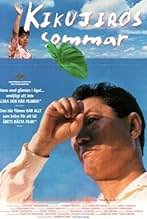
A young, naive boy sets out alone on the road to find his wayward mother. Soon he finds an unlikely protector in a crotchety man and the two have a series of unexpected adventures along the ... Read allA young, naive boy sets out alone on the road to find his wayward mother. Soon he finds an unlikely protector in a crotchety man and the two have a series of unexpected adventures along the way.A young, naive boy sets out alone on the road to find his wayward mother. Soon he finds an unlikely protector in a crotchety man and the two have a series of unexpected adventures along the way.
- Awards
- 4 wins & 4 nominations total
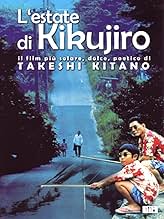
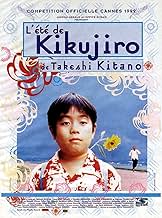

Takeshi Kitano
- Kikujiro
- (as Beat Takeshi)

The Great Gidayû
- Biker
- (as Gurêto Gidayû)


Beat Kiyoshi
- Man at Bus Stop
- (as Bîto Kiyoshi)
Yôji Tanaka
- Yakuza Henchman
- (as Yoji Tanaka)
- Director
- Writer
- All cast & crew
- Production, box office & more at IMDbPro
7.723.3K
1
2
3
4
5
6
7
8
9
10
Featured reviews
Funny, subtle storytelling
Kikujiro is a movie with beautiful calmness that's a great diversity from the fast cut movies today. Takeshi Kitano proofs once and for all, that he's a master filmmaker that will forever be remembered. And even though he dislikes the fame that goes along with his more successful movies (Zatoichi), it's a shame he doesn't get more recognition for his films.
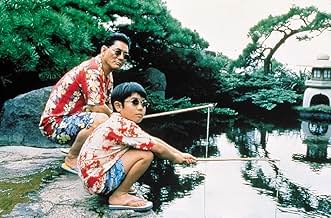
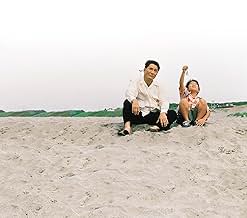
Kikujiro no natsu tells the story of a kid who decides to visit his mother that he never met. Through odd circumstances kikujiro (Kitano), though absolutely unqualified, is forced to lead the kid. But as we see only moments later the boy would be better off alone, as kikujiro's fondness of gambling and (very amusing) way to treat people makes the journey a funny and quite touching odyssee.
What stands out in this movie is the simple comedy. It shows Kitano started off as a comedian, and his dialogue and acting made me almost spill my milk more than a few times. This is certainly one of his best. A great film for a quiet, rainy sunday afternoon.
Kikujiro no natsu tells the story of a kid who decides to visit his mother that he never met. Through odd circumstances kikujiro (Kitano), though absolutely unqualified, is forced to lead the kid. But as we see only moments later the boy would be better off alone, as kikujiro's fondness of gambling and (very amusing) way to treat people makes the journey a funny and quite touching odyssee.
What stands out in this movie is the simple comedy. It shows Kitano started off as a comedian, and his dialogue and acting made me almost spill my milk more than a few times. This is certainly one of his best. A great film for a quiet, rainy sunday afternoon.
Takeshi Kitano's most underrated movie.
Western audiences basically only know Beat Takeshi for his tough guy persona. Japanese audiences have seen many sides to him for a long time, and probably regard him as a comedian more than anything else. Maybe this is the reason why 'Kikujiro' isn't all that well known. Takeshi wrote and directed this movie as a follow up to his most celebrated work 'Hana-bi', but as it isn't a yakuza crime drama, it seems to have been largely overlooked. And that's a damn shame, because it's a very good movie, and anyone who enjoys Kitano's work will enjoy it. On paper the plot looks very Disney-like (grumpy old coot hits the road with an unhappy kid), but hey, this is Beat Takeshi, so what he does with it is always original and surprising. Much of the movie is playful, but then much of 'Sonatine' was too, only 'Kikujiro' doesn't mix that up with the orgy of violence you might expect from watching Kitano's better known movies. However it does have some dark moments that you would NEVER see in a Hollywood film dealing with similar "heart warming" subject matter, especially the "scary man" sequence featuring Akaji Maro, an actor you might recognise from Tarantino's 'Kill Bill'. I enjoyed 'Kikujiro' a lot, and the more Kitano movies I see, the more I think he is one of the most underrated directors working today.
Beat Takeshi's Audacious, Edgy and Heartwarming Road Movie
In the title role of this highly original 1999 road movie, Beat Takeshi - with his twitching eye and bow-legged shuffle - looks and acts like a cross between Mickey Rourke and Harvey Keitel with a heavy dose of Walter Matthau's sourpuss demeanor (circa "The Bad News Bears") for good measure. He creates a truly memorable character - cynically profane, unapologetically insulting, childishly manipulative and somehow likable. As the director and screenwriter of said film, Takeshi Kitano - the same guy - has fashioned something quite unique from a tired premise - a boy's search for his mother and the gruff man who begrudgingly helps find her. What could have been a predictable and sentimental wallow, especially with the indiscriminate use of angels as a pervasive symbol, is instead an idiosyncratic, emotionally adroit film that sometimes simmers on the cusp of violence.
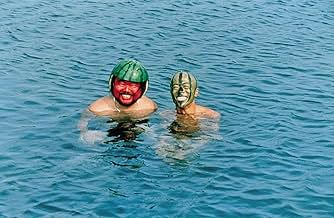
Yet it becomes ultimately affecting almost in spite of itself. In fact, Kitano does such a resolutely offbeat job that at certain times, the film reminds me of the narrative ellipses and low steady shots that were the trademark of Yasujiro Ozu's home dramas, intermingled with a surprisingly intense Quentin Tarantino-like, in-your-face edginess. The protagonist of the film is really the latch-key nine-year old, Masao, who is on a quest to find the mother whom his grandmother says is "away working". With his sad eyes and cherubic face, Yusuke Sekiguchi is perfectly cast as Masao providing the moral compass for the story. Whether he is running with his arms flailing or forlornly playing soccer by himself, he is poignant without being saccharine and completely natural. It is Masao's scrapbook that provides the framework for the film lending each chapter a descriptive title. Every chapter has a distinct character that is, in various turns, playful, hilarious, disturbing, surreal and heartbreaking. Case in point: Kitano is not afraid to use a child molester as first an uncomfortable source of black humor and then as the subject of Masao's nightmare. My favorite scenes come toward the end when Kikujiro organizes a motley crew of misfits to play games with Masao and have them masquerade as Indians, aliens, marine life and even watermelons. The variety in tone between chapters makes for unexpected tonal shifts, but somehow it works and adds to the greater context of the story.
That Kitano is able to manage a consistent film-making style with a strong visual sense is a credit to the talent behind the camera - not only Kitano's direction, script and film editing but also his artwork showcased throughout the movie, Katsumi Yanagishima's sharply rendered cinematography and Joe Hisaishi's evocative Windham Hill-like score. There are some funny sideline performances from Gidayu Great and Rakkyo Ide as Fatso and Baldy, two bikers who turn out to be the Abbott and Costello of soft-hearted slackers; Nezumi Mamura as a free-spirited drifter; Fumie Hosokawa as a relentlessly perky girl with a talent for juggling; and in the opening sequence, Kayoko Kishimoto as Kikujiro's take-no-prisoners wife. Kitano, however, elicits the most laughs if only for the film's central conceit that he gets away with his infantile gangster behavior. One would think the story would climax when Masao comes upon his mother, but Kitano confounds expectations with every new scene. The DVD really has no extras other than a couple of trailers not related to the film (not coincidentally, one is for Walter Salles' "Central Station" which has a similar story structure). I know this film has its detractors, especially among fans of Kitano's bloodier work, but I find it intriguingly ambiguous and thoroughly enjoyable.
Yet it becomes ultimately affecting almost in spite of itself. In fact, Kitano does such a resolutely offbeat job that at certain times, the film reminds me of the narrative ellipses and low steady shots that were the trademark of Yasujiro Ozu's home dramas, intermingled with a surprisingly intense Quentin Tarantino-like, in-your-face edginess. The protagonist of the film is really the latch-key nine-year old, Masao, who is on a quest to find the mother whom his grandmother says is "away working". With his sad eyes and cherubic face, Yusuke Sekiguchi is perfectly cast as Masao providing the moral compass for the story. Whether he is running with his arms flailing or forlornly playing soccer by himself, he is poignant without being saccharine and completely natural. It is Masao's scrapbook that provides the framework for the film lending each chapter a descriptive title. Every chapter has a distinct character that is, in various turns, playful, hilarious, disturbing, surreal and heartbreaking. Case in point: Kitano is not afraid to use a child molester as first an uncomfortable source of black humor and then as the subject of Masao's nightmare. My favorite scenes come toward the end when Kikujiro organizes a motley crew of misfits to play games with Masao and have them masquerade as Indians, aliens, marine life and even watermelons. The variety in tone between chapters makes for unexpected tonal shifts, but somehow it works and adds to the greater context of the story.
That Kitano is able to manage a consistent film-making style with a strong visual sense is a credit to the talent behind the camera - not only Kitano's direction, script and film editing but also his artwork showcased throughout the movie, Katsumi Yanagishima's sharply rendered cinematography and Joe Hisaishi's evocative Windham Hill-like score. There are some funny sideline performances from Gidayu Great and Rakkyo Ide as Fatso and Baldy, two bikers who turn out to be the Abbott and Costello of soft-hearted slackers; Nezumi Mamura as a free-spirited drifter; Fumie Hosokawa as a relentlessly perky girl with a talent for juggling; and in the opening sequence, Kayoko Kishimoto as Kikujiro's take-no-prisoners wife. Kitano, however, elicits the most laughs if only for the film's central conceit that he gets away with his infantile gangster behavior. One would think the story would climax when Masao comes upon his mother, but Kitano confounds expectations with every new scene. The DVD really has no extras other than a couple of trailers not related to the film (not coincidentally, one is for Walter Salles' "Central Station" which has a similar story structure). I know this film has its detractors, especially among fans of Kitano's bloodier work, but I find it intriguingly ambiguous and thoroughly enjoyable.
10nizsu
It is not a film . . .
I have heard a lot of people said that this film was not recognized as much as his other films. What a shame! When I saw the tittle of the film, I was surprised. The tittle is Kitano's father name.
In Kitano's biography, it is said that "Kitano's father was an alcoholic and would spend most of the money he earned on alcohol, and when he had been drinking, he would become violent and beat up both his wife and his kids. Eventually, Kikujiro left his family".
I know Kitano Takeshi made this film because he has been tired of violence/gangsters/life&death in his previous film, but what made him writing a story about his father-a man who abandoned his family when Kitano was young. If you read Kitano Takeshi's biography, you should see his childhood memory in Masao. Kikujiro ( in the film) is a corrupted person. But also in the film, Masao eventually respects and loves to play with that childish man who keeps smoking and shouting at people. Does Kitano himself desire a father too much, so he is willing to accept his father's bad habits as long as his father is still at his side.
It is not really a film I'd say, I feel like I am seeing the characters in real life. From the start, Masao has drawn Kikujiro in his diary. The ending is also the beginning. Kitano didn't make a happy ending nor a sad ending. Our 3 hours is just to see the beginning of a father-and-son relationship which would grows by the time. Remember, Masao just knew Kikujiro's name in the end of the film, and Kikujiro said: "Let's do it again some time". The cycle of life in "Kikujiro" go on forever. The feeling is too real. I have forgot that I were watching a movie. There is no simple words that can describe this movie completely, u have to watch it by yourself
In Kitano's biography, it is said that "Kitano's father was an alcoholic and would spend most of the money he earned on alcohol, and when he had been drinking, he would become violent and beat up both his wife and his kids. Eventually, Kikujiro left his family".
I know Kitano Takeshi made this film because he has been tired of violence/gangsters/life&death in his previous film, but what made him writing a story about his father-a man who abandoned his family when Kitano was young. If you read Kitano Takeshi's biography, you should see his childhood memory in Masao. Kikujiro ( in the film) is a corrupted person. But also in the film, Masao eventually respects and loves to play with that childish man who keeps smoking and shouting at people. Does Kitano himself desire a father too much, so he is willing to accept his father's bad habits as long as his father is still at his side.
It is not really a film I'd say, I feel like I am seeing the characters in real life. From the start, Masao has drawn Kikujiro in his diary. The ending is also the beginning. Kitano didn't make a happy ending nor a sad ending. Our 3 hours is just to see the beginning of a father-and-son relationship which would grows by the time. Remember, Masao just knew Kikujiro's name in the end of the film, and Kikujiro said: "Let's do it again some time". The cycle of life in "Kikujiro" go on forever. The feeling is too real. I have forgot that I were watching a movie. There is no simple words that can describe this movie completely, u have to watch it by yourself
A Bittersweet Symphony
It is summertime, and Masao is a lonely boy living with his grandmother in Tokyo. One day, he finds an address supposedly belonging to his long-lost mother, and decides to try and find her. His grandmother's friend insists that her husband, Kikujiro, accompany Masao, and the two set out together; despite not knowing each other well. On their long journey, Kikujiro and Masao engage in many adventures, meeting colourful characters along the way and forging a bond stronger than that between parent and child. Whether or not their friendship withstands the test of time- and if they find Masao's mother- remains to be seen in the dramatic powerhouse that is Takeshi Kitano's 'Kikujiro.'
Kitano's eighth feature film, 'Kikujiro' is a delightfully funny and poignant road movie sure to warm the cockles of any viewers' heart. A simple story about friendship and connection, the trip Masao and Kikujiro undertake contains subtle power and emotional depth, whilst also being frequently hilarious. The characters are all well-drawn and the escapades they engage in both wildly entertaining and affecting. The relationship that develops between Masao and Kikujiro is realistic and heart-warming, and the film's exploration of those considered 'outsiders' is one most intelligent and subdued. Much like Kitano's previous 'A Scene At The Sea,' the film's power is of the low-key and naturalistic variety; and 'Kikujiro' will surely linger in the mind long after the credits have rolled.
'Kikujiro' reunites Kitano with cinematographer Katsumi Yanagishima, for their sixth out of sixteen collaborations. Yanagishima's muted work is undeniably powerful and beguiling, lending the film and its' story additional beauty and depth. His is not pretentious or needlessly hectic cinematography, it is steady and sure work that produces sagacious, artful and distinct results. That Kitano has utilised Yanagishima's immeasurable talents for every one of his movies bar 'Violent Cop' and 'Hana-Bi' proves just how effectively the two men work together; and the visuals borne of their partnership for 'Kikujiro' are unforgettable.
The same can be said of another frequent collaborator of Kitano's, composer Joe Hisaishi: his score for 'Kikujiro' is catchy and evocative. The fifth film of Kitano's Hisaishi has worked on, his melodies are haunting and delicate. The theme, 'Summer,' is particularly beautiful, and like an earwig worms it's way into one's subconscious, establishing itself as a tune one will find it most difficult to forget. Hisaishi frequently plays the 'Kikujiro' soundtrack while touring, and the enduring popularity of the music shows just how moving and ineffaceable it is.
'Kikujiro' also boasts highly detailed costume design from Fumio Iwasaki that lends additional dimension to characters, as well as echoing past works from Kitano's cinematic canon (most notably through the short sleeved Hawaiian shirts featured so prominently in 'Sonatine'). Also of note is Ryôji Kasumi and Michio Miyauchi's work in the makeup department and Tatsuo Ozeki's rich set decoration; which adds further believability to the proceedings.
'Kikujiro' stars Kitano in the titular role and Yusuke Sekiguchi as Masao, making his big screen debut. Sekiguchi is a fine actor who remains understated throughout, crafting in Masao a character both believable and compelling. It could be argued that he has the least to do in the cast- certainly he has relatively little dialogue or any large displays of emotion- and that many other young boys could have played the role as effectively. However, that is to do a serious discredit to the subtlety of his acting. Though he only has one other film role to date, Sekiguchi has left an indelible imprint on cinema through his brilliant performance as Masao.
Kitano is terrific as Kikujiro, making him a slightly unhinged comedic force of nature, as well as a profoundly complex man. His relationship with Masao forces him to examine his own life, which he finds wanting; and Kitano's performance is powerfully understated and wildly entertaining. It is assumed that Kikujiro is a facsimile of Kitano's own father, and the fondness and exuberance with which he approaches the role betrays a great respect, admiration and love for the man. Kitano's Kikujiro may be one of his finest performances from his storied career; and is certainly his warmest and most heartfelt.
The supporting cast is populated with talented actors like Kayoko Kishimoto and Akaji Maro, both of whom steal their too few scenes as Kikujiro's wife and a seedy fellow Masao encounters in a park, respectively. All the secondary performers do admirable work, with Nezumi Imamura, Gurêto Gidayû and Rakkyo Ide impressing and entertaining the most as a travelling writer and two bikers Masao and Kikujiro befriend along the way. From the smallest role to the titular one; everyone in the film is perfectly cast.
'Kikujiro' is a powerful, funny and genuinely moving film from Takeshi Kitano that impresses on every level. Strongly acted, well-written and featuring stunning cinematography from Katsumi Yanagishima; the movie is entertaining and memorable both. With an atmospheric Joe Hisaishi score and detailed costume and set design; there is little to fault with the film. In short, 'Kikujiro' is a bittersweet symphony of unaffected profundity and voluminous emotional depth that hits all the right notes.
Kitano's eighth feature film, 'Kikujiro' is a delightfully funny and poignant road movie sure to warm the cockles of any viewers' heart. A simple story about friendship and connection, the trip Masao and Kikujiro undertake contains subtle power and emotional depth, whilst also being frequently hilarious. The characters are all well-drawn and the escapades they engage in both wildly entertaining and affecting. The relationship that develops between Masao and Kikujiro is realistic and heart-warming, and the film's exploration of those considered 'outsiders' is one most intelligent and subdued. Much like Kitano's previous 'A Scene At The Sea,' the film's power is of the low-key and naturalistic variety; and 'Kikujiro' will surely linger in the mind long after the credits have rolled.
'Kikujiro' reunites Kitano with cinematographer Katsumi Yanagishima, for their sixth out of sixteen collaborations. Yanagishima's muted work is undeniably powerful and beguiling, lending the film and its' story additional beauty and depth. His is not pretentious or needlessly hectic cinematography, it is steady and sure work that produces sagacious, artful and distinct results. That Kitano has utilised Yanagishima's immeasurable talents for every one of his movies bar 'Violent Cop' and 'Hana-Bi' proves just how effectively the two men work together; and the visuals borne of their partnership for 'Kikujiro' are unforgettable.
The same can be said of another frequent collaborator of Kitano's, composer Joe Hisaishi: his score for 'Kikujiro' is catchy and evocative. The fifth film of Kitano's Hisaishi has worked on, his melodies are haunting and delicate. The theme, 'Summer,' is particularly beautiful, and like an earwig worms it's way into one's subconscious, establishing itself as a tune one will find it most difficult to forget. Hisaishi frequently plays the 'Kikujiro' soundtrack while touring, and the enduring popularity of the music shows just how moving and ineffaceable it is.
'Kikujiro' also boasts highly detailed costume design from Fumio Iwasaki that lends additional dimension to characters, as well as echoing past works from Kitano's cinematic canon (most notably through the short sleeved Hawaiian shirts featured so prominently in 'Sonatine'). Also of note is Ryôji Kasumi and Michio Miyauchi's work in the makeup department and Tatsuo Ozeki's rich set decoration; which adds further believability to the proceedings.
'Kikujiro' stars Kitano in the titular role and Yusuke Sekiguchi as Masao, making his big screen debut. Sekiguchi is a fine actor who remains understated throughout, crafting in Masao a character both believable and compelling. It could be argued that he has the least to do in the cast- certainly he has relatively little dialogue or any large displays of emotion- and that many other young boys could have played the role as effectively. However, that is to do a serious discredit to the subtlety of his acting. Though he only has one other film role to date, Sekiguchi has left an indelible imprint on cinema through his brilliant performance as Masao.
Kitano is terrific as Kikujiro, making him a slightly unhinged comedic force of nature, as well as a profoundly complex man. His relationship with Masao forces him to examine his own life, which he finds wanting; and Kitano's performance is powerfully understated and wildly entertaining. It is assumed that Kikujiro is a facsimile of Kitano's own father, and the fondness and exuberance with which he approaches the role betrays a great respect, admiration and love for the man. Kitano's Kikujiro may be one of his finest performances from his storied career; and is certainly his warmest and most heartfelt.
The supporting cast is populated with talented actors like Kayoko Kishimoto and Akaji Maro, both of whom steal their too few scenes as Kikujiro's wife and a seedy fellow Masao encounters in a park, respectively. All the secondary performers do admirable work, with Nezumi Imamura, Gurêto Gidayû and Rakkyo Ide impressing and entertaining the most as a travelling writer and two bikers Masao and Kikujiro befriend along the way. From the smallest role to the titular one; everyone in the film is perfectly cast.
'Kikujiro' is a powerful, funny and genuinely moving film from Takeshi Kitano that impresses on every level. Strongly acted, well-written and featuring stunning cinematography from Katsumi Yanagishima; the movie is entertaining and memorable both. With an atmospheric Joe Hisaishi score and detailed costume and set design; there is little to fault with the film. In short, 'Kikujiro' is a bittersweet symphony of unaffected profundity and voluminous emotional depth that hits all the right notes.


Did you know
- TriviaTakeshi Kitano made this gentler film as an antidote to his usual violent gangster movies.
- Crazy creditsThere's one more scene after the credits.
- ConnectionsFeatured in Jam session - Kikujiro no natsu koshiki kaizokuban (1999)
- SoundtracksSummer
Written by Joe Hisaishi
- How long is Kikujiro?Powered by Alexa
Details
- Release date
- Country of origin
- Language
- Also known as
- Mua He Cua Kikujiro
- Filming locations
- Sensoji Temple, Asakusa, Taito, Tokyo, Japan(Masao and his friend walk across the temple grounds)
- Production companies
- See more company credits at IMDbPro
Box office
- Gross US & Canada
- $200,920
- Opening weekend US & Canada
- $28,079
- May 28, 2000
- Gross worldwide
- $281,527
- Runtime
- 2h 2m(122 min)
- Color
- Sound mix
- Aspect ratio
- 1.85 : 1
Contribute to this page
Suggest an edit or add missing content