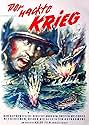
A feature-length condensed version of the documentary TV series Victory at Sea (1952).A feature-length condensed version of the documentary TV series Victory at Sea (1952).A feature-length condensed version of the documentary TV series Victory at Sea (1952).
- Director
- Writers
- Stars
Harold Alexander
- Self
- (archive footage)
Alan Brooke
- Self
- (archive footage)
Winston Churchill
- Self
- (archive footage)
Galeazzo Ciano
- Self
- (archive footage)
Karl Dönitz
- Self
- (archive footage)
Joseph Goebbels
- Self
- (archive footage)
- (as Josef Goebbels)
Rudolf Hess
- Self
- (archive footage)
Heinrich Himmler
- Self
- (archive footage)
Adolf Hitler
- Self
- (archive footage)
Wilhelm Keitel
- Self
- (archive footage)
King Victor Emmanuel III
- Self
- (archive footage)
Bernard L. Montgomery
- Self
- (archive footage)
Benito Mussolini
- Self
- (archive footage)
Pope Pius XII
- Self
- (archive footage)
Franklin D. Roosevelt
- Self
- (archive footage)
- (as Franklin Delano Roosevelt)
Joachim von Ribbentrop
- Self
- (archive footage)
- Director
- Writers
- All cast & crew
- Production, box office & more at IMDbPro
8.4191
1
2
3
4
5
6
7
8
9
10
Featured reviews
Narration
The narrator for the Victory at Sea series was Leonard Graves, not Alexander Scourby. Graves' name is credited at the beginning of each of the 16 episodes.
Also, as noted in Wikipedia, Richard Rodgers, fresh off several hit Broadway musicals, was retained to compose the musical score for the series. Rodgers would contribute twelve "themes"--short piano compositions a minute or two in length. Robert Russell Bennett did the scoring, transforming Rodgers's themes to fit a variety of moods, and composing much more original material than Rodgers. Nonetheless, Bennett received credit only for "arranging" the score and conducting NBC Symphony Orchestra members on the soundtrack recording sessions, and many writers still refer erroneously to "Rodgers's thirteen-hour score."
Nearly perfect...
This summary of the series was very good, covering most of the crucial moments in the sea-war. But I was somewhat disappointed that one of the most singular & heroic actions engaged in an extremely significant battle off Samar was completely overlooked. I get it - you can't cover everything. But the actions of a few Destroyers, Destroyer escorts and a few escort carriers - Tsffy 1, 2 & 3 - engaging a full flotilla of attacking Japanese battleships & cruisers in order to protect the marine action.ashore in Leyte which was the target of this Japanese force who thought all or Adm. Haley's ships had been draw off by a ruse. This heroic David & Goliath battle was crucial to saving thousands of lives and the very invasion operation itself. It should have been mentioned.
Film version of famous TV documentary series
The feature film version of "Victory at Sea" was made for movie theatres, not television, much as Walt Disney made a feature-length film out of the three "Davy Crockett" episodes that aired on his program. And it is Alexander Scourby who is credited as being the narrator of the feature-length film.
However, it is very hard to tell the difference in the voices of Leonard Graves, narrator of the TV series, and Scourby. In other films, however, and in the many documentaries that he narrated in the '60's and '70's, Scourby's voice sounds distinctly different from the voice heard in the motion picture version of "Victory at Sea". Here it sounds suspiciously like Graves's voice.
Could it be that it was actually the same narrator for both the TV series "Victory at Sea" and the movie version, and that for some reason, two different actors were credited?
However, it is very hard to tell the difference in the voices of Leonard Graves, narrator of the TV series, and Scourby. In other films, however, and in the many documentaries that he narrated in the '60's and '70's, Scourby's voice sounds distinctly different from the voice heard in the motion picture version of "Victory at Sea". Here it sounds suspiciously like Graves's voice.
Could it be that it was actually the same narrator for both the TV series "Victory at Sea" and the movie version, and that for some reason, two different actors were credited?
Excellent for introducing...
...people to WWII history. My uncle, a career Navy man and on the USS Enterprise on December 7th, 1941, said that this movie version of the TV show was good in depicting the war, as he saw it from the deck of a ship in the South Pacific. Of course there was no musical accompaniment nor profound moments; combat is hours of boredom coupled with minutes of sheer terror. What you are seeing, with a few minor exceptions, is actual footage from the battles described. It is a well-produced and good look at what our men, and those of our allies and even enemies faced in WWII. It is emotional, it cannot help to be, given the subject matter. A good, solid introduction to WWII history.
Great Documentary & Great Music
An early and wonderful example of what tv can do when it sets itself to do something good. Stuff like this is now all over the History Channel, but you can't do better than Richard Rodger's music for this. Worth it for the score alone.
Did you know
- TriviaThe Richard Rodgers-composed sound track of the movie and TV series was a favorite of President Richard Nixon who played it frequently at the White House during stressful times.
- ConnectionsEdited from Victory at Sea (1952)
Details
- Release date
- Country of origin
- Language
- Also known as
- De Dunquerque a Hiroshima
- Production companies
- See more company credits at IMDbPro
- Runtime
- 1h 38m(98 min)
- Color
- Aspect ratio
- 1.33 : 1
Contribute to this page
Suggest an edit or add missing content