IMDb RATING
8.7/10
1.2K
YOUR RATING

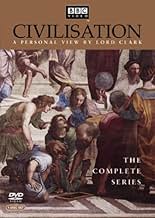
An extraordinary cultural tour through the centuries. Kenneth Clark's landmark 1969 series, offering his personal perspective on the history of western art and philosophy.An extraordinary cultural tour through the centuries. Kenneth Clark's landmark 1969 series, offering his personal perspective on the history of western art and philosophy.An extraordinary cultural tour through the centuries. Kenneth Clark's landmark 1969 series, offering his personal perspective on the history of western art and philosophy.
- Won 2 BAFTA Awards
- 4 wins & 2 nominations total
Browse episodes




8.71.2K
1
2
3
4
5
6
7
8
9
10
Featured reviews
Enlighteneing, engaging, and intimate program of scholarly work
First broadcast in 1969,Civilization was produced not only to showcase the new medium of color television but also to reassure a then turbulent society of its established roots.
Before viewing Civilization I had never heard of Kenneth Clark, or K Clark as he was known to his contemporaries. At first glance he appears to be the product of a stodgy old order, a stereotypical brown flannel suit poised very uneasily in the Age of Aquarius. However his soft demeanor, articulate observations and frank but reasonable opinions quickly become very endearing qualities. I soon found myself very disappointed I had never met the man, or at least lived through his era.
I can say with confidence that if you seriously enjoy history, particularly the European variety, you will enjoy Civilization. Even if you don't, the stunning and intimate portrayal of 1500 years of art may still be captivating enough to hold your attention. This program is unlike anything broadcast in the post-MTV era, and it sets a standard of culture and erudition that puts networks which should know better, like the History Channel, to shame.
Before viewing Civilization I had never heard of Kenneth Clark, or K Clark as he was known to his contemporaries. At first glance he appears to be the product of a stodgy old order, a stereotypical brown flannel suit poised very uneasily in the Age of Aquarius. However his soft demeanor, articulate observations and frank but reasonable opinions quickly become very endearing qualities. I soon found myself very disappointed I had never met the man, or at least lived through his era.
I can say with confidence that if you seriously enjoy history, particularly the European variety, you will enjoy Civilization. Even if you don't, the stunning and intimate portrayal of 1500 years of art may still be captivating enough to hold your attention. This program is unlike anything broadcast in the post-MTV era, and it sets a standard of culture and erudition that puts networks which should know better, like the History Channel, to shame.
10stever-6
A wonderful television presentation
I was a young man in my impressionable early-20s, when Kenneth Clark's "Civilisation" made its appearance on American television. I recall, at the time, thinking what ambition to entitle a program so. Public Broadcasting had not been around for many years, and I expected a stodgy, pompous, supercilious approach to the subject of art and civilization, especially as it was coming from Britain. Surely, this was a program for the elite, the snobs of the art world, the aristocrats of Europe who had access to such treasures. Kenneth Clark truly changed those first impressions, presenting in a gentle, understandable way some of the great treasures of the human species. These pieces were no longer remote, mysterious objects stuffed away in some dusty museum or moldering palace. He clearly taught about each of his choices, seeming to enjoy the opportunity to pass on to the viewer his love and admiration for these works and their meaning, as they related to the modern world and to the world long past in which they were created. He was humorous and wise, and the photography was stunning. I immediately changed my major in college to art history and, although I never became wealthy from the education, I have always appreciated what I did learn, beginning with the inspiration provided by Kenneth Clark and "Civilisation." Mr. Clark became one of those people with whom I wish I could have spent an afternoon, just listening. I haven't seen the program in many years, though it was re-run often after its first showing. I would like to see this back on television, or on DVD. I do believe it was the inspiration for many similar, and more famous programs to follow and was part of that exceptional time in television when the UK sent us its best - "Civilisation", "The First Churchills", "The Six Wives of Henry VIII", "Elizabeth R", and "I, Claudius."
If "Civilisation" ever reappears, do yourself a favor. Sit back in an easy chair, tone down the distractions, have a good hot coffee, and enjoy the story of your past. It's shared by all of us, and Kenneth Clark will introduce you to yourself.
If "Civilisation" ever reappears, do yourself a favor. Sit back in an easy chair, tone down the distractions, have a good hot coffee, and enjoy the story of your past. It's shared by all of us, and Kenneth Clark will introduce you to yourself.
10gring0
The best of its kind
Watching the series in China, it makes me all the more proud of my heritage. The last comment is a good one; let Clark introduce himself to you, just as one reads a Herodotus or Suetonius- to be in the presence of a knowledgeable and engaging friend. having visited many of the places shown, it's also a marked benefit that the series was filmed in 1969, when travel was truly the domain of those seeking enlightenment before our days of package tours. And how clear and lucid are his discussions of culture and history! Often I found myself anticipating his next sentence from my own classes I teach, but am left feeling pedantic and plebeian by comparison. Although the BBC continues to be a source of wonderment through its historical live-action recreation series such as Auschwitz, Pompeii and the Attenboroughs, this is truly of its time when there was no need for gimmicks or embellishment. www.tracesofevil.blogspot.com
A big jewel in the crown of classic BBC television
The upside of paternalism, if you like. They couldn't make Civilisation (1969) today.
I know, I know. They tried. 'Civilisations' (cos there's been more than one, you know). Rightly chewed-up, even by the BBC's own arts critic, as a project without any sense of vision or purpose, the worthless and unnecessary sequel is destined for the scrapheap. The original, commissioned by that hero of BBC TV, Sir David Attenborough, is an immortal product of the Beeb at her most ambitious. The most extraordinary buildings and works of engineering, the most beautiful interiors and works of decorative art, the greatest achievements in music and sculpture, painting, bronze casting, and more besides; and all to show off the new medium of colour television.
And if Attenborough is a hero then so is the series writer-presenter, Kenneth Clark. The director of the National Gallery, an art historian of immense experience and erudition, and actually one of the most experienced culture broadcasters on the still developing medium of televisual broadcasting. Civilisation is a 13-part lecture series, of a kind, in which Clark endeavours to answer one question: what is civilisation? He prefers to answer it through the medium of art, his specialty, because it is less doubtful than the words of a smarmy politician or a propagandist historian. His journey takes him around Europe and across the Atlantic to the USA. He, and the recording team, are showing things to the viewer that they might never have known existed, much less had the chance to see in person.
Clark was an immense figure in the art world. He speaks with a confidence born of deep consideration of art and literature, over decades of study and writing. Write so you learn to think, talk so you learn to speak. Those are the words of Prof. Jordan Peterson. Alternatively, immerse yourself in the eloquence of great spirits such as Clark (and Peterson, naturally). For Clark's presentation is remarkable for its eloquence, as well as one or two unusual pronunciations (ca-PIT-alism, not CAP-italism; i-ron, not i-yun, as we tend to say 'iron' today). He also provides a model of how to be on camera without stealing focus from the art and architecture which is intended to be the central attraction.
The decades have passed and there have been many series on TV about art and history from different periods. None can match, few have ever attempted, the grand sweep of Clark's vision (vision is the apt word), nor his eloquent use of language, engagement without ego, or at times contained emotion. Most tv historians subsequent to Clark merely allow the producers to stroke their egos, so they toss their hair, make worthless shots looking out at vistas or sunsets, and talk as simplistically as possible so as not to threaten the dull minds with knowledge or inspiration. Or we get vapid travelogues, replete with segments on local cuisine and clowning. Clark's series is always replete with something others rarely communicate: passion. A passionate engagement with things he considered holy.
I watch whole episodes, or just bits of them, again and again, and over the decades I've come to love all the episodes, rather than having favourites. The more depressed and disgusted I become, soaking my attention in the tabloid vulgarity and sheer stupidity that teems in Socialmedia Land, the more urgently I need Civilisation, the series and what it stands for.
You're not educated if you have not seen this TV series.
I know, I know. They tried. 'Civilisations' (cos there's been more than one, you know). Rightly chewed-up, even by the BBC's own arts critic, as a project without any sense of vision or purpose, the worthless and unnecessary sequel is destined for the scrapheap. The original, commissioned by that hero of BBC TV, Sir David Attenborough, is an immortal product of the Beeb at her most ambitious. The most extraordinary buildings and works of engineering, the most beautiful interiors and works of decorative art, the greatest achievements in music and sculpture, painting, bronze casting, and more besides; and all to show off the new medium of colour television.
And if Attenborough is a hero then so is the series writer-presenter, Kenneth Clark. The director of the National Gallery, an art historian of immense experience and erudition, and actually one of the most experienced culture broadcasters on the still developing medium of televisual broadcasting. Civilisation is a 13-part lecture series, of a kind, in which Clark endeavours to answer one question: what is civilisation? He prefers to answer it through the medium of art, his specialty, because it is less doubtful than the words of a smarmy politician or a propagandist historian. His journey takes him around Europe and across the Atlantic to the USA. He, and the recording team, are showing things to the viewer that they might never have known existed, much less had the chance to see in person.
Clark was an immense figure in the art world. He speaks with a confidence born of deep consideration of art and literature, over decades of study and writing. Write so you learn to think, talk so you learn to speak. Those are the words of Prof. Jordan Peterson. Alternatively, immerse yourself in the eloquence of great spirits such as Clark (and Peterson, naturally). For Clark's presentation is remarkable for its eloquence, as well as one or two unusual pronunciations (ca-PIT-alism, not CAP-italism; i-ron, not i-yun, as we tend to say 'iron' today). He also provides a model of how to be on camera without stealing focus from the art and architecture which is intended to be the central attraction.
The decades have passed and there have been many series on TV about art and history from different periods. None can match, few have ever attempted, the grand sweep of Clark's vision (vision is the apt word), nor his eloquent use of language, engagement without ego, or at times contained emotion. Most tv historians subsequent to Clark merely allow the producers to stroke their egos, so they toss their hair, make worthless shots looking out at vistas or sunsets, and talk as simplistically as possible so as not to threaten the dull minds with knowledge or inspiration. Or we get vapid travelogues, replete with segments on local cuisine and clowning. Clark's series is always replete with something others rarely communicate: passion. A passionate engagement with things he considered holy.
I watch whole episodes, or just bits of them, again and again, and over the decades I've come to love all the episodes, rather than having favourites. The more depressed and disgusted I become, soaking my attention in the tabloid vulgarity and sheer stupidity that teems in Socialmedia Land, the more urgently I need Civilisation, the series and what it stands for.
You're not educated if you have not seen this TV series.
Superb Reminder of all we Deserve to be Proud Of
Totally superb. The truth is that for all the current foolish complaints about the patriarchy and white privilege etc, etc ad nauseam the facts will outlive the children's current outrage.
Here is a reminder that the west has so much to be proud of. Britain especially. We are where we are today because of the success and adoption of the British and the wests systems of government, an independent judiciary, standardized weights and measures, universal education, invention, financial institutions, etc, etc.
Without the west's civilization life will be nasty, brutish and short to quote Hobbes. This cracking documentary shows the results of supporting "from the river to the sea" and the superb developments that resulted from the terrible colonizers.
Here is a reminder that the west has so much to be proud of. Britain especially. We are where we are today because of the success and adoption of the British and the wests systems of government, an independent judiciary, standardized weights and measures, universal education, invention, financial institutions, etc, etc.
Without the west's civilization life will be nasty, brutish and short to quote Hobbes. This cracking documentary shows the results of supporting "from the river to the sea" and the superb developments that resulted from the terrible colonizers.


Did you know
- TriviaWhile popular at the time of its release, the documentary series has been criticized over the decades for presenting a 19th-century worldview of history being shaped by the relatively few "highly influential and unique individuals" with extraordinary abilities. This historical theory had originally been proposed by Thomas Carlyle in the 1840s, and remained fashionable until the 1920s. Both the original theory and the documentary series have been criticized for largely ignoring the impact of social history, economic history, and political history on art and art movements. The series also minimized the role of female writers and artists within the art movements covered in the series, because they did not fit in its main writer's "traditional choice" of great artists, a group which he viewed as exclusively male.
- GoofsIn the segment titled "The Light of Experience", narrator Lord Clark discusses the great developments in Europe of the XVIIth century - mathematics, measurement, observation - and notes that these "were not hostile to architecture; nor to music, for this was the age of one of the greatest English composers, William Purcell." Here he is misquoting himself, for in the book that accompanies this series (Civilisation. New York and Evanston: Harper & Row, 1969, p.218) he correctly names the composer as Henry Purcell.
- ConnectionsEdited from Mozart's Don Giovanni (1955)
- How many seasons does Civilisation have?Powered by Alexa
Details
Contribute to this page
Suggest an edit or add missing content