
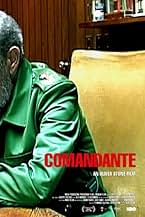
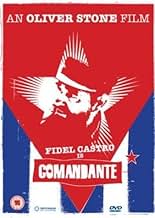
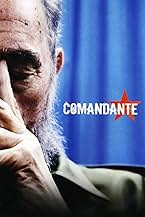
Documentary on the director's meeting with Castro.Documentary on the director's meeting with Castro.Documentary on the director's meeting with Castro.



Ernesto 'Che' Guevara
- Self
- (archive footage)

John F. Kennedy
- Self
- (archive footage)

Richard Nixon
- Self
- (archive footage)


Janet Reno
- Self
- (archive footage)
Jaume Roures
- Self
- (uncredited)

Santiago Segura
- Self
- (uncredited)
- Director
- Writer
- All cast & crew
- Production, box office & more at IMDbPro
6.93.9K
1
2
3
4
5
6
7
8
9
10
Featured reviews
Eye opener
I just saw Comandante on Greek public television, in its entirety and uninterrupted and was immediately drawn to it.
Whether one agrees with Cuba's political system or not, is not the issue here. What Oliver Stone has achieved is what no journalist or historian has ever come close to. He brings himself and his crew right up close to the aged leader and confronts him relentlessly with questions from the mundane to the esoteric and from the political to the personal. Ideas about the past and the future, about dreams, art, democracy, colonialism, family, religion, women's rights, education, love etc are all exposed here, bringing out an intimate portrait. The questions are often uncomfortable as when Stone asks Castro about his ex wives in front of his wife, or when his claims about policing in Cuba are denied by one of Stone's crew members. Yet Castro even at this age, is sharp, humorous and poetic in a way that reveals the intellectual behind the politician.
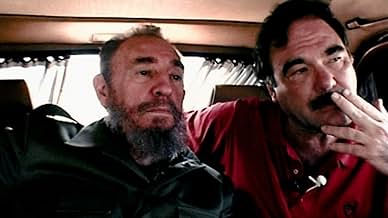
It is also a travel documentary of Havana where Fidel Castro is Stone's guide and walks him through the city's monuments and cafés, sits next to him at the back seat of his car, eats and drinks with him and we get a sense that he knows what is happening in Havana's every alley.
One thing is for sure: no other country leader would ever allow himself the closeness Castro offers to Stone and expose his feelings and doubts with such spontaneity.
Stone turns a formal encounter into a family visit and brings the audience to meet an iconic political figure and spend a couple of intimate hours with him.
A work that leaves you thinking for a long while.
Whether one agrees with Cuba's political system or not, is not the issue here. What Oliver Stone has achieved is what no journalist or historian has ever come close to. He brings himself and his crew right up close to the aged leader and confronts him relentlessly with questions from the mundane to the esoteric and from the political to the personal. Ideas about the past and the future, about dreams, art, democracy, colonialism, family, religion, women's rights, education, love etc are all exposed here, bringing out an intimate portrait. The questions are often uncomfortable as when Stone asks Castro about his ex wives in front of his wife, or when his claims about policing in Cuba are denied by one of Stone's crew members. Yet Castro even at this age, is sharp, humorous and poetic in a way that reveals the intellectual behind the politician.
It is also a travel documentary of Havana where Fidel Castro is Stone's guide and walks him through the city's monuments and cafés, sits next to him at the back seat of his car, eats and drinks with him and we get a sense that he knows what is happening in Havana's every alley.
One thing is for sure: no other country leader would ever allow himself the closeness Castro offers to Stone and expose his feelings and doubts with such spontaneity.
Stone turns a formal encounter into a family visit and brings the audience to meet an iconic political figure and spend a couple of intimate hours with him.
A work that leaves you thinking for a long while.
Small Island, Big Revolution, Giant Leader.
This film is a fantastic, hypnotic encounter with the legendary Marxist, world agitator and bete noire to America, Fidel Castro. It features left-wing warrior Oliver Stone's trademark flash cutting and controversial storytelling, alongside a simply stunning musical score from Alberto Iglesias. Prepare for the Buena Vista Social Club (2001) on revolutionary acid.
The beginning of Commandante yet another Oliver Stone masterpiece is similar to the beginning of his epic JFK (1991): lots of archive footage of Castro and Cuba, only this time intercut with masses of frenzied crowds drunk on revolutionary fervour, all shouting 'Fidel, Fidel', hailing their great man who is still there in this film, forty years later. Incredible.
There is both 1960s and modern footage of Havana featuring giant murals of 'Che' Guevara, Fidel ('VIVA FIDEL CASTRO') and a total absence of any corporate, Western advertising whatsoever. There is a lot of poverty, but also a series of impromptu meetings between Castro (and Stone) and various Cubans in the streets. Propaganda or planned? The movie harks back to the original revolution in 1959 and Castro's initial pro-Western peoples revolution, hailing (in English) 'representative democracy' and 'social justice'. Of course, the American corporations and political elite could never countenance any notion of true democracy just ninety miles from their corrupt lands and so the story unfolds of how various presidents tried to invade the island and destroy their path.
Fidel himself at 80 is surprisingly fit and optimistic, always in his olive green military fatigues. He appears to be a genuine messiah, despite the paradox of religion and atheistic communism in this island paradise. He wears his customary beard, is polite and genuinely sincere. Castro and Oliver Stone in a remarkably frank and candid series of interviews go on to discuss everything from politics, film, women and nationalism. Castro admires Sophia Loren, Charlie Chaplin, Khruschev, Gorbachev, Depardieu and a host of others. He has watched Titanic and Gladiator but hates Nixon who he considers the originator of the American hatred of his island yet feels sorry for Kennedy for being assassinated.
Could George W Bush even consider for one second walking the streets of his capital city? No, he would be strung up as a corrupt war criminal and stooge to all of the corporate giants that have been banished from Cuba (Texaco, Gulfoil, McDonalds, etc.).
In the original 1960s footage Castro is hailed by crowds of literally one million people. He is a strange combo of Dr Caligari, Karl Marx and the Pope.
The beginning of Commandante yet another Oliver Stone masterpiece is similar to the beginning of his epic JFK (1991): lots of archive footage of Castro and Cuba, only this time intercut with masses of frenzied crowds drunk on revolutionary fervour, all shouting 'Fidel, Fidel', hailing their great man who is still there in this film, forty years later. Incredible.
There is both 1960s and modern footage of Havana featuring giant murals of 'Che' Guevara, Fidel ('VIVA FIDEL CASTRO') and a total absence of any corporate, Western advertising whatsoever. There is a lot of poverty, but also a series of impromptu meetings between Castro (and Stone) and various Cubans in the streets. Propaganda or planned? The movie harks back to the original revolution in 1959 and Castro's initial pro-Western peoples revolution, hailing (in English) 'representative democracy' and 'social justice'. Of course, the American corporations and political elite could never countenance any notion of true democracy just ninety miles from their corrupt lands and so the story unfolds of how various presidents tried to invade the island and destroy their path.
Fidel himself at 80 is surprisingly fit and optimistic, always in his olive green military fatigues. He appears to be a genuine messiah, despite the paradox of religion and atheistic communism in this island paradise. He wears his customary beard, is polite and genuinely sincere. Castro and Oliver Stone in a remarkably frank and candid series of interviews go on to discuss everything from politics, film, women and nationalism. Castro admires Sophia Loren, Charlie Chaplin, Khruschev, Gorbachev, Depardieu and a host of others. He has watched Titanic and Gladiator but hates Nixon who he considers the originator of the American hatred of his island yet feels sorry for Kennedy for being assassinated.
Could George W Bush even consider for one second walking the streets of his capital city? No, he would be strung up as a corrupt war criminal and stooge to all of the corporate giants that have been banished from Cuba (Texaco, Gulfoil, McDonalds, etc.).
In the original 1960s footage Castro is hailed by crowds of literally one million people. He is a strange combo of Dr Caligari, Karl Marx and the Pope.
10gavin-96
Balanced on a tightrope
Watching recent documentaries from writers such as Michael Moore, one may be confused to what a documentary actually is. Comandante is a perfect example of what a documentary should be like. By the end of its running, the viewer has seen a balanced account with enough information either way to give food for thought.
I came away from this asking myself - 'is Castro a truly great man?', or is he 'full of ***t'?, or on the other hand has he just not practiced what he has preached?
Moore on the other hand comes from a journalistic angle, everything so over emphasised and dramatised, as if he is almost trying to convince the viewer to agree with him. He presents information through his own paradigm of the opinion he is carrying at the time.
Comandante is a mature documentary, flawless in presentation as Stones work generally is; but the key to its quality, is that it does not give you the answer. It documents the facts.
Comandante easily achieves what it sets out to do. Some viewers may expect more given the subject, but for the purist, satisfaction guaranteed.
I came away from this asking myself - 'is Castro a truly great man?', or is he 'full of ***t'?, or on the other hand has he just not practiced what he has preached?
Moore on the other hand comes from a journalistic angle, everything so over emphasised and dramatised, as if he is almost trying to convince the viewer to agree with him. He presents information through his own paradigm of the opinion he is carrying at the time.
Comandante is a mature documentary, flawless in presentation as Stones work generally is; but the key to its quality, is that it does not give you the answer. It documents the facts.
Comandante easily achieves what it sets out to do. Some viewers may expect more given the subject, but for the purist, satisfaction guaranteed.
The US needs more of these.
Despite the anti-Castro rhetoric that has been going on in this country since the 1960's, this film has managed to make its way to the mainstream media of the most hostile nation towards Cuba. This documentary gives us a view at Cuba's Fidel Castro. Castro has been one of the most talked about leaders this century and has managed to "control" or stay in power more than any other head of state alive today. Demonized and admired by millions worldwide, Castro is seen as he is today, an aged man with stories and anecdotes that would require volumes to ever capture on film. I highly suggest viewing this film, regardless of you political persuasion. For those who view Castro as a revolutionary , the always active and still brilliant way that he answers some of Stone's toughest questions, this film will probably further your admiration in this charismatic figure. For those who view him as a ruthless dictator, you might see this film as a bit soft. Stone does not insult him or complicate him, at least not to a level that Castro can not handle. Maybe it is the fact that this documentary shows a human being and not our common image of a communist on the quest for power.
El Tirano /The Dictator/another Seddam Hussein HOLLYWOODS IS IGNORANT/CONTROVERSY IS A MONEY MAKER
In communism/socialism the beginning is always the End. One dictator removes another from power by force. Many praise the men that at the moment believe what they fight for some kind of change, usually when the previous government has been corrupt in some way. Corruption creates poverty and poverty leads to stress then becomes the fuel for a revolution. Most revolutions in our history have lead to totalitarianism. I like to blame that on human nature the USA is not perfect but its pretty close if you do not know what it's like to live in Cuba don't be mistaken tourist don't see the suffering especially if you have the money. Venezuela is a fresh look on early Cuba lets see how its ends up in a few years. HUGO CHAVEZ and some fanatics are beginning to dismantle any checks and balances the country may have plans on changing how long he can serve as president no limit remind you of something. Enough about that after so many years and tears and lives lost at sea. The exiled Cubans have preserved peace by leaving through 90 miles of rough seas on anything that floats not recreating another revolt adding to the cycle of bull in almost 40 odd years. Thousands of lives lost at sea as well as injustices on that prisoner island. Please think why would so many people risk their lives in such a way.


Did you know
- TriviaThe film was partly produced by HBO and was planned for broadcast. Shortly before airtime, after Cuba executed three hijackers of a ferry to the United States and imprisoned more than 70 political dissidents, HBO pulled the program.
- ConnectionsFeatures Vatel (2000)
- Soundtracks11.11
Written and Performed by Paul Kelly
- How long is Comandante?Powered by Alexa
Details
- Release date
- Countries of origin
- Official site
- Languages
- Also known as
- Son efsane - Comandante
- Production companies
- See more company credits at IMDbPro
Box office
- Gross worldwide
- $135,633
- Runtime
- 1h 39m(99 min)
- Color
- Sound mix
Contribute to this page
Suggest an edit or add missing content