IMDb RATING
6.7/10
3.6K
YOUR RATING
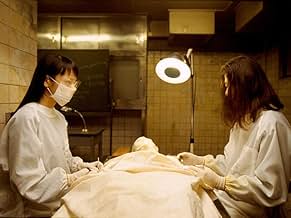
A young man awakens in the hospital after an accident wipes his memory. Fascinated by a textbook full of drawings of dissections, he is drawn to a medical school where something becomes his ... Read allA young man awakens in the hospital after an accident wipes his memory. Fascinated by a textbook full of drawings of dissections, he is drawn to a medical school where something becomes his obsession: the dead woman on the cadaver table.A young man awakens in the hospital after an accident wipes his memory. Fascinated by a textbook full of drawings of dissections, he is drawn to a medical school where something becomes his obsession: the dead woman on the cadaver table.
- Awards
- 5 wins & 3 nominations total
- Director
- Writer
- All cast & crew
- Production, box office & more at IMDbPro
6.73.6K
1
2
3
4
5
6
7
8
9
10
Featured reviews
10kmevy
beautiful and very intoxicating
This film really gave me an impression and was for myself a very memorable experience.
Like many others i was also quite surprised about the emotional and gentle character of this film. Before starting to watch i prepared myself for something extreme and uncompromising like i experienced in many Shinya Tsukamoto's films. But that is a good thing for this film; making it possible to reach a broader audience. And it definitely deserves it.
Technically this film is superb. Lighting and camera were excellent .. and the colors ... Sound design and music weren't that demonstrative but still played, in a subtle way, an important role. Acting was also impressive. Tadanobu Asano, one of my favorite actor since Ichi the killer, was a perfect fit. Nami Tsukamoto was very scary, in a good way ;). But she doesn't have a record at IMDb yet. I wonder why .. her acting was very promising. And letting Kiki perform modern dance was for the atmosphere and art-style a very good idea.
To sum the story up, by leaving all the artful details behind, you could say it is about the painful yearning for the loved one. This was extremely good implemented. Just everything, art, sound and acting supported the presentation of this yearning.
This is one of those films you don't simply watch. You have to experience them.
Like many others i was also quite surprised about the emotional and gentle character of this film. Before starting to watch i prepared myself for something extreme and uncompromising like i experienced in many Shinya Tsukamoto's films. But that is a good thing for this film; making it possible to reach a broader audience. And it definitely deserves it.
Technically this film is superb. Lighting and camera were excellent .. and the colors ... Sound design and music weren't that demonstrative but still played, in a subtle way, an important role. Acting was also impressive. Tadanobu Asano, one of my favorite actor since Ichi the killer, was a perfect fit. Nami Tsukamoto was very scary, in a good way ;). But she doesn't have a record at IMDb yet. I wonder why .. her acting was very promising. And letting Kiki perform modern dance was for the atmosphere and art-style a very good idea.
To sum the story up, by leaving all the artful details behind, you could say it is about the painful yearning for the loved one. This was extremely good implemented. Just everything, art, sound and acting supported the presentation of this yearning.
This is one of those films you don't simply watch. You have to experience them.
Vital viewing for genre fans or a confusing art-house offering?
I normally watch films with no expectations or anticipation of what they have to offer but I wish I'd done some background reading on "Vital" before I settled down to view it. Expecting a horror film, I was left disappointed. Described as a thriller, I didn't find "Vital" particularly thrilling or attention grabbing.
While the film is beautifully shot, the movie relies on mood to keep the viewer engaged with what is unrolling on the screen. In the end, though, it's a somewhat confusing meditation on death and left me feeling more than a little frustrated.
6 out of 10. This is a stylish entry in Asian cinema but it lacks substance. I've no doubt it will delight some viewers but it will frustrate in equal measure.
While the film is beautifully shot, the movie relies on mood to keep the viewer engaged with what is unrolling on the screen. In the end, though, it's a somewhat confusing meditation on death and left me feeling more than a little frustrated.
6 out of 10. This is a stylish entry in Asian cinema but it lacks substance. I've no doubt it will delight some viewers but it will frustrate in equal measure.
Brief review
After the surrealness of the Tetsuo films and the blue filters and voyeurism of Snake of June, I was not sure where Tsukamoto would go with this film. I saw it as part of the London FIlm Festival and it was one of my favourite films.
The story is of a Hiroshi (Asano Tadanobu) suffering from amnesia (as a result of a car crash in which his girlfriend dies) slowly regaining his memory through performing an autopsy on her. It raises questions on the nature of the self and how mutable it is.
For example, Hiroshi was pressured in to becoming a medical student, but he rebelled and became a drifter. After the crash he loses his recent memory, but he is inexplicably drawn to study medicine. Is this the call of his nature or a way of healing? Once the trauma's of teenage years are stripped away and we return to the core of the self before social conditioning steps in, are we more innocent or closer to what we can become? All this may sound very deep, but this film is all about childhood/innocence and the self in my opinion.
Pretty different from the other three films mentioned above, but still has lots of blue/grey filters and an extremely acute sense of sound. Some of the autopsy scenes have some wonderful slurping noises and tension that really set me on edge.
The story is of a Hiroshi (Asano Tadanobu) suffering from amnesia (as a result of a car crash in which his girlfriend dies) slowly regaining his memory through performing an autopsy on her. It raises questions on the nature of the self and how mutable it is.
For example, Hiroshi was pressured in to becoming a medical student, but he rebelled and became a drifter. After the crash he loses his recent memory, but he is inexplicably drawn to study medicine. Is this the call of his nature or a way of healing? Once the trauma's of teenage years are stripped away and we return to the core of the self before social conditioning steps in, are we more innocent or closer to what we can become? All this may sound very deep, but this film is all about childhood/innocence and the self in my opinion.
Pretty different from the other three films mentioned above, but still has lots of blue/grey filters and an extremely acute sense of sound. Some of the autopsy scenes have some wonderful slurping noises and tension that really set me on edge.
odd contemplation of life and death
I think whoever listed this as a "thriller" was going by the plot description rather than the actual film, in which an amnesiac medical student spends several months dissecting his ex-girlfriend at the University. The student is taciturn, is followed around by another, infatuated medical student, and because to have memories of his ex. And that's pretty much the movie. It is deliberately paced and at times purposely opaque.
The director has at times a film students fondness for meaningless composition, notably in an early scene in which the students parents stand perfectly still and converse. This sort of statues-holding-deadpan-conversations work well in Hal Hartley movies, but they feel a bit pretentious without Hartley's humor. The opening jittery camera-work also seems like something a film student would do. This sort of thing put me off, but the movie did generally keep my interest, becoming slightly more involving and less pretentious as it progressed, and in the end I feel okay about sitting through it, although I can't say I'd give it a strong recommendation.
Not quite there yet...
I was mostly disappointed with this film. I'm a fan of Tsukamoto's other work, and while this film indicates his growth as a director, and has a strong cast, I felt it had issues with pacing, and a pretty dissatisfying ending.
Asano Tadanobu, normally an engaging lead, seems to be coasting through this film, brooding, mainly. Of course, maybe that's how his character was written, but I found myself wondering when it would pick up in several places and unable to identify with him.
Kunimura Jun is wonderfully powerful as Ryoko's father, and I wound up wishing he was more of a central character. I also felt Ittoku Kishibe, who can conjure a truly menacing screen presence, was rather wasted as Dr. Kashiwabuchi.
There are some interesting philosophical questions raised, but they are never really addressed or explored fully. I guess I'm also getting tired of the "I don't know whether I'm dreaming or awake" cliché in many movies in this genre. Plus, it's a little ham-fisted to have a character just come out and say that.
Vital contains a few interesting scenes involving a dance, and some of Tsukamoto's signature music video-style strangeness in a few places, but in summary, a slow, dark film with no real scares or thrills.
Asano Tadanobu, normally an engaging lead, seems to be coasting through this film, brooding, mainly. Of course, maybe that's how his character was written, but I found myself wondering when it would pick up in several places and unable to identify with him.
Kunimura Jun is wonderfully powerful as Ryoko's father, and I wound up wishing he was more of a central character. I also felt Ittoku Kishibe, who can conjure a truly menacing screen presence, was rather wasted as Dr. Kashiwabuchi.
There are some interesting philosophical questions raised, but they are never really addressed or explored fully. I guess I'm also getting tired of the "I don't know whether I'm dreaming or awake" cliché in many movies in this genre. Plus, it's a little ham-fisted to have a character just come out and say that.
Vital contains a few interesting scenes involving a dance, and some of Tsukamoto's signature music video-style strangeness in a few places, but in summary, a slow, dark film with no real scares or thrills.
Did you know
- How long is Vital?Powered by Alexa
Details
Contribute to this page
Suggest an edit or add missing content