IMDb RATING
7.4/10
5.9K
YOUR RATING


The life and times of Albert Pierrepoint - Britain's most prolific hangman.The life and times of Albert Pierrepoint - Britain's most prolific hangman.The life and times of Albert Pierrepoint - Britain's most prolific hangman.
- Nominated for 1 BAFTA Award
- 2 wins & 4 nominations total



Lizzie Hopley
- Dorothea Waddingham
- (as Elizabeth Hopley)

- Director
- Writers
- All cast & crew
- Production, box office & more at IMDbPro
7.45.9K
1
2
3
4
5
6
7
8
9
10
Featured reviews
It's a dirty job, but someone's got to do it.
The Last Hangman Review
Mike Reynolds
It's a dirty job, but someone's got to do it. The clock strikes nine and the hangman goes to work, getting rid of criminals the old fashioned way. At the end of the day he puts on his cap and heads home to his wife like any other man. But what goes on in the head of an ordinary person who's job it is to kill? This is the question asked by Adrian Shergold, the director of The Last Hangman.
The film follows the true story of the rise of Britain's most prolific executioner, Albert Pierrepoint, and his struggle to be a lead a normal life. Pierrepoint is played by Timothy Spall, most noted for his great supporting roles in Vanilla Sky and The Last Samurai. Spall shines in this film, becoming both a calculating, intense killer and a jolly pub mate. As the film progresses, he literally transforms as his burden becomes greater. Juliet Stevenson plays Annie, Albert's arguably supportive wife. She portrays the guilt and paranoia of an English housewife painfully well. Through her, we see the full story of the couple's social and moral difficulties.
Pierrepoint's only real drive is that of any honest, hard working man. He just wants to be good at what he does. This keeps the audience in a emotionally conflicting state. The viewer desperately wants Albert to resign from his chilling career, while cheering on his incredible success.
The film is very nice to look at. What a feat. One can only imagine the difficulty of shooting a period piece independently. It was very interesting seeing the gritty grey streets of a wartime London recorded on 16. It seemed to give it a charming modern context, though there were jarring out of focus shots here and there. One memorable scene is brilliantly spliced with actual footage of a capital punishment protest.
Aside from the physical shooting of the film, there were strong symbolic devices at use. In order to hang someone efficiently, Pierrepoint would calculate the prisoner's height and weight. To do this he would look through a small peephole in the heavy cell door. Whenever anyone is shown through a crack, or a hole, it's a hint of grizzly foreshadowing. The method of passing time was artfully portrayed as well. Pierrepoint kept a logbook of all the people who he killed, their names written in perfect script. The stack of logbooks got bigger and bigger as years went by.
Films like The Last Hangman are important because they challenge our choices. This story makes us think of what we're responsible for in our lives and careers. Is the success worth the death of your inner self? That decision is up to us. Because the saddest thing about Albert Pierrepoint is that he applied for the job.
Mike Reynolds
It's a dirty job, but someone's got to do it. The clock strikes nine and the hangman goes to work, getting rid of criminals the old fashioned way. At the end of the day he puts on his cap and heads home to his wife like any other man. But what goes on in the head of an ordinary person who's job it is to kill? This is the question asked by Adrian Shergold, the director of The Last Hangman.
The film follows the true story of the rise of Britain's most prolific executioner, Albert Pierrepoint, and his struggle to be a lead a normal life. Pierrepoint is played by Timothy Spall, most noted for his great supporting roles in Vanilla Sky and The Last Samurai. Spall shines in this film, becoming both a calculating, intense killer and a jolly pub mate. As the film progresses, he literally transforms as his burden becomes greater. Juliet Stevenson plays Annie, Albert's arguably supportive wife. She portrays the guilt and paranoia of an English housewife painfully well. Through her, we see the full story of the couple's social and moral difficulties.
Pierrepoint's only real drive is that of any honest, hard working man. He just wants to be good at what he does. This keeps the audience in a emotionally conflicting state. The viewer desperately wants Albert to resign from his chilling career, while cheering on his incredible success.
The film is very nice to look at. What a feat. One can only imagine the difficulty of shooting a period piece independently. It was very interesting seeing the gritty grey streets of a wartime London recorded on 16. It seemed to give it a charming modern context, though there were jarring out of focus shots here and there. One memorable scene is brilliantly spliced with actual footage of a capital punishment protest.
Aside from the physical shooting of the film, there were strong symbolic devices at use. In order to hang someone efficiently, Pierrepoint would calculate the prisoner's height and weight. To do this he would look through a small peephole in the heavy cell door. Whenever anyone is shown through a crack, or a hole, it's a hint of grizzly foreshadowing. The method of passing time was artfully portrayed as well. Pierrepoint kept a logbook of all the people who he killed, their names written in perfect script. The stack of logbooks got bigger and bigger as years went by.
Films like The Last Hangman are important because they challenge our choices. This story makes us think of what we're responsible for in our lives and careers. Is the success worth the death of your inner self? That decision is up to us. Because the saddest thing about Albert Pierrepoint is that he applied for the job.
Charismatic Timothy Spall.
I booked this independent little British film to show at Coalville's Century Theatre, on the Non-Theatrical circuit. Titled "Pierrepoint" here in the UK, this is a case of another quality British film being routinely ignored by the multiplexes in favour of the usual fodder presented for the masses. I was confident my regular audience would be interested by this true story of mass executioner Albert Pierrepont who really was 'a household name' in the 50s and 60s. In actual fact, Mr Pierrepoint was NOT 'the last hangman' in the UK. It really is a remarkably entertaining picture considering the obviously dour storyline, much aided by the portrayal of charismatic star Timothy Spall, who can be relied upon to always give an interesting and engrossing performance. Mr Spall is no matinée idol lead but not many would argue he is one of the most popular actors in Britain today. The film explains how Albert followed in the same 'career' of his father and Uncle Tom (who is briefly portrayed in the film), and interestingly reveals the technical side of his skillful and efficient methods for a successful result! Along the way, Albert is seen with Field Marshal Montgomery, who personally recommended Pierrepoint to carry out the Nuremburg executions, as well as other familiar people such as Timothy Evans, Derek Bentley and Ruth Ellis, all of whose cases fed the argument for the abolition of capital punishment. In the film, much dramatic use is made of Pierrepoint's execution of his friend, 'Tish', who often sang duets with Albert in the latter's pub. This really is true, very much a case of stranger than fiction. This film is strangely entertaining, never dull, although I noted some of the female members of my audience were regularly looking downwards whenever a hanging was shown. However, afterwards, there many favourable comments about this film and we were still talking about it at the post show drink in the pub afterwards! Obviously achieved on a very restricted budget, but a film to be recommended.
Having A Swinging Time ...
When documenting a true story, criticism is often levied at the film-makers for condensing and twisting true-life events to suit their needs. That may well be the case. Unless the viewer has read first hand accounts of such true-life stories, then the film versions of these events appear stilted and fanciful.
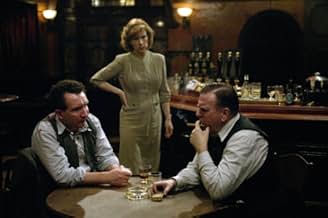
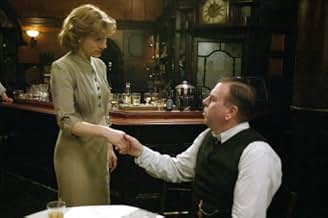
Albert Pierrepoint's story has been well documented in not only his autobiography but by numerous historians and writers. With key events in the film being followed as closely as possible, it must have been nigh on impossible to keep everyone happy. Casting for this film must have been quite an exciting process. With people like Timothy Spall in the lead role, he showed all the care and attention that Pierrepoint was famous for. His wife, played by Juliet Stephenson, was a highly touching character. Although Mrs Pierrepoint never stood out in the original autobiography, Stephenson brings us a strong yet gentile woman, the driving force behind The Hangman. Eddie Marsan's portrayal as 'Tish' was casting at it's best.
A supporting cast of physically interesting character actors blended with superb lighting and set design, make a highly enjoyable and thought provoking film about the rights and wrongs of capital punishment.
The fact that the makers of 'The Last Hangman' managed to cram a fascinating life-long career into 90 minutes must serve as a tribute to their skill and craftsmanship.
Albert Pierrepoint's story has been well documented in not only his autobiography but by numerous historians and writers. With key events in the film being followed as closely as possible, it must have been nigh on impossible to keep everyone happy. Casting for this film must have been quite an exciting process. With people like Timothy Spall in the lead role, he showed all the care and attention that Pierrepoint was famous for. His wife, played by Juliet Stephenson, was a highly touching character. Although Mrs Pierrepoint never stood out in the original autobiography, Stephenson brings us a strong yet gentile woman, the driving force behind The Hangman. Eddie Marsan's portrayal as 'Tish' was casting at it's best.
A supporting cast of physically interesting character actors blended with superb lighting and set design, make a highly enjoyable and thought provoking film about the rights and wrongs of capital punishment.
The fact that the makers of 'The Last Hangman' managed to cram a fascinating life-long career into 90 minutes must serve as a tribute to their skill and craftsmanship.
A Dirty Job
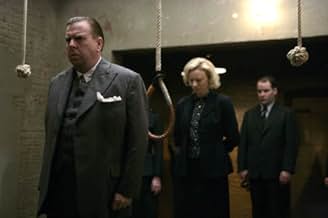
Albert Pierrepoint was Britain's most prolific executioner, overseeing the hanging of more than 600 condemned men and women including Derek Bentley, Ruth Ellis and Lord Haw Haw. Adrian Shergold's film starring Timothy Spall in the title role is a dark period piece exploring the stark relationship between compassion and work ethic.
Pierrepoint approaches his grisly duties with pride, professionalism and a stoical detachment a third generation hangman, he is well accustomed to checking his personal life at the prison gate while he gets on with the job at hand.
But duty and morality are constantly battling in the back of his mind - a struggle neatly illustrated when he is seconded to Germany after the War and tasked with dispatching Nazi war criminals. His clinical work here is deliberately and uncomfortably linked to the crimes of the Nazis who gassed their Holocaust victims with the same brutal precision.
Back in England, as liberalism begins to take hold and high-profile executions enrage a population bubbling with discontent, Pierrepoint's reputation in the eyes of the public slides swiftly and irretrievably from British war hero to callous murderer a bewildering descent perfectly captured by Spall's mesmerising performance. Juliet Stevenson is not bad either as Pierrepoint's loyal wife gradually embittered by years of turning the other cheek at her husband's double life.
The film celebrates dignity and humanity but is laced with a uniquely British attitude evocative of Vera Drake and The Remains of the Day. Like these earlier social dramas, Pierrepoint culminates memorably in a momentary quivering of its previously resolute stiff upper lip.
Pierrepoint approaches his grisly duties with pride, professionalism and a stoical detachment a third generation hangman, he is well accustomed to checking his personal life at the prison gate while he gets on with the job at hand.
But duty and morality are constantly battling in the back of his mind - a struggle neatly illustrated when he is seconded to Germany after the War and tasked with dispatching Nazi war criminals. His clinical work here is deliberately and uncomfortably linked to the crimes of the Nazis who gassed their Holocaust victims with the same brutal precision.
Back in England, as liberalism begins to take hold and high-profile executions enrage a population bubbling with discontent, Pierrepoint's reputation in the eyes of the public slides swiftly and irretrievably from British war hero to callous murderer a bewildering descent perfectly captured by Spall's mesmerising performance. Juliet Stevenson is not bad either as Pierrepoint's loyal wife gradually embittered by years of turning the other cheek at her husband's double life.
The film celebrates dignity and humanity but is laced with a uniquely British attitude evocative of Vera Drake and The Remains of the Day. Like these earlier social dramas, Pierrepoint culminates memorably in a momentary quivering of its previously resolute stiff upper lip.
Capital Punishment in the UK
I saw this DVD twice and read all the other user comments of this recent film before I considered I was ready to write my opinion on IMDb.com.
Capital punishment in the UK was abolished in 1965 and since then it has remained a controversial topic on which MPs have been given a free vote in the House (no whips office involved) and it has consistently been voted down by MPs ever since.The arguments for capital punishment range from "an eye for an eye"; why must the State keep killers alive at the public expense; as an example to other malefactors; to provide revenge for the bereaved families of the murder victim.I suppose the most controversial case cited for reimposing the death penalty stemmed from the Moors Murderers case from 1966, Ian Brady and Myra Hindley who died in custody.Even though they could not judicially be hanged, no Home Secretary since then has considered it politic to release or commute their sentence because of the expected public and media fury.Of course today in Britain killers are routinely sentenced "to life imprisonment" which depending on the circumstances, does not necessarily mean the killer's whole life.
Against this argument is the Christian doctrine of forgiveness and whether the State is executing an innocent man e.g.Timothy Evans (hanged by Pierrepont) instead of John Reginald Halliday Christie for the murder of Evans' baby daughter.
Albert Pierrepoint was certainly not "The Last Hangman" in the UK as I believe he resigned shortly after executing Ruth Ellis in 1955 after a continuous career as Chief hangman stretching from 1933 and as I said above. killers were hanged in the UK right up to 1964.In his 1974 auto- biography he turned against capital punishment with distaste as he considered it was merely the State exacting revenge and solved nothing.Considering he executed 608 murderers we must respect his opinions.I suspect those that advocate execution would not like to do the act personally as long as there is someone else to do it and bear the crushing guilt on their conscience.
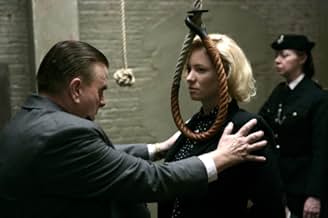
Juliet Stevenson gives a marvellously understated performance as Anne Pierrepoint, Albert's wife and provides the home life and comfort to her husband.She is also the business brains in the marriage.We see the chilling, technical efficiency and speed which convinced the Allied powers in 1946 that a British hangman was the best for dispatching the many Nazi war criminals sentenced to death at Nuremburg.Albert was informed by the brigadier that the first batch to be hanged in a day was 13 with many more to come.Albert did not want to know what evil the condemned had done and tried to ensure he kept himself personally and professionally detached when performing his duties for the State.He even had a sense of compassion for the condemned by trying to complete the hanging in less time than his father's average of 13 seconds to reduce the fear and suffering in them.In one notable case he was done in 7 1/2 seconds.Likewise at Nuremburg he decided to hang the condemned female Belsen guards first with the youngest going first as she would be the most frightened.
To my knowledge this is the first film which accurately shows the technical method of hanging that was used in British prisons.It was ignorance by film producers of this that made their films unconvincing when showing a hanging scene as hangmen were advised to keep their methods entirely secret from the public.
All credit must go to Timothy Spall in the central pivotal role and the whole production team in evoking capital punishment in a Britain between 1932- 1955.
Capital punishment in the UK was abolished in 1965 and since then it has remained a controversial topic on which MPs have been given a free vote in the House (no whips office involved) and it has consistently been voted down by MPs ever since.The arguments for capital punishment range from "an eye for an eye"; why must the State keep killers alive at the public expense; as an example to other malefactors; to provide revenge for the bereaved families of the murder victim.I suppose the most controversial case cited for reimposing the death penalty stemmed from the Moors Murderers case from 1966, Ian Brady and Myra Hindley who died in custody.Even though they could not judicially be hanged, no Home Secretary since then has considered it politic to release or commute their sentence because of the expected public and media fury.Of course today in Britain killers are routinely sentenced "to life imprisonment" which depending on the circumstances, does not necessarily mean the killer's whole life.
Against this argument is the Christian doctrine of forgiveness and whether the State is executing an innocent man e.g.Timothy Evans (hanged by Pierrepont) instead of John Reginald Halliday Christie for the murder of Evans' baby daughter.
Albert Pierrepoint was certainly not "The Last Hangman" in the UK as I believe he resigned shortly after executing Ruth Ellis in 1955 after a continuous career as Chief hangman stretching from 1933 and as I said above. killers were hanged in the UK right up to 1964.In his 1974 auto- biography he turned against capital punishment with distaste as he considered it was merely the State exacting revenge and solved nothing.Considering he executed 608 murderers we must respect his opinions.I suspect those that advocate execution would not like to do the act personally as long as there is someone else to do it and bear the crushing guilt on their conscience.
Juliet Stevenson gives a marvellously understated performance as Anne Pierrepoint, Albert's wife and provides the home life and comfort to her husband.She is also the business brains in the marriage.We see the chilling, technical efficiency and speed which convinced the Allied powers in 1946 that a British hangman was the best for dispatching the many Nazi war criminals sentenced to death at Nuremburg.Albert was informed by the brigadier that the first batch to be hanged in a day was 13 with many more to come.Albert did not want to know what evil the condemned had done and tried to ensure he kept himself personally and professionally detached when performing his duties for the State.He even had a sense of compassion for the condemned by trying to complete the hanging in less time than his father's average of 13 seconds to reduce the fear and suffering in them.In one notable case he was done in 7 1/2 seconds.Likewise at Nuremburg he decided to hang the condemned female Belsen guards first with the youngest going first as she would be the most frightened.
To my knowledge this is the first film which accurately shows the technical method of hanging that was used in British prisons.It was ignorance by film producers of this that made their films unconvincing when showing a hanging scene as hangmen were advised to keep their methods entirely secret from the public.
All credit must go to Timothy Spall in the central pivotal role and the whole production team in evoking capital punishment in a Britain between 1932- 1955.


Did you know
- TriviaDespite the title Pierrepoint was not Britain's last hangman. He retired in the mid 1950s, shortly after executing Ruth Ellis. Britain never had a "last hangman", as the last two executions before suspension of capital punishment were carried out in different cities at the same time. The last two people executed were both guilty of the murder of John West, so it was decided to carry out the sentence at the same time in Aug 1964. People were still being sentenced to death In November 1965.
- GoofsThe Hamelin war criminal hangings took place in an execution chamber at the end of a cell corridor within the old prison itself, not in an aircraft hangar. Pierrepoint described this very clearly in his memoirs.
- Quotes
Albert Pierrepoint: I did a lot of jobs in Germany. More than were really good for me. Too many really. I get so bloody tired now...
- ConnectionsFeatured in Adolf Hitler: The Greatest Story Never Told (2013)
- SoundtracksMakin' Whoopee
Music by Walter Donaldson
Lyrics by Gus Kahn
Performed by Timothy Spall and Eddie Marsan
- How long is Pierrepoint: The Last Hangman?Powered by Alexa
Details
- Release date
- Countries of origin
- Language
- Also known as
- Pierrepoint
- Filming locations
- Production companies
- See more company credits at IMDbPro
Box office
- Gross US & Canada
- $23,192
- Opening weekend US & Canada
- $2,028
- Jun 3, 2007
- Gross worldwide
- $824,856
- Runtime
- 1h 35m(95 min)
- Color
- Sound mix
- Aspect ratio
- 1.85 : 1
Contribute to this page
Suggest an edit or add missing content