

A white family and a black family find out what it's like to switch lives.A white family and a black family find out what it's like to switch lives.A white family and a black family find out what it's like to switch lives.
- Won 1 Primetime Emmy
- 1 win & 1 nomination total
Browse episodes






5.3301
1
2
3
4
5
6
7
8
9
10
Featured reviews
Best Lessons Served by Non-Cast Members
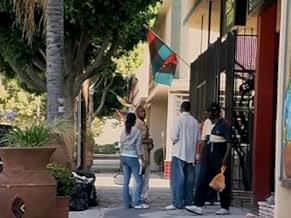
I'm not a big fan of contrived social experiments and certainly don't think it's appropriate to extrapolate much out of a sample body of 2 families but I did appreciate the honesty of those who weren't aware that they were being filmed. From the store clerks who ran out of job applications, to the cop advocating racial profiling, to the drum circle crowd upset at the "interracial" couple and the line dancers shaking their heads at the "black" couple. These were the moments that makes one shake his head in resignation.
Although the end speechs were highly edited with jump cuts and melodramatic music, I was taken by the words of Kenny the self-proclaimed ex gangster. I was moved by his eloquent words and his heartfelt caring for Nick. He had the entire room transfixed on his words and his emotion and while he didn't speak to the issue of race he did reach out and connect with Nick in a way no one else in the show did. Indeed, it was quite sad to hear Nick say that he has never been close to anyone, including his own family. We can't solve the issues of race if we can't even bridge the disconnect in our families. As Kenny alluded, if we fail to realise the power in our relationships with the people around us, we will never realise our true potential. We should all start locally and then work outward from there.
Although the end speechs were highly edited with jump cuts and melodramatic music, I was taken by the words of Kenny the self-proclaimed ex gangster. I was moved by his eloquent words and his heartfelt caring for Nick. He had the entire room transfixed on his words and his emotion and while he didn't speak to the issue of race he did reach out and connect with Nick in a way no one else in the show did. Indeed, it was quite sad to hear Nick say that he has never been close to anyone, including his own family. We can't solve the issues of race if we can't even bridge the disconnect in our families. As Kenny alluded, if we fail to realise the power in our relationships with the people around us, we will never realise our true potential. We should all start locally and then work outward from there.
Cutler and Cube's reality series is a unique social experiment that goes horribly awry
Network: FX; Genre: Reality, Documentary; Content Rating: TV-MA (strong language); Perspective: Contemporary (star range: 1 - 4);
Seasons Reviewed: Complete Series (1 season)
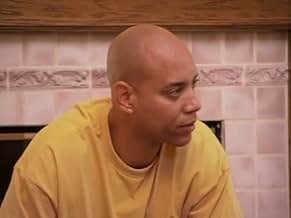
I love FX. Even when their shows aren't very good, they are still so bold and unique that they thrash about making a formidable fight. "Black. White." is a 1-shot, 6 episode series developed by R. J. Cutler and Ice Cube - lending his celebrity name and a halfway decent theme song to "the project" - about two families who employ an elaborate Hollywood make-up regimen to "trade races", making the white family (Bruno, Carmen and daughter Rose) appear black and the black family (Brian, Renee, and son Nick) appear white. Creepy? Maybe a little, but we've never seen this before, which is always a find in the creatively dead and socially irresponsible reality genre.
It starts out fun enough. It's fascinating watching the family members react to each other's new appearance. The opportunity they are given to walk around looking like someone other than themselves, is a cathartic human curiosity that goes beyond race and ethnicity. Brian gets his white make-over and goes straight to the driving range, then gets treatment from a shoe salesman I've never heard of life-long white men getting. Bruno, on the other hand, relishes what he will do when first called the N-word while in black make-up. But after the first episode, which also includes a test group where the two races hear what others think of them (the show's provocative high point), the fun is pretty much gives way to standard reality series impulses.
From there, you can take "Black. White." one of two ways: as a reality series or as a social experiment. Taken simply as a reality show it is decidedly above the rest, and both families have enough emotional baggage to pass the mustard for simple, interesting TV. End of that review.
But like Actual Reality's other FX series, the entertaining "30 Days", Cutler and Cube want "Black. White." to be more. They want to make us think. They want to break down the wall of self-segregation that these two races erect for themselves. For the duration of the project the families are made to live together so that they will share their experiences, and, hopefully, have intellectual discussions on the state of race relations in America. Because talking is the first step toward fixing the problem - right? But it isn't long before the women are at each others throats just like in any other reality show.
For all of its good intentions, in choosing these particular people as its participants they force us to debate a false reality. Instead of showing the national battle between black and white, "Black" actually ends up showing the battle between blacks and liberals, with Carmen as the prototype for someone who thinks that because her parents where involved with the civil rights movement, that she's got the right idea about race, all the while not realize that every "tolerant", "open-minded" idea she has toward black people is rooted in a weird core belief that they are SO different that they need to be understood like "creatures" as she puts it and coddled in society. Renee notes that Carmen treats her like an alien.
The subjects quickly prove themselves to be too kooky; saying things and making social mistakes that the average person really wouldn't say or do. We constantly feel like we are smarter than they are and as a result, can't learn anything from them. Is it all about skin color? Is racism perceived or indoctrinated? Any message the show was going for in the first place gets muddled, falling back on the old "there are no easy answers" line and refusing to pose any theories. Any hope of getting people to talk about race evaporates the moment Bruno showcases his own (hold on ) rap video.
The guys are pretty cool, but as guinea pigs, both Bruno and Brian are so hell bent on proving their take on racism they, frustratingly, won't even consider another view. Bruno (a pompous ass who views the world through the prism of himself), to prove that people see racism because they are looking for it, and Brian who takes the traditional line that black people are immersed in white culture and are constantly being sized up every where they go (like teenagers) by whites. When racist things don't happen, Brian and Renee assume that it would have happened had they not been in white make-up. For her part, Renee befriends a white women outside the project, deciding that she can be friends with her - not because she has learned anything about "the white experience", but because of the understanding way the women treats her. It is still all about her.
The show completely falls apart as an experiment when it starts to obviously take Brian's side. The last half of the series is less about two different ethnicities learning about each other and becomes a cliché, sanctimonious sermon, the yardstick for success of which is how well it can beat into Bruno, Carmen and us how victimized black America is. "Black" has a view of race no deeper than surface-level stereotypes.
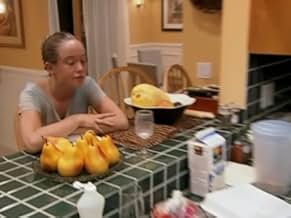
What does work about "Black.White" are the kids. Rose, the overly emotional daughter, is ripped apart having to lie to her new friends in a black poetry group. A bond forms between her, Brian and Renee and the series rightly climaxes at Rose's poetry showcase.
Nick, who in white face looks like Michael Jackson but hilariously won't change the way he speaks, is equally hell bent, but on learning absolutely nothing. The most fascinating storyline in the show involves Nick's disrespect for money, his ignorance over the use of the N-word and the fact that he doesn't see things in terms of race until his parents train him to see it.
* * / 4
Seasons Reviewed: Complete Series (1 season)
I love FX. Even when their shows aren't very good, they are still so bold and unique that they thrash about making a formidable fight. "Black. White." is a 1-shot, 6 episode series developed by R. J. Cutler and Ice Cube - lending his celebrity name and a halfway decent theme song to "the project" - about two families who employ an elaborate Hollywood make-up regimen to "trade races", making the white family (Bruno, Carmen and daughter Rose) appear black and the black family (Brian, Renee, and son Nick) appear white. Creepy? Maybe a little, but we've never seen this before, which is always a find in the creatively dead and socially irresponsible reality genre.
It starts out fun enough. It's fascinating watching the family members react to each other's new appearance. The opportunity they are given to walk around looking like someone other than themselves, is a cathartic human curiosity that goes beyond race and ethnicity. Brian gets his white make-over and goes straight to the driving range, then gets treatment from a shoe salesman I've never heard of life-long white men getting. Bruno, on the other hand, relishes what he will do when first called the N-word while in black make-up. But after the first episode, which also includes a test group where the two races hear what others think of them (the show's provocative high point), the fun is pretty much gives way to standard reality series impulses.
From there, you can take "Black. White." one of two ways: as a reality series or as a social experiment. Taken simply as a reality show it is decidedly above the rest, and both families have enough emotional baggage to pass the mustard for simple, interesting TV. End of that review.
But like Actual Reality's other FX series, the entertaining "30 Days", Cutler and Cube want "Black. White." to be more. They want to make us think. They want to break down the wall of self-segregation that these two races erect for themselves. For the duration of the project the families are made to live together so that they will share their experiences, and, hopefully, have intellectual discussions on the state of race relations in America. Because talking is the first step toward fixing the problem - right? But it isn't long before the women are at each others throats just like in any other reality show.
For all of its good intentions, in choosing these particular people as its participants they force us to debate a false reality. Instead of showing the national battle between black and white, "Black" actually ends up showing the battle between blacks and liberals, with Carmen as the prototype for someone who thinks that because her parents where involved with the civil rights movement, that she's got the right idea about race, all the while not realize that every "tolerant", "open-minded" idea she has toward black people is rooted in a weird core belief that they are SO different that they need to be understood like "creatures" as she puts it and coddled in society. Renee notes that Carmen treats her like an alien.
The subjects quickly prove themselves to be too kooky; saying things and making social mistakes that the average person really wouldn't say or do. We constantly feel like we are smarter than they are and as a result, can't learn anything from them. Is it all about skin color? Is racism perceived or indoctrinated? Any message the show was going for in the first place gets muddled, falling back on the old "there are no easy answers" line and refusing to pose any theories. Any hope of getting people to talk about race evaporates the moment Bruno showcases his own (hold on ) rap video.
The guys are pretty cool, but as guinea pigs, both Bruno and Brian are so hell bent on proving their take on racism they, frustratingly, won't even consider another view. Bruno (a pompous ass who views the world through the prism of himself), to prove that people see racism because they are looking for it, and Brian who takes the traditional line that black people are immersed in white culture and are constantly being sized up every where they go (like teenagers) by whites. When racist things don't happen, Brian and Renee assume that it would have happened had they not been in white make-up. For her part, Renee befriends a white women outside the project, deciding that she can be friends with her - not because she has learned anything about "the white experience", but because of the understanding way the women treats her. It is still all about her.
The show completely falls apart as an experiment when it starts to obviously take Brian's side. The last half of the series is less about two different ethnicities learning about each other and becomes a cliché, sanctimonious sermon, the yardstick for success of which is how well it can beat into Bruno, Carmen and us how victimized black America is. "Black" has a view of race no deeper than surface-level stereotypes.
What does work about "Black.White" are the kids. Rose, the overly emotional daughter, is ripped apart having to lie to her new friends in a black poetry group. A bond forms between her, Brian and Renee and the series rightly climaxes at Rose's poetry showcase.
Nick, who in white face looks like Michael Jackson but hilariously won't change the way he speaks, is equally hell bent, but on learning absolutely nothing. The most fascinating storyline in the show involves Nick's disrespect for money, his ignorance over the use of the N-word and the fact that he doesn't see things in terms of race until his parents train him to see it.
* * / 4
Bruno is a bully: Scenarios are Shallow
I am glad there's a show like this but the scenarios are shallow, in my opinion. What I mean by that is being black creates in the bearer a state of mind around different people and in different settings. Try going to an emergency room with back pain as a white guy and then as a black guy. Try getting a job anywhere you want. Send them into certain neighborhoods to rent or buy. The list goes on but I must say the show is a start and kudos to Ice. It also depends on your background, family history and geographic region. There is no monolithic black community though some things are endemic, yet many try to deny it and may have never been exposed. Changing subjects: Bruno is a real jerk. A typical bully, invalidating the experiences of others to absolve himself of realizing truth and his white privilege. Instead of saying, "here, see, here, see!", the brother needs to direct him to Tim Wise.
Just saw the series premiere on F/X...
...And I can honestly my jaw dropped. I just couldn't believe it. Hollywood makeup effects artist Keith VanderLaan (whose work on "Big Momma's House" and "White Chicks" has not gone unnoticed) has done the unthinkable by transforming a black family into a white family, and a white family into a black family. The Sparks, is the black family (Brian, his wife Renee, son Nick) from an Atlanta suburb and the white Wurgel-Marcotulli family (Carmen, her live-in boyfriend Bruno, Carmen's daughter Rose) from Santa Monica, California, must live together and walk and talk, as the opposite race.
Now before I heard about this show, courtesy of the rants of the many EB Soldiers at Public Enemy's official website message boards, I have to say I first met "Black. White." with great skepticism. But as I heard more about it, and even though I agree largely with the rants of the EB Soldiers, I was still enticed. I wanted to see more, and what I saw tonight was nothing short of an outstanding examination of how the black and white races interact with one another and as each other.
As a 20-year-old black male, "Black. White." not only forced to me to take into account what whites think and experience, but it also made room for me to ponder my own conceptions about myself, and my fellow brothers and sisters in America. Bruno and Carmen and Brian and Renee all attend separate black/white focus groups, in disguise, and each gets a taste of what the other race feels about the other race. Before the meetings, though, the participants gave their companions advice on how to "act" while listening to the discussion; Brian says Bruno should slouch a little bit and Bruno says Brian should keep an upright, or otherwise proper posture. We can see them nervously squirming in their seats as they all get anxious about the discussions taking place. I couldn't help but feel the heat too.
Hopefully, this show will open eyes, minds, and hearts about walking a mile in the shoes of somebody different. According to the Style section of today's Washington Post newspaper, the show's creator R.J. Cutler seems to know all about this sort of touchy reality thing. He produced "Super Size Me" (2004) filmmaker Morgan Spurlock's "30 Days" (damn, I really wanted to see that show), which frequently had similar role-swapping role-playing that included a fundamentalist Christian living with a Muslim family and a straight homophobe taking up residence in San Franciso's openly-gay Castro district.
Rapper Ice Cube, who is no stranger to politics and the racial divide in America, also did the opening theme song and is the show's co-producer and that should hopefully draw in more viewers, particularly those who pay attention to political hip-hop.
What we may see on "Black. White." may not be new to a lot of us, and I won't disagree with anyone who says otherwise. What it will do, I hope, is show what America is like from the other side for these six people. It shows much promise. The dynamics of racism, as portrayed often in the media, is sour compared to what really goes on out there. We can no longer turn a blind eye and a deaf ear to this cancerous epidemic in our country.
Now let's see what the other side says.
Now before I heard about this show, courtesy of the rants of the many EB Soldiers at Public Enemy's official website message boards, I have to say I first met "Black. White." with great skepticism. But as I heard more about it, and even though I agree largely with the rants of the EB Soldiers, I was still enticed. I wanted to see more, and what I saw tonight was nothing short of an outstanding examination of how the black and white races interact with one another and as each other.
As a 20-year-old black male, "Black. White." not only forced to me to take into account what whites think and experience, but it also made room for me to ponder my own conceptions about myself, and my fellow brothers and sisters in America. Bruno and Carmen and Brian and Renee all attend separate black/white focus groups, in disguise, and each gets a taste of what the other race feels about the other race. Before the meetings, though, the participants gave their companions advice on how to "act" while listening to the discussion; Brian says Bruno should slouch a little bit and Bruno says Brian should keep an upright, or otherwise proper posture. We can see them nervously squirming in their seats as they all get anxious about the discussions taking place. I couldn't help but feel the heat too.
Hopefully, this show will open eyes, minds, and hearts about walking a mile in the shoes of somebody different. According to the Style section of today's Washington Post newspaper, the show's creator R.J. Cutler seems to know all about this sort of touchy reality thing. He produced "Super Size Me" (2004) filmmaker Morgan Spurlock's "30 Days" (damn, I really wanted to see that show), which frequently had similar role-swapping role-playing that included a fundamentalist Christian living with a Muslim family and a straight homophobe taking up residence in San Franciso's openly-gay Castro district.
Rapper Ice Cube, who is no stranger to politics and the racial divide in America, also did the opening theme song and is the show's co-producer and that should hopefully draw in more viewers, particularly those who pay attention to political hip-hop.
What we may see on "Black. White." may not be new to a lot of us, and I won't disagree with anyone who says otherwise. What it will do, I hope, is show what America is like from the other side for these six people. It shows much promise. The dynamics of racism, as portrayed often in the media, is sour compared to what really goes on out there. We can no longer turn a blind eye and a deaf ear to this cancerous epidemic in our country.
Now let's see what the other side says.
Very good look into the minds of the "average" middle class black and white family
I thought this was a very well developed idea that works on many different levels. First, we have the two "average" families composed of two parents and a child. The white family seems a little more offbeat with the overly accepting mother and the father who doesn't seem to see the racism in anything that happens around him. The daughter seems to be the only member of the family that is learning anything somewhat valuable during the whole transition. The black family seems to be more down-to-earth and likable. The father enjoys being "treated" as a white man and using the "white" talk that is often used as a hyper reality mockery of the formal talk that dave chapelle is usually found using when imitating/mocking the way white people talk. The mother is somewhat easygoing but gets irritated when listening to the ditsy white mother imitate "black" talk. The son is just a normal, shy kid who doesn't feel like he has to "act white" because he feels like he will be accepted for who he is. The way ideas clash between the families during their ventures out into LA are very interesting and sometimes comical. This is a great show for everyone and I hope that more people take to such a good thought provoking show about racial tension in the modern day.


Did you know
- TriviaA part of this experiment, was for the two families to live together in the same house. With their false identities, they found jobs, enrolled their kids in schools and at the end of each day shared their interactions amongst each other.
- ConnectionsReferenced in Alex Meyers: the new Hunger Games movie is kinda dumb... (2024)
- How many seasons does Black. White. have?Powered by Alexa
Details
- Color
Contribute to this page
Suggest an edit or add missing content