Kan shang qu hen mei
- 2006
- 1h 32m
IMDb RATING
6.7/10
1.6K
YOUR RATING

A young boy starting school for the first time struggles to fit in to a strictly regimented society in in post-revolutionary China.A young boy starting school for the first time struggles to fit in to a strictly regimented society in in post-revolutionary China.A young boy starting school for the first time struggles to fit in to a strictly regimented society in in post-revolutionary China.
- Awards
- 8 wins & 3 nominations total



- Director
- Writers
- All cast & crew
- Production, box office & more at IMDbPro
6.71.5K
1
2
3
4
5
6
7
8
9
10
Featured reviews
charming little rebel in a Chinese kindergarten
this is a film that you can easily watch with your little kids, because they can relate themselves to this little hero's rebellion against (totalitarian) adults and their unjust world. the protagonist in this case is a stubborn rascal but he has his own logic in behaving as he does, so take him seriously or otherwise... it is a charming little movie about children's life in post-revolutionary china, a small gem. and on general level it also is a perennial study of a child's inability to understand or accept all the strange things adults do or not do to keep their sometimes questionable authority. a nice addition to Asian kid movies which are usually more of a Japanese or a south korean field of quality cinema.
I'd give it a bronze star if they took out some stuff
Admittedly fairly intriguing story that is blatantly an allegory for something. Presumably oppression in some country. But which one...
My enduring memory of this movie is bodily functions. A lot of lavatorial stuff and some prepubescent nudity. I'm weirded out by the teachers that take even discrete flatulence very personally.
I'm not convinced that this had anything to say beyond that oppression is exists and that its bad but I still respect how this movie waves the flag for vulgarity and raises a juvenile middle finger the authority figures that think they're so different to those they're oppressing.
It's whimsical good fun that's on the right side at least even if it falls short of being the profound statement at least one of the producers must have thought it was.
Good child actors and a sweet sense of color and composition.
My enduring memory of this movie is bodily functions. A lot of lavatorial stuff and some prepubescent nudity. I'm weirded out by the teachers that take even discrete flatulence very personally.
I'm not convinced that this had anything to say beyond that oppression is exists and that its bad but I still respect how this movie waves the flag for vulgarity and raises a juvenile middle finger the authority figures that think they're so different to those they're oppressing.
It's whimsical good fun that's on the right side at least even if it falls short of being the profound statement at least one of the producers must have thought it was.
Good child actors and a sweet sense of color and composition.
Revolt on a small scale
This is the story of a young boy making a little revolt of his own against his teachers. The plot (if you can call it that) unfolds slowly as we get to follow the kids in their day to day life at the school. The interaction between the kids is great and feels very authentic. Another thing worth mentioning is the photo and the way the camera is always placed in the kids point of view, so the audience always see the adults from below. On the minus side is that many scenes are very predictable and the lack of an actual plot makes it a bit too slow at times. But it's never boring and the heart-warming interaction between the kids as they go their own way makes this a film well worth seeing.
A lyrical film about childhood in Mao's China
I just watched this film on UK TV. I wasn't sure what to make of it at first but it did capture my attention - not least because I'm not familiar with the setting in a Mao generation kindergarten boarding school. I've no idea if any of the details are factual but it reminded me of a rather Dickensian idea of bringing up children - though kinder and more humane.
This is a "foreign film" and therefore there are no car chases, no murders and no serial killers. It's about real human beings - infants in this case. If anyone is upset about seeing little kids bottoms it's because you have had your mind poisoned by Anglo-Saxon attitudes and obsession with pedophiles. Obviously you must never have been around infants - toilet training is a big part of the day! Infants are basically sweet and innocent and these kids are mostly seen in that way. The approach in this film is affectionate and realistic - kids also have their evil little ways! I think the core message is that there is not much difference between the children's Kindergarten school routines and the adult society in Mao's China. The attitudes of the children will harden in the controlled society that exists outside when the games become real. The teachers, the educators will be replaced by other kinds of educators and wrong behaviour will be punished by re-education.When you watch the last 5 minutes you will see why I came to that conclusion (could be wrong!). Natural instincts become perverted by too much control. People are so regimented that they even have to poo and pee at he same time in a line in the same place!Something like that.
You have a delightful journey getting to that point. As stated elsewhere the children's performances are completely believable. Of course, it is fiction and some dramatic license is taken in regard to the freedom of movement the little boy protagonist has.
This is a "foreign film" and therefore there are no car chases, no murders and no serial killers. It's about real human beings - infants in this case. If anyone is upset about seeing little kids bottoms it's because you have had your mind poisoned by Anglo-Saxon attitudes and obsession with pedophiles. Obviously you must never have been around infants - toilet training is a big part of the day! Infants are basically sweet and innocent and these kids are mostly seen in that way. The approach in this film is affectionate and realistic - kids also have their evil little ways! I think the core message is that there is not much difference between the children's Kindergarten school routines and the adult society in Mao's China. The attitudes of the children will harden in the controlled society that exists outside when the games become real. The teachers, the educators will be replaced by other kinds of educators and wrong behaviour will be punished by re-education.When you watch the last 5 minutes you will see why I came to that conclusion (could be wrong!). Natural instincts become perverted by too much control. People are so regimented that they even have to poo and pee at he same time in a line in the same place!Something like that.
You have a delightful journey getting to that point. As stated elsewhere the children's performances are completely believable. Of course, it is fiction and some dramatic license is taken in regard to the freedom of movement the little boy protagonist has.
Charming and well played drama chronicling a young boy's descent through a school's system, cloaking a powerful tale of the exasperated plight of conformity.
Little Red Flowers is rather-a bright and breezy film on the surface, a film coated with a light and somewhat fluffy exterior about a young boy's mishaps at school and rather quaint friendship he strikes up with another girl that overall masks what rather disturbing substance lies beneath; a film featuring young children looking cute and doing all manner of rather childish things which we may find quite sweet but much more importantly exploring ideas of power, control and the reactions those go through when exposed to these items. Chinese director Yuan Zhang distills, through very young children occupying a live-in nursery, a human-being's reaction to imperialistic and strict attitudes towards life and functioning which lead's to many seemingly happily abiding but one overtly reacting to the taking away of their freedom and their choice as to whether or not to live under the inferred state's imposed sanctions. The film is on one level a whimsical enough comedy about a child fumbling and bumbling their way through a locale with others his age whom get in on the act far quicker than he does, deeper still it is a quite frightening plight of one person's struggle against overwhelming odds which will eventually lead to attempted revolution and proposed violence when the way of living isn't inclined enough towards one's own choice.
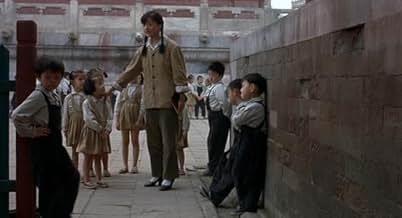
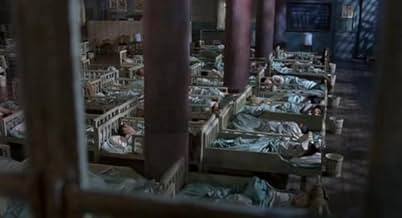
The film begins with the lead, a four year old Fang Qiangqiang played by child actor Bowen Dong, in the process of being delivered to a boarding nursery school for both genders by his father in late-1940's China. The father is kept anonymous, cut off from around the knees upwards leaving the audience solely to be able to focus on that of both the disillusioned Fang and the headteacher Miss Li (Rui). Fang is very much an outcast to this play school nursery zone, the other children have already long since been moulded into a unit of kids whom go along with the teachers' wishes and do what they're told. The film enjoys its mise-en-scene of a somewhat militarian nature at the school, the trooping around of the playground by the teachers echoing the activity to that of guards at a kind of establishment as well as the sleeping quarters of the children shrouded together as if in an army barracks, It is a place Fang is delivered to in the middle of winter, the climbing-frames and roundabouts lying dormant and forlorn outside as they sit there drenched in heavy snow. Inside, regimental set ups dominate the way of operation with rewards distributed by the establishment in the form of the titular little red flowers as children go through with the basic life-skills more inclined towards the hygiene required in life.
Fang is initially unable to compete; he's left there to cry an awful lot, appears in different clothing to that of the others and dislikes both the regime and system. At first it's inclined it may be down to home-sickness, but as things transpire the consequent reactions to the school's set up infer that it is fear and sadness born out of how things are run. There is a wide shot during his tenure as the cygnet amidst the swans which encompasses the sheer menagerie of other youngsters within the locale encapsulating his alienation, as he is greeted into the imminent scenario by a sternly face teacher and then forced into changing into his day clothes, despite knowledge all round that he is unable to do so, in front of everybody. There is a temptation to read Little Red Flowers on an initial level linked more broadly to that of it being a straight forward depiction of a school for children doing what they're told since, how else are they supposed to live? On another level, the film's clear distinction between ruler and ruled twinned with the fact it has been produced by a nation no-less than China along with the fact director Zhang strikes me, from reading of his past-work, to be a too accomplished-a filmmaker to produce a straight up film depicting such a scenario without allegory.
One of the starker moments in his film actually occurs outside of the boarding kindergarten, a short walk around local sites or what-not resulting in the children venturing past a small squad of Chinese soldiers out and about going through drills for whatever purpose; the placing of them in the background as our children occupy the foreground effectively competing in the same action foreshadowing generational jumps from regimental circumstances unto further ways of living of similar distinction. While there is nothing particularly sordid or necessarily evil about the school, exemplified in a song it has everybody sing about the sharing of an apple and upholding positive characteristics, it is a rather engaging look into how a working system of such an assimilated nature can affect those of which are processed through it; more broadly, how imagery and particular methods in bringing somebody up or bringing somebody around to be of a particular 'type' can have ill affects on those undergoing said process, the majority of it culminating in a really smartly played drama tackling some interesting themes.
The film begins with the lead, a four year old Fang Qiangqiang played by child actor Bowen Dong, in the process of being delivered to a boarding nursery school for both genders by his father in late-1940's China. The father is kept anonymous, cut off from around the knees upwards leaving the audience solely to be able to focus on that of both the disillusioned Fang and the headteacher Miss Li (Rui). Fang is very much an outcast to this play school nursery zone, the other children have already long since been moulded into a unit of kids whom go along with the teachers' wishes and do what they're told. The film enjoys its mise-en-scene of a somewhat militarian nature at the school, the trooping around of the playground by the teachers echoing the activity to that of guards at a kind of establishment as well as the sleeping quarters of the children shrouded together as if in an army barracks, It is a place Fang is delivered to in the middle of winter, the climbing-frames and roundabouts lying dormant and forlorn outside as they sit there drenched in heavy snow. Inside, regimental set ups dominate the way of operation with rewards distributed by the establishment in the form of the titular little red flowers as children go through with the basic life-skills more inclined towards the hygiene required in life.
Fang is initially unable to compete; he's left there to cry an awful lot, appears in different clothing to that of the others and dislikes both the regime and system. At first it's inclined it may be down to home-sickness, but as things transpire the consequent reactions to the school's set up infer that it is fear and sadness born out of how things are run. There is a wide shot during his tenure as the cygnet amidst the swans which encompasses the sheer menagerie of other youngsters within the locale encapsulating his alienation, as he is greeted into the imminent scenario by a sternly face teacher and then forced into changing into his day clothes, despite knowledge all round that he is unable to do so, in front of everybody. There is a temptation to read Little Red Flowers on an initial level linked more broadly to that of it being a straight forward depiction of a school for children doing what they're told since, how else are they supposed to live? On another level, the film's clear distinction between ruler and ruled twinned with the fact it has been produced by a nation no-less than China along with the fact director Zhang strikes me, from reading of his past-work, to be a too accomplished-a filmmaker to produce a straight up film depicting such a scenario without allegory.
One of the starker moments in his film actually occurs outside of the boarding kindergarten, a short walk around local sites or what-not resulting in the children venturing past a small squad of Chinese soldiers out and about going through drills for whatever purpose; the placing of them in the background as our children occupy the foreground effectively competing in the same action foreshadowing generational jumps from regimental circumstances unto further ways of living of similar distinction. While there is nothing particularly sordid or necessarily evil about the school, exemplified in a song it has everybody sing about the sharing of an apple and upholding positive characteristics, it is a rather engaging look into how a working system of such an assimilated nature can affect those of which are processed through it; more broadly, how imagery and particular methods in bringing somebody up or bringing somebody around to be of a particular 'type' can have ill affects on those undergoing said process, the majority of it culminating in a really smartly played drama tackling some interesting themes.


- How long is Little Red Flowers?Powered by Alexa
Details
Box office
- Gross worldwide
- $303,898
- Runtime
- 1h 32m(92 min)
- Color
- Sound mix
Contribute to this page
Suggest an edit or add missing content