IMDb RATING
7.2/10
141K
YOUR RATING


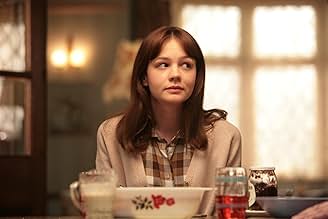
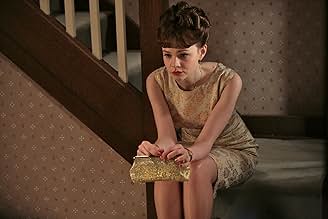
A coming-of-age story about a teenage girl in 1960s suburban London, and how her life changes with the arrival of a playboy nearly twice her age.A coming-of-age story about a teenage girl in 1960s suburban London, and how her life changes with the arrival of a playboy nearly twice her age.A coming-of-age story about a teenage girl in 1960s suburban London, and how her life changes with the arrival of a playboy nearly twice her age.
- Nominated for 3 Oscars
- 36 wins & 96 nominations total





Kate Duchêne
- Latin Teacher
- (as Kate Duchene)


- Director
- Writers
- All cast & crew
- Production, box office & more at IMDbPro
7.2140.5K
1
2
3
4
5
6
7
8
9
10
Featured reviews
Carey Mulligan is lovely, Peter Sarsgaard too slimy
It's early 1960's London. Jenny Mellor (Carey Mulligan) is a sheltered schoolgirl aiming to go to Oxford. She meets David Goldman (Peter Sarsgaard) one rainy afternoon. He's a mysterious older man who opens her eyes to the exciting world outside her life at home. He's so slick that even her parents fall for him. Only there's more of a dark side to David. He does questionable things to keep his highlife. She joins him as her live inevitable slide downwards.
It's annoying how easily deceived her father (Alfred Molina) is. He's more caricature than anything. There are some wonderful exchanges with Miss Stubbs (Olivia Williams). Peter Sarsgaard is so obviously slimy that it's offputting. Carey Mulligan is absolutely lovely. She puts in a great performance.
It's annoying how easily deceived her father (Alfred Molina) is. He's more caricature than anything. There are some wonderful exchanges with Miss Stubbs (Olivia Williams). Peter Sarsgaard is so obviously slimy that it's offputting. Carey Mulligan is absolutely lovely. She puts in a great performance.
An educated mind is not necessarily an open one
In the cinema certain historical periods have become associated with a particular set of ideas. The 1960s represent change, progress and excitement whereas the 1950s are frequently regarded as a period of stifling social conformity. Of course, the "swinging sixties" did not necessarily start to swing on 1st January 1960, and in retrospect the first few years of the decade seem to have more in common with the conformist fifties than with the "swinging London" era of the later sixties. Certainly, many young people during this period regarded London as a dull, conservative place, and looked eagerly to foreign cities, especially Paris, as being more exciting and radical. There was an enthusiasm for everything French- French philosophy, French literature, French cinema, French fashions, even French jazz and French cigarettes. This Francophilia doubtless included elements of wishful thinking- De Gaulle's Fifth Republic was a more conservative place than many Britons realised- but it was nevertheless an influential phenomenon. It is a phenomenon explored in Julian Barnes' novel "Metroland" (later filmed), and also in this film.
The main character is Jenny, a teenage schoolgirl living in the London suburb of Twickenham in 1961. Jenny is highly intelligent, and is studying hard with a view to taking the entrance exams to Oxford University. She is not, however, really sure why she wants to go to Oxford, except that she is being pushed to do so by her parents who feel that university is the best place for her to meet a wealthy husband.
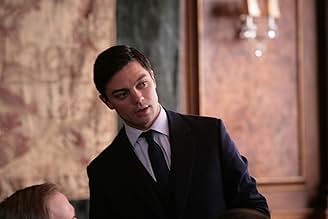
Jenny's life changes when she meets a handsome and charming older man named David. They quickly become close friends and begin dating. David is clearly wealthy, and claims to be an art dealer and property developer. More important to Jenny, however, is his knowledge of culture. He is well up with all the latest intellectual and artistic fashions from France and takes her to concerts and jazz clubs. What really impresses her is that he takes her to Paris. Eventually, David proposes to Jenny and she accepts and drops out of school without taking her A-levels, her Oxford ambitions abandoned.
Many parents would be worried about the idea of their sixteen-year-old daughter being romanced by a thirty-something man, especially if his influence leads her to neglect her education, but Jenny's parents, especially her complacent, Philistine father, seem strangely unconcerned. His argument is that as Jenny has now found a wealthy suitor there will be no need for her to use Oxford as a dating agency. His one objection to David as a son-in-law seems to be that he is Jewish. (Anti-Semitism was unfortunately widespread in British society at this period). Yet it is obvious to the audience that there is a darker side to David's character. His business methods are, to say the least, not beyond reproach (the character may have been based upon the notorious slum landlord Peter Rachman) and he never takes Jenny to his home, always meeting her in a luxurious flat belonging to his friend and business partner Danny. Eventually, even Jenny herself begins to suspect that David is not all he seems.
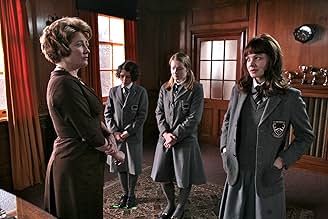
The title "An Education" can be understood on two levels. As a coming-of-age drama it narrates Jenny's metaphorical "education" in the wider sense of learning lessons about life. Yet it obviously also deals with her education in the narrower, literal sense of the word. It raises similar issues to another great British film, "Educating Rita", namely whether it is formal academic education or informal education to be gained in the outside world which is the more valuable. Jenny drops out of school because she believes that she can better acquire knowledge, both of high culture and of the ways of the world, through her life with David than through academic study. (Jenny's vision of her future life envisages her living with David in Paris on the Rive Gauche, reading Sartre, smoking Gauloises and going to the cinema to see the latest productions of the Nouvelle Vague). It seems hard to blame her for this conclusion, given that in the film the main advocate of the life academic is her headmistress, an intellectual snob and virulent anti-Semite ("The Jews killed Our Lord!") who serves as a reminder that an educated mind is not necessarily an open one. It is only when she becomes disillusioned with David that Jenny starts to reassess her priorities.
Her performance in the lead role has led to Carey Mulligan being hailed as the "new Audrey Hepburn", although the main point of resemblance seems to be that at one point in the film Jenny sports (as many young women doubtless did in the early sixties) a Hepburn-style hairdo. Nevertheless, on the basis of this performance Mulligan would appear to be a highly promising star in the making, perhaps the new Keira Knightley. Although she is actually 24, she always seems entirely believable as a naive young teenager. Other good contributions come from Peter Sarsgaard as the smooth, reptilian David, Alfred Molina as Jenny's comical, blustering father, Rosamund Pike as Danny's airheaded mistress Helen and Emma Thompson in an excellent cameo as the obnoxious headmistress.
Period drama is something the British cinema often does well, and "An Education" falls within this tradition, even though it has a Danish director, Lone Scherfig. 2009 has already seen two good British costume dramas, "The Young Victoria" and "Dorian Gray", but "An Education" is an even better one. It is not only a study of a girl on the verge of womanhood, but also an exploration of issues such as social class, racism and the value of education. One of the best British films of recent years. I hope that the Academy will remember it when next year's Oscars are being handed out. 9/10
The main character is Jenny, a teenage schoolgirl living in the London suburb of Twickenham in 1961. Jenny is highly intelligent, and is studying hard with a view to taking the entrance exams to Oxford University. She is not, however, really sure why she wants to go to Oxford, except that she is being pushed to do so by her parents who feel that university is the best place for her to meet a wealthy husband.
Jenny's life changes when she meets a handsome and charming older man named David. They quickly become close friends and begin dating. David is clearly wealthy, and claims to be an art dealer and property developer. More important to Jenny, however, is his knowledge of culture. He is well up with all the latest intellectual and artistic fashions from France and takes her to concerts and jazz clubs. What really impresses her is that he takes her to Paris. Eventually, David proposes to Jenny and she accepts and drops out of school without taking her A-levels, her Oxford ambitions abandoned.
Many parents would be worried about the idea of their sixteen-year-old daughter being romanced by a thirty-something man, especially if his influence leads her to neglect her education, but Jenny's parents, especially her complacent, Philistine father, seem strangely unconcerned. His argument is that as Jenny has now found a wealthy suitor there will be no need for her to use Oxford as a dating agency. His one objection to David as a son-in-law seems to be that he is Jewish. (Anti-Semitism was unfortunately widespread in British society at this period). Yet it is obvious to the audience that there is a darker side to David's character. His business methods are, to say the least, not beyond reproach (the character may have been based upon the notorious slum landlord Peter Rachman) and he never takes Jenny to his home, always meeting her in a luxurious flat belonging to his friend and business partner Danny. Eventually, even Jenny herself begins to suspect that David is not all he seems.
The title "An Education" can be understood on two levels. As a coming-of-age drama it narrates Jenny's metaphorical "education" in the wider sense of learning lessons about life. Yet it obviously also deals with her education in the narrower, literal sense of the word. It raises similar issues to another great British film, "Educating Rita", namely whether it is formal academic education or informal education to be gained in the outside world which is the more valuable. Jenny drops out of school because she believes that she can better acquire knowledge, both of high culture and of the ways of the world, through her life with David than through academic study. (Jenny's vision of her future life envisages her living with David in Paris on the Rive Gauche, reading Sartre, smoking Gauloises and going to the cinema to see the latest productions of the Nouvelle Vague). It seems hard to blame her for this conclusion, given that in the film the main advocate of the life academic is her headmistress, an intellectual snob and virulent anti-Semite ("The Jews killed Our Lord!") who serves as a reminder that an educated mind is not necessarily an open one. It is only when she becomes disillusioned with David that Jenny starts to reassess her priorities.
Her performance in the lead role has led to Carey Mulligan being hailed as the "new Audrey Hepburn", although the main point of resemblance seems to be that at one point in the film Jenny sports (as many young women doubtless did in the early sixties) a Hepburn-style hairdo. Nevertheless, on the basis of this performance Mulligan would appear to be a highly promising star in the making, perhaps the new Keira Knightley. Although she is actually 24, she always seems entirely believable as a naive young teenager. Other good contributions come from Peter Sarsgaard as the smooth, reptilian David, Alfred Molina as Jenny's comical, blustering father, Rosamund Pike as Danny's airheaded mistress Helen and Emma Thompson in an excellent cameo as the obnoxious headmistress.
Period drama is something the British cinema often does well, and "An Education" falls within this tradition, even though it has a Danish director, Lone Scherfig. 2009 has already seen two good British costume dramas, "The Young Victoria" and "Dorian Gray", but "An Education" is an even better one. It is not only a study of a girl on the verge of womanhood, but also an exploration of issues such as social class, racism and the value of education. One of the best British films of recent years. I hope that the Academy will remember it when next year's Oscars are being handed out. 9/10
Well deserved positive criticism...
I remember this film getting quite a lot of critical praise when it came out and so I was intrigued to see what all the fuss was about. Of course it got nowhere near being shown in my local cinema and so I waited patiently for it to show on TV. A screenplay by Nick Hornby based on a memoir by Lynn Barber and set in London in the early 1960's it has all the hallmarks of a decent production. You'll be glad to know that I agree with the critics, yes, it's pretty good. There were a couple of points where it could have gone off the rails, but fortunately it stayed on the tracks and we have a fine piece of work.
Jenny Mellor is a bright sixteen year old student whose parents have ambitions for her to study at Oxford University. She is slightly disenchanted with her lot though, and yearns to go out and experience the world while she is still young. By chance she meets David, a man more than twice her age, who recognises something in her and takes her to see the sights. Two friends of his, Danny and Helen come along and Jenny goes to concerts, sees art, dines in fine restaurants and even visits Paris. David does all this with Jenny's parent's permission, he is very persuasive. Of course all is not what it seems and her world is about to take a massive jolt and the many arguments she has made against conformity are about to be tested.
This is a very well made film which features a stand-out performance from Carey Mulligan as Jenny; she was really outstanding in the part. Peter Sarsgaard was suitably suave as David, as was Dominic Cooper as Danny. Both Alfred Molina and Cara Seymour did a good job as Jenny's parents, Jack and Marjorie. Rosamund Pike played the part of the, rather dim, Helen very well and Olivia Williams did a very good job as Jenny's teacher Miss Stubbs. Finally, a mention for Emma Thompson who had a nice cameo as the headmistress.
This film asks a lot of questions about how some parents try to control the lives of their children, although it's not the main point of the story. I really liked the way it was written but I still felt one or two bits could have done with tidying up (I'm sorry, I can't be specific – spoilers). Having said that, I did enjoy it very much and I really liked the ending. I would definitely watch it again sometime Recommended.
My Score: 7.6/10
Jenny Mellor is a bright sixteen year old student whose parents have ambitions for her to study at Oxford University. She is slightly disenchanted with her lot though, and yearns to go out and experience the world while she is still young. By chance she meets David, a man more than twice her age, who recognises something in her and takes her to see the sights. Two friends of his, Danny and Helen come along and Jenny goes to concerts, sees art, dines in fine restaurants and even visits Paris. David does all this with Jenny's parent's permission, he is very persuasive. Of course all is not what it seems and her world is about to take a massive jolt and the many arguments she has made against conformity are about to be tested.
This is a very well made film which features a stand-out performance from Carey Mulligan as Jenny; she was really outstanding in the part. Peter Sarsgaard was suitably suave as David, as was Dominic Cooper as Danny. Both Alfred Molina and Cara Seymour did a good job as Jenny's parents, Jack and Marjorie. Rosamund Pike played the part of the, rather dim, Helen very well and Olivia Williams did a very good job as Jenny's teacher Miss Stubbs. Finally, a mention for Emma Thompson who had a nice cameo as the headmistress.
This film asks a lot of questions about how some parents try to control the lives of their children, although it's not the main point of the story. I really liked the way it was written but I still felt one or two bits could have done with tidying up (I'm sorry, I can't be specific – spoilers). Having said that, I did enjoy it very much and I really liked the ending. I would definitely watch it again sometime Recommended.
My Score: 7.6/10
Story: predictable. Presentation: excellent.
Before I even get to the review, I want to let you know you can currently find this DVD for $2 on the bargain table at your local Blockbuster (if you live in the USA or Canada). Well worth the price.
Now let's get to the movie. If you're like me & somewhat unexcited by the May- December romance story (Lolita, Venus, Pippa Lee, Last Tango, every Woody Allen flick ever made), you might be asking yourself why you're even bothering. The story here is nothing new, and the description on the back of the DVD sums up the plot in 2 sentences: something about a young schoolgirl torn between her conservative life vs. the glamour life of jazz clubs, older men and sex. But despite this age-old premise, it's the presentation that makes it thoroughly engaging and satisfying.
For one thing, it's set in Britain in the early 1960s. The attitudes, costumes and speech instantly take us back to a time when perhaps the plot wasn't so predictable. Much like watching Three's Company which is so undeniably 70s, we are transported back to a time when the now-trite plot wasn't so trite. So even though part of you may sit there shaking your head thinking "I know where this is going", the overall effect is to experience the film not only through the eyes of a naïve 16-year-old but also through the eyes of a somewhat naïve society. Dark-skinned people are called negroes. The term "Jew" is batted around like an insult. Characters in general are hopelessly clueless compared to today's standards. But the film is presented in a way that we all (should) take it in stride.
For that, I'd say this is probably the most interesting of the May-December romance films I've seen. Also I like the fact that it follows the girl's (younger) point of view whereas all the above films take the man's (older) viewpoint which, especially in the case of Woody Allen & Bertolucci, can come across as the director's attempt to justify his own taste in women. This film, rather, stays away from the subjective morality argument and instead focuses on the consequences. So although the story is far from original, I have to admit that the overall tone is something I haven't seen before.
...with the exception of one amazing film, City of Lost Children (by the director of Amélie). Now there's a film that approaches the subject in a thoroughly unconventional and charming way. If you haven't seen that one, go find a copy right away.
PS Alfred Molina!! You'll love Alfie in An Education. If you're not already a fan of his, check out Chocolat, The Hoax, and you MUST see his skit in Coffee & Cigarettes.
Now let's get to the movie. If you're like me & somewhat unexcited by the May- December romance story (Lolita, Venus, Pippa Lee, Last Tango, every Woody Allen flick ever made), you might be asking yourself why you're even bothering. The story here is nothing new, and the description on the back of the DVD sums up the plot in 2 sentences: something about a young schoolgirl torn between her conservative life vs. the glamour life of jazz clubs, older men and sex. But despite this age-old premise, it's the presentation that makes it thoroughly engaging and satisfying.
For one thing, it's set in Britain in the early 1960s. The attitudes, costumes and speech instantly take us back to a time when perhaps the plot wasn't so predictable. Much like watching Three's Company which is so undeniably 70s, we are transported back to a time when the now-trite plot wasn't so trite. So even though part of you may sit there shaking your head thinking "I know where this is going", the overall effect is to experience the film not only through the eyes of a naïve 16-year-old but also through the eyes of a somewhat naïve society. Dark-skinned people are called negroes. The term "Jew" is batted around like an insult. Characters in general are hopelessly clueless compared to today's standards. But the film is presented in a way that we all (should) take it in stride.
For that, I'd say this is probably the most interesting of the May-December romance films I've seen. Also I like the fact that it follows the girl's (younger) point of view whereas all the above films take the man's (older) viewpoint which, especially in the case of Woody Allen & Bertolucci, can come across as the director's attempt to justify his own taste in women. This film, rather, stays away from the subjective morality argument and instead focuses on the consequences. So although the story is far from original, I have to admit that the overall tone is something I haven't seen before.
...with the exception of one amazing film, City of Lost Children (by the director of Amélie). Now there's a film that approaches the subject in a thoroughly unconventional and charming way. If you haven't seen that one, go find a copy right away.
PS Alfred Molina!! You'll love Alfie in An Education. If you're not already a fan of his, check out Chocolat, The Hoax, and you MUST see his skit in Coffee & Cigarettes.
An Education
Sixteen year old "Jenny" (Carey Mulligan) lives with her aspiring, middle class, parents "Jack" (Alfred Molina) and "Marjorie" (Cara Seymour) whose only real desire in life is for her to study at Oxford University. This is and has been her sole focus throughout her childhood, until, that is - she encounters the dashing "David" (Peter Skarsgard). He's easily twice her age but is so much more stimulating than her schoolboy friend "Graham" (Matthew Beard). This isn't a sweep her off her feet relationship, he gradually engages her in conversation and finds they share common interests. He makes her feel special, interesting, grown up - and when he introduces her to his friends "Danny" (Dominic Cooper) and "Helen" (Rosamund Pike) she starts to feel like the proper fourth wheel on a social wagon that's truly exhilarating. Needless to say, her schoolwork starts to suffer - much to the chagrin of her teacher (Olivia Williams) and, like we all were at that age, there's no telling her that her short term path is not necessarily in her long term interests. As the film develops, we discover that though harmless enough, "David" and his pal are a pair of cads who make their living legally, but maybe just a little immorally - and when "Jenny" discovers that he has one whopping great (if predictable) skeleton in his closet, she has to put her new found maturity to good use. There's something very natural not just about Mulligan's performance here, but also about her burgeoning relationship with a man who knows just which buttons to press. He's not a nasty man, he has no agenda to get her straight into bed, indeed he seems just as dependent on having this young woman around to make him feel alive as she does him; and those characterisations proves quite effective. The star for me, though, was probably Molina. He portrays almost perfectly a father whose dreams for his daughter partnered with his own middle-class mores leaves him caught between his paternal instincts to protect his daughter and his ambitions that she live a better, more fulfilled, life than he. It does run out of steam a little at the end, but then again I'm not quite sure how I would have wanted it to conclude without copping out - one way or another, so maybe it is for the best. It looks classy, the 1960s cars, costumes and soundtrack see to that and it's well worth a watch,


Did you know
- TriviaThe creative team was initially worried about casting the 22-year-old Carey Mulligan in the role of a 16-year-old but was convinced by her screentest. Rosamund Pike reportedly really wanted the small part of Helen because "no one ever lets me be funny."
- GoofsWhen Jenny finally passes her A levels, she mentions grades. The film is set in 1961 - A level grades were first introduced in 1963. Although,when she's studying at home, it is implied that a significant amount of time passes, it is unlikely to have taken her beyond 1962 when, essentially, you either passed or failed GCE exams.
- Crazy creditsThe opening credits are shown against a background of animated chalk-like drawings, all illustrating various stages and segments of "an education," although not sequentially.
- ConnectionsFeatured in The 81st Annual Academy Awards (2009)
- SoundtracksSmoke Without Fire
Written by Duffy and Bernard Butler
Performed by Duffy
Courtesy of A&M/Polydor Records (UK), Mercury Records (US)
Details
- Release date
- Countries of origin
- Official site
- Languages
- Also known as
- Enseñanza de vida
- Filming locations
- Bloomsbury Service Station - 6 Store Street, Bloomsbury, London, England, UK(Jenny finds the letter)
- Production companies
- See more company credits at IMDbPro
Box office
- Budget
- $7,500,000 (estimated)
- Gross US & Canada
- $12,574,914
- Opening weekend US & Canada
- $159,017
- Oct 11, 2009
- Gross worldwide
- $26,096,852
- Runtime
- 1h 40m(100 min)
- Color
- Sound mix
- Aspect ratio
- 2.35 : 1
Contribute to this page
Suggest an edit or add missing content