IMDb RATING
5.7/10
5.3K
YOUR RATING


Arising out of the horror of the Spanish Civil War, a candidate for canonization is investigated by a journalist who discovers his own estranged father had a deep, dark and devastating conne... Read allArising out of the horror of the Spanish Civil War, a candidate for canonization is investigated by a journalist who discovers his own estranged father had a deep, dark and devastating connection to the saint's life.Arising out of the horror of the Spanish Civil War, a candidate for canonization is investigated by a journalist who discovers his own estranged father had a deep, dark and devastating connection to the saint's life.
- Awards
- 2 nominations total




Jordi Mollà
- Don José
- (as Jordi Mollá)


Juan Cruz Rolla Knight
- Young Josemaría
- (as Juan Cruz)
- Director
- Writer
- All cast & crew
- Production, box office & more at IMDbPro
5.75.2K
1
2
3
4
5
6
7
8
9
10
Featured reviews
Good and deep, really interesting, maybe not a classic, but must seen!
Roland Joffe wakes up after two decades of bad cinema. Like a the phoenix bird he come again with interesting cinema.
The film is technically quite interesting. It starts with a short sequence that shows the deepest Spanish soul in a lost village near France. This sequence has an impeccable cut and setting, and works as introduction of the characters and situation. In my opinion the best sequence (speaking as cinema "freak"). The best thing in the film is the photography, which takes the viewer 1920s Spain.
The script is also quite interesting. Although the main character in the film is the Spanish priest Josemaria Escriva, he is not the protagonist of the story. This makes the film more interesting, as it plays with 2 people weighting their importance by their personality and their role in the story. Josemaria is the alter-ego Manolo, both are attractive persons that keep the attention of the viewer, which at the end should judge. Another success of the script is the usage of time. The main story happens in 1920 and 1930, but it is told as memories in the 80s, when the son of Manolo has to write an article about Josemaria, which is going to be canonized by the Catholic Church. Robert discovers that his father came from the same little village of Josemaria, and asks to his father about him. The answer give the title to the film "there be dragons".
Now let's go with the dragons. The makers knew that the film was going to be surrounded by dragons. Opus Dei, communism, revolution, Catholics and the Spanish Civil War... this film has all the ingredients to be a big scandal. The film has the collaboration of some members of the Opus Dei (at least 2 of the producers are) and the organization has given information and access to the documentation about Josemaria. The film also shows a period of the Spanish history which still is a taboo in this country. In Spain, still today, there are mainly 2 opposite streams: pro-franquists and pro-republicans. The film success- in my opinion- to show that as in any war there were no good and bads (which has shocked the Spanish population), that in both sides there were good and bad people, good goals but bad means. My personal opinion is that it success to show the real left of Spain, breaking with the franquist propaganda of the left as communist criminals, but also breaking the view given to Americans by Hemingway that the left in Spain was the advocate of Democracy and freedom. Maybe the film fails to show the right-side of the war, but nevertheless is- in my opinion- the best representation of the civil war that I have seen in art.
Only a non-Spanish could make such a good representation of the Civil War, and only a person like Joffe could dive enough to make such a good representation. I like Joffe because he takes a field and goes deep enough to explain the reasons. It was shown in the Mission and in Killing Fields, and here we are in front of the same Joffe. I admire him because he forgets his own point of view (I have read that he is agnostic), investigates and tries to find the keystone. Some people has said that this film is the answer of the Opus to the Da Vinci Code well I think it comes to late, because the DVC was released 5 or 6 years ago. On the other hand, if it is an answer, it works well. The DVC shows us a people that, in my opinion, is impossible that are real I don't know but I don't believe that in the World are people so crazy for example they are shown flagellating themselves (which is also shown in There Be Dragons), but in the DVC they are doing so while they know that Christ wasn't God! It makes no sense, no one does something like that to offer to a God, that they know is not God at all As this the film is full of incoherences on the other hand There Be Dragons shows both what they do (not the myth) and also explains why In my opinion this is what makes the difference between good and bad cinema (when your idea is to speak about real things).
I would also like to answer to some of the critics: please speak about the film, because people wants to know about it. If we would like to know about the Opus we could go to their web page, or just write Opus in Google. Here we come to speak about cinema. Also someone said that the rating is not trustful because all the Opus Dei's people will vote 10 well they rate 10 because they liked it as a 10, and have the same right as the people that are not members of the association IMDb works democratically, so their vote counts as well. The only problem would be if they vote without having watched the film, if the organization has commanded to vote in IMDb but well there are some 150 high votes, it doesn't seem to be the result of some strange "conspiracy" Well, my final advice is: you will hear a lot about the film. Some people will speak really well about it, some really bad, and some will just speak about the Civil War or the Opus Dei with this film is gonna be really difficult to know if it is good or not so I suggest you to watch it and make your own opinion. It maybe not one of the best films in the last 10 years, but nevertheless it's a must watch.
The film is technically quite interesting. It starts with a short sequence that shows the deepest Spanish soul in a lost village near France. This sequence has an impeccable cut and setting, and works as introduction of the characters and situation. In my opinion the best sequence (speaking as cinema "freak"). The best thing in the film is the photography, which takes the viewer 1920s Spain.
The script is also quite interesting. Although the main character in the film is the Spanish priest Josemaria Escriva, he is not the protagonist of the story. This makes the film more interesting, as it plays with 2 people weighting their importance by their personality and their role in the story. Josemaria is the alter-ego Manolo, both are attractive persons that keep the attention of the viewer, which at the end should judge. Another success of the script is the usage of time. The main story happens in 1920 and 1930, but it is told as memories in the 80s, when the son of Manolo has to write an article about Josemaria, which is going to be canonized by the Catholic Church. Robert discovers that his father came from the same little village of Josemaria, and asks to his father about him. The answer give the title to the film "there be dragons".
Now let's go with the dragons. The makers knew that the film was going to be surrounded by dragons. Opus Dei, communism, revolution, Catholics and the Spanish Civil War... this film has all the ingredients to be a big scandal. The film has the collaboration of some members of the Opus Dei (at least 2 of the producers are) and the organization has given information and access to the documentation about Josemaria. The film also shows a period of the Spanish history which still is a taboo in this country. In Spain, still today, there are mainly 2 opposite streams: pro-franquists and pro-republicans. The film success- in my opinion- to show that as in any war there were no good and bads (which has shocked the Spanish population), that in both sides there were good and bad people, good goals but bad means. My personal opinion is that it success to show the real left of Spain, breaking with the franquist propaganda of the left as communist criminals, but also breaking the view given to Americans by Hemingway that the left in Spain was the advocate of Democracy and freedom. Maybe the film fails to show the right-side of the war, but nevertheless is- in my opinion- the best representation of the civil war that I have seen in art.
Only a non-Spanish could make such a good representation of the Civil War, and only a person like Joffe could dive enough to make such a good representation. I like Joffe because he takes a field and goes deep enough to explain the reasons. It was shown in the Mission and in Killing Fields, and here we are in front of the same Joffe. I admire him because he forgets his own point of view (I have read that he is agnostic), investigates and tries to find the keystone. Some people has said that this film is the answer of the Opus to the Da Vinci Code well I think it comes to late, because the DVC was released 5 or 6 years ago. On the other hand, if it is an answer, it works well. The DVC shows us a people that, in my opinion, is impossible that are real I don't know but I don't believe that in the World are people so crazy for example they are shown flagellating themselves (which is also shown in There Be Dragons), but in the DVC they are doing so while they know that Christ wasn't God! It makes no sense, no one does something like that to offer to a God, that they know is not God at all As this the film is full of incoherences on the other hand There Be Dragons shows both what they do (not the myth) and also explains why In my opinion this is what makes the difference between good and bad cinema (when your idea is to speak about real things).
I would also like to answer to some of the critics: please speak about the film, because people wants to know about it. If we would like to know about the Opus we could go to their web page, or just write Opus in Google. Here we come to speak about cinema. Also someone said that the rating is not trustful because all the Opus Dei's people will vote 10 well they rate 10 because they liked it as a 10, and have the same right as the people that are not members of the association IMDb works democratically, so their vote counts as well. The only problem would be if they vote without having watched the film, if the organization has commanded to vote in IMDb but well there are some 150 high votes, it doesn't seem to be the result of some strange "conspiracy" Well, my final advice is: you will hear a lot about the film. Some people will speak really well about it, some really bad, and some will just speak about the Civil War or the Opus Dei with this film is gonna be really difficult to know if it is good or not so I suggest you to watch it and make your own opinion. It maybe not one of the best films in the last 10 years, but nevertheless it's a must watch.
Well...
Nice cinematography. Weak script, Weak special effects. some dark scenes that didn't have to be.
The music, oh my horror, what can I say about the music. The swelling crescendos,everywhere, the loud volume, drowning out the dialog, and the most inappropriate music at the most inappropriate times, oh my horror, the most horrible music. After a half hour, I was left to myself to watch the thing, the music chased all the others away. Did I mention the music, oh my horror, the miserable horrible music, wrecking what could have been.
In the last half of the movie, I could see the actors were all tired of this, their efforts were drawn and tired, they had succumbed, they had had enough, long before the audience collapsed.
I'm sure the cutting room floor was littered with performances that were absolutely horrible, the actors were sick of this project and just wanted, no needed, to run away.
In Blu-Ray, at a cost of $2.99, cheaper than a bad movie at the theatre and I could at least drown myself in beer.
The music, oh my horror, what can I say about the music. The swelling crescendos,everywhere, the loud volume, drowning out the dialog, and the most inappropriate music at the most inappropriate times, oh my horror, the most horrible music. After a half hour, I was left to myself to watch the thing, the music chased all the others away. Did I mention the music, oh my horror, the miserable horrible music, wrecking what could have been.
In the last half of the movie, I could see the actors were all tired of this, their efforts were drawn and tired, they had succumbed, they had had enough, long before the audience collapsed.
I'm sure the cutting room floor was littered with performances that were absolutely horrible, the actors were sick of this project and just wanted, no needed, to run away.
In Blu-Ray, at a cost of $2.99, cheaper than a bad movie at the theatre and I could at least drown myself in beer.
Historical film about a journalist who discovers an intense drama plenty of war , love-hatred , treason , and religion
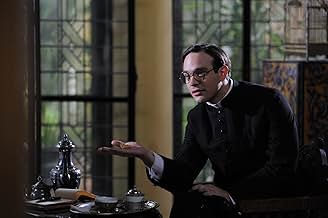
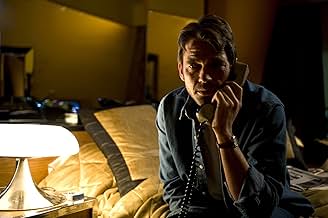
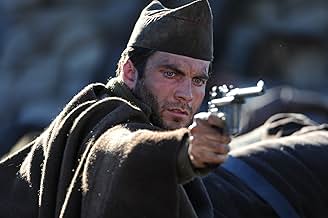
Spanish/US co-production developing dramatic deeds during Spanish Civil War and the historic figure about Jose Maria Escriba De Balaguer . Enjoyable biographic movie well written and played , being compellingly directed by Roland Joffé . Arising out of the terror of the Spanish Civil War, a candidate for canonization is investigated by a reporter (Dougray Scott) who aware his own estranged father (Wes Bentley) had a deep, dark and devastating connection to the saint's (Charlie Cox) life .
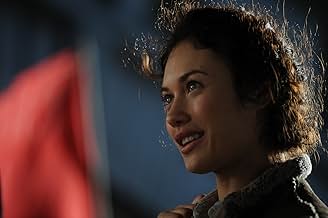
This interesting film is full of compelling drama with love , passion and subsequent betrayal , touching scenes , historical events and good feeling . It is a simple , dramatic and intelligent portrait of a time when the Spanish people live taking on among them . This is an agreeable account of the survival of the human spirit against difficulties ; an epic portrayal of Faith, Forgiveness and Redemption . The movie is plenty of graphic , striking and memorable moments about timeless power of forgiveness and dictating a strong emotional response from the spectator , though some moments is unrealistic . Interesting and thought-provoking movie with evident excitement that can sometimes be undercut by inadequacies in the screenplay , being written and adapted by the same Roland Joffé . This moving picture results to be a breathtaking spectacle about dramatic consequences of Spanish civil war , including strong emotions , brooding dialog and a heartbreaking final . ¨There be dragons¨ or ¨Encontrarás Dragones¨ results to be other of the innumerable stories to deal with dramatic deeds regarding the Civil War background , a familiar theme about the global horrors of a fratricide war , impossible to forget to Spanish cinema . However the story needs a vibration more real than the one offered in this slow-moving and sometimes dull film . But anyway, its is compensated with the great performances from main cast as Charlie Cox as Josemaría Escrivá , Wes Bentley as Manolo Torres as Dougray Scott as Roberto Torres as Rodrigo Santoro as Oriol , Olga Kurylenko as Ildiko and sensational support cast , mostly Spanish , such as Unax Ugalde , Ana Torrent and Jordi Molla , interpreters who provided a considerable boost to the result . Furthermore , a spotless pictorial cinematography by Gabriel Beristain and a willingness , almost perfect of the elements of each shot , every sequence, every space .
The film develops an intrigue by means of flashbacks and dealing with Jose Maria Escriba De Balaguer's life . The events were the following : during the Spanish Civil War , Escrivá was hidden in a psychiatric sanatorium and fled from Madrid, which was under republican control, via Andorra and France, to the city of Burgos, held by the nationalist forces of General Francisco Franco. After the war ended in 1939 with Franco's victory, Escrivá was able to resume his studies in Madrid and complete a doctorate in law. His principal work was the foundation, government and expansion of Opus Dei.
The motion picture was well directed by the British Roland Joffé , being realized in academic style and general coldness , filmed in his usual formal and stylistic scholarship , without leaving a trace the thought-provoking issues , in terms of dramatic and narrative excitement . He is a good filmmaker mainly of epic subjects . After a long career filming for television , he made his movie debut in a big way with ¨The killing fields¨ winner of three Oscar and dealing with madness and atrocities committed by humans , Joffe's usual theme. ¨The mission¨, one of his greatest hits , had Palme d'or at Cannes , a graphic monument to Portuguese oppression in South-America , but Joffe has not quite held his place at the top level . He subsequently directed ¨Fat Man and Little Boy¨ referring to two atomic bombs dropped by America on Japan . Joffe's meagre output for the cinema makes it all the more surprising that he has turned out three splendid films and several others near-disasters such as ¨The scarlet letter¨, ¨Captivity¨, and ¨You and me¨. Rating ¨Encontraras Dragones¨ : Better than average , worthwhile watching .
This interesting film is full of compelling drama with love , passion and subsequent betrayal , touching scenes , historical events and good feeling . It is a simple , dramatic and intelligent portrait of a time when the Spanish people live taking on among them . This is an agreeable account of the survival of the human spirit against difficulties ; an epic portrayal of Faith, Forgiveness and Redemption . The movie is plenty of graphic , striking and memorable moments about timeless power of forgiveness and dictating a strong emotional response from the spectator , though some moments is unrealistic . Interesting and thought-provoking movie with evident excitement that can sometimes be undercut by inadequacies in the screenplay , being written and adapted by the same Roland Joffé . This moving picture results to be a breathtaking spectacle about dramatic consequences of Spanish civil war , including strong emotions , brooding dialog and a heartbreaking final . ¨There be dragons¨ or ¨Encontrarás Dragones¨ results to be other of the innumerable stories to deal with dramatic deeds regarding the Civil War background , a familiar theme about the global horrors of a fratricide war , impossible to forget to Spanish cinema . However the story needs a vibration more real than the one offered in this slow-moving and sometimes dull film . But anyway, its is compensated with the great performances from main cast as Charlie Cox as Josemaría Escrivá , Wes Bentley as Manolo Torres as Dougray Scott as Roberto Torres as Rodrigo Santoro as Oriol , Olga Kurylenko as Ildiko and sensational support cast , mostly Spanish , such as Unax Ugalde , Ana Torrent and Jordi Molla , interpreters who provided a considerable boost to the result . Furthermore , a spotless pictorial cinematography by Gabriel Beristain and a willingness , almost perfect of the elements of each shot , every sequence, every space .
The film develops an intrigue by means of flashbacks and dealing with Jose Maria Escriba De Balaguer's life . The events were the following : during the Spanish Civil War , Escrivá was hidden in a psychiatric sanatorium and fled from Madrid, which was under republican control, via Andorra and France, to the city of Burgos, held by the nationalist forces of General Francisco Franco. After the war ended in 1939 with Franco's victory, Escrivá was able to resume his studies in Madrid and complete a doctorate in law. His principal work was the foundation, government and expansion of Opus Dei.
The motion picture was well directed by the British Roland Joffé , being realized in academic style and general coldness , filmed in his usual formal and stylistic scholarship , without leaving a trace the thought-provoking issues , in terms of dramatic and narrative excitement . He is a good filmmaker mainly of epic subjects . After a long career filming for television , he made his movie debut in a big way with ¨The killing fields¨ winner of three Oscar and dealing with madness and atrocities committed by humans , Joffe's usual theme. ¨The mission¨, one of his greatest hits , had Palme d'or at Cannes , a graphic monument to Portuguese oppression in South-America , but Joffe has not quite held his place at the top level . He subsequently directed ¨Fat Man and Little Boy¨ referring to two atomic bombs dropped by America on Japan . Joffe's meagre output for the cinema makes it all the more surprising that he has turned out three splendid films and several others near-disasters such as ¨The scarlet letter¨, ¨Captivity¨, and ¨You and me¨. Rating ¨Encontraras Dragones¨ : Better than average , worthwhile watching .
This movie is mis-titled...
"There Be One Draggin' Movie" is more like it... I respect the tragedy of the Spanish Civil War and the hatred for Franco but pullllllease... get to the point... I don't want to feel EVERY bullet... the ones that should have been meant for me.... ugh!
I liked that the film reflected the pain, confusion, and agony of war but it's not the first time something has been made of the topic... the movie goes on and on and on switching between battles scenes, treachery, religious strength and doubt, love... thank God for no cheap sex scenes... maybe I just don't get it but the wringing of hands can only be put up with for so long... and NOT for two hours.... aaaaaargh!
I liked that the film reflected the pain, confusion, and agony of war but it's not the first time something has been made of the topic... the movie goes on and on and on switching between battles scenes, treachery, religious strength and doubt, love... thank God for no cheap sex scenes... maybe I just don't get it but the wringing of hands can only be put up with for so long... and NOT for two hours.... aaaaaargh!
Start strong but derails
I was impressed by the beginning of this movie, which looked like an intriguing investigation of the past, but pretty soon it turned into a messy story of two boys, Manolo e Jose Maria, who grew up in a small Spanish city and then lost touch, but for some reasons, Manolo thought he could tell his son a lot about Jose even if they did not meet in forty years.
I even learned that Jose was a guy who actually existed and created Opus Dei, about which I know nothing except that it is a Catholic controversial institution. I don't know if Manolo is also based on a real character, but in the movie, he's a spoiled, rich, mean boy who grows up to be a spy in the Republican army during the Spanish civil war and gets entangled in a tragic love story. Actually, Manolo gets rejected by the woman he loves and he betrays her in a most horrible way.
All this tragedy is mixed with the story of Manolo's estranged son, who's a journalist investigating Jose Maria, who was persecuted during the revolution and had to flee Spain. Quite messy and depressing, it seems a story coming straight from a bad adaptation of a very long novel with way too many characters.
I even learned that Jose was a guy who actually existed and created Opus Dei, about which I know nothing except that it is a Catholic controversial institution. I don't know if Manolo is also based on a real character, but in the movie, he's a spoiled, rich, mean boy who grows up to be a spy in the Republican army during the Spanish civil war and gets entangled in a tragic love story. Actually, Manolo gets rejected by the woman he loves and he betrays her in a most horrible way.
All this tragedy is mixed with the story of Manolo's estranged son, who's a journalist investigating Jose Maria, who was persecuted during the revolution and had to flee Spain. Quite messy and depressing, it seems a story coming straight from a bad adaptation of a very long novel with way too many characters.


Did you know
- TriviaThe title comes from the phrase "here be dragons" which was written on old maps to denote dangerous or uncharted areas.
- GoofsThe sub machine gun that the rebel leader Oriol takes from the wrecked combat car to pose with Ildiko is a Thompson M1 or M1-A1, as shown by the charging handle on the right and the simplified rear sight. This was not introduced until 1942, six years after the events in the movie.
- Alternate versionsBecause of poor box-office performance in 2011, the film was re-edited and re-released in the USA in 2012, under the title "There Be Dragons: Secrets of Passion". This new version is shorter (106 minutes) and has a new music scored by Robert Folk.
- ConnectionsFeatured in Saint of the Ordinary: The Making of There Be Dragons (2011)
- How long is There Be Dragons?Powered by Alexa
Details
- Release date
- Countries of origin
- Official sites
- Language
- Also known as
- There Be Dragons: Secrets of Passion
- Filming locations
- Production companies
- See more company credits at IMDbPro
Box office
- Budget
- $36,000,000 (estimated)
- Gross US & Canada
- $1,069,334
- Opening weekend US & Canada
- $705,537
- May 8, 2011
- Gross worldwide
- $4,372,642
- Runtime
- 2h 2m(122 min)
- Color
- Sound mix
- Aspect ratio
- 2.35 : 1
Contribute to this page
Suggest an edit or add missing content