IMDb RATING
6.2/10
2.5K
YOUR RATING


The sole survivor of a lost whaling ship relates the tale of his captain's self-destructive obsession to hunt the white whale, Moby Dick.The sole survivor of a lost whaling ship relates the tale of his captain's self-destructive obsession to hunt the white whale, Moby Dick.The sole survivor of a lost whaling ship relates the tale of his captain's self-destructive obsession to hunt the white whale, Moby Dick.
- Awards
- 3 nominations total
Browse episodes


6.22.4K
1
2
3
4
5
6
7
8
9
10
Featured reviews
Sadly, an unnecessary remake
Unfortunately, this remake should have remained undone. Despite reputable actors, the film does not touch and the tension never arises. The directing and the screenplay is weak, e.g. suddenly we are informed that the Pequod has been to sea for 30 months(!), while it appears as they just left harbor. The madness of Ahab comes out as likable and understandable and the rationality and the sense of Starbuck appears theatrical. The three harpooners play inconspicuous parts in the film instead of adding to the tension. Ishmael - poorly played with a constant snug smile by Charlie Cox - looks simply ridiculous throughout the film. In summary a disappointing remake.
Unworthy
This is an unsuccessful effort with fine actors and beautiful views of the sea and sailing vessels. It is by far the most disappointing performance I have seen by William Hurt, an actor who has given us many fine performances. I suppose it is too much to hope that there will ever be a film that actually spends time on the essential things in the novel, since they are not that cinematic in nature. The most effective part of the film is the representation of Nantucket, replete with a scene from a church service. The ship's masthead on the pulpit is quite striking and authentic. Otherwise, this film struggles to take a new approach to an old subject, but the result is sometimes ludicrous. There are several instances of modern-day idioms which make one cringe, given the context of nineteenth-century speech (e.g. "I'm just messin' with you"). The crew members are shown gleefully singing sea shanties as if this is the real reason they have gone to sea, the camera zooms in on their faces so the audience will see how awestruck they are at the sight of a whale, and the computer-generated image of Moby Dick is just plain laugh-out-loud ridiculous. The crew shouting "Moby Dick, Moby Dick, . . ." sounds like something from a football pep rally. (You almost expect them to spell it out next "M-O-B-Y-D-I-C-K"). Ishmael's narration of the story is minimal, so much so that it seems almost out of place. The totally invented part about the child lost at sea and miraculously found is never explained or rationalized. How did he suddenly become separated and how could Ishmael possibly have known where to look? The film begins with a soon-to-be neurotic and obsessed Captain Ahab having dinner peacefully at home with his wife and child. The ship sets out from Nantucket for some reason. (In the book it is New Bedford. What on earth did this change hope to accomplish?) In short, this movie is part action film, part cartoon.
"Call me Ishmael'
As the novel opens, 'Call me Ishmael' are the first words of the sole survivor of a lost whaling ship as he relates the tale of his captain's self-destructive obsession to hunt the white whale, Moby Dick. They are words that have become often quoted by many authors and poets and for any number of reasons, yet they open the mysteries and beauties of one of the greatest American novels every written. There have been many cinematic productions of MOBY DICK, Herman Melville's 1851 supreme novel - 1956 with Gregory Peck as Ahab and 1998 with Patrick Stewart in the Ahab role - and each has its strong and weak points. There are many detractors of this current version who rightfully state that too few of Ahab's great speeches and lines have been omitted and that this version is too influenced by contemporary reasoning. But the tale is a great one and the splendid extended reveries and 'speeches' of Captain Ahab rest beautifully on the written page, a factor that allows mulling over the words and the meaning and the drama that may just fall a bit heavy when incorporated into a screenplay. Better the flavor of the story be conveyed by what cinema allows - imagery - that books can't mimic. This current version does just that - it finds the core of the obsession of a man driven by a struggle with his past, with nature, and with the personal vendetta against the great white whale, Moby Dick, who claimed Ahab's leg in the past. Nigel Williams is responsible for the screenplay, Mike Barker directs.
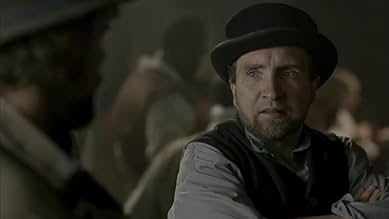
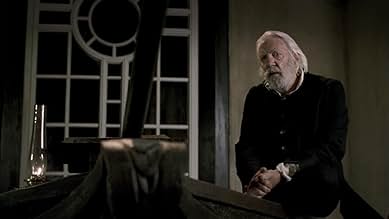
Ishmael (Charlie Cox) sees his dream of a whaling voyage come true when he and his Hapoonist friend Queequeeg (Raoul Trujillo) join the crew of the Pequod, a sailing vessel leaving port in Nantucket. What Ishmael and the mates don't initially appreciate is that the Pequod's monomaniacal Captain Ahab (William Hurt) is taking them all on a mad and personal mission to slay the great whale Moby Dick, an obsession that will open their eyes to the wonder and spectacle of man, of beast, and the inescapable nature of both. The flavor of the crew is well captured by a solid cast, including Ethan Hawke as a rather weak Starbuck, Eddie Marsan as Stubb, Billy Boyd as Elijah, Billy Merasty as Tashtego, Onyekachi Ejim as Dagoo, Matthew as Flask, James Gilbert as Steelkit, Gary Levert as Perth, and Daniyah Ysrayl as the cabin boy Pip. The special effects offer vivid and credible underwater activity of Moby Dick and the clashes with nature both within the crew and on the ocean are very well represented. The final underwater scene with Ahab strapped dead to the still alive and swimming Moby Dick is unforgettably realistic and a fine balance with the ever-innocent Ishmael grasping the empty coffin as the sole survivor of the voyage.
William Hurt gives us a different Ahab in Nigel Williams' script adaptation - less mad but more obsessed, less cruel and more vulnerable than we are used to seeing - but he is strong and takes us with him as he meets his end in his struggle with Nature. It is a moving adventure and despite the omissions that seem to bother most viewers, the movie does cast a spell over the entire 3 hours.
Grady Harp
Ishmael (Charlie Cox) sees his dream of a whaling voyage come true when he and his Hapoonist friend Queequeeg (Raoul Trujillo) join the crew of the Pequod, a sailing vessel leaving port in Nantucket. What Ishmael and the mates don't initially appreciate is that the Pequod's monomaniacal Captain Ahab (William Hurt) is taking them all on a mad and personal mission to slay the great whale Moby Dick, an obsession that will open their eyes to the wonder and spectacle of man, of beast, and the inescapable nature of both. The flavor of the crew is well captured by a solid cast, including Ethan Hawke as a rather weak Starbuck, Eddie Marsan as Stubb, Billy Boyd as Elijah, Billy Merasty as Tashtego, Onyekachi Ejim as Dagoo, Matthew as Flask, James Gilbert as Steelkit, Gary Levert as Perth, and Daniyah Ysrayl as the cabin boy Pip. The special effects offer vivid and credible underwater activity of Moby Dick and the clashes with nature both within the crew and on the ocean are very well represented. The final underwater scene with Ahab strapped dead to the still alive and swimming Moby Dick is unforgettably realistic and a fine balance with the ever-innocent Ishmael grasping the empty coffin as the sole survivor of the voyage.
William Hurt gives us a different Ahab in Nigel Williams' script adaptation - less mad but more obsessed, less cruel and more vulnerable than we are used to seeing - but he is strong and takes us with him as he meets his end in his struggle with Nature. It is a moving adventure and despite the omissions that seem to bother most viewers, the movie does cast a spell over the entire 3 hours.
Grady Harp
Well worth watching!
(7.5/10) My husband and I picked it up at our local rental place and we were surprised at how well it was done. Really strong performances from William Hurt and Ethan Hawke as Ahab and Starbuck, and the rest of the roles were well-cast, too. The filmmakers managed to capture a lot of the symbolism and themes of Melville's novel, and if you think about what was happening in Melville's time (civil war was brewing, American society seemed to be disintegrating), the mini-series makes it clear that the story was about much more than a Nantucket whaling expedition. Melville was issuing a warning to his fellow Americans that still has resonance today. We're Canadian, so it was fun to see that much of the movie was filmed in Nova Scotia. The whale special effects were a little weak at times, but otherwise, well worth watching.
Plot seriously mangled, but themes are intact
I just finished watching this and I don't have time to write an extensive review, but I will say a couple of things about this production.
Many, many liberties were taken with the plot. In fact the opening scene may blow you right out of the water. And Caption Ahab has apparently been swayed by New Age sharing and caring! But the essence of Melville's work may be considered intact if you take the view that he was a Transcendentalist, along with Whitman and others of that era.
If you hold to that interpretation of this production you may enjoy it on that level (see Jed Mckenna's "Spiritually Incorrect Enlightenment" for more on that). In fact if you hold to the conventional interpretation- that of a psycho-social critique of man's hubris against Nature, you will also probably be satisfied at the thematic level.
A few fine scenes but Ahab's wild and fantastic speeches are missing - which to me are the greatest of joys.
The treatment of the finale is decent.
Good luck!
Many, many liberties were taken with the plot. In fact the opening scene may blow you right out of the water. And Caption Ahab has apparently been swayed by New Age sharing and caring! But the essence of Melville's work may be considered intact if you take the view that he was a Transcendentalist, along with Whitman and others of that era.
If you hold to that interpretation of this production you may enjoy it on that level (see Jed Mckenna's "Spiritually Incorrect Enlightenment" for more on that). In fact if you hold to the conventional interpretation- that of a psycho-social critique of man's hubris against Nature, you will also probably be satisfied at the thematic level.
A few fine scenes but Ahab's wild and fantastic speeches are missing - which to me are the greatest of joys.
The treatment of the finale is decent.
Good luck!


Did you know
- TriviaCast member Gillian Anderson first came to fame playing Dana Scully on the TV series The X-Files (1993). It was mentioned several times throughout the run of the series that Scully and her family were big fans of Herman Melville's book 'Moby Dick': her nickname for her Naval officer father was "Captain Ahab;" his nickname for her was "Starbuck;" and her dog, which she named Queequeg, was, like its namesake, also an eater of humans (the dog ate the body of its previous owner).
- ConnectionsReferenced in The Tonight Show with Jay Leno: Episode #19.190 (2011)
- How many seasons does Moby Dick have?Powered by Alexa
Details
- Release date
- Country of origin
- Official sites
- Language
- Also known as
- Mobi Dik
- Filming locations
- Production companies
- See more company credits at IMDbPro
Contribute to this page
Suggest an edit or add missing content